

Why Engagement Compounds While Reach Evaporates
Every platform rewards the same behavior: keeping a human watching, reacting, commenting, and returning. Reach is rented, but engagement is owned. An account with 40,000 followers and a 2% engagement rate will consistently out-earn an account with 400,000 followers and a 0.3% rate, because the algorithm treats interaction as a quality signal and amplifies the content that produces it.
Generative video changed the economics of that equation. A solo creator can now produce a serialized show with recurring characters, consistent visual identity, and daily output — a workload that used to require a small studio. But cheaper production also means more noise. When anyone can generate a polished clip in an afternoon, polish stops being a differentiator. Structure, pacing, continuity, and distribution discipline become the differentiators.
This guide is a neutral, tool-agnostic workflow. It covers how to plan engagement-driven video, how to keep characters consistent across episodes, how to build visual variety without losing brand identity, how to distribute across platforms, and how to measure what actually matters. Tools are named only as examples, so you can swap any of them for whatever fits your stack.
The Four-Stage Engagement Workflow at a Glance
The creators who consistently win are not the ones with the best model access. They are the ones with a repeatable pipeline. Here is the pipeline that works for both long-form and short-form AI video.
Stage 1: Brief and Hook Design
Before generating a single frame, write a one-page brief: target viewer, single promise, hook line, payoff, and call to action. If you cannot state the promise in one sentence, the video will ramble. The hook gets its own sentence and its own visual treatment, because it is the only part of the video that has to survive the scroll.
Stage 2: Generation in Blocks
Generate in blocks organized by scene rather than by finished shot. For a 60-second piece, plan 12 to 18 shots of 3 to 5 seconds each. Short clips cut together feel more cinematic than long generated clips, and they hide artifacts that appear at the end of longer generations.
Stage 3: Assembly, Sound, and Captions
The assembly pass is where engagement is won or lost. Sound design, music, and captions do more for watch time than another render pass. Viewers scroll with sound off, so burned-in captions are mandatory, not optional.
Stage 4: Publish, Learn, Recycle
Publish, read the analytics after 48 hours, and log what worked into a reusable format. The winning clips become templates: same structure, new subject, new hook variation.
A simple rule of thumb: spend 30% of your time on planning, 40% on generation and editing, 15% on packaging (title, thumbnail, caption), and 15% on reviewing performance. Most beginners invert that and spend 90% on generation, which is why their videos look good and go nowhere.
Hook Engineering: The First Three Seconds Decide Everything
Retention curves are brutal. On most short-form feeds, you lose a meaningful share of viewers before the second second. Your hook is not a sentence; it is a visual, an audio cue, and a promise delivered simultaneously.
Hook Patterns That Survive the Scroll
- Visual anomaly: something in frame that should not be there — a floating object, an impossible reflection, a scale mismatch.
- Motion-first open: the clip begins mid-action with no establishing shot. Camera already moving, subject already doing something.
- Direct address: a character looks into the lens and asks a question the viewer is already asking.
- Contradiction: state something the audience believes, then immediately break it. "Slow videos get more watch time than fast ones — here's why."
- Number promise: "Three edits that tripled my completion rate." The number sets an expectation the video can actually fulfill.
Testing Hooks Without Reshooting
You do not need to regenerate a video to test a hook. Generate one master video and three alternate openings of 3 to 4 seconds. Publish the same body with different openings on different days to the same audience segment, then compare the 3-second retention number. Keep the winner, reuse the pattern. This single practice is often worth a 20–40% improvement in watch time because the body was already fine — the opening was the bottleneck.
Narrative Structure and Character Consistency Across a Series
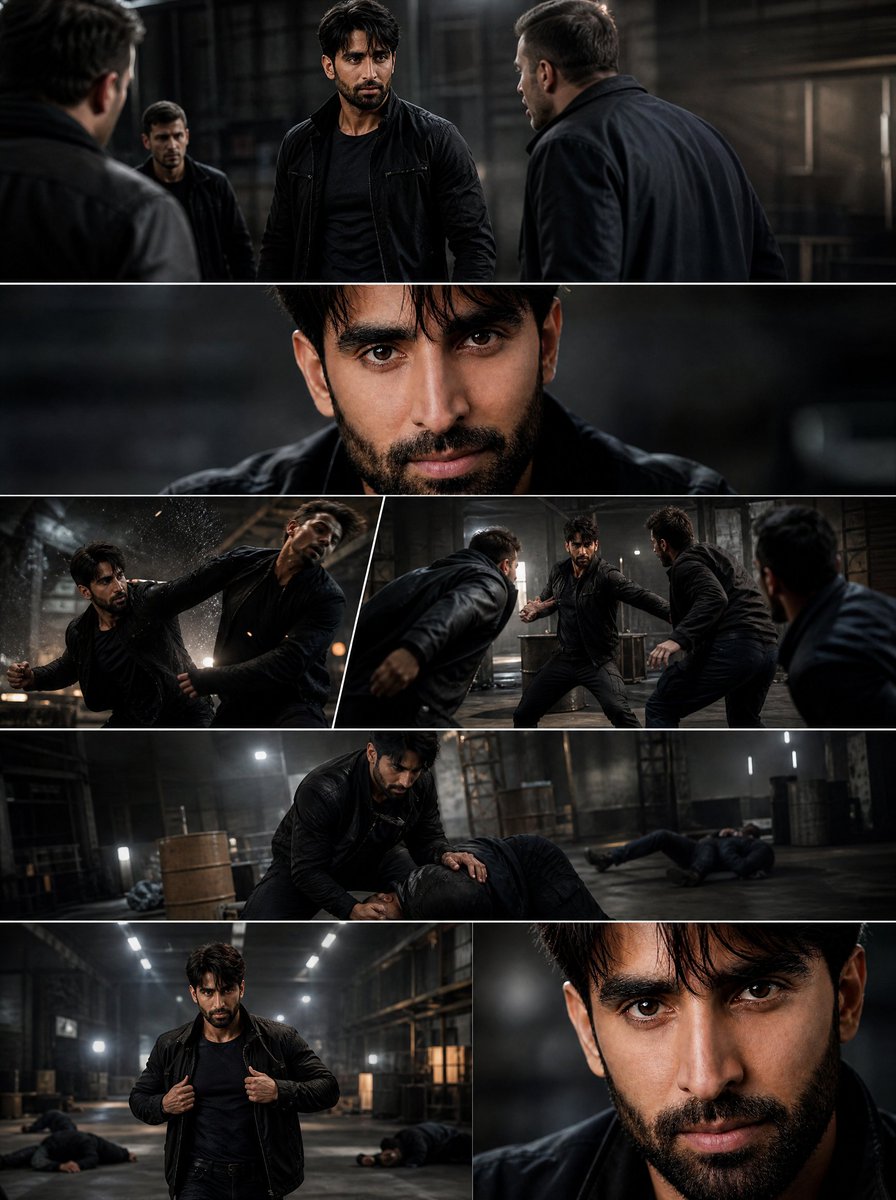
Serialized video is where AI generation gets hard. A single clip is a demo. A series is a brand. The moment your protagonist's face, jacket, or hairstyle drifts between episodes, the audience loses the thread — and the algorithm loses the rewatch signal.
Build a Character Bible Before You Generate
Create a document per recurring character containing:
- A neutral reference image, plus two profile references and one in-motion reference
- Physical descriptors written as plain text that you paste into every prompt: age range, hair, wardrobe, distinguishing marks
- Voice profile: pitch, pace, accent, favorite phrases
- Behavioral rules: how they react to stress, how they open a sentence
- A short list of forbidden traits so the model does not drift
The bible is not bureaucratic overhead. It is the difference between a series that reads as intentional and a series that reads as unrelated clips.
Multi-Reference Techniques for Continuity
Most modern generation tools accept one or more reference images alongside the prompt. The reliable pattern is to supply a primary identity reference plus a scene-style reference, then describe wardrobe and pose in text. If your tool supports multi-image or fusion-style conditioning, use it: combining an identity frame with a pose frame yields far more consistent results than text alone.
Practical continuity checklist:
- Lock an aspect ratio and lens feel for the whole series and never change it mid-arc.
- Keep lighting direction consistent within a scene; flip it only to signal a time or location shift.
- Reuse the exact wardrobe descriptors in every prompt — copy and paste, do not retype.
- Generate establishing shots sparingly; recurring shows are built on close and medium shots.
- Review each episode against the bible before publishing, not after.
Scene-Level Structure That Holds Attention
A dependable structure for a 45–90 second AI video:
- 0–3s: hook
- 3–8s: context in one line, no backstory
- 8–30s: escalation — two or three beats, each with a small visual change
- 30–45s: turn or reveal
- 45–60s: payoff plus a reason to rewatch (a detail viewers missed)
- Final 3s: loop-friendly ending that makes the replay feel natural
Loop-friendly endings are underrated. If the last frame visually rhymes with the first frame, replays spike, and replays are one of the strongest engagement signals on any feed.
Visual Variety Without Losing Brand Identity
Audiences saturate fast. If every episode uses the same palette, same camera move, and same lighting, viewers stop noticing the content at all. But random visual experimentation destroys recognition. The answer is a controlled range.
Define a Range, Not a Single Style
Write down three style tiers for your channel:
- Core style: 70% of output. Your recognizable look — palette, contrast, grain, lens.
- Adjacent style: 20% of output. Same world, different mood: night instead of day, rain, colder grade.
- Wildcard style: 10% of output. A deliberate break — animation, documentary texture, retro format.
The wildcard exists to reset attention. It should still feel like it belongs to the same universe.
Rotate Models Strategically
Different generation models have different strengths: some excel at photoreal humans, others at stylized motion, others at camera control or physics. Instead of choosing one and forcing everything through it, assign models to scene types. Keep a small chart in your production doc mapping scene type to model, and note the prompt phrasing that produced good results.
That chart is your real competitive advantage. It compounds, and it survives every model update.
Prompt Hygiene
Prompts drift because humans get sloppy. Standardize a prompt skeleton:
[shot type] + [subject + wardrobe] + [action] + [environment] + [lighting] + [camera movement] + [style keywords]
Keep style keywords in a saved snippet. When you change something, change one variable at a time so you know what caused the improvement.
Personalization and Segmentation for Watch Time
Personalization does not require a data team. It requires segmentation and versioning.
Segment by Entry Point, Not Demographics
Demographics predict little about video behavior. Entry point predicts a lot. Group your audience by how they arrive:
- Cold scrollers: no context. Need hooks with zero assumed knowledge.
- Returning viewers: know your format. Need continuity callbacks and inside references.
- Searchers: arrive with a question. Need the answer in the first ten seconds.
- Community regulars: comment and share. Need participation hooks — polls, prompts, reply videos.
Make one master video per topic, then cut variants of the first 5 seconds and the final call to action for each segment. Same production cost, four times the targeting.
Captions, Thumbnails, and Metadata as Engagement Levers
Packaging is not decoration. A thumbnail with a face and an unresolved visual question routinely outperforms a beautiful but neutral frame. Captions should be large, high contrast, and positioned away from platform UI elements. Titles should promise a specific outcome and avoid vague cleverness.
Metadata that consistently helps:
- A hook-matching first line of the description
- 3–5 specific tags rather than 20 generic ones
- Chapter markers on longer videos to reduce mid-roll drop-off
- Pinned comments that ask a question answerable in five words
Questions with low friction get answered. Answers feed the engagement signal.
Distribution and Platform Fit
One video, many cuts. This is the highest-leverage habit in the entire workflow.
Master Once, Cut Many
Export a square-safe master at the highest resolution you can, then produce:
- Vertical 9:16 for short-form feeds
- Horizontal 16:9 for long-form and embeds
- A 3–5 second looping teaser
- A still-frame carousel with the key insight as text on image
Each cut should have its own hook. Cropping a horizontal video into vertical without reframing the composition is the single most common reason a good video underperforms on a second platform.
Pacing by Platform
Pacing is a platform dialect. Feeds built on fast swiping reward cuts every 1.5–3 seconds and dense caption motion. Feeds built on longer sessions tolerate 4–6 second shots and slower reveals. Do not copy your short-form cut durations into a long-form edit.
Cadence Over Volume
Three well-structured posts per week will beat fourteen rushed ones in almost every case, because consistency trains the audience and the algorithm. If you cannot sustain daily output, pick a cadence you can hold for twelve weeks and hold it.
Measurement: The Metrics That Matter and the Loops to Build
Engagement rate alone is a vanity number. It hides the real story. Track a small dashboard and review it weekly.
Leading and Lagging Indicators
| Metric | Type | What it tells you |
|---|---|---|
| 3-second retention | Leading | Whether the hook works |
| Average watch time | Leading | Whether pacing and structure work |
| Completion rate | Leading | Whether the payoff justifies the length |
| Saves and shares | Leading | Whether the content has practical or emotional value |
| Comment sentiment | Leading | Whether the audience feels addressed |
| Follower growth per post | Lagging | Whether the format is building a habit |
| Returning viewer share | Lagging | Whether you have a series rather than a feed |
If 3-second retention is weak, fix the hook. If retention is strong early and collapses mid-video, your middle section is too long. If completion is strong but follows are weak, your call to action is missing a reason to subscribe.
A Simple Testing Framework
Test one variable per week. Rotate through: hook style, video length, caption style, thumbnail composition, posting time, and call-to-action wording. Log the result in a spreadsheet with the date, the variable, the change, and the primary metric. After twelve weeks you will have a personalized playbook no generic advice can match.
Give every test a minimum of three posts before judging it. Single-post results are noise.
Common Mistakes That Suppress Engagement
- Generating before planning. Beautiful footage with no promise loses every scroll battle.
- Long establishing shots. On feeds, an establishing shot is a pause button.
- Inconsistent characters. Drift breaks the illusion faster than any visual flaw.
- One style for everything. Saturation kills attention; introduce controlled variety.
- Ignoring sound and captions. Silent autoplay is the default viewing mode.
- Publishing one cut everywhere. Reframe and re-hook per platform.
- Never reusing a winning format. The fastest growth comes from repeating what already worked.
- Judging by one post. Decisions should follow patterns, not outliers.
- No call to action. Viewers do not guess what to do next; tell them.
- Abandoning a series too early. Continuity pays off around the third or fourth episode.
FAQ
How long should an AI-generated video be for good engagement?
For discovery feeds, 20–60 seconds is the sweet spot because completion rate stays high. For retention-focused long-form, 5–12 minutes works if you use chapters and re-hook every 90 seconds. Length is not the lever; completion rate is.
Do I need a different tool for every scene type?
No. You need one reliable primary tool and one or two specialists for scenes where quality matters most — usually photoreal human close-ups and complex motion. Specialty rotation should be deliberate, documented, and limited.
How do I keep a character consistent across many episodes?
Lock a written character bible, keep reference images on hand, reuse exact wardrobe phrasing in every prompt, and review each episode against the bible before publishing. Consistency is a process problem, not a model problem.
How often should I post?
Pick a cadence you can sustain for three months. Three quality posts a week beats daily improvisation. Consistency compounds because it teaches your audience when to expect you.
What is a realistic engagement rate to aim for?
Benchmarks vary widely by platform and niche, so compare against your own history instead. The useful target is a month-over-month improvement in 3-second retention and completion rate. Those two drive everything else.
Can AI video reach the quality of traditionally shot video?
For stylized, explanatory, animated, and narrative content, yes — often faster. For documentary footage and authentic behind-the-scenes moments, live capture still wins. The strongest channels blend both rather than choosing sides.
How do I avoid producing content that looks generic?
Define a core visual style, a controlled set of adjacent variations, and a small wildcard allowance. Then keep a prompt and style log so your best results become repeatable instead of accidental.
What should I do if a video performs badly?
Check the hook first, then pacing, then packaging, then distribution. Fix one variable and republish a variant of the same idea. Most underperforming videos are fixable concepts, not wasted work.
