
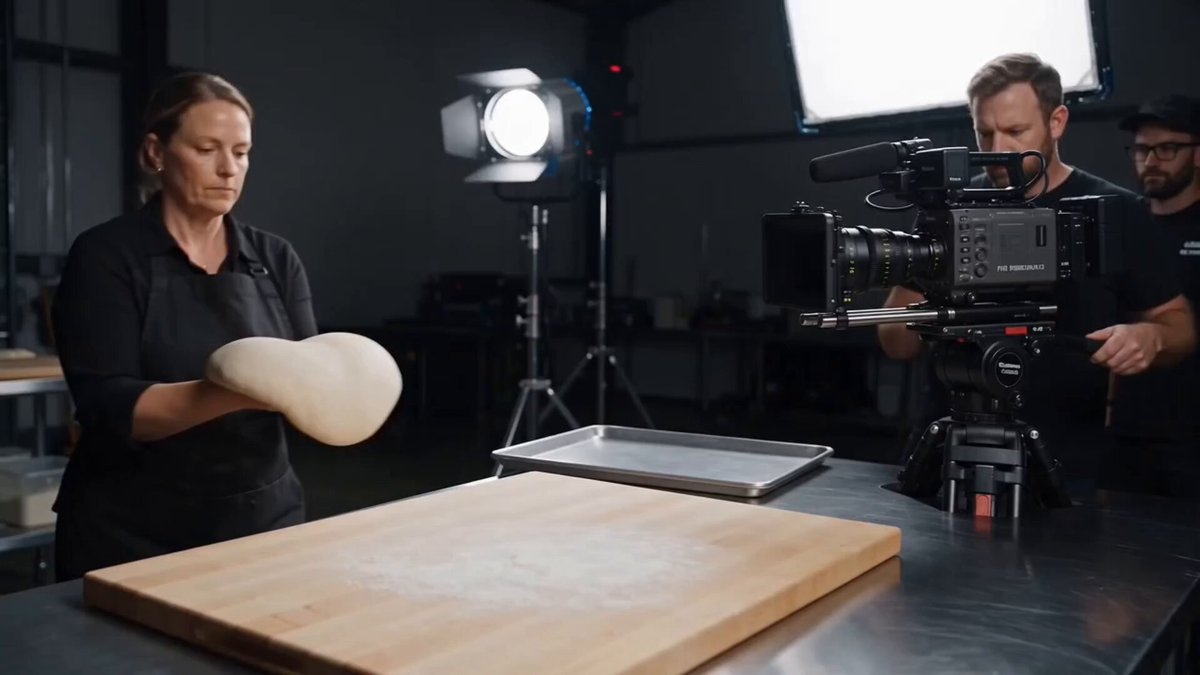

Video production has always been a chain of dependencies. A script waits on research, a shoot waits on a script, an edit waits on footage, and a publish date waits on everything else. Generative AI is useful here not because it replaces a single link in that chain, but because it collapses the waiting between links. A rough cut can exist before the shot list is final. A storyboard can be revised in minutes rather than days. A voiceover can be regenerated instead of re-booked.
The purpose of this guide is practical: take a workflow you already run, insert AI where it removes friction, and keep the parts that still need human judgment. The result is fewer restarts, fewer reshoots, and a review loop that stays honest about quality instead of chasing novelty.
Why AI Changes the Video Production Equation
Traditional production optimizes for certainty. You lock a script so the shoot day is predictable. You lock the shoot so the edit is predictable. Every lock protects the next stage from change, but every lock also makes change expensive. When a client asks for a different ending, the cost is measured in crew hours and rescheduling.
AI-driven workflows optimize for reversibility instead. Concept, script, storyboard, and first-pass visuals live in a space where changes are cheap, so you can explore more before committing. That shift has three practical consequences:
- Earlier feedback. Stakeholders react to something they can see, not a paragraph describing what they will eventually see. Previsualization turns vague notes into specific ones.
- Parallel tracks. Writing, visual design, voice, and music can progress at the same time because each depends on assets that can be produced on demand.
- Smaller teams per project. One person with a clear process can carry a project from idea to delivery, which changes what kinds of videos are economically viable.
What AI does not change is taste. Model output is a starting point, and the difference between a mediocre AI-assisted video and a good one is almost always editorial: shot selection, pacing, sound, and restraint.
Map the Workflow Before You Automate It
Automating a messy process produces a faster mess. Before adding any tool, write down your current pipeline as a numbered list of stages with the time each one consumes and the person who owns it.
Where the time actually goes
Most teams assume editing is the bottleneck. In practice, the hidden costs usually sit in coordination: waiting for approvals, hunting for the right file version, and re-explaining a creative direction that was never written down. Track a single project for one week and note every time you stop work because you are waiting on something else.
| Stage | Typical hidden cost | AI lever |
|---|---|---|
| Concept | Unscoped brainstorm meetings | Fast concept variants and reference moodboards |
| Script | Revisions without a visual anchor | Script-to-storyboard loops |
| Previsualization | Slow hand-drawn boards | Generated boards and animatics |
| Production | Reshoots for coverage | Shot generation for inserts, B-roll, pickups |
| Post | Rebuilding timing from scratch | Auto assembly plus transcript-based editing |
| Audio | Re-recording narration | Instant voice regeneration |
Choosing your first bottleneck
Pick the stage that is both slow and reversible. Audio cleanup, subtitle generation, and storyboard drafts are ideal first targets because mistakes cost almost nothing. Skip the stage that touches your brand voice or legal exposure until you have built confidence elsewhere.
A useful rule: automate the work you would happily delegate to a competent freelancer with a clear brief. Do not automate the work that defines why the video exists.
Pre-Production: From Concept to Locked Script
Pre-production decides whether the rest of the project is calm or chaotic. This is where AI earns its keep fastest, because the output is text and images rather than final video, so iteration is cheap.
Concept development and research
Use AI as a structured brainstorming partner, not a slot machine. Give it a brief with four constraints: audience, duration, tone, and the one idea the video must land. Ask for ten concepts, then deliberately discard the obvious five. Ask it to argue against its own strongest idea and see what survives.
Keep a running document of rejected directions. When a stakeholder asks why an option was dropped, you have a written reason instead of a vague memory.
Scripting that survives the edit
Write scripts with the edit in mind. An AI assistant can restructure a draft into beats, flag lines that are hard to visualize, and produce a version trimmed to a target runtime. Two habits matter:
- Read every line aloud. Generated prose often reads well and speaks badly. Trim clauses that a narrator cannot breathe through.
- Tag every claim. Anything factual belongs on a verification list. AI is good at plausible sentences, which is exactly why unverified claims are risky.
Keep a human pass for the hook and the close. Those fifteen seconds determine whether the rest is watched at all.
Character consistency and visual design
If your video has recurring characters, build a small style bible before generating anything: age range, wardrobe, hair, silhouette, palette, and two or three reference images per character. Consistency across shots comes from consistent inputs, not from hoping the model remembers.
Describe characters by stable, visual attributes rather than moods. Mood changes between scenes; a scar, a jacket color, or a specific frame shape does not. Save your best references in a dedicated folder and reuse them every session.
Storyboards and previsualization
Storyboards are the cheapest place to discover that your idea does not work. Generate boards for the five most important shots first, not the whole sequence. Review pacing with a simple animatic: still frames cut to a temporary music bed with rough timing.
Two questions during review:
- Does the story still make sense if the viewer looks away for five seconds?
- Is each shot doing one job, or is it trying to do three?
If a board confuses the reviewer without narration, the final video will too.
Production: Choosing and Directing Generative Video Tools
Production is where expectations and reality diverge. Generative video is excellent for certain shot types and unreliable for others. Knowing the difference saves hours.
Matching the model to the shot
Broadly, you will draw from four categories of tools:
- Text-to-video for abstract, environmental, and establishing shots where continuity is flexible.
- Image-to-video for controlled compositions, product shots, and anything where the frame must match a designed look.
- Character or subject reference tools for recurring people, animals, or objects across a sequence.
- Motion and camera control tools for specific moves such as dolly-ins, pans, or orbit shots.
Match the tool to the tolerance for randomness. A dream sequence can absorb variation; a product demo cannot.
Multi-image fusion and style continuity
When a sequence must feel like one film, feed the model multiple references at once: a character reference, a location reference, and a lighting or grade reference. Fusion works best when references agree with each other. Mixing a soft natural-light reference with a hard studio look produces muddled results.
Build a short continuity checklist you run before generating a batch:
- Same color temperature across all shots in a scene?
- Same lens feel (wide versus telephoto compression)?
- Same wardrobe and props in every frame the character appears?
- Same time of day, including shadow direction?
Prompt structure that holds up across a sequence
Write prompts in a fixed order so you can change one variable at a time: subject, action, environment, lighting, camera, style, and technical format. Keep a template file and edit only the fields that need to change. This is the single biggest time-saver in AI production, because it turns prompt writing into parameter editing.
Generate in small batches, review immediately, and keep the failures. Failed generations are documentation of what the model does not understand, which is useful for the next project.
Post-Production: Assembly, Audio, and Finishing
Post is where AI saves the most wall-clock time, because it can work from transcripts and metadata instead of forcing you to scrub through footage.
Automated assembly and rough cuts
Transcription-based editing lets you edit video like a text document. Delete a sentence in the transcript, and the corresponding footage disappears. For interview-driven content, talking-head videos, and explainers, this compresses the first assembly from hours to minutes.
Better still, generate a rough cut from a script outline: match each beat to the closest available clip, then fix timing by hand. The value is not the output; it is that you now argue with something concrete instead of imagining it.
Voice, music, and sound design
AI voice generation is strongest for scratch narration, localization, and short pickups where re-recording is disproportionate. Use it with three safeguards:
- Keep a human read for anything emotional or brand-critical.
- Normalize loudness across all generated lines; models vary in level.
- Check pronunciation on names, numbers, and technical terms manually.
For music, treat generated tracks as beds, not scores. Duck them under dialogue, and avoid loops that repeat obviously at 20-second intervals.
Cleanup, color, and upscaling
AI denoising, stabilization, and upscaling can rescue footage that would otherwise be unusable, but they are not magic. Upscaling adds detail that was never captured, so avoid aggressive settings on faces and text. Do color and exposure work first, then upscale; correcting after enhancement is harder.
Build a Human-in-the-Loop Review System
AI increases output volume, and volume without review creates noise. Structure review so that humans spend attention where it matters.
Tiered review
Define three gates. Gate one checks concept and script, gate two checks visual continuity from stills and short clips, gate three checks the full cut with sound. Do not let reviewers comment on tier-three concerns at gate one; it derails projects and produces contradictory notes.
Naming and versioning
Adopt a naming convention such as project_scene_shot_version. Store generated assets in one place with metadata noting the prompt and references used. Six weeks later, being able to regenerate a shot identically is worth more than any single clever prompt.
Measuring cycle time
Track four numbers per project: days from brief to locked script, hours from script to approved boards, hours from first assembly to locked cut, and number of reshoots. If AI is helping, the first three fall. If only generation volume rises while cycle time stays flat, you have added tools without fixing the process.
A Practical Week-Long Production Sprint
Here is a realistic schedule for a three-to-five minute video with a small team.
Day one: brief, constraints, ten concepts, and a decision. Lock the one-line idea and the runtime.
Day two: script draft, read-aloud pass, claim verification list, and a beat sheet.
Day three: style bible, character references, boards for the five hero shots, and an animatic review.
Day four: generate production shots in small batches using the fixed prompt template. Review continuity after each batch.
Day five: assembly from transcript or beat sheet, scratch narration, music bed, and a first full-cut review.
Day six: address notes, regenerate only the shots that failed, balance audio, and color.
Day seven: captions, titles, exports for each platform, and an archive of prompts and references.
Notice how much of the week is review rather than production. That ratio is normal and healthy.
Common Mistakes That Undo Your AI Gains
- Chasing model novelty. Switching tools mid-project resets your learned settings and continuity. Finish the project with what works.
- Generating too much. Hundreds of options create decision fatigue. Aim for three usable takes per shot, not thirty.
- Skipping the style bible. Inconsistency between shots is the fastest way to make an AI video feel cheap.
- Using AI voices for emotional lines. Audiences detect flat delivery quickly, especially in narration-heavy content.
- Automating approvals. Automating the creative work while leaving approvals manual simply moves the bottleneck.
- Ignoring rights and disclosure. Know the licensing terms of every tool you use and follow platform rules for synthetic media.
- No archive. Without saved prompts and references, you cannot reproduce a shot when a client asks for a small change.
Tool Categories and How to Choose
Rather than adopting one platform, think in categories and pick the best option in each.
Video generation
Prioritize control over spectacle. Look for reference image support, consistent subject handling, clip length that matches your edit rhythm, and predictable output when you re-run the same prompt.
Editing assistants
Choose an editor that treats transcripts as first-class objects. Text-based cutting, silence removal, filler-word detection, and automatic captions are the features that consistently save hours.
Audio tools
Voice generation, noise removal, loudness normalization, and stem separation cover most post-audio needs. Check that exports land in the sample rate and format your editor expects.
Asset management
A searchable library with prompt metadata is not glamorous, but it is the difference between a repeatable process and a one-off experiment.
FAQ
Do I need expensive hardware to run an AI video workflow? No. Most generation happens on hosted services, and heavy rendering happens in the cloud. A mid-range laptop with a stable connection handles the majority of the work; local GPU power matters mainly for large batch jobs and offline editing of high-resolution footage.
Can AI produce a complete ten-minute video end to end? It can produce all the pieces, but the assembly, pacing, and sound still need human direction. A realistic target is AI handling seventy to eighty percent of asset creation while a person owns structure and final polish.
How do I keep a character consistent across many shots? Build reference images first, describe characters with stable visual attributes, reuse the same reference set, and generate one shot at a time so you can catch drift early. Regenerate immediately when a detail changes rather than hoping it resolves in the edit.
Will this replace my editor? It changes what the editor spends time on. Less hunting for clips and syncing audio, more story shaping and pacing decisions. Editors who learn these tools usually take on more projects rather than fewer.
How many takes should I generate per shot? Three usable options is a good target. If none of the three works, the prompt or reference is wrong; fix the input rather than generating ten more variations.
What should I check before publishing AI-assisted footage? Verify factual claims, confirm tool licensing terms, check platform disclosure requirements for synthetic media, review captions for accuracy, and confirm music rights for any generated track.
Is it worth writing down prompts and settings? Yes, and it is the cheapest habit on this list. A shared prompt library turns each project into a reusable asset instead of a fresh experiment, and it lets teammates reproduce your results without asking you.
Bringing It Together
The winning approach is not the most advanced model; it is the workflow with the shortest distance between an idea and a reviewable cut. Map your pipeline, automate reversible stages first, standardize prompts and references, and keep humans at the gates that decide whether the video is good. Do that, and AI stops being a novelty you show clients and becomes the reason your next project ships on time.
