
A generated clip rarely fails because the idea was weak. It fails because the prompt described a picture instead of a moment. Still-image prompting rewards atmosphere; video prompting rewards choreography — a subject, an action, a camera, and a duration that all agree with each other. When those four elements contradict one another, the model averages them, and the output looks like a slideshow with motion blur.
This guide is a practical system for writing prompts that survive contact with a generation model. It covers prompt anatomy, a repeatable build workflow, camera and motion vocabulary, cross-shot consistency, model selection, the mistakes that waste the most time, reusable templates, and a quality checklist to run before you commit to a take.
Start with intent, not with adjectives
The most common failure pattern in AI video work is a prompt that reads like a mood board. Words such as beautiful, epic, stunning, cinematic, and high quality tell a model almost nothing it can act on, because every training example was already labelled with those words. They are noise that competes with the signal.
A useful prompt answers four questions before it decorates anything:
- Who or what is on screen, and what are they doing?
- Where is that happening, and what is the light doing?
- How is it being captured — distance, angle, movement?
- What should the result feel like in one or two concrete terms?
Write those four answers as plain sentences first. Only then translate them into prompt language. This ordering matters because it forces you to make decisions a director would make. If you cannot describe the shot in a sentence, no prompt string will fix the ambiguity.
A useful test: hand your draft prompt to another person and ask them to sketch a single frame from it. If they hesitate, the model will hesitate too, just in a different way.
The five layers of a reliable video prompt
Think of every prompt as a stack of layers, ordered from most to least important. Models weight early tokens more heavily in practice, and human readers do the same. Keep the layers in this order and you will rarely produce something unusable.
Layer 1: Subject and action
Name the subject precisely: a woman in a wool coat, not a person; a matte black espresso machine, not a coffee product. Then attach one primary action with a clear start and end state. Walking into frame is stronger than moving. Pouring milk until the cup is full is stronger than making coffee, because it has an endpoint.
One subject, one dominant action. Two subjects can work if they interact, but two unrelated actions in one shot almost always produce mush.
Layer 2: Environment and light
Describe the space in physical terms and specify the light source and its quality. Hard afternoon sun through blinds creates different physics than soft overcast diffusion. Include one atmospheric detail that implies movement — drifting steam, falling dust, rippling water — because it gives the model something to animate even when the subject is still.
Layer 3: Lens and camera
State the shot size (wide, medium, close-up), the angle (eye level, low, high), and the movement (static, slow push in, lateral tracking). Add a lens characteristic only when it matters: shallow depth of field, wide-angle distortion, telephoto compression. This layer is where most amateur prompts collapse, because people write three contradictory camera instructions at once.
Layer 4: Style and grade
Two or three style anchors are enough. Pick a medium or era, a lighting philosophy, and a color treatment. For example: documentary realism, available light, muted teal shadows. Avoid stacking six aesthetic references; they cancel out and you get a generic middle.
Layer 5: Format and constraints
Aspect ratio, duration, frame rate feel, and what must not appear. Constraints are not censorship — they are the guardrails that stop a model from inventing a second character, adding text overlays, or morphing hands into something alarming.
A step-by-step workflow for building a shot prompt
This workflow works for single clips and for sequences of twenty. Do it in passes rather than trying to write the perfect prompt in one attempt.
Step 1: Write the shot as a sentence a cinematographer could shoot
Example: A cyclist rides through a rain-slicked city street at night while a bus passes behind her, shot from across the road at eye level.
That sentence already contains subject, action, environment, and angle. Everything else is refinement.
Step 2: Add motion as a verb with direction and rate
Motion in video prompts needs three properties: what moves, in which direction, and how fast. Slow push in means something different from slow push in toward the subject's face. Tracking left at walking pace is unambiguous. Gentle camera movement is not.
Step 3: Lock the look with a compact style block
Keep it to a short phrase: 35mm film grain, neon reflections, cool shadows, warm practical lights. Reuse that block across every shot in a sequence so the whole piece feels like one film rather than a playlist of unrelated clips.
Step 4: Add constraints
Write a short negative list. Typical entries: no text overlays, no watermarks, no extra people, no sudden scene changes, no morphing limbs. Keep the list under about eight items; extremely long negative lists start suppressing desired content.
Step 5: Iterate one variable at a time
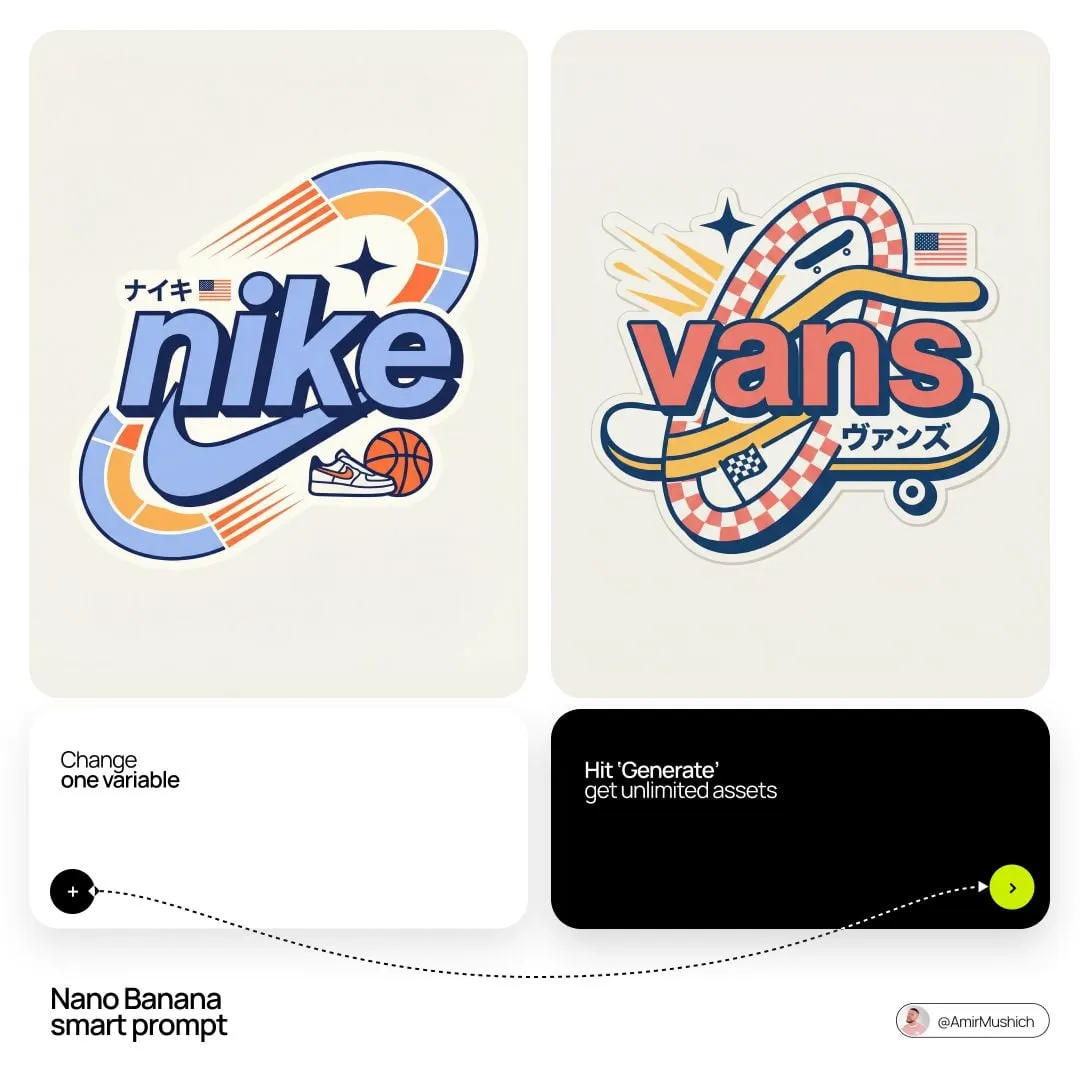
Change the camera speed, or the lighting, or the style word — never all three between runs. Otherwise you learn nothing about what caused the improvement, and you will not be able to reproduce the good take next week.
Motion and camera vocabulary that models respond to
Vocabulary is leverage. The right phrase collapses a paragraph into three words.
Movement, rate, and relationship to subject
Useful terms include: static locked-off shot, slow dolly in, dolly out, lateral tracking shot, crane up, tilt down, handheld follow, orbit around subject, rack focus, whip pan, aerial descent, and drone pullback. Pair each with a rate — slow, steady, quick — and with a subject relationship: following behind, approaching from the front, circling at chest height.
Words that cause chaos
The problematic words are the vague ones: dynamic, energetic, sweeping, cinematic movement, dramatic camera. They describe an emotional impression rather than a physical event, so the model guesses. If you want energy, specify the physical cause: quick handheld tracking with slight shake, subject crossing frame left to right in two seconds.
Shot sizes and angle conventions
Establishing wide, full shot, medium shot, medium close-up, close-up, extreme close-up. Low angle for power, high angle for vulnerability, dutch tilt for unease, over-the-shoulder for conversation. These conventions are widely understood and effectively free to use. Naming a shot size also helps control how much detail the model must invent, which reduces artifacts.
Consistency across shots
A single good clip is a demo. A sequence of consistent clips is a product, an ad, or a short film.
Reference frames, seeds, and locked descriptors
When the tool supports image-to-video, generate a still first, approve it, then animate from it. This gives you frame-level control that text alone cannot match. Where seeds are available, keep the same seed within a sequence and change only the shot-specific text. Treat your style block, wardrobe descriptions, and lighting phrases as constants — copy and paste them, do not paraphrase them.
Character sheets and wardrobe rules
Describe recurring characters once, in a reusable block: age range, hair, build, one distinctive garment with color, one accessory. Then insert that block verbatim into every prompt where the character appears. Vague continuity — the same woman as before — never works, because the model has no memory across generations.
Continuity in edits
Plan shot order before generating. Match eyelines, screen direction, and light direction between adjacent shots. If a character walks left to right in one clip, they should not walk right to left in the next unless you intend a reversal. Small continuity decisions like this are what make assembled AI footage feel intentional rather than accidental.
Matching prompts to different model families
Not all generators want the same prompt shape, and knowing the difference saves hours.
Text-to-video versus image-to-video
Text-to-video prompts need more environment and camera detail, because the model is inventing everything. Image-to-video prompts need less subject description and more motion description, because the frame already fixes the look. A common mistake is pasting a long text-to-video prompt into an image-to-video tool, which causes the model to fight its own starting frame.
Short-clip versus long-form engines
Clip-based engines excel at one clear action with one camera move. Longer-form or story-oriented pipelines reward structured beats with explicit transitions and continuity notes. If your tool supports scene descriptions with separate motion fields, use them instead of cramming everything into one paragraph.
When a stylized model is the wrong tool
Anime-tuned, painterly, or heavily stylized models will fight photoreal requirements no matter how many times you write photorealistic. If you need product accuracy — labels, logos, exact textures — generate the base image with an image model, correct it, then animate it minimally. Prompting harder is not a strategy.
Common prompting mistakes and how to fix them
The adjective avalanche
Symptom: beautiful, stunning, masterpiece, ultra detailed, 8K. Fix: delete every adjective that does not describe a physical property. Replace them with nouns and verbs the model can visualize.
Contradictory camera instructions
Symptom: static shot with dynamic handheld movement and a slow orbit. Fix: choose one primary move. Secondary micro-movements are fine only if they support the primary one.
Overloaded scenes
Symptom: three characters, two animals, a crowd, and a vehicle in a six-second clip. Fix: cut the cast list. If the story needs density, split it into multiple shots and cut them together in the edit.
Ignoring aspect ratio and duration
Symptom: a vertical social clip generated at widescreen, or a four-second action crammed into a two-second render. Fix: write the format into the prompt and check it in the tool settings every single time.
Trusting one take
Symptom: judging a prompt after a single generation. Fix: run three to five variations with the same prompt, then decide. Randomness is part of the medium; your job is to sample it deliberately.
Reusable prompt templates
These are skeletons. Replace the bracketed parts and keep the structure.
[Shot size], [angle], [primary camera move at a stated rate].
[Subject with one defining detail] [single action with a clear end state].
[Environment with one moving atmospheric element]. [Light source and quality].
[Two or three style anchors]. [Duration and aspect ratio].
No [constraint], no [constraint], no [constraint].
A finished cinematic product shot might read: Medium close-up, eye level, slow push in at a steady rate. A matte black espresso machine on a stone counter releases a thin ribbon of steam as a hand places a ceramic cup beneath the spout. Soft window light from the left, deep shadows on the right, dark walnut background. Clean commercial photography look, shallow depth of field, muted warm palette, six seconds, 16:9. No text overlays, no logos, no extra hands, no camera shake.
A character moment might read: Medium shot, slight low angle, static locked-off camera. A woman in a rust-colored wool coat stands at a rain-streaked window and slowly exhales, her reflection visible in the glass. Interior apartment at dusk, warm lamp light behind her, cool blue daylight in front. Naturalistic drama, 35mm grain, soft contrast, five seconds, 2.39:1. No extra people, no scene change, no facial distortion.
Notice how much of the work is done by nouns and verbs. The style layer is short on purpose.
Quality control checklist before you keep a take
Run the same checks every time so your standards do not drift with your patience.
- Does the first frame read clearly at thumbnail size?
- Does the action complete within the clip, with no cut-off half-gesture?
- Are hands, faces, and text-free surfaces anatomically plausible?
- Does the camera move match the instruction, or did the model improvise?
- Does the clip match the previous shot in light direction and color temperature?
- Would this shot survive a cut to the next one without a visual jolt?
- Is the motion motivated — does something in the scene justify the movement?
If a clip fails two or more checks, regenerate rather than trying to fix it in post. Repair work on generated footage usually costs more time than a fresh take.
Building a personal prompt library
Speed comes from reuse, not from inspiration. Keep a text file organized by shot type: product close-ups, establishing wides, character entrances, abstract transitions, dialogue over-shoulder shots. For each entry, store the full prompt, the model and settings used, and a still frame from the best take.
Review the library monthly and delete entries that no longer work as models update. Prompts age. A phrase that produced beautiful results six months ago may now be interpreted differently or ignored entirely. Treating prompts as version-managed assets rather than one-off messages is the difference between a hobby and a workflow.
Finally, save your failures with a short note about why they failed. A documented negative result is often more valuable than another mediocre success, because it stops you from repeating the same mistake under deadline pressure.
FAQ
How long should an AI video prompt be?
Long enough to cover the five layers, short enough that no layer repeats itself. In practice that is often 40 to 90 words. Length is not a virtue; specificity is. If you can remove a sentence without losing information, remove it.
Do negative prompts actually help?
They help with persistent, recognizable artifacts such as extra fingers, watermarks, text overlays, and unwanted camera shake. They help less with conceptual problems like a weak composition. Fix composition by rewriting the positive description, not by adding more negatives.
Why does the same prompt produce different results each time?
Generation is stochastic. Most tools sample from a probability distribution, so identical prompts yield variations. This is useful for exploration but frustrating for consistency — which is why seeds, reference frames, and locked style blocks matter so much in production work.
Should I write prompts in English?
Many models perform best with English because of training data distribution, but several handle other languages well. If you work in another language natively, test both: write in your language, then translate the same prompt and compare. Whichever gives more control is the right choice for your project.
How many variations should I generate before choosing?
Three to five for exploratory shots, two to three for shots that follow a locked style. Generate more when the action is complex and less when the frame is simple. Batch similar shots together so you can compare them side by side instead of judging from memory.
What is the fastest way to improve my prompts?
Keep a log. Record the prompt, the settings, and a one-line verdict for every generation. After twenty entries, patterns appear that no tutorial can give you, because they are specific to the models and subjects you actually use.
Prompting for AI video is a craft with a short feedback loop. Decide what the shot is, describe it in physical terms, control the camera with directional language, lock the look, and iterate one variable at a time. Do that consistently and the model stops feeling like a slot machine and starts behaving like a camera crew that needs clear direction.
