

Short-Form Video Is a Timing Discipline, Not a Tool Problem
Most creators who struggle with AI-generated vertical video do not have a tool problem. They have a rhythm problem. A short clip lives or dies inside the first two seconds, and every production decision — the prompt, the camera move, the first caption, the sound cue — exists to serve that opening beat. When people blame the model, they usually mean the model did not rescue a weak structure.
The practical answer is to stop treating generation as a single lucky prompt and start treating it as a pipeline. A pipeline has stages, checkpoints, and a place to fail cheaply. It also has a finishing line: the moment a clip is good enough to publish, which is almost never the moment it looks most impressive on a timeline.
This guide walks through a complete, tool-agnostic workflow for producing shorts and reels with AI assistance. It covers concept generation, prompt architecture, keyframe consistency, editing for vertical screens, fast iteration, and the quality checks that separate a scroll-stopper from a clip that gets abandoned at second three.
You can run the whole thing with one text-to-video generator or with a stack of them. What matters is that each stage has a defined input, a defined output, and a clear reason to exist.
The Anatomy of a Short That Holds Attention
Before any tool enters the picture, it helps to agree on what a good short actually is. Strip away the genre and most successful vertical clips share four structural parts:
- The hook. A visual or verbal interruption in the first one to two seconds. Motion, an unexpected object, a face mid-expression, or a bold text overlay.
- The escalation. A reason to keep watching. New information, rising tension, or a visual change every two to four seconds.
- The payoff. The resolution, reveal, or punchline. Without it, viewers feel cheated and stop following.
- The loop or handoff. An ending that either sends the viewer back to the start or points them to the next clip.
AI generation is extremely good at producing the middle — the escalation. It is mediocre at inventing hooks and payoffs on its own, because those depend on audience knowledge that lives in your head, not in the model.
That asymmetry should shape your workflow. Write the hook and the payoff yourself, in words, before you open any generator. Let the model handle motion, texture, and visual variety. This single division of labour removes more frustration than any settings tweak.
Stage One: Build a Concept Pipeline Instead of Chasing Ideas
Ideas are the least reliable part of short-form production. Waiting for inspiration is a losing strategy when you need to publish several times a week. Replace inspiration with a repeatable pipeline.
Capture Raw Material Continuously
Keep a running note with three columns: observation, tension, and format. An observation is anything you noticed today — a strange sign, a customer reaction, a visual pattern. Tension is why it matters or what is odd about it. Format is the shape you would give it: a reveal, a before-and-after, a countdown, a fake interview, a product close-up.
Score Ideas Before You Generate
Not every idea deserves a render. Score each one quickly on three axes from one to five:
- Clarity — could a stranger understand the premise within two seconds?
- Visual promise — does it suggest an image worth looking at, not just a sentence worth reading?
- Effort — how many generation attempts and edits will it realistically require?
Ideas that score high on clarity and visual promise but low on effort go first. This is how you keep a publishing cadence without burning entire days on a single clip.
Turn One Idea Into Five Variations
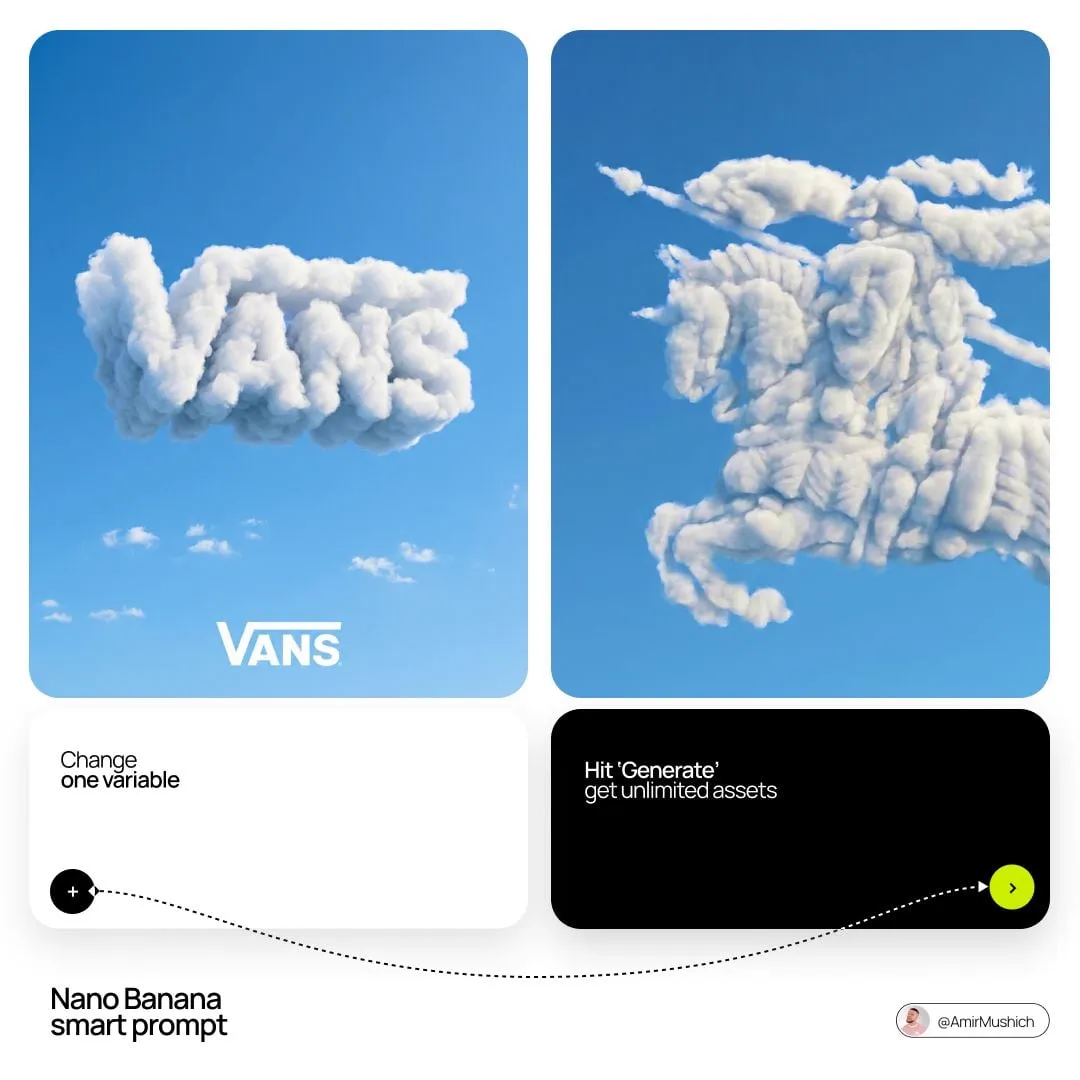
Once an idea passes, expand it into variants before you render anything. Change one variable at a time: the setting, the character, the camera angle, the time of day, the pacing. Five variants of one concept give you five testable hooks for the cost of one concept-development session. Creators who skip this step end up with a single clip they have emotionally over-invested in.
Stage Two: Write Prompts That Survive Real Generators
Text-to-video prompting rewards specificity about things the camera can see and restraint about things it cannot. Vague poetry produces drift; over-specified scripts produce stiff, mechanical movement.
Use a Shot-Level Prompt Structure
A reliable structure for a single shot has six slots:
Subject + action + environment + camera + lighting + style.
An example: a street vendor flipping a steel pan, steam rising against a wet asphalt street, slow push-in from chest height, sodium streetlights with warm falloff, gritty documentary realism with fine grain.
Every slot answers a question a cinematographer would ask. Notice what is absent: no emotional adjectives, no backstory, no camera brand names. Those belong in your head or in a separate brief, not necessarily in the generation input.
Separate Style From Content
Models handle style consistency better when style is described identically across every shot and content changes. Write your style block once — colour grade, lens character, film grain, era, mood — and reuse it verbatim. Then vary only the content block. This small habit dramatically improves how coherent a multi-shot sequence feels when assembled.
Write for Motion, Not for Stills
A prompt that describes a beautiful still image often produces a beautiful still image with almost no movement. If you need motion, name it: drifting, orbiting, pushing in, hands working, fabric moving, crowd passing. Two motion cues per shot is usually the sweet spot. More than that and the model starts averaging them into mush.
Keep a Prompt Library
Every prompt that worked is an asset. Store it with the output clip and a short note about what made it work. Within a few weeks you will have a personal reference set that outperforms any generic prompt collection, because it reflects your specific style, characters, and audience.
Stage Three: Keyframes, Characters, and Visual Consistency
Consistency is the hardest problem in AI video, and it is mostly solved before generation, not after.
Generate Keyframes First
Instead of asking a video model to invent a character from scratch, generate still keyframes first — a front view, a three-quarter view, and a detail shot. Approve them. Then animate from those approved frames, either by using image-to-video or by referencing them in your prompt workflow. The still image is cheap to regenerate; a five-second video clip is not.
Fuse Multiple References Carefully
When a tool supports multiple reference images, use them for complementary information rather than duplicates: one image for the face, one for the wardrobe, one for the environment. Feeding three near-identical portraits gives the model conflicting signals about which details are essential.
Accept Controlled Variation
Perfect consistency is not always desirable. For a stylised series, slight variation in costume or lighting can read as intentional craft. Define the elements that must never change (face, hair silhouette, signature prop) and let everything else move. This keeps a series recognisable without making it feel like the same render repeated.
Test Consistency Early
Before you commit to a twelve-shot storyline, produce three shots and watch them back to back. If the character drifts noticeably across those three, no amount of editing will fix the remaining nine. Rebuild the keyframes now.
Stage Four: Editing for a Vertical Screen
Generation ends the hard part and begins the important part. Vertical editing has its own grammar, and ignoring it wastes otherwise good footage.
Cut on Motion, Not on Beats Alone
On a tall screen, the eye tracks vertical movement and the centre of the frame. Cut when a subject is already moving, so the transition hides inside motion rather than landing on a static frame. Beat-matched cuts are useful, but motion-matched cuts feel more professional.
Design Captions as Part of the Frame
Captions are not an accessibility afterthought in short-form; they are the second script. Place them in the middle third of the frame, keep them to three to five words per line, and avoid the bottom quarter where interface elements will overlap. Use consistent typography so viewers learn your visual signature.
Sound First, Then Picture Polish
Choose a track and place your sound cues before you finish colour and effects. Dialogue, impacts, and transitions dictate where cuts should land. Creators who polish visuals first often re-edit everything once the audio arrives.
Respect the Crop
Compose for a 9:16 safe area from the start. Anything generated in a wide format should be re-framed deliberately — decide which part of the image is essential and animate the crop rather than centre-cropping and hoping.
Stage Five: Iterate Fast and Test Systematically
Speed is a workflow feature, not a personality trait. The goal is to move from idea to published clip without lowering the quality bar.
Batch Similar Work
Write all prompts in one session. Generate in another. Edit in a third. Switching modes costs attention, and context-switching is the main reason small teams feel slow.
Change One Variable Per Test
When a clip underperforms, most creators change everything at once. That teaches you nothing. Test one element: the hook frame, the first caption, the music, the pacing of the first three seconds. Run the same clip with two hooks on different days and compare retention past the three-second mark.
Define What Success Means
Views are a vanity number in isolation. Pick two metrics that reflect the behaviour you want — for example, three-second retention and saves. Optimise the hook for retention and the payoff for saves. Those two levers cover most of the practical ground.
Keep a Failure Log
Record which prompts drifted, which style blocks clashed, and which hooks fell flat. A short failure log prevents you from repeating expensive mistakes and quietly builds into a personal playbook.
Common Mistakes and How to Fix Them
Mistake: generating a full story in one clip. Fix it by splitting into shots. One generated clip should carry one idea and one camera move.
Mistake: writing prompts like ad copy. Fix it by removing persuasive language and describing what a camera would record.
Mistake: ignoring the first frame. Fix it by exporting the opening frame as a still and asking whether it would stop you mid-scroll. If not, regenerate or add a text overlay.
Mistake: over-rendering before editing. Fix it by generating a rough cut at lower quality, assembling it, then re-rendering only the shots that survive the cut.
Mistake: inconsistent visual identity. Fix it by locking a style block, caption font, and colour palette across a series.
Mistake: chasing every trend. Fix it by keeping a fixed proportion of your output on evergreen formats and a smaller share on reactive content.
Mistake: publishing without a hook check. Fix it by watching only the first two seconds on mute, on a phone, in daylight. That is the real viewing condition.
Pre-Publish Quality Control Checklist
Run this list before every upload. It takes under two minutes and catches most avoidable failures.
- The first frame is visually distinct and readable on a small screen.
- The first two seconds make sense with sound off.
- Motion appears within the first second.
- Captions stay inside the safe area and never clash with interface elements.
- Audio peaks are consistent; no clip is noticeably louder than another.
- The ending resolves the premise or sets up the next clip.
- The character or subject matches the rest of the series.
- The export is correct resolution, frame rate, and aspect ratio.
- The title and cover frame promise exactly what the clip delivers.
Frequently Asked Questions
Do I need multiple AI video tools to produce good shorts?
No. One model used skilfully beats five models used casually. Multiple tools help when they cover genuinely different strengths — for example, one for realistic footage and one for stylised animation — but the workflow, not the tool count, drives quality.
How long should a generated clip be?
Generate short and cut shorter. Two to five second shots give you the most editorial freedom. Long single clips are harder to control and usually lose motion coherence toward the end.
How do I keep a character consistent across many clips?
Build approved keyframes first, reuse an identical style block, and define the two or three features that must never change. Then verify consistency with a three-shot test before committing to a full series.
Is it worth writing prompts in a structured template?
Yes, at least at the start. Templates prevent you from forgetting camera, lighting, or motion. Once the structure is internalised, you can write faster and looser without losing the essentials.
How often should I publish?
Choose a cadence you can sustain for two months without dropping quality. Consistency compounds more reliably than volume, and a predictable rhythm makes batching far easier.
What if a clip looks good but performs badly?
Treat it as a hook problem before a quality problem. Keep the visual, replace the opening frame or first caption, and re-test. Most underperformance lives in the first two seconds.
Can AI handle the entire production process end to end?
It can handle generation, some editing assistance, captioning, and variation. Judgement — what is worth making, what the hook should say, when a clip is finished — remains the creator's job. That division is what makes the workflow fast rather than automated.
Where to Go From Here
Pick one stage from this guide and improve it this week. If your output feels random, build the concept pipeline. If your clips look inconsistent, rebuild your keyframes. If your retention is weak, rewrite the hook and test it against the original.
Improving one stage at a time compounds quickly. Within a month you will have a repeatable system — prompts, keyframes, edits, and checks — that produces vertical video on schedule without depending on luck, and that is the real advantage in a format where attention is the only currency that matters.
