
Why Prompting Decides the Quality of AI Video
Every generative video model, whether it renders a three-second product shot or a twenty-second narrative beat, performs the same underlying task: it translates language into motion. The model does not know what you meant. It only knows what you wrote. That single fact explains most of the gap between creators who get polished clips in two or three attempts and creators who spend an afternoon rerolling the same vague sentence.
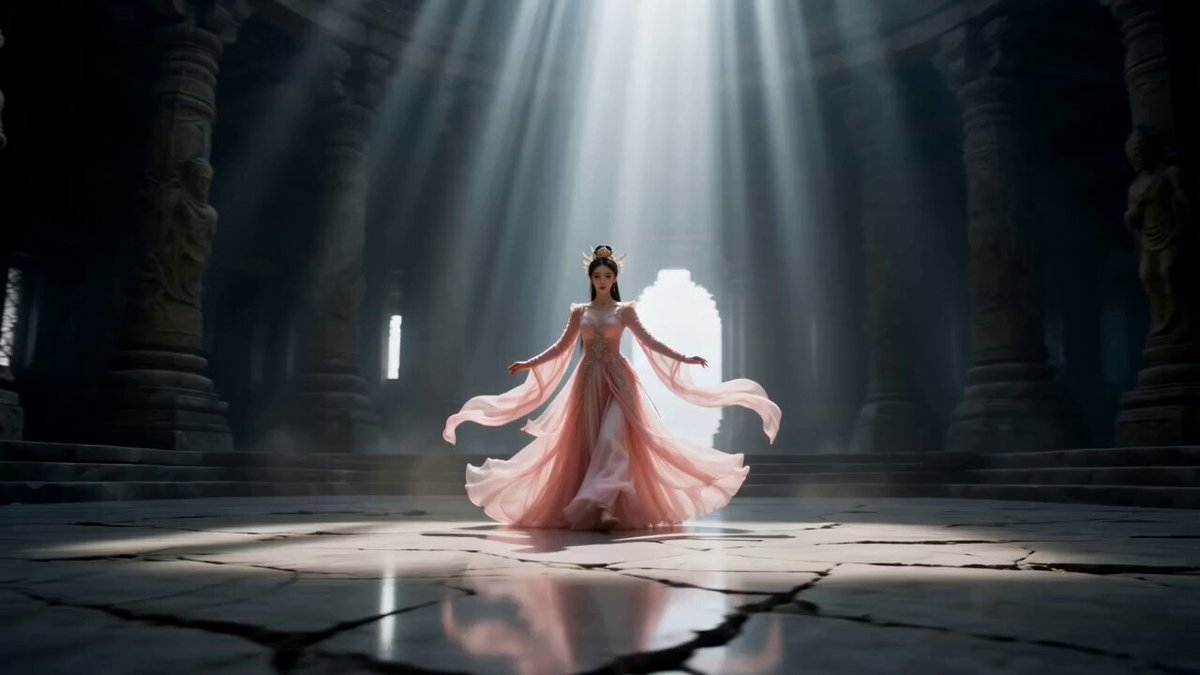
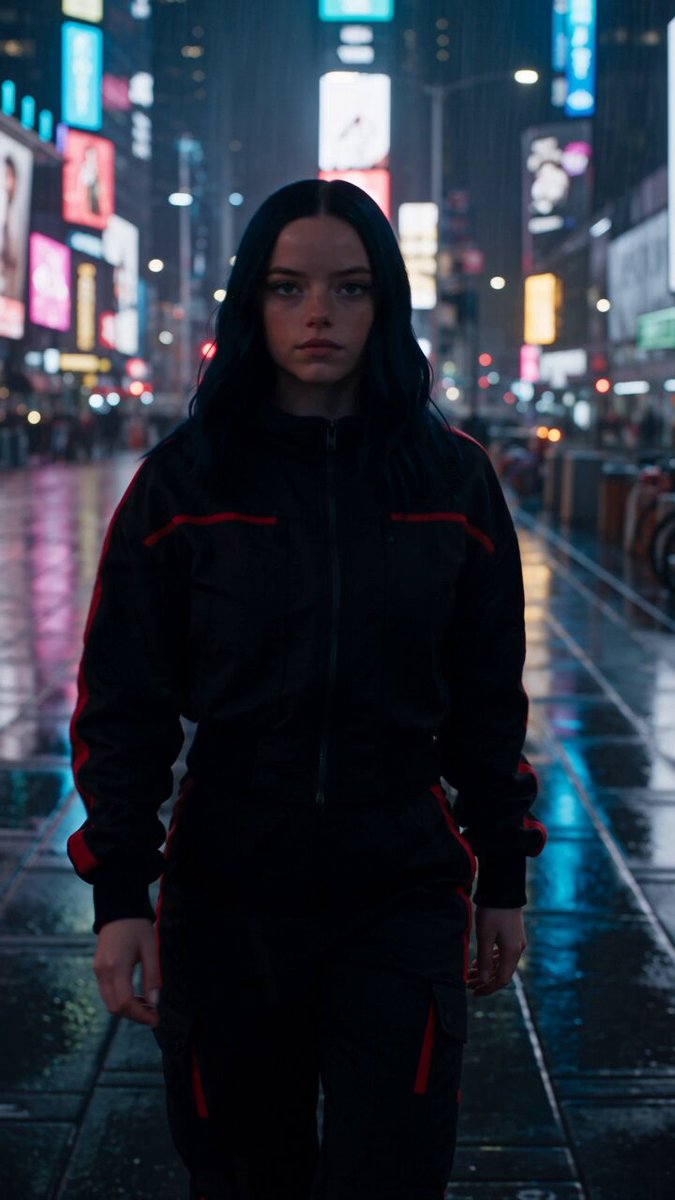
Prompting for video sits closer to screenwriting and cinematography than to keyword research. You are not describing a topic. You are directing a shot: who is on screen, what they do, where the camera sits, how the light falls, how long the moment lasts, and what must never appear. A prompt like "a woman walking in a city at night, cinematic" hands the model dozens of equally valid interpretations, and it will pick one arbitrarily. A prompt that specifies a subject with visible detail, a single continuous action, a camera position, a lighting direction, and a visual reference gives the model far fewer ways to disappoint you.
The second reason prompting matters is that video generation compounds errors. In still-image generation, a confusing prompt produces one confusing frame. In video, a confusing prompt produces a confusing frame repeated across dozens or hundreds of frames, plus inconsistent motion, flickering textures, and drifting identities. Small ambiguities become expensive. Getting the wording right at the start is cheaper than fixing it in post-production.
The Anatomy of a Strong Video Prompt
Think of a strong prompt as a set of layered blocks rather than a single flowing sentence. Each block answers one question for the model, and the order roughly reflects importance: subject, action, setting, style, camera, lighting, mood, and constraints. You do not need every block in every prompt, but knowing which block is missing makes troubleshooting much faster.
Subject and appearance
Describe the subject with enough specificity that two different artists reading your prompt would draw the same person. Hair length and color, approximate age, build, clothing fabric and fit, distinguishing features. "A middle-aged fisherman with a salt-stiffened beard and a faded yellow raincoat" gives the model something to anchor on. "A man" does not.
Action in a single beat
Video models handle one clear, continuous action far better than a sequence of events. "She turns her head slowly toward the window" works. "She turns, stands, picks up a cup, walks to the kitchen, and starts the kettle" will usually produce a muddled compromise where none of the actions complete properly. If you need multiple actions, generate them as separate shots and edit them together.
Setting and background detail
Backgrounds are where models silently improvise. Name the environment, the time of day, the weather, and one or two background elements that create depth. "A narrow cobblestone alley in Lisbon at dusk, wet from recent rain, laundry lines above" is a shot. "A street" is a slot machine.
Visual style and reference language
Style is shorthand for a large bundle of decisions about contrast, color grading, texture, and lens behavior. Use recognized references—documentary handheld, 1970s anamorphic, soft matte painting, clean commercial product photography. Naming a real film or photographer can work, but be aware that some platforms filter out trademarked names, so describing the look ("high-contrast black and white with heavy grain and hard shadows") is often more reliable than naming a source.
Camera language
Camera terms are among the most powerful tokens you can use because they are unambiguous. Static tripod shot. Slow dolly in. Handheld follow. Low-angle close-up. Aerial pull-back. Dutch tilt. Over-the-shoulder. If you do not specify camera behavior, most models default to a gentle drift that can look unintentional.
Lighting and color direction
State the source, direction, and quality of light. "Warm key light from a window on the left, soft shadow fill, cool ambient blue in the background" is actionable. "Good lighting" is not. Color direction can also be expressed as a palette or a contrast strategy.
A Reusable Prompt Formula
Once you have used the blocks a few times, you can compress them into a personal template:
[Subject with visible detail] + [single continuous action] + [specific setting and time] + [visual style reference] + [camera framing and movement] + [lighting direction and quality] + [mood] + [constraints]
A filled example might read: "A retired watchmaker in her seventies, silver hair pinned back, wearing a dark green apron, carefully tightening a tiny screw with brass tweezers; a cluttered wooden workbench in a small shop lit by one warm desk lamp; shallow depth of field, 50mm lens, slow push in; amber key light from the left, deep shadows on the right; quiet, focused mood; no text, no logos, no extra hands."
Notice what the formula does: every phrase eliminates options. Ambiguity is the enemy, not brevity. That said, more words are not automatically better. Each additional clause dilutes the weight of the others, so prune anything the model can infer from context. If the setting already implies the mood, drop the separate mood line.
Keeping Characters and Scenes Consistent
Consistency is the hardest unsolved problem in AI video, and it is where most projects actually fail. A prompt can be beautiful and still useless if the protagonist's face changes between shots.
Identity anchors
If your tool supports image-to-video or character reference inputs, use them. A clear reference image with even lighting, a neutral expression, and a plain background outperforms any amount of descriptive text. When you must rely on text alone, repeat the exact same descriptive phrase verbatim in every prompt for that character. Do not paraphrase. Small variations—"silver hair" in one prompt and "grey-haired" in the next—can produce a different person.
A character sheet you copy and paste
Maintain a short block of text that you paste unchanged into every prompt featuring that character: age, build, hair, eye color, skin tone, clothing, and one memorable detail. Add a second block for the location: architecture, palette, key props, and lighting setup. Treating these blocks as frozen assets is far more effective than rewriting them each time.
Environmental coherence
Shots that share a location should share light direction, color temperature, and weather. If shot one is golden hour from the left, shot three should not be midday from the right unless the story justifies it. Write down your lighting plan before you generate anything.
Continuity lists for props and wardrobe
Props are a classic failure point. A character holds a red mug in one shot and a blue one in the next because the prompt did not specify. Keep a simple continuity list: what is in the character's hands, what they are wearing, what is on the table, and where the light comes from. Check every prompt against it.
Directing Motion: Camera Moves, Physics, and Timing
Motion is where AI video most often looks artificial, and the cause is usually a prompt that describes content but not movement.
Specify camera motion and subject motion separately. "The camera slowly tracks right while the cyclist pedals steadily forward, wheels rotating, coat flapping" gives the model two independent motion instructions. Vague motion language like "dynamic" or "energetic" tells the model nothing about direction or speed.
Use adverbs sparingly but precisely: slowly, steadily, abruptly, gently. Speed words matter more than they seem, because they influence frame interpolation and the perceived frame rate of the result.
Respect physics that the model understands. Cloth, hair, smoke, water, and dust are handled well and add realism cheaply. Complex hand manipulation, crowds interacting, and objects being passed between people are handled poorly and should be avoided or split into simpler shots.
Keep clips short. A four-to-eight-second generation is far more controllable than a twenty-second one. Build longer sequences by editing several short, tightly specified shots rather than asking one prompt for a scene.
Negative Prompts and Constraint Control
Negative prompts are constraints. They work best when they target specific, recurring failure modes rather than broad concepts.
Useful negatives include: extra fingers, distorted hands, text, watermarks, logos, jitter, flickering, morphing faces, duplicated limbs, abrupt cuts, oversaturated colors, blurry background, warped architecture.
Counterproductive negatives include generic words like "bad" or "ugly," which do not map to any specific visual artifact, and long lists of contradictions that fight your positive description. If you want a moody low-key shot, do not add "dark" to your negatives simply because you also want some brightness somewhere.
Keep a personal negative list that grows over time. Every time a generation fails in a recognizable way, add that failure to the list. Over a few weeks, this becomes the most valuable asset in your workflow.
Choosing the Right Model and Iterating
Different models have genuinely different strengths, and matching the tool to the shot saves more time than any prompt trick.
General-purpose narrative models handle cinematic scenes, dialogue-adjacent moments, and stylized storytelling well. Specialized image-to-video models excel at animating an existing still with controlled motion. Fast drafting models are ideal for quickly testing composition and blocking before you commit to a slower, higher-quality render. Some tools are stronger at photorealism, others at illustration, anime, or product photography.
A practical selection rule: generate a cheap low-resolution draft first to check composition and motion, then re-run the same prompt at higher quality once the shot works. This two-stage approach costs less time than iterating on expensive renders.
When iterating, change one variable at a time. If you rewrite the subject, the camera, and the lighting simultaneously, you learn nothing about which change fixed the problem. Keep a log of prompt, settings, and result for the shots that matter.
A Repeatable Production Workflow
- Write a short shot list. One line per shot, one action per shot.
- Build frozen character and location blocks that you will paste unchanged.
- Write each prompt using the block formula: subject, action, setting, style, camera, light, mood, constraints.
- Generate a fast draft of every shot before polishing any single shot.
- Review the drafts for composition, motion, and continuity. Fix structural problems first.
- Re-render approved shots at higher quality, then assemble in an editor.
- Grade and sound-design last, because color and audio can mask small continuity flaws but cannot fix bad motion.
This order matters. Studios that polish shot one before drafting shot twelve usually run out of time and ship inconsistent work.
Common Mistakes and How to Fix Them
Problem: the subject's face changes between shots. Fix it with a reference image or a verbatim identity block. Never paraphrase character descriptions.
Problem: motion looks unnatural or rubbery. Remove secondary actions from the prompt, simplify camera movement to a single move, and shorten the clip.
Problem: the model ignores part of the prompt. Move the most important clause to the front. Many models weight early tokens more heavily, and long prompts push late details toward irrelevance.
Problem: hands and limbs are malformed. Reframe the shot so hands are out of frame, partially obscured, or occupied with a simple object. Add extra-fingers and distorted-hands to your negatives.
Problem: the output looks flat and generic. Add a style reference, a specific lens, and directional lighting. Generic results usually come from generic inputs.
Problem: cheap-looking texture and oversharpening. Lower the resolution requirement, reduce contrast-boosting keywords, and add film grain or soft-focus language to soften digital crispness.
Problem: the clip feels rushed. Add pacing words and specify that motion is slow and continuous. Time dilation in prompts is imperfect but directionally helpful.
Prompt Hygiene Habits That Compound
Save every prompt that produced a good result, along with the model and settings used. Build a personal library organized by shot type: close-up portrait, product rotation, landscape establishing, action beat, interior dialogue. Reusing a known-good prompt is faster than writing from scratch and keeps your visual style coherent across projects.
Keep a vocabulary list of camera, lighting, and texture terms you trust. Precision improves as your vocabulary improves, and most newcomers plateau simply because they only know five or six descriptive words.
Finally, treat each generation as a test rather than a lottery. Note what changed, note what improved, and revise the template. Prompting is a craft, and crafts improve through deliberate iteration rather than luck.
FAQ
How long should an AI video prompt be? Long enough to remove ambiguity, short enough that every clause earns its place. Forty to ninety words is a comfortable range for most models, with the most important details first.
Do negative prompts really help? Yes, when they target concrete artifacts such as extra fingers, watermarks, or flicker. They help much less when they target abstract qualities.
Can I get perfect character consistency with text alone? Rarely. Text-only consistency is approximate. Reference images, character training, and consistent seed values do far more work than clever wording.
Should I include technical parameters in the prompt? Only if the model accepts them. Frame rate, aspect ratio, duration, and seed are usually set in the interface, not the text. Keep the prompt for visual direction.
Why do my best prompts stop working? Models are updated, and behavior shifts. Save your prompts with notes about the tool version so you can adapt rather than assume the prompt was wrong.
Is it better to generate one long clip or several short ones? Several short ones, almost always. Short generations are easier to control, easier to redo, and easier to cut together into something that feels intentional.
How many attempts should a shot take? Two to four drafts is normal for a well-specified prompt. If you are on attempt twelve, the prompt or the model is wrong, not the random seed.
The core discipline is simple: describe the shot, not the idea. Every detail you supply is a decision the model no longer has to guess at, and every guess it makes is a chance for the output to drift away from what you saw in your head. Write like a director, keep your assets frozen, iterate one variable at a time, and the results will stop feeling like luck.
