
创作
How to Analyze Viral Video Trends on Streaming Platforms
Oct 16, 2026


Why Trend Analysis Beats Trend Chasing
Most creators find out about a trend when it is already peaking. They see a format everywhere, rush a version of it into production, publish three days late, and watch it underperform. The problem is rarely effort. It is timing plus a missing feedback loop.
Trend analysis is a discipline, not a vibe. It means separating a genuine shift in audience behavior from a temporary spike driven by one lucky post. It means knowing which signals predict longevity and which ones only look impressive in a screenshot of view counts.
The difference between chasing and analyzing comes down to three questions:
- Is the format repeatable? A single breakout video is an anecdote. Ten creators using the same structure with consistent results is a pattern.
- Does it survive translation? A trend that only works when one specific creator performs it is a personality trend, not a format trend. You can borrow the format; you cannot borrow the personality.
- Can you produce it inside your existing workflow? Trends that require a completely different production pipeline usually fail for teams, because the cost of adaptation exceeds the value of the moment.
This guide lays out a repeatable system: how to collect signals, score candidates, validate cheaply, adapt without looking derivative, and measure whether the effort paid off.
The Anatomy of a Trend: Signals, Velocity, and Half-Life
Every trend has a lifecycle, and the useful part of that lifecycle is short. Understanding the mechanics lets you decide quickly instead of guessing.
Signal types worth tracking
Not all evidence is equal. Rank your inputs by how early and how reliable they are:
- Format mutations — when a known format gets a new twist (new pacing, new transition, new audio treatment). Earliest signal, hardest to spot.
- Audio spikes — a sound or track suddenly appearing across unrelated niches. Strong signal, very short window.
- Comment-driven demand — viewers asking for a specific variation ("do the calm version", "part two please"). Slower signal, longer tail.
- Cross-platform bleed — something that started on one platform and is now appearing on another. Usually means the mainstream phase is beginning.
- Brand adoption — when large advertisers start using a format, the window for organic reach is closing.
Velocity and half-life
Track two numbers for any candidate trend: how fast it is spreading (velocity) and how long comparable trends have stayed relevant (half-life). A fast-spreading format with a historically short half-life is a sprint. A slow-spreading format with a long half-life is a compounding asset.
A simple heuristic:
- High velocity, short half-life: publish within 48 hours or skip it entirely.
- High velocity, long half-life: build a series, not a single video.
- Low velocity, long half-life: treat it as a format upgrade to your evergreen content.
- Low velocity, short half-life: ignore. These are the traps that consume planning time.
Reading Platform Algorithms Without Guessing
The exact ranking logic on any platform changes constantly and is never fully public. What stays stable is the behavior platforms reward: retention, rewatches, session continuation, and meaningful interaction.
Engagement signals that actually matter
- Retention curves. A flat curve with a small drop at the end is the strongest predictor of distribution. A cliff in the first three seconds is a hook problem, not an algorithm problem.
- Rewatch rate. Short loops with a satisfying ending get replayed, and replays are disproportionately valuable.
- Session continuation. If your video leads viewers into another video, the platform treats you as a good citizen.
- Saves and shares. Private shares are often a stronger signal than public likes, because they indicate intent rather than politeness.
- Comments with substance. Short praise comments are noise. Questions and disagreements signal depth of attention.
Distribution differences across platforms
Each platform has a different tolerance for polish, length, and pacing:
| Platform profile | Typical strength | What gets rewarded |
|---|---|---|
| Fast-scroll short-form | Reach and discovery | Instant hooks, clear payoff, native texture |
| Story-led short-form | Community and saves | Narrative tension, emotional resolution |
| Long-form video | Watch time and search | Structure, chapters, depth, clear value |
| Community feeds | Loyalty and conversion | Personality, consistency, behind-the-scenes |
When you adapt a trend, adapt it to the platform's default viewing posture. A format that works in a five-second scroll environment often feels rushed and hollow in a long-form context, and vice versa.
A Repeatable Workflow for Trend Research
This is the operational core. Run it weekly and it takes less than two hours once established.
Step 1: Build a trend intake board
Create a single place where signals land. Columns should include: source, date spotted, format description, example link, estimated velocity, estimated half-life, fit with your niche, and production cost.
Feed it from four directions:
- Your own analytics (what already over-performs for you)
- Direct observation of your niche on each platform
- Adjacent niches that share an audience but not a topic
- Format-level observation: transitions, editing rhythms, caption styles, sound design
Step 2: Score candidates
Score each candidate from 1 to 5 on four dimensions and multiply:
- Audience fit — would your core viewer care, or is this borrowed relevance?
- Execution fit — can you produce it well with current skills and tools?
- Timing remaining — how much of the window is left?
- Differentiation — do you add something, or just repeat?
A score under 40 usually means skip. Between 40 and 70, adapt heavily. Above 70, publish fast with a clear point of view.
Step 3: Validate with a micro-test
Never commit a full production cycle to an unvalidated trend. Micro-tests are cheap:
- One 15-second version posted natively, no cross-posting
- One story or community post asking which version people prefer
- One static mockup or storyboard shared in a community you own
The goal is not performance. It is signal: did the hook hold attention, did people ask for more, did the format feel natural in your voice?
Step 4: Produce the adaptation
Adaptation, not imitation. Keep the structural mechanics that make the format work — the hook shape, the rhythm, the payoff placement — and replace everything else with your own subject matter, visual identity, and tone. If a viewer can identify the original video you copied, you have adapted too little.
Step 5: Measure and archive
After 72 hours, log results against your baseline, not against the trend leader. Then archive the format in a reusable library: hook template, structure notes, sound reference, editing notes. Over time this library becomes your competitive advantage, because you can react in hours instead of days.
Creative Formats That Travel Well
Some formats move between niches with almost no friction. Others are locked to their origin. The ones that travel share a few traits.
Vertical, cinematic, and the polished-raw spectrum
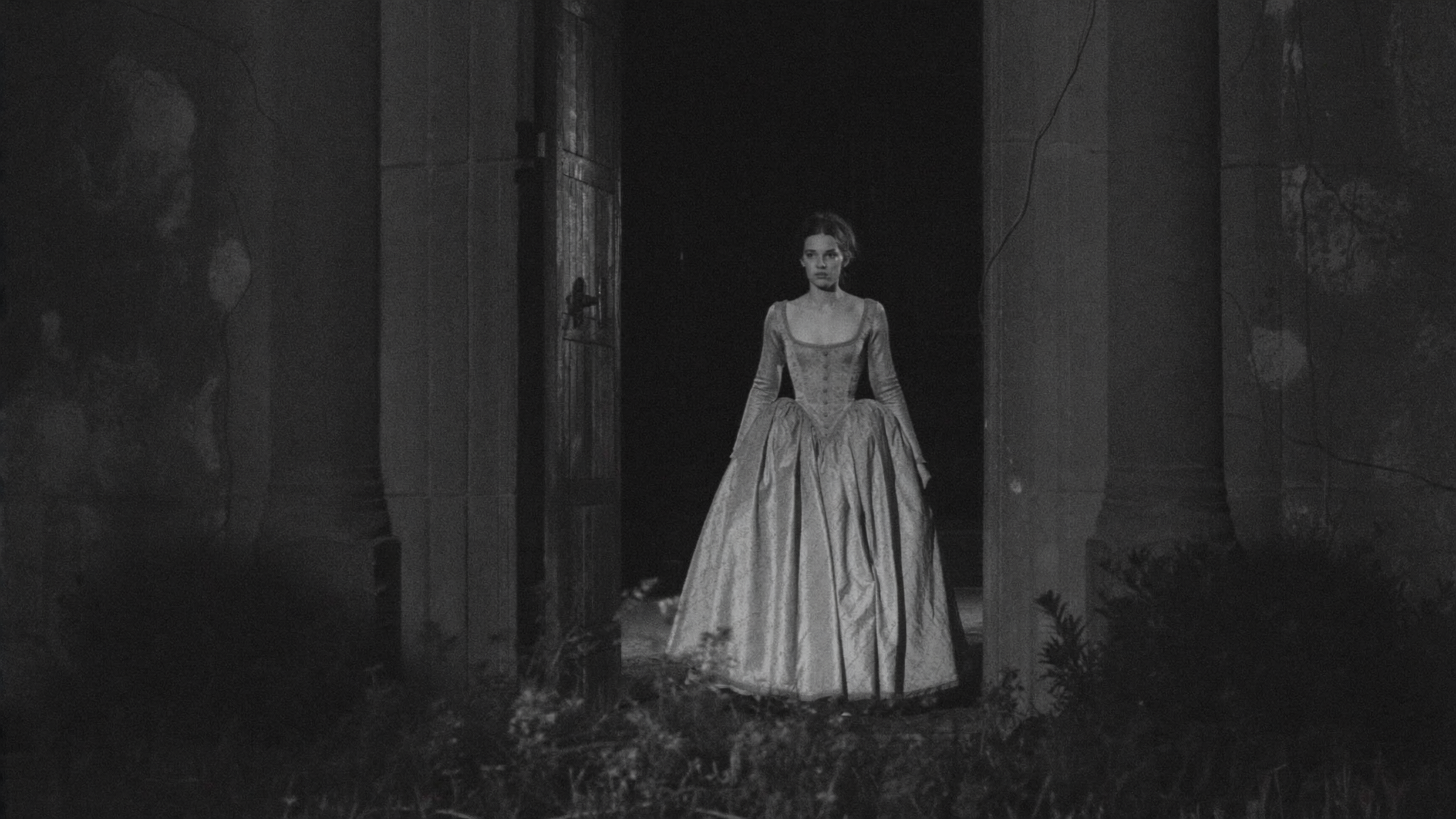
Short-form has moved past the assumption that everything must look like it was shot on a phone in a hurry. Audiences now respond to visual care: deliberate lighting, shallow depth of field, controlled color, and clean sound — compressed into a short runtime. The winning combination is cinematic craft at short-form pace.
In practice this means:
- Open on motion or a strong visual idea, not a static talking head
- Use one visual motif per video instead of five
- Keep grade and typography consistent so a series feels like a series
Fast narrative structures
Complex stories work in short runtimes if the structure is disciplined:
- Setup – turn – payoff in under 20 seconds
- Cold open then context (start at the most interesting second, then explain)
- List with escalating stakes (each item raises tension rather than repeating)
- Silent visual with captions (works across languages and muted autoplay)
- Loop design where the ending feeds the opening
The last one matters more than most creators realize. A loop that resolves cleanly converts casual viewers into repeat viewers, which is exactly the behavior platforms reward.
Using AI Tools in Trend Analysis and Production
AI is most valuable in trend work when it compresses repetitive steps rather than replacing judgment.
Where it genuinely helps:
- Transcription and clustering. Pull captions from competitor videos in your niche, cluster recurring phrases, and see which hooks are being reused. This surfaces patterns faster than manual scrolling.
- Volume analysis. Grouping hundreds of short videos by hook type, editing style, or audio track reveals structural patterns that no single watch-through would show.
- Storyboarding and previsualization. Turning a written format into a shot list or rough animatic before shooting saves entire production days.
- Iteration speed. Generating multiple hook variants, thumbnail concepts, or caption treatments lets you test more ideas inside the same budget.
- Localization. Subtitle and dubbing workflows make a validated format usable across multiple language audiences without re-shooting.
Where it hurts:
- Generic asset libraries that make every video look the same
- Over-polished synthetic visuals that break the native texture of a platform
- Automated trend lists that flag formats already past peak
The healthy division of labor: AI handles volume, speed, and variation; humans handle taste, timing, and point of view. A trend video with no perspective is just a repost with better lighting.
Localization and Cultural Fit
A format can be universal while its content is deeply local. Comedy timing, taboo subjects, slang, and reference points do not translate as cleanly as captions do.
When adapting a format for a new audience:
- Keep the mechanic, swap the context. The pause before the punchline may be universal; the punchline itself probably is not.
- Test the hook language first. Hooks carry the most cultural load. If the first three seconds feel foreign, nothing after it matters.
- Watch pacing expectations. Some audiences expect faster cuts and denser information; others expect more breathing room. A direct translation often feels either frantic or sluggish.
- Use subtitles as a design element. Caption placement, font, and rhythm are part of the format, not an accessibility afterthought.
- Respect the reference layer. Memes that rely on a specific local event should be rebuilt on an equivalent local event, not translated verbatim.
Teams that treat localization as a repackaging step rather than a creative step consistently underperform teams that rebuild the format for each audience.
Common Mistakes and How to Avoid Them
Mistake 1: Confusing reach with relevance. A format can produce huge numbers in a niche with no commercial or strategic value to you. Filter candidates through your audience, not through the leaderboard.
Mistake 2: Arriving late. If you first noticed a trend from a mainstream news article, the organic window is likely closed. Focus on format mutations instead of viral peaks.
Mistake 3: Copying the surface. Copying the editing style without understanding why it works produces content that looks correct and performs badly. Identify the underlying mechanic first.
Mistake 4: Abandoning your series. Trend-hopping breaks the continuity that builds an audience. Anchor trends inside an existing series so new viewers have somewhere to go.
Mistake 5: Measuring the wrong window. Judging a trend video after 24 hours punishes slow-burn formats. Judge short-form at 72 hours and long-form at two weeks.
Mistake 6: Ignoring production cost. A format that takes three days to produce is not worth a 48-hour window. Cost per validated idea matters more than cost per video.
Mistake 7: No archive. If you cannot recall which formats worked six months ago, you will rebuild the same research from scratch every quarter.
Decision Framework: When to Jump, Adapt, or Skip
Use this quick triage before committing resources:
- Jump now — high velocity, strong audience fit, low production cost, clear differentiation available. Publish within 48 hours.
- Adapt deliberately — strong fit but expensive production. Build it as a recurring segment rather than a one-off.
- Test small — uncertain fit but low cost. Publish one native version and read the retention curve.
- Skip — weak fit, high cost, or the window has already closed. Log it so the pattern is visible later.
The single most useful question: if this trend disappeared tomorrow, would this video still be worth publishing? If yes, you are building an asset. If no, you are renting attention for a week.
FAQ
How quickly do I need to publish to catch a trend?
For fast-scroll formats, 48 hours is the practical limit. For narrative or educational formats, a week is usually fine because the value comes from your interpretation, not from novelty.
How do I know a trend is real and not just one lucky video?
Look for at least three independent creators in different niches using the same mechanic with consistent results. One outlier is noise.
Should I use trending audio even if it does not fit my topic?
Only if the audio supports the emotional tone of your content. Mismatched audio reads as desperate and usually hurts retention more than it helps discovery.
Do AI-generated visuals hurt performance?
Not inherently. They hurt when they replace an idea rather than support one. Audiences forgive synthetic images; they do not forgive a video with nothing to say.
How many trends should I test per month?
Two validated adaptations per month is a sustainable rhythm for most solo creators and small teams. More than that usually means lower quality across everything.
What if my adaptation flops?
Treat it as data. Check the retention curve before blaming the format: a strong curve with weak reach means the trend was saturated, while a weak curve means the execution or the hook missed.
How do I avoid looking like I am copying?
Change at least two of these three: subject matter, visual identity, narrative angle. Keeping all three identical is copying, not adapting.
Measuring Success and Building a Trend Archive
Set a baseline before you experiment. Record median views, retention percentage, save rate, and share rate for your last twenty videos. Every trend test gets measured against that baseline, never against the trend leader's numbers.
The metrics that matter most in order:
- Retention at the three-second mark — did the hook work?
- Average watch percentage — did the body hold?
- Saves and shares — did it earn intent?
- Follows per thousand views — did it convert strangers into an audience?
- Raw views — useful context, least useful as a decision metric.
Then archive. For every test, record the format name, hook structure, runtime, production cost, and outcome. Within a few months you will have something more valuable than any trend report: a documented record of what your specific audience responds to.
Trends are inputs, not instructions. The creators who consistently win are not the fastest to react — they are the ones with a fast, cheap validation loop, a distinctive voice, and an archive that lets them recognize a repeat pattern the moment it appears. Build the loop, protect the voice, and the trends stop feeling like chaos and start feeling like a calendar.

Alexander
More Blogs
Read MoreVidu Q4 Alternatives: 4K AI Video Models Compared (2026)
Vidu Q4 alternatives compared: Kling 4.0, Seedance 2.5, Wan 3.0, and Runway Gen-4 — 4K support, input modes, durations, audio, and what each costs in credits on Domer.
Top 4K AI Image Generators in 2026: 5 Models Compared on Real Costs
The top 4K AI image generators on Domer compared: Flux 3 Klein, Nano Banana 2.1, GPT Image 2.5, GPT Image 2, and Nano Banana Pro — 4K credit costs, reference limits, and speed.
Nano Banana 2.1 vs GPT Image 2.5: Which Image Model Should You Use? (2026)
Nano Banana 2.1 vs GPT Image 2.5 Flare compared: credit costs per resolution, aspect ratios, reference images, text rendering, and which tasks fit each model.