
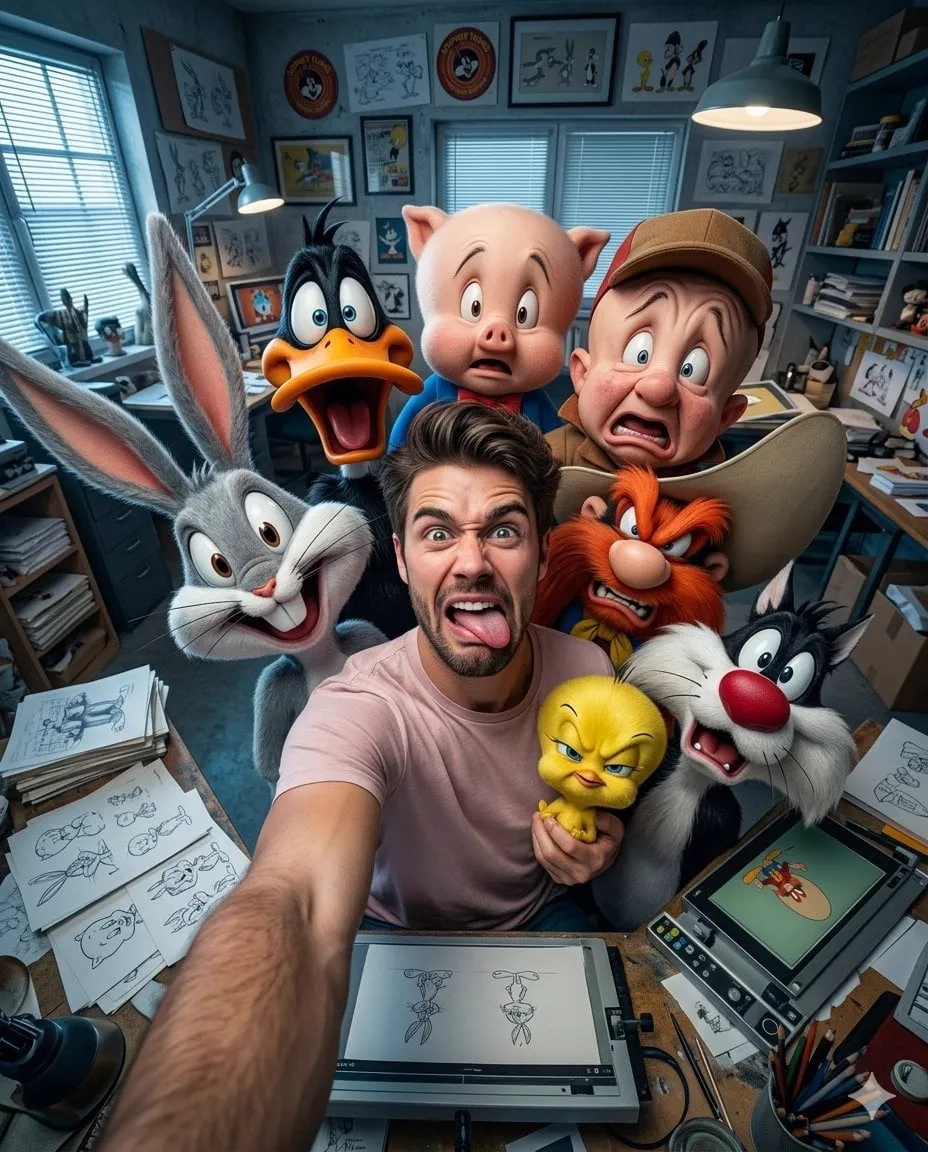
The Art of the Video Hook: Intros That Stop the Scroll
Oct 16, 2026
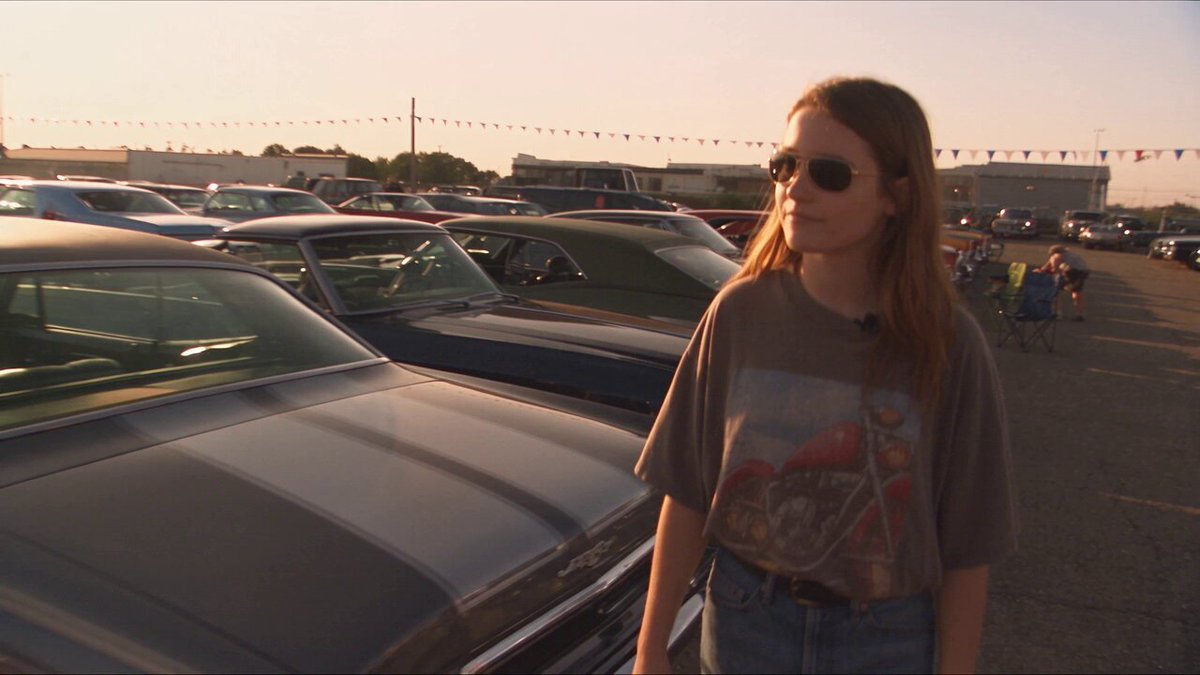

Why the First Three Seconds Decide Everything
A video is never judged as a whole. It is judged in fragments, and the smallest and most decisive fragment is the opening. On a vertical feed, the thumb moves before conscious thought. On a search-driven platform, the viewer is scanning for a reason to stay. In a sales or training context, the prospect is quietly deciding whether you understand their problem. In all three cases, the same gate opens or closes within roughly three seconds.
That window is short, but it is not random. Retention curves from almost any platform share the same shape: a steep drop in the first moments, then a flattening once the viewer has committed. Your job is to survive the steep part. Everything after that — the story, the tutorial, the pitch, the punchline — only matters if the opening earns the right to be watched.
Three forces make the opening so powerful:
- Feed competition. The next video is always one swipe away, and leaving costs the viewer nothing.
- Recommendation systems. Platforms measure early retention because it predicts overall watch time. Strong openings get distributed more widely; weak ones are quietly buried, no matter how good the middle is.
- Cognitive load. A new viewer arrives with zero context. Every second you spend on setup is a second they must invest before receiving value.
The practical conclusion is uncomfortable but useful: the hook is not decoration added at the end of production. It is a product decision that determines whether the rest of your work is ever seen. Teams that treat it that way — budgeting time for hook writing and testing the same way they budget for editing — consistently outperform teams that treat it as an afterthought.
The Psychology Behind a Hook That Works
Hooks are not magic phrases. They are small psychological events that occur in a predictable order. When you understand the mechanics, you can build them deliberately instead of hoping for inspiration.
Curiosity Gaps
A curiosity gap is the distance between what the viewer knows and what they want to know. The gap has to be opened in the first line and closed later in the video. "The best hook in this video happens at 4:12, and almost nobody notices it" works because it names a specific, verifiable-sounding moment and implies a payoff. "In this video I'm going to talk about hooks" does not work, because there is no gap — only an announcement.
The mistake most creators make is closing the gap too early. If you explain the answer in the first ten seconds, the viewer has no reason to continue. Delay resolution, not information. Give them enough to feel oriented, not enough to feel finished.
Pattern Interruption
Feeds are visually repetitive. Talking heads, stock footage, and gentle music blur together into a single texture. A pattern interrupt is anything that breaks that texture: a mid-action start, an unusual camera angle, a sudden silence, a hard cut from a wide shot to a macro shot, or a line delivered with unexpected bluntness.
Interruption is a tool, not a personality. It should serve the promise of the video. A random flashy transition that has nothing to do with the content buys you half a second and then loses the viewer when they realize there is no substance behind it.
The WIIFM Test
"What's in it for me" is the question every viewer asks, usually without words. Answer it early and concretely. Compare:
- Weak: "Today we're going to look at some ways to improve your videos."
- Strong: "Here are three edits that cut my average drop-off in half — the second one takes nine seconds to apply."
The second version names a benefit (lower drop-off), implies a method (edits), scopes the size (three), and reduces effort anxiety (nine seconds). That is a lot of work done by one sentence.
Emotional Stakes and Specificity
Vague hooks feel safe and perform poorly. Specific hooks feel risky and perform well, because specificity signals that the creator actually knows something. Numbers, named tools, timeframes, and consequences all increase perceived credibility. Emotion does the rest: curiosity, mild envy, relief, or the fear of making an avoidable error.
Anatomy of a Hook: Five Building Blocks
A hook is not a single sentence. It is a synchronized stack of five elements that all fire within the first few seconds. If any one of them contradicts the others, the viewer feels the friction even if they cannot name it.
- Visual anchor. The single image that tells the viewer what this is about. A finished dish, a broken part, a spreadsheet with a red number, a before/after split screen.
- Motion. Movement directs attention. Even a slow push-in or a hand entering the frame is enough to signal that something is happening.
- First spoken line. Seven to twelve words that open a loop, name a benefit, or challenge an assumption.
- On-screen text. A short caption that adds information rather than repeating the audio. If the audio says "three edits," the text can say which three.
- Sonic cue. Music, a whoosh, an abrupt cut to silence, or ambient sound that makes the opening feel intentional rather than accidental.
A quick breakdown of a working example: a cooking video opens on a hand pulling a pan from the oven (visual anchor and motion), the first line is "This is the only bread recipe you need if you own one bowl" (loop plus constraint), the text reads "one bowl · no knead," and the audio drops to a single sustained note. Five elements, all pointing at the same promise.
Format-Specific Hook Strategies
The same psychology applies everywhere, but the execution changes by format. A hook that crushes on a vertical feed can feel manic in a webinar, and a hook that works in a keynote can feel slow on a phone.
Vertical Short-Form
Assume the viewer has not decided to watch. Start at the moment of highest tension or clearest payoff. Skip greetings, skip context, skip the logo. If you need an intro, put it after the payoff has been teased. Text should be readable at arm's length, and the first frame should be identifiable even with the sound off.
The strongest short-form hooks usually do one of four things: show a result before explaining the process, state a contrarian claim, ask a question the viewer has actually asked themselves, or start in the middle of a physical action.
Long-Form Educational and Search-Driven Video
Here the viewer has already chosen you, which changes the job of the hook. You are no longer fighting for a swipe; you are confirming that they landed in the right place. Restate the promise, set the scope, and preview the structure. "By the end of this you'll be able to do X, Y, and Z, and I'll show the failure case at the end" works because it gives the viewer a reason to stay past the midpoint.
Product Demos and B2B Explainers
The hook should name the pain in the viewer's own vocabulary. A demo that opens with "welcome to our platform" wastes the most valuable seconds you have. A demo that opens with "your team spends six hours a week copying data between three tools" earns attention because it describes a Tuesday, not a feature list.
Ads and Social Commerce
The hook must survive muted autoplay and a skeptical audience. Lead with the transformation, the price reality, or the objection. Many high-performing product ads open by acknowledging the doubt: "Yes, this is another ad. Here's the one thing that actually changed after thirty days."
Podcast and Webinar Clips
Clip hooks live or die on the first spoken fragment. Cut into the sentence, not before it. If the speaker's point needs three seconds of setup, find a different moment. A useful rule: the clip should be understandable with no title card at all.
An AI-Assisted Hook Workflow
Generative tools have changed the economics of hook testing. You no longer have to commit to one opening and hope. You can produce a dozen variations, review them side by side, and pick based on evidence. Here is a workflow that holds up in practice.
Step 1: Write the Payoff First
Before writing any hook, write one sentence describing what the viewer gets at the end. If you cannot state it clearly, no hook will save the video. This sentence becomes the anchor for every variation you generate.
Step 2: Define the Audience and the Objection
Write down who is watching and what they are skeptical about. "Small business owners who have tried scheduling tools and abandoned them" is far more useful for generation than "marketers."
Step 3: Generate Twenty Hooks, Not Five
Use a language model to produce a broad spread of angles: contrarian, question-led, result-first, confession, list, and tension-based. Ask for variations in tone as well as structure. Twenty mediocre options are more useful than five polished ones, because you are hunting for angles, not final copy.
Step 4: Generate Visual Variants
Text-to-image and text-to-video tools make it possible to mock up three or four visual openings for the same script without a shoot. Generate a result-first shot, a problem-state shot, and a mid-action shot. Even rough visuals expose which framing reads instantly and which requires explanation.
Step 5: Assemble Three-Second Tests
Cut each hook as a standalone three-to-five-second clip with its own text overlay and audio cue. You are not evaluating the video; you are evaluating the opening as a unit.
Step 6: Review as a Contact Sheet
Watch all variants in a grid, muted, on a phone. The one you notice first is usually the one the algorithm will notice first. Then watch with sound. A hook should win in both conditions.
Step 7: Keep the Losing Variants
Store every hook that did not win. Hooks are reusable assets. A line that failed for a tutorial may be perfect for a product demo, a newsletter, or a thumbnail. Tag them by angle, format, and audience.
Prompt Patterns You Can Reuse
Good prompts for hook generation share a structure: role, audience, promise, constraints, and output format. Here are patterns that produce usable material rather than generic filler.
Script hook generator. "You are a short-form scriptwriter. Audience: [audience]. The video delivers: [payoff]. Write 15 opening lines under 12 words each. Use these angles: contrarian claim, question, result-first, mistake, unusual constraint. No greetings, no 'in this video,' no hype words."
Visual hook generator. "Describe four opening shots for a video about [topic] aimed at [audience]. For each, specify subject, framing, motion, and lighting in one sentence. Prioritize shots that communicate the topic without audio."
On-screen text generator. "Write six short text overlays for the first three seconds of a video about [topic]. Maximum six words each. Each overlay must add information the spoken line does not contain."
Objection-first generator. "List the top five objections [audience] has about [topic]. Convert each into a hook that names the objection directly in the first eight words."
Treat the output as raw material. Read every line aloud. Anything you would not say to a friend gets cut.
Testing and Measuring Hook Performance
A hook is a hypothesis. Testing it properly requires more discipline than most creators expect.
Metrics That Actually Reflect the Hook
- Three-second view rate. The clearest signal that the opening worked.
- Retention at 10 and 30 seconds. Shows whether the hook made a promise the body could keep.
- Retention curve slope. A flat curve after the first drop means the hook and the content match.
- Rewatches of the opening. A strong sign that the hook is doing narrative work.
- Saves and shares. Lagging indicators, but useful for evergreen content.
Designing a Fair Test
Change one variable at a time. If you swap the visual, the first line, and the music simultaneously, you learn nothing. Run three to five variants, give each enough impressions to stabilize, and do not draw conclusions from a few hundred views. Judge variants within the same audience, the same thumbnail style, and the same posting window where possible.
One more caution: a hook that wins in a test may not win in the wild. Small differences in view counts are noise. Look for consistent gaps — a variant that reliably holds ten percent more viewers is real; a one-off spike usually is not.
Common Mistakes That Kill Retention
Most weak openings fail for predictable reasons.
- The greeting. "Hey guys, welcome back" spends the most valuable seconds on a formality.
- The logo animation. Branding before value reads as a commercial.
- Too much context. Background information is useful only after the viewer cares.
- Bait without payoff. A hook that promises something the video never delivers trains viewers to leave early.
- Multiple promises. Three hooks in one opening means no hook at all.
- Unreadable text. Small, low-contrast, or fast-moving captions get ignored on phones.
- Bad audio. Distorted or unbalanced sound ends the session regardless of how good the first line is.
- Delayed visual interest. A static frame with a voiceover gives the eye nothing to hold on to.
The fix for nearly all of these is the same: cut the first five seconds, then see if the video still makes sense. If it does, you did not need them.
Building a Reusable Hook Library
Consistent output comes from systems, not bursts of creativity. Keep a running document organized by angle — contrast, curiosity, result, mistake, question — and add to it every time a hook performs well or fails instructively. Note the format, the audience, and the metric it moved.
Review the library quarterly. Retire hooks that have been overused, refresh ones that still resonate, and look for patterns in what consistently works for your audience. Over time, this turns hook writing from a gamble into a repeatable craft skill, and it makes AI generation far more effective because you can feed the model your own proven patterns instead of asking it to guess.
FAQ
How long should a video hook be?
Three to eight seconds is the practical range. Short-form hooks often land in two to four seconds; long-form hooks can stretch to fifteen seconds if they set scope and structure rather than tease. The limit is not time, it is patience: end the hook the moment the viewer has a reason to stay.
Can a hook be too aggressive?
Yes. Overselling creates a mismatch between the promise and the payoff, which shows up as a cliff in the retention curve a few seconds later. Match intensity to substance.
Do I need a hook for every video?
Every video that competes for attention needs one. Internal training videos and closed-community content can sometimes skip the tease, but they still benefit from an early statement of value.
How do AI tools fit into hook creation?
They are best used for volume and variety: generating many angles, mocking up visual variants, and drafting text overlays. The judgment about which hook is honest, on-brand, and deliverable stays with you.
What if my hook works but retention still drops?
The problem is usually the second beat, not the first. If viewers leave at ten seconds, the hook made a promise the next segment failed to advance. Rebuild the transition between the opening and the first substantive point.
Should I reuse a hook that worked before?
Reuse the structure, not the exact wording. Audiences notice repetition, and platforms reward novelty. Rotate proven angles through new specifics.

Alexander
More Blogs
Read MoreVidu Q4 Alternatives: 4K AI Video Models Compared (2026)
Vidu Q4 alternatives compared: Kling 4.0, Seedance 2.5, Wan 3.0, and Runway Gen-4 — 4K support, input modes, durations, audio, and what each costs in credits on Domer.
Top 4K AI Image Generators in 2026: 5 Models Compared on Real Costs
The top 4K AI image generators on Domer compared: Flux 3 Klein, Nano Banana 2.1, GPT Image 2.5, GPT Image 2, and Nano Banana Pro — 4K credit costs, reference limits, and speed.
Nano Banana 2.1 vs GPT Image 2.5: Which Image Model Should You Use? (2026)
Nano Banana 2.1 vs GPT Image 2.5 Flare compared: credit costs per resolution, aspect ratios, reference images, text rendering, and which tasks fit each model.