
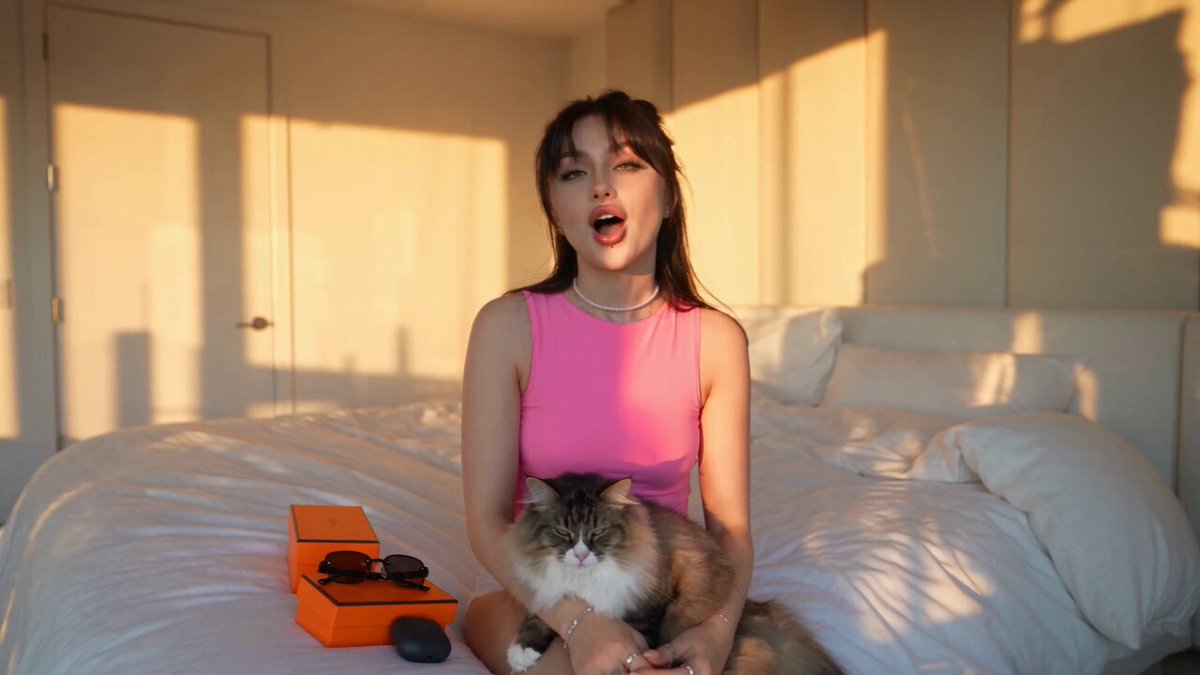
A prompt is not a wish. It is a specification. When you type one sentence into a text-to-video model and hope for the best, you are gambling with render time. When you build a layered specification — subject, action, camera, light, texture, sound, and constraints — you are directing. The difference is visible in the first frame and compounds across every clip that follows.
This guide covers a practical, model-agnostic approach to advanced prompting for AI image and video generation: how to structure prompts so results are predictable, how to describe motion in a way models can actually execute, how to keep characters and products consistent across shots, how to iterate without burning an afternoon, and which quiet mistakes sabotage otherwise strong generations.
Everything here is written to be reusable whether you work with cinematic text-to-video systems, fast draft models, image-to-video pipelines, or a mix of all three.
Start With the Outcome, Not the Description
Most weak prompts begin with the thing the creator finds interesting: a mood, a color, a vague visual idea. Strong prompts begin with the deliverable. Before writing a single word of prompt text, answer four questions.
First, where will this clip live? A nine-by-sixteen vertical ad watched on a phone with sound off has different requirements than a wide cinematic shot embedded in a long-form documentary. Aspect ratio, subject scale, and text-safe areas all follow from the destination.
Second, what must be true in the final frame? If the shot has to end on a product centered and lit, that is a constraint the model needs to know from the start, not a fix you apply afterward.
Third, how long is the shot and what is the single most important beat inside it? A four-second clip can carry one idea. Trying to fit three ideas into four seconds produces mush.
Fourth, who or what is on screen, and what has to stay recognizable about them? Face shape, hair, wardrobe, logo placement, bottle silhouette — pick the two or three identity anchors that must survive the generation.
Once you have those answers, the prompt almost writes itself. You are no longer describing a vibe; you are specifying a shot that satisfies a brief.
The Five-Layer Prompt Structure
The most reliable way to organize a video or image prompt is in layers, ordered from most to least important. Models weight the beginning of a prompt more heavily, so put the non-negotiables first and the polish last.
Subject and identity
Describe who or what is on screen with the same precision a casting sheet would use. Instead of "a woman," write "a woman in her early thirties with short dark curly hair, freckles, wearing an oversized beige linen shirt." Age range, hair, wardrobe, and one distinguishing detail are usually enough. For animals and objects, use material and form words: brushed aluminum, hand-thrown ceramic, wet asphalt, chipped paint.
Action and context
State what happens during the shot, using verbs that imply a duration. "She walks toward the window and stops" gives the model a beginning and an end. "She is walking" gives it a loop. Add the environment in the same sentence so subject and setting are linked rather than described separately: "walks across a rain-slicked rooftop toward a lit window."
Camera and lens
Camera language is the fastest way to upgrade output quality. Specify shot size (extreme close-up, medium, wide), angle (eye level, low angle, overhead), movement (slow push-in, handheld follow, locked-off tripod), and lens character (35mm, shallow depth of field, slight barrel distortion). One movement per shot is almost always better than two.
Light, color, and grade
Name the light source and its direction before naming the mood. "Single window light from camera left, soft falloff, warm practicals in the background" is more actionable than "moody lighting." Then add grade language: desaturated teal shadows, high-contrast black and white, pastel film emulation, clean commercial white.
Sound and negative constraints
If your model accepts audio direction, describe ambience and one diegetic sound — rain on metal, distant traffic, a door latch. Then list what you do not want: no on-screen text, no extra fingers, no lens flares, no slow-motion, no warped background signage. Negative constraints are cheap and prevent expensive re-renders.
Controlling Motion: What Moves and When It Stops
Motion is where text-to-video prompts most often fall apart. A common failure mode is a prompt that describes a beautiful still image and then asks for a video. The model has no idea what should change between the first and last frame, so it invents something — usually a slow drift or a morphing face.
Fix this by writing motion in three parts: primary motion, secondary motion, and camera motion.
Primary motion belongs to the subject: a hand lifting a cup, a dog shaking off water, a curtain pulling away from a window. Be specific about speed and endpoint. "Slowly lifts" and "lifts in one quick motion" produce visibly different results.
Secondary motion belongs to the environment: steam curling, grass bending in wind, hair moving slightly, rain hitting a puddle. Secondary motion is what makes an AI clip feel alive rather than frozen. Add one or two elements, not five.
Camera motion should be separate and singular. A gentle dolly-in combined with a handheld micro-shake reads as intentional. A dolly-in plus a pan plus a zoom reads as chaos.
Also decide how the shot resolves. Does the motion continue and get cut, or does it complete on screen? Ending motion, like a subject settling into stillness, gives editors a clean out-point and dramatically improves the perceived quality of a generated clip.
Consistency Across Shots Without a Character Sheet
Consistency is the hardest problem in AI video, and it is solved with three tools: reference images, locked descriptors, and a stable style block.
Reference images do most of the work. If your pipeline supports image conditioning, generate or photograph one strong reference for your character or product, then reuse it as the anchor for every subsequent shot. When a face reference is available, the model no longer has to invent features, which eliminates most drift.
Locked descriptors handle everything references cannot. Write a fixed string of identity words — hair, wardrobe, accessories, distinctive features — and paste that exact string into every prompt in the sequence. Do not paraphrase. The moment you change "short dark curly hair" to "dark wavy hair," you get a different person.
A stable style block keeps the visual world intact. Every prompt in a sequence should end with the same grade, grain, lens, and aspect specification. Think of it as the project's film stock. If shot one is "35mm, shallow depth of field, cool desaturated grade, 24fps feel," shot two must say the same thing.
A practical trick: build the prompt as a template with slots. Identity block, action slot, camera slot, environment slot, style block. Changing only the action and camera slots while keeping the other three constant gives you a sequence that cuts together cleanly.
First-Frame to Last-Frame Control
When your model supports keyframe conditioning, you gain a level of control that pure text prompting cannot match. You are no longer asking the model to invent a shot — you are asking it to interpolate between two known images.
Choosing keyframes
The first frame should establish composition and lighting. The last frame should establish the end state: subject position, expression, product angle. Keep the two frames visually compatible. If the first frame is a wide shot and the last frame is a close-up, the interpolation will produce a jarring push rather than a sane camera move.
Transition vocabulary
Once keyframes are set, the prompt becomes a description of the journey between them. Useful vocabulary includes "gradually," "in one continuous motion," "as the light shifts," and "settling into." Avoid stacking multiple simultaneous changes; if the subject moves and the light changes and the camera pushes, the interpolation has too much to solve and artifacts appear.
This workflow is especially strong for product reveals, before-and-after shots, costume changes, and any shot where a precise end composition matters for the edit.
Multimodal Prompting: Text, Image, Audio
The strongest modern pipelines let you combine inputs. Text describes intent, images define identity and style, and audio establishes timing. Learning to combine them multiplies your output quality.
Use text for what images cannot express: motion, duration, camera behavior, and constraints. Use images for likeness, palette, composition, and material. Use audio, when available, to drive rhythm — a clip generated against a music bed with clear beats tends to cut better than one generated in silence.
A useful rule is to never duplicate information across modalities. If your reference image already defines the wardrobe, do not spend prompt words re-describing it; spend those words on motion and camera instead. Prompts get diluted when every layer repeats the same detail.
Matching Prompt Style to Model Class
Not every model wants the same prompt. Broadly, there are three classes, and each rewards a different approach.
| Model class | Strength | Prompt style that works best |
|---|---|---|
| Cinematic / high-fidelity | Photoreal texture, complex lighting | Long, layered, camera-specific prompts with explicit grade language |
| Fast / draft | Speed, iteration volume | Short prompts with one subject, one action, one camera move |
| Image-to-video / conditioned | Consistency, control | Minimal text plus strong references and keyframes |
A practical workflow uses all three. Draft on the fast model to find the composition and timing, refine on the cinematic model once the shot structure is settled, and use conditioned models when a specific character or product must be preserved.
Decision criteria when choosing: how many shots you need, how tight the deadline is, whether likeness matters more than beauty, and whether the shot will be viewed at full screen or as a background element. A background texture does not need cinematic fidelity, and spending a long prompt on it is wasted effort.
An Iteration Loop That Converges
Prompting without a method becomes endless tweaking. Use a three-pass loop.
Pass one is structural. Ignore aesthetics entirely. Generate four to six variations and ask only: is the subject in the right place, is the motion plausible, is the shot size correct? Change one structural variable at a time.
Pass two is aesthetic. Once structure is right, freeze it and adjust light, grade, and texture. This is where words like "soft rim light," "matte finish," and "fine grain" earn their place. Keep the structural layer untouched so you can compare fairly.
Pass three is polishing. Fix small artifacts with negative constraints, tighten the ending, and confirm the clip cuts with its neighbors.
Throughout, log your prompts. Keep a simple table with the prompt text, the model, the settings, and a one-line verdict. After twenty generations you will have a personal reference library that is worth more than any generic tip list, because it reflects your specific subject matter and your specific toolchain. Also save seed values whenever the model exposes them; reproducing a good result later depends on it.
Common Mistakes and Reusable Templates
Mistakes worth eliminating
The most common error is adjective stacking: "beautiful, stunning, epic, cinematic, hyper-realistic, 8K." These words carry almost no information and consume prompt weight that could describe an actual camera or light.
Second is conflicting motion. Asking for a locked-off tripod shot and a sweeping crane move in the same prompt guarantees an unstable result.
Third is overloading. Ten subjects in a four-second clip means none of them read. Cut to one subject and one idea.
Fourth is ignoring physics. Water does not fall upward, fabric does not move without wind or body motion, and hair does not stay perfectly still in a storm. Prompts that respect cause and effect generate more believable footage.
Fifth is forgetting the edit. A clip that ends mid-motion is hard to cut. Design an out-point.
Templates to start from
Product demo: "[Product] on a matte stone surface, centered, shot at eye level on a 50mm lens, single soft key light from the left with a subtle fill, camera slowly pushes in, a hand enters from frame right and turns the bottle slightly, clean neutral grade, no text, no reflections of people."
Dialogue scene: "Medium two-shot of two people seated across a wooden table in a warm interior, eye level, handheld with slight breathing motion, natural window light with warm practicals in the background, the person on the left speaks and the person on the right nods once, shallow depth of field, film grain, no subtitles."
Atmospheric b-roll: "Wide shot of mist moving through a pine forest at dawn, locked-off camera on a 24mm lens, cool blue shadows with pale gold light breaking through, fog drifting left to right, faint bird ambience, no people, no text."
Each template follows the same five-layer order, which is the point: structure is repeatable, subject matter is not.
FAQ
How long should an AI video prompt be?
Long enough to specify the five layers, short enough that nothing contradicts. For fast draft models, two to three sentences is often ideal. For cinematic models, a dense paragraph of sixty to one hundred words works well. Length is not the goal; unambiguous coverage is.
Should I write prompts in English even if my project is in another language?
Most current models are trained predominantly on English descriptions, so English prompts tend to be more predictable, especially for camera and lighting vocabulary. Write the prompt in English and keep dialogue, on-screen content, and creative direction in your project language. If a model handles your language well and you get consistent results, there is no reason to switch.
Why does the same prompt give different results each time?
Randomness is part of the generation process. If your tool exposes a seed, lock it to reproduce a result. Otherwise, treat each generation as a variation and select from several rather than expecting determinism.
How do I stop faces from changing between shots?
Use an image reference for the character, keep an identical identity descriptor string in every prompt, and keep style blocks constant across the sequence. Avoid changing the wardrobe, hair, or lighting direction unless the story requires it.
Can I prompt for a specific camera move like a dolly zoom?
Complex compound moves are unreliable in text-only generation. Describe the simpler component the audience will actually notice — for example, a slow push-in with unchanged framing — and save compound moves for keyframe-driven workflows where the start and end compositions are provided.
What is the fastest way to improve my results?
Cut the number of ideas per clip to one, add a single camera move, name the light source, and write a negative constraint list. Those four changes fix the majority of disappointing generations before you touch any advanced technique.
The craft here is not memorizing magic phrases. It is learning to think like a director who has to hand a shot to a crew that has never met you: state the subject, the action, the lens, the light, and the limits, then iterate on one variable at a time. Do that consistently, and the model stops feeling unpredictable and starts feeling like a collaborator with a very literal imagination.
