

Why AI Video Model Selection Matters
In the rapidly evolving landscape of generative AI, video creation has moved from a novelty to a core production tool. Professional studios and independent creators alike are adopting AI-driven workflows at an unprecedented rate, with adoption among production teams surpassing the majority threshold. The driving forces are clear: faster prototyping, reduced post-production costs, and the ability to iterate on creative concepts without expensive reshoots. However, the abundance of AI video models available today presents a new challenge—choosing the right one for your specific needs.
This guide cuts through the hype by comparing the leading categories of AI video models across key dimensions: visual realism, temporal consistency, directorial control, and cost-efficiency. Rather than focusing on brand names, we’ll examine the underlying technologies and workflow implications so you can make an informed decision for your next project. Whether you’re producing short-form social content, episodic animation, or cinematic pre-visualization, understanding the trade-offs between premium, balanced, and specialized models will save you time and money.
The 2025 AI Video Landscape at a Glance
The past two years have seen an explosion in generative video capabilities. What began with short, low-resolution clips has matured into high-fidelity, multi-scene generation with nuanced control over camera movement, lighting, and character performance. Three broad tiers have emerged:
- Premium models prioritize photorealism and granular parameter control, often at a higher cost per second of generated footage.
- Balanced models offer a compromise between quality and affordability, making them ideal for rapid iteration and high-volume content.
- Specialized models target niche applications such as anime, 3D animation, or scientific visualization, where general-purpose models may struggle.
Understanding where each model type excels—and where it falls short—is the first step toward an efficient production pipeline. The rest of this article breaks down the technical differentiators, practical workflows, and decision criteria that matter most.
Premium Models: When Realism and Control Are Non-Negotiable
Premium AI video models are defined by their reliability in maintaining visual consistency and their advanced controls over output parameters. These models typically employ larger architectures, more extensive training data, and sophisticated temporal attention mechanisms. The result is footage that can pass as professionally shot, with natural motion blur, accurate lighting interactions, and minimal artifacts.
Key Strengths of Premium Models
- Photorealism: Skin textures, fabric details, and environmental lighting are rendered with high fidelity.
- Directorial control: Users can specify camera angles, lens type, depth of field, and even subtle performance nuances like micro-expressions.
- Scene continuity: Multi-shot sequences maintain character appearance, wardrobe, and set design without jarring shifts.
- Motion coherence: Complex actions—running, dancing, fighting—are generated with physically plausible physics and no ghosting.
Trade-offs to Consider
Premium models often come with higher computational costs, longer render times, and steeper learning curves. They may also require more detailed prompts or reference images to achieve optimal results. For projects where every frame must be flawless—such as commercial spots or feature-film pre-visualization—these trade-offs are justified. But for quick social media clips or storyboard animatics, the extra expense may not yield proportional benefits.
Example Workflow: Cinematic Product Launch
A typical premium workflow might start with a detailed shot list and character reference sheets. The director uses multi-image fusion to lock in the product’s appearance from multiple angles, then generates a series of short clips that are later assembled in an editor. Each clip is reviewed for consistency, and any deviations are corrected by adjusting the prompt or providing additional reference frames. This iterative process, while time-consuming, ensures a cohesive final cut that meets broadcast standards.
Balanced Models: The Sweet Spot for Speed and Affordability
Balanced models have gained immense popularity because they deliver acceptable visual quality at a fraction of the cost of premium tiers. They are particularly well-suited for content that prioritizes storytelling and pacing over pixel-perfect realism—think YouTube explainers, social media ads, and internal training videos.
Where Balanced Models Shine
- Rapid prototyping: Generate multiple variations of a scene in minutes to test narrative flow.
- High-volume production: Produce dozens of clips per day without breaking the budget.
- Stylized aesthetics: Many balanced models excel at painterly or illustrative styles, masking any lack of photorealism.
- Accessibility: Lower hardware requirements and simpler interfaces make them accessible to beginners.
Limitations and Workarounds
Balanced models may struggle with complex hand movements, intricate facial expressions, or rapid camera pans. They can also exhibit temporal inconsistency, where a character’s features subtly change from frame to frame. To mitigate these issues, creators often:
- Use shorter clip durations (2–4 seconds) and stitch them together.
- Apply post-processing stabilization or interpolation.
- Combine balanced models with upscaling tools to enhance final output.
- Leverage style transfer to turn artifacts into intentional artistic choices.
Example Workflow: Social Media Ad Series
A marketing team needs ten variations of a 15-second ad for A/B testing. They use a balanced model to generate each variation, tweaking the prompt to alter the setting, actor demographics, and product placement. The clips are then quickly edited with captions and music. The entire batch is produced in a single afternoon, allowing the team to launch tests immediately and iterate based on performance data.
Specialized and Niche Models: Innovation at the Edges
Beyond the general-purpose tiers, a growing number of specialized models cater to specific genres or technical requirements. These models often incorporate domain-specific training data and architectural tweaks that give them an edge in their niche.
Anime and Stylized Animation
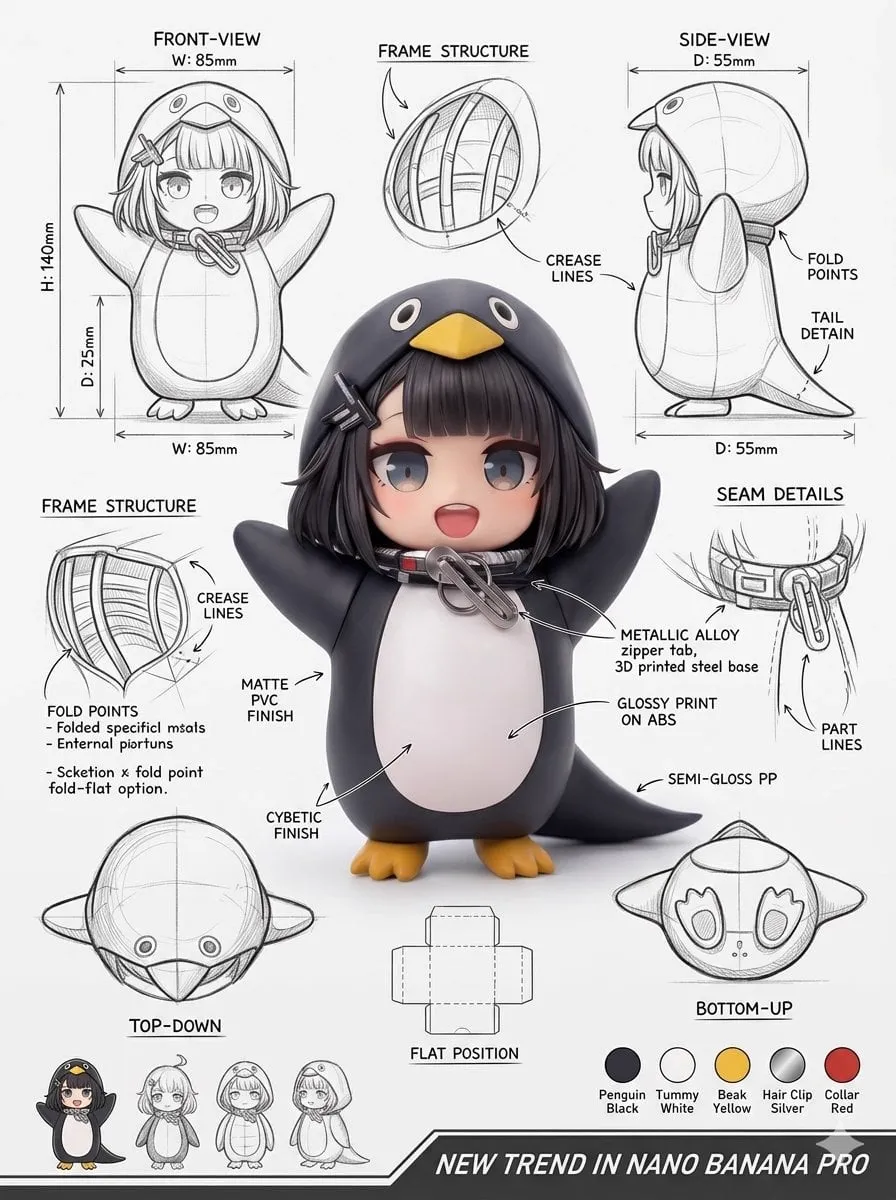
Anime generation has seen remarkable progress, with models capable of producing the distinctive line art, cel shading, and expressive character designs associated with Japanese animation. Some specialized models can even generate "sakuga"-style sequences—rapid, high-energy cuts with dynamic camera angles—at frame rates that mimic traditional animation. Creators in this space often combine multiple models: one for character design, another for background art, and a third for animation, then composite the results.
3D and VFX-Oriented Models
For projects requiring integration with 3D pipelines, certain models output depth maps, normal maps, or camera tracking data alongside the generated video. This allows seamless compositing with CGI elements or live-action footage. These models are invaluable for pre-visualizing complex VFX shots before investing in expensive practical effects.
Scientific and Data Visualization
Niche models also exist for scientific visualization, such as simulating fluid dynamics, molecular interactions, or astronomical phenomena. While not typically used for entertainment, these tools demonstrate the versatility of generative video and may find crossover applications in educational content.
When to Choose Specialized Models
If your project falls squarely into one of these niches, a specialized model will almost always outperform a general-purpose one. However, be prepared for a smaller community, less documentation, and potentially higher costs due to lower economies of scale. It’s often wise to prototype with a general model first to validate the concept, then switch to a specialized model for final production.
The Technology Behind Consistency: Keyframe and Multi-Image Fusion
One of the greatest challenges in AI video generation is maintaining visual consistency across frames and shots. Early models produced flickering, morphing characters that broke immersion. Today, advanced techniques like keyframe generation and multi-image fusion have largely solved this problem.
How Keyframe Generation Works
Keyframe generation involves creating a series of still images that represent critical poses or moments in a sequence. The AI then interpolates between these keyframes to produce smooth motion. This approach gives creators precise control over composition and timing while reducing the computational load compared to generating every frame from scratch.
The Role of Multi-Image Fusion
Multi-image fusion takes keyframe generation a step further by allowing the model to reference multiple images simultaneously. For example, you can provide front, side, and back views of a character, and the model will maintain a consistent appearance regardless of the camera angle. This is particularly powerful for scene continuity, as it ensures that props, costumes, and environments remain stable across cuts.
Techniques for Character Consistency
The latest models employ several strategies to keep characters looking the same throughout a video:
- Identity embeddings: A numerical representation of a character’s face is extracted from reference images and injected into the generation process.
- Temporal attention: The model learns to attend to features that should remain stable over time, such as eye color or clothing patterns.
- Pose-conditioned generation: By supplying a skeleton or pose sequence, the model focuses on rendering appearance rather than guessing motion.
- Fine-tuning: Some platforms allow you to fine-tune a model on a specific character, further improving consistency at the cost of longer setup.
Practical Tips for Better Consistency
- Always provide high-quality reference images with even lighting and neutral expressions.
- Keep clip lengths short when introducing new characters; gradually increase duration as the model stabilizes.
- Use the same seed value for related shots to reduce random variation.
- Review each clip at full speed and at frame-by-frame level to catch subtle inconsistencies early.
Cost Optimization: Balancing Quality and Budget
AI video generation can become expensive quickly, especially when using premium models or generating long sequences. Smart cost management is essential for sustainable production. Here are strategies to optimize your spending without sacrificing quality.
Understand Your Pricing Model
Most platforms use either a subscription model or a usage-based system. Subscriptions offer predictable monthly costs and are ideal for teams with steady production volume. Usage-based systems charge per generation or per second of video, which can be more economical for sporadic projects but requires careful monitoring to avoid surprises.
Optimize Generation Parameters
- Resolution: Generate at lower resolution for drafts, then upscale only the final approved clips.
- Duration: Use short clips (2–4 seconds) and stitch them together; this often costs less than generating a single long clip.
- Iterations: Limit the number of variations per shot by refining your prompt before hitting generate.
- Batch processing: Some platforms offer discounts for bulk generation; plan your shots to take advantage.
Leverage Free Tiers and Trials
Many services offer free tiers or trial periods. Use these to test different models and identify which one works best for your style before committing financially. Keep a spreadsheet of your results—quality, time, and cost—to make data-driven decisions.
Hybrid Workflows
Combine models to balance cost and quality. For example, use a balanced model to generate the bulk of a scene, then use a premium model to regenerate only the hero shots that need extra polish. This hybrid approach can cut costs significantly while maintaining high production value.
Platform and Ecosystem Considerations
The choice of AI video model is often intertwined with the platform you use. Platforms differ in their model offerings, user interfaces, collaboration features, and integration capabilities. Evaluating these factors is as important as comparing model outputs.
Access Models: Subscription vs. Usage-Based
Subscription platforms typically provide unlimited or high-volume access to a suite of models for a flat monthly fee. This suits teams that generate video daily. Usage-based platforms charge per generation, which can be better for freelancers or those with fluctuating workloads. Some platforms offer hybrid plans that include a base subscription plus additional usage fees.
Collaboration and Asset Management
If you work in a team, look for platforms that support shared workspaces, version history, and commenting. The ability to review and annotate clips directly within the platform can streamline feedback loops and reduce email chains. Asset management features—such as tagging, search, and cloud storage—become critical as your library of generated clips grows.
Integration with Editing Suites
Seamless integration with popular video editors (e.g., Adobe Premiere Pro, DaVinci Resolve, Final Cut Pro) can save hours of manual exporting and importing. Some platforms offer plugins or APIs that allow you to generate clips directly from your editing timeline. Check for support of standard file formats and metadata preservation.
Community and Support
A vibrant community can be a lifesaver when you encounter technical issues or need inspiration. Look for active forums, Discord servers, or official support channels. Documentation quality and response times also vary; prioritize platforms with a reputation for helpful support.
Decision Framework: Choosing the Right Model for Your Project
With so many options, it helps to have a structured approach. Use the following framework to narrow down your choices.
Step 1: Define Your Project Requirements
- Output quality: Does it need to be photorealistic, or is a stylized look acceptable?
- Duration: Are you creating a 15-second ad or a 10-minute narrative?
- Consistency needs: Will the same character appear across multiple scenes?
- Deadline: How quickly do you need the final video?
- Budget: What is your maximum spend per project?
Step 2: Match Requirements to Model Tiers
- Premium: Best for photorealistic, high-consistency, short-to-medium duration projects with ample budget.
- Balanced: Ideal for stylized, fast-turnaround, high-volume content with moderate budget.
- Specialized: Necessary for niche genres (anime, 3D, scientific) regardless of budget.
Step 3: Test Before You Commit
Generate a few test clips with each candidate model using the same prompt and reference images. Evaluate:
- Visual quality and artifact levels
- Motion smoothness and physical plausibility
- Consistency across multiple generations
- Speed and ease of use
- Cost per clip
Step 4: Build a Scalable Workflow
Once you’ve selected a model, document your prompt templates, reference image guidelines, and post-processing steps. This ensures that anyone on your team can reproduce results and maintain quality as production scales.
Frequently Asked Questions
Q: Can I use AI-generated video for commercial projects?
A: Generally yes, but you must review the terms of service of the specific model and platform you use. Some models restrict commercial use or require attribution. Always check licensing before publishing.
Q: How do I improve the realism of AI-generated video?
A: Start with high-quality reference images, use a premium model, specify camera details in your prompt (e.g., "shot on 35mm lens, shallow depth of field"), and consider post-processing with color grading and film grain.
Q: What is the biggest challenge in AI video generation today?
A: Maintaining temporal consistency—ensuring characters and objects look the same across frames and shots—remains the primary technical hurdle, though recent advances in keyframe fusion have significantly improved results.
Q: How long does it take to generate a typical clip?
A: Depending on the model and resolution, generation can take anywhere from a few seconds to several minutes per second of video. Premium models often take longer due to higher computational demands.
Q: Can I combine multiple AI models in one project?
A: Absolutely. Many creators use a balanced model for background plates, a premium model for hero characters, and a specialized model for effects or stylized sequences, then composite them in an editor.
Future Trends and What to Watch
The field of AI video generation is advancing at a breathtaking pace. Keeping an eye on emerging trends will help you future-proof your skills and workflows.
Real-Time Generation
We are on the cusp of real-time AI video generation, where models can produce frames fast enough for interactive applications, live streaming, or virtual production. This will open up new creative possibilities, such as improvisational storytelling and dynamic virtual sets.
Improved Control Interfaces
Expect more intuitive controls for directing AI-generated scenes. Instead of writing complex prompts, creators may use spatial interfaces, sketch-based tools, or even performance capture to guide the AI. This will lower the barrier to entry and allow for more precise artistic expression.
Ethical and Legal Developments
The rapid adoption of AI video has raised concerns about deepfakes, copyright, and consent. Regulatory frameworks are evolving, and platforms are introducing safeguards like watermarking and content provenance. Staying informed about these developments is essential for responsible creation.
Integration with AR and VR
AI-generated video will increasingly be used in augmented and virtual reality experiences. The ability to generate immersive environments on the fly will revolutionize gaming, education, and training simulations.
Conclusion: Making the Right Choice for Your Creative Vision
The AI video landscape offers an incredible array of tools, each with its own strengths and weaknesses. By understanding the distinctions between premium, balanced, and specialized models, and by applying a structured decision framework, you can select the approach that best aligns with your creative goals and production constraints. Remember that the best model is not always the most expensive one—it’s the one that fits your project’s specific needs for quality, speed, consistency, and cost. Stay curious, experiment with different options, and refine your workflow as the technology continues to evolve. With the right model in your toolkit, you can unlock new levels of storytelling and efficiency in your video productions.
