
Affiliazione
Inizia Gratis Ora
How to Advertise Video Services With AI Marketing Workflows
Oct 15, 2026

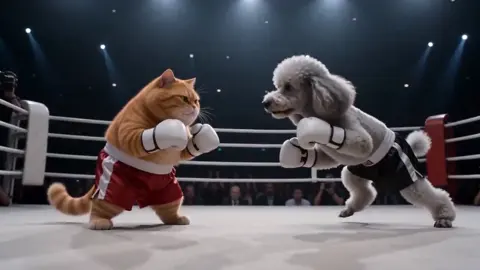
Video production studios sell craft, storytelling, and taste, yet many of them market themselves with a showreel, a services page, and optimism. That mismatch is expensive. Buyers now discover production partners inside social feeds, search results, and connected-TV ad breaks, which means your own marketing has to survive the same scrutiny you apply to client work. AI did not invent that pressure, but it did change what is possible: faster creative iteration, sharper audience definition, and continuous optimization loops that used to require a media agency retainer.
This guide walks through how to advertise video services with AI assistance, from the first creative concept to the weekly optimization cadence. It is written for working producers, editors, and studio owners who want a repeatable system rather than a pile of tools.
Why Video Service Advertising Is Now a Systems Problem
A decade ago, selling production was largely a relationship business. A client saw a portfolio, trusted a referral, and negotiated a scope. Relationships still matter, but the discovery layer has moved. Prospective clients scroll past dozens of polished clips before they ever land on your website, and they judge your studio by how your own content performs in that environment.
That shift creates three structural changes worth designing around.
Creative volume beats creative perfection. A single hero film is a fragile bet. The studios that win attention produce a steady stream of shorter, sharper pieces that test different hooks, formats, and audiences. AI makes this affordable because the incremental cost of a variant drops dramatically once the base assets exist.
Message fit matters as much as production value. A beautifully shot clip aimed at the wrong buyer is a wasted impression. Segmentation, personalization, and offer-specific creative do more for conversion rates than another half-stop of lighting.
Feedback loops compress. Performance data now arrives within hours, not quarters. The question is whether your workflow can absorb that feedback and produce a revised creative concept before fatigue sets in.
AI belongs in all three layers, but it belongs as an accelerator, not as an author. The judgment calls, positioning, tone, client relationship, and final polish remain human. What changes is the distance between an idea and a testable version of that idea.
Building an AI-Assisted Creative Engine
The creative engine is the part most studios underinvest in. They treat their own ads as a side project squeezed between client deadlines. A better approach is to run your studio marketing like a small, permanent content operation with defined inputs and outputs.
Producing ad variations without extra shoot days
Start with one deliberate production day that captures more than you need. Shoot vertical and horizontal simultaneously, record clean plates without talent, grab product or set details, and capture at least three distinct opening hooks. From that single session you can generate eight to fifteen ad variants using AI-assisted editing:
- Reframing tools that intelligently crop horizontal footage into vertical and square formats
- Generative fill for extending backgrounds when aspect ratios change
- AI voice tools for alternate narration tracks in different tones or languages
- Automatic captioning and transcript-based editing for fast cutdowns
- Color and style matching so variants feel like one brand rather than a scattered portfolio
Before the shoot, use image and video generation tools to build mood boards, storyboard frames, and rough animatics. Iterating on a storyboard that took twenty minutes beats discovering a structural problem on set.
Personalizing the message, not just the visuals
Changing a logo is not personalization. Real personalization changes the first three seconds: the problem being named, the vocabulary used, and the proof shown. A production studio can run the same base footage with different openings for e-commerce brands, SaaS teams, real estate developers, and healthcare organizations, then match each opening to a dedicated landing page that speaks the same language.
The practical version: build a matrix of hook by audience by proof point. Three hooks, three audiences, and two proof points give you eighteen legitimate concepts from one shoot. Test them as distinct ad sets rather than blending them into a single averaged result.
Keeping visual consistency across everything
Video services marketing relies on stills more than most people admit, because thumbnails, banners, social cards, and portfolio grids are static. Inconsistent color grading, fonts, or framing across those assets makes a studio look like three different vendors.
Fix this with a locked brand kit: a defined palette, two type families, a caption style, and a set of prompt templates or style references you reuse. Keep an internal asset library with clear naming conventions so a busy editor can find the correct graded still in seconds. Regenerate outdated thumbnails on a schedule rather than leaving the first one you happened to export.
Audience Targeting and Segmentation With AI
Targeting is where AI delivers the most measurable return for production studios, mostly because small advertisers benefit disproportionately from automation that would otherwise require an analyst.
Predictive scoring for high-value leads
Ad platforms and CRMs can now score leads on likelihood to close, not just likelihood to click. To make that work, you need clean signal inputs: offline conversion imports, CRM stage changes, and a definition of a qualified lead that is consistent across sales and marketing. If a form fill from a student researching film school counts the same as a request for a quote from a brand manager, the model learns the wrong pattern.
Practical steps: import closed-won and closed-lost outcomes, weight quote requests higher than downloads, and exclude obvious non-buyers. Then let the platform's optimization find more people who resemble actual buyers.
Dynamic segmentation and real-time optimization
Static audiences go stale fast. Build segments around behavior and lifecycle instead:
- Cold prospects who match your best-fit firmographic profile
- Engaged viewers who watched at least half of a case study
- Website visitors who reached a pricing or process page
- Existing clients who could be upsold into recurring content retainers
- Dormant clients from past projects
Each segment deserves different creative and a different call to action. Cold traffic needs proof of quality. Warm traffic needs a clear next step. Clients need outcome stories rather than a general capabilities pitch.
Lookalike expansion done responsibly
Lookalike and similar audiences work best when the seed is narrow and high quality. A seed built from five hundred closed-won clients is more useful than one built from fifty thousand page views. Expand in tiers, start at the tightest setting, and watch cost per qualified lead rather than cost per click. When you see quality degrade, pull back rather than pushing budget into a leaky bucket.
Ad Placement, Bidding, and Cross-Platform Distribution
Creative and targeting get the attention, but placement decisions determine whether the right creative ever reaches the right person in a format they can actually watch.
Programmatic buying for video inventory
Demand-side platforms give studios access to connected TV, streaming audio, and premium publisher inventory that used to be reserved for large brands. The tradeoff is creative rigor. Each placement has format requirements: six-second bumpers, fifteen-second skippable units, thirty-second non-skippable connected-TV slots, and sound-off feed placements. Producing one asset and forcing it everywhere guarantees poor performance somewhere.
A sensible structure separates campaigns by placement family rather than mixing everything into one budget line. That way a weak format does not drain spend from a strong one before you notice.
Cross-platform distribution and creative adaptation
Every platform has its own rhythm. Feed-based placements reward a strong visual hook in the first second and captions that work without sound. Longer video platforms reward narrative and watch time. Professional networks reward specificity and credibility signals like named clients and measurable results.
Adapt, do not just resize. Reordering shots, rewriting the opening line, and shortening the proof section are creative decisions that matter more than aspect ratio. Keep a single source of truth for claims so that a test variant never promises something the delivery team cannot support.
A Repeatable Campaign Workflow
Systems beat bursts. Here is a workflow a small studio can run continuously without a dedicated marketing hire.
- Write the positioning brief. One page: who you serve, what problem you solve, what proof you have, and what a qualified lead looks like.
- Audit your signals. Confirm conversion tracking, offline import, form quality, and CRM stages. Fix tracking before spending.
- Run a creative sprint. One shoot day, one editing pass, AI-generated variants for hooks, aspect ratios, captions, and voiceover.
- Structure the account. One campaign per objective. Separate prospecting from retargeting. Keep naming conventions consistent so reporting stays readable.
- Build a test matrix. Hook, format, and audience in controlled combinations. Change one variable at a time where possible.
- Set kill rules in advance. For example: pause any creative that spends a defined amount without producing a qualified lead.
- Hold a weekly review. Fifteen minutes: what fatigued, what scaled, what to produce next.
- Archive and reuse. Every winner becomes a template for the next sprint, and every loser becomes documentation of what not to repeat.
The value of this workflow is not any single step. It is that each cycle leaves you with more reusable assets and better data than the last one.
Measuring What Actually Matters
Vanity metrics are seductive in the video world because views feel like validation. They rarely correlate with revenue. Build a small dashboard around the following:
- Cost per qualified lead. The single most useful number for a studio.
- Hook rate. Three-second views divided by impressions. This tells you whether the opening frame earns attention.
- Watch-through at meaningful thresholds. Completion matters more than average view duration for short formats.
- Landing page conversion rate. A great ad pointed at a weak page wastes the creative investment.
- Booked calls or quotes requested. The business outcome, not the platform outcome.
- Blended acquisition cost. Total marketing spend divided by new clients, checked monthly.
For attribution, rely on more than one method. Platform-reported conversions double count. Add a self-reported question on your intake form asking how the client found you, and run periodic geo holdouts or pause tests for your biggest channels. Incrementality testing is uncomfortable because it means deliberately turning something off, but it is the only honest way to know what your advertising is actually contributing.
Common Mistakes That Sink Studio Advertising
Most underperformance in video services advertising comes from a short list of recurring errors.
Using the showreel as the ad. A reel is a portfolio artifact. An ad needs a problem, a promise, and a next step.
Generating dozens of AI variants without a hypothesis. Volume without structure produces noise and muddled reporting. Each variant should test something specific.
Ignoring sound-off viewing. A large share of feed impressions are watched muted. If the meaning depends on audio, most viewers miss it.
Over-targeting. Extremely narrow audiences exhaust quickly and inflate costs. Give automation enough room to find buyers you did not anticipate.
Creative fatigue left unchecked. Frequency climbing while click-through declines is a clear signal. Refresh before performance collapses, not after.
No page match. The ad promises a specific outcome and the landing page offers a generic overview. Continuity between ad and page is one of the cheapest conversion gains available.
Treating AI output as finished. Unedited AI output carries subtle artifacts, awkward pacing, and generic phrasing. Always apply a human pass focused on rhythm, clarity, and brand voice.
Budget, Team, and Tooling Decisions
How much structure you need depends on your scale. A rough framework:
| Situation | Monthly media budget | Creative cadence | Priority investments |
|---|---|---|---|
| Solo editor building a client base | Small, focused on one channel | One new hook per week | Clean tracking, one strong offer, vertical-first edits |
| Small studio with steady inbound | Moderate, split across two channels | Two to four new variants weekly | CRM integration, retargeting, case study assets |
| Established studio scaling outbound | Larger, multi-channel with testing budget | Monthly sprint plus weekly variants | Incrementality testing, brand lift measurement, dedicated editor time |
On tooling, keep the stack small and boring. You need editing software with AI-assisted features, a captioning and transcript tool, a voice or dubbing option, an image generator for stills and storyboards, and a clear reporting layer. Adding a tenth tool rarely improves results as much as fixing the workflow around the five you already have.
On team, the highest-leverage role is not a media buyer. It is an editor who understands performance creative. Hook editing, pacing, and caption design drive more variance in outcomes than bid strategy for most studios at this scale.
Frequently Asked Questions
Can AI produce a complete ad on its own?
For some formats, close to it. Fully generated spots work for concept visualization, abstract b-roll, and simple product-focused cutdowns. For client-facing brand work where trust and craft are the product, human direction still determines whether the result feels credible.
Do clients care if AI is used in production?
Increasingly they ask, and the answer depends on the use case. Disclose generative elements when they appear on screen in a way that could mislead, and follow any contractual or union requirements. Using AI for captions, rough cuts, or thumbnail variants is rarely controversial; replacing a paid performer is a different conversation.
How much should a studio spend advertising its own services?
Treat it as a customer acquisition cost calculation rather than a fixed percentage. If the average project is substantial, a modest monthly budget that produces one or two qualified conversations can pay for itself quickly.
What is the fastest AI win for a busy studio?
Captioning and reframing. Both take existing client or portfolio footage and turn it into feed-ready variants in minutes, and both improve performance immediately.
Which channel should come first?
Start where your buyers already spend attention. For brand and agency work, professional networks and search intent often outperform broad social. For direct clients in retail or real estate, feed-based video tends to work better.
How often should creative be refreshed?
Watch frequency and click-through trends rather than a calendar. In fast-moving feeds, meaningful fatigue can appear within two to three weeks. Keep two or three backup concepts ready at all times.
Do I need a separate landing page for every ad concept?
Not every one, but the strongest performers deserve their own page. At minimum, vary the headline and proof section to match the ad promise.
Turning the System Into an Advantage
The studios that gain the most from AI-assisted advertising are not the ones chasing every new generation tool. They are the ones that turned their own marketing into a disciplined operation: one shoot day feeding many variants, clean conversion data feeding better targeting, and a weekly review that converts performance into the next brief.
Start smaller than feels comfortable. Pick one audience, one offer, and one channel. Produce three distinct hooks from existing footage, fix your tracking, and run them for two weeks with a defined kill rule. What you learn in that short cycle will tell you more about your positioning than any amount of strategic discussion. Then extend the same workflow to a second audience, a second format, and eventually a second channel.
AI lowers the cost of being wrong. That is its real gift to video services marketing. When a failed test costs an afternoon instead of a shoot week, you can afford to be curious, and curiosity compounded over months is what separates studios with a full pipeline from studios waiting on referrals.

Alexander
More Blogs
Read MoreVidu Q4 Alternatives: 4K AI Video Models Compared (2026)
Vidu Q4 alternatives compared: Kling 4.0, Seedance 2.5, Wan 3.0, and Runway Gen-4 — 4K support, input modes, durations, audio, and what each costs in credits on Domer.
Top 4K AI Image Generators in 2026: 5 Models Compared on Real Costs
The top 4K AI image generators on Domer compared: Flux 3 Klein, Nano Banana 2.1, GPT Image 2.5, GPT Image 2, and Nano Banana Pro — 4K credit costs, reference limits, and speed.
Nano Banana 2.1 vs GPT Image 2.5: Which Image Model Should You Use? (2026)
Nano Banana 2.1 vs GPT Image 2.5 Flare compared: credit costs per resolution, aspect ratios, reference images, text rendering, and which tasks fit each model.