
Crea
Affiliazione
Inizia Gratis Ora
AI Video Ads That Convert: A Practical Production Workflow
Oct 15, 2026
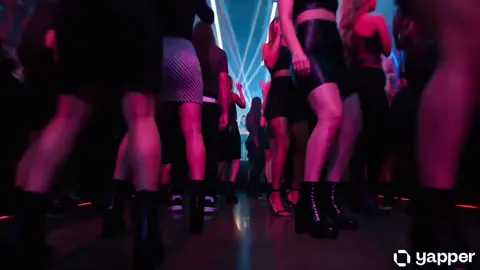
Why AI Video Advertising Changed the Production Math
Video is the default unit of paid acquisition on nearly every major platform. It is what stops a scroll, what carries a product demonstration, and what makes a testimonial believable. The problem was never demand for video. It was the supply chain behind it: concepting, casting, wardrobe, location scouting, a shoot day, an edit suite, then re-versioning the same footage for every placement and aspect ratio. Every variant carried real marginal cost, so most teams shipped two or three ideas and hoped one landed.
Generative production collapses that chain. A product still can be animated into a moving shot. Several stills can be fused into one narrative sequence. A written character description can hold the same face, jacket, and hairstyle across a dozen scenes without a casting session. The marginal cost of variant fourteen is close to the marginal cost of variant one, which changes the creative strategy from "choose carefully" to "test broadly and kill fast."
What generative tools do not fix is the part that actually determines performance: the offer, the first two seconds, and audience fit. Cheap production of a weak concept simply produces more weak concepts. Volume without a testing structure is noise, and noise is expensive in a different way, because it burns budget and attention without teaching you anything.
Three structural shifts matter for marketers. Generation moves labor from the set into pre-production, which makes the brief the highest-leverage document you write. Consistency technology keeps identity stable across shots, which makes serialized, character-driven ads practical. Iteration speed lets a small team ship a fresh creative slate weekly instead of quarterly. Build your workflow around those three shifts and everything downstream gets easier.
The Core Building Blocks of an AI Video Ad
Treat an AI-assisted ad as a four-layer stack. Each layer can be produced independently, reviewed independently, and swapped independently. When an ad underperforms, that separation is what lets you find out whether the hook, the visuals, the audio, or the edit is responsible.
The script and hook layer
The script layer is not a screenplay. It is a hook, a proof point, and a call to action, in that order, compressed into fifteen to thirty seconds. Write seven to ten hooks for each concept before generating a single frame. Useful hook patterns include the problem callout ("Still doing X the slow way?"), the curiosity gap ("We tested this for thirty days"), the contrarian claim, the visual pattern interrupt, and the direct price or offer statement. The hook should be readable in under two seconds and understandable with the sound off.
The visual generation layer
You have three production paths. Text-to-video generates everything from a prompt and is fastest but least controllable. Image-to-video animates a still you already approve, which gives you a reliable first frame and a much higher hit rate. Multi-image fusion blends several stills into one continuous sequence, which is the strongest option when you have real photography, product shots, or user-generated content to work with. Most high-performing ad sets combine all three: a generated establishing shot, an animated product still, and a fused lifestyle sequence.
The audio layer
Audio is where cheap AI ads reveal themselves. Choose a voice that matches the audience's demographic expectations without sounding synthetic, keep the pace conversational, and hold voiceover to roughly forty words per ten seconds. Music should support the edit rather than compete with it. Burn in captions, place them inside platform safe zones, and check that they remain legible on a small phone screen. A silent autoplay environment means your captions are effectively the script for most viewers.
The assembly and delivery layer
Build a master vertical cut first, then adapt. A 9:16 master at 1080x1920 covers the majority of paid social placements, and a 1:1 or 4:5 crop covers feed placements where vertical feels intrusive. Keep a version without burned-in text so you can localize or restyle later. Name every export with a consistent convention that encodes concept, hook, and variant, because you will not remember which file was which three weeks from now.
A Step-by-Step Workflow: From Brief to First Cut
This is the sequence that keeps quality high while production stays fast. Skipping early steps is the most common reason AI ads look expensive but perform poorly.
Step 1: Write an offer-first brief
One page maximum. State the audience, the single promise, the proof you can legally support, the desired action, and the objection the ad must neutralize. Every prompt you write later should trace back to a line in this brief. If the promise is fuzzy, no amount of visual polish will rescue the ad.
Step 2: Build a shot list that maps to the funnel
Give the video four functional beats: hook, context, proof, action. The hook earns the next three seconds, context explains relevance, proof makes the claim credible, and action tells the viewer exactly what to do. Assign a duration to each beat before generating anything. A common split is two seconds, six seconds, ten seconds, four seconds.
Step 3: Generate and approve base stills
Generate or select stills for each beat and approve them before animating. Stills are cheap to redo and fast to compare side by side. Locking the look at the still stage prevents the expensive loop of animating a scene that was never right to begin with.
Step 4: Animate and fuse the sequence
Animate approved stills into short clips, then stitch them into a coherent sequence. Where you have multiple images of the same subject, fuse them into a single moving passage rather than cutting between static frames. Keep camera movement motivated: a slow push for emphasis, a lateral move for discovery, a static frame for dialogue or text.
Step 5: Layer audio, captions, and pacing
Drop in voiceover, then cut visuals to the voice rather than the reverse. Add captions, then add music at a level that never masks speech. Watch the whole thing once with the sound off and once at arm's length on a phone. If the message survives both tests, you have a usable ad.
Step 6: Export platform-specific variants
Produce a vertical master, a feed crop, and one square version for placements that need it. Export a text-free version alongside each. Deliver three hook variants of the same body so testing starts immediately instead of waiting for the next production cycle.
Multi-Image Fusion: Turning Still Assets Into Story Beats
Most brands already own the raw material for strong video: product photography, lifestyle shoots, customer photos, screenshots, and behind-the-scenes images. Fusion turns that archive into motion without a reshoot.
Give every image a role. A product close-up can be the proof beat, a lifestyle shot can be the context beat, and a customer photo can be the social proof beat. Assign an action verb to each image so the sequence has movement rather than a slideshow rhythm: tilt, reveal, pull back, rotate, track along the surface. Transitions should follow the logic of the story, not decorate it.
Continuity matters more than spectacle. Match lighting direction, color temperature, and depth of field across fused frames, or the sequence will read as disconnected. Start with three images before attempting six. Review the result at normal speed, not frame by frame, because motion artifacts that are invisible when paused can look fine in playback and vice versa.
Be careful with text inside images. Packaging copy, signage, and screen text often distort during animation. If a label must be readable, hold that frame nearly static and let the caption or voiceover carry the message instead.
Keeping Characters and Products Consistent Across Shots
Consistency is the difference between a campaign and a collection of unrelated clips. It is also the hardest part of generative production to get right, and the part audiences notice fastest when it fails.
Build a character sheet first
Write a reusable description covering age range, build, hair, wardrobe, and one distinguishing detail. Keep that description verbatim across every prompt, and reuse the same reference image or seed whenever the tool allows it. Changing adjectives mid-campaign is how faces drift between shots.
Anchor products with real photography
Generated product renders look convincing until a hand touches them or a label appears. Use real product stills as the base and let generation handle lighting, environment, and motion around them. Keep one straight-on, evenly lit product shot as the canonical reference for color accuracy.
Create a look bible for the campaign
The look bible is a short document with the palette, lens character, lighting style, wardrobe rules, and typography for captions. Anyone generating a scene reads it first. It costs twenty minutes to write and saves entire reshoots.
A Testing Framework for AI Video Ads
Cheap production is only an advantage if you test in a way that produces decisions. Testing everything at once produces noise; testing one thing at a time produces knowledge.
Start by testing hooks with an identical body. The hook determines whether anyone sees the rest of your ad, so it deserves the first round of budget. Once a hook wins, test proof elements: demonstration versus testimonial versus comparison. Then test the call to action and offer framing. Visual style comes last, because style rarely rescues a weak offer.
Track four numbers per creative: three-second view rate, hold rate at the midpoint, click-through rate, and cost per acquisition. Three-second view rate tells you if the hook works. Hold rate tells you if the middle earns attention. Click-through tells you if the action is clear. Cost per acquisition tells you if any of it matters commercially.
Set kill rules in advance. If a variant is materially below the account average on view rate after a set spend, pause it rather than "letting it learn." Keep a swipe file of winners with the hook text, the structure, and a note on why it worked. That file becomes the creative brief for the next month.
Platform Rules and Format Constraints That Break AI Ads
Every placement has its own grammar, and ignoring it wastes otherwise good creative. Vertical placements reward fast pacing, tight framing, and captions placed above the lower interface area. Feed placements tolerate slightly slower openings but punish anything that looks like an obvious ad in the first frame. Stories and short-form placements reward native, handheld energy over polished cinematography.
Keep the key subject inside a central safe zone so automatic crops do not cut off a face or a product. Avoid text in the outer ten percent of the frame. Deliver captions sized for a small screen, not a desktop preview. Keep individual ad lengths aligned with the placement: short for scroll-heavy surfaces, longer for placements where viewers expect a narrative.
Also respect the rules of the category you advertise in. Health, finance, and employment ads face stricter claim standards, and generative visuals do not exempt you from them. If a claim cannot be substantiated in the landing page, remove it from the script before it reaches the render stage.
Common Mistakes and How to Avoid Them
Cramming three ideas into one video is the most frequent failure. One ad, one promise. If you have three promises, build three ads and let the data choose.
Over-investing in visuals before validating the hook is the second. Polish is not persuasion. A rough but well-hooked ad routinely outperforms a beautiful ad that opens with a logo animation.
Ignoring the first frame is the third. Many platforms autoplay and viewers decide within a fraction of a second, so treat frame one as the headline. Avoid starting on a black screen, a fade-in, or a wide establishing shot with no subject.
Other common problems: inconsistent faces across shots, uncanny motion in hands and hair, long intros before the promise appears, missing captions, unclear calls to action, and generated text that renders as gibberish. Each of these is fixable with a checklist review before export rather than after launch.
Finally, do not treat generated output as final. Treat it as a first cut that a human editor trims, paces, and tightens. The best AI-assisted ads usually contain human decisions about rhythm and restraint.
Scaling Production Without Losing Brand Voice
Scale comes from systems, not from generating more. Build a prompt library organized by beat type: hooks, product reveals, lifestyle context, testimonials, and end cards. Store the winning version of each alongside the description that produced it, so a new campaign starts from a proven base instead of a blank field.
Batch your work. Generate all stills for a creative slate in one session, review them together, then animate in a second session. Context switching is the hidden cost in AI production, and batching removes most of it.
Establish a review checklist that covers brand palette, logo treatment, claim accuracy, caption legibility, safe zones, and audio levels. Have one person own final approval so quality stays consistent across a fast-moving pipeline.
If you localize, keep a text-free master and a caption-free audio stem. Swap voiceover and captions rather than regenerating visuals, which preserves brand consistency across markets and cuts production time dramatically. And keep a lightweight archive of every asset, prompt, and result, because the campaign you rebuild next quarter will start from one of these files.
FAQ
How long should an AI-generated video ad be?
Most paid social placements perform best between fifteen and thirty seconds. Lead with the promise in the first two seconds, deliver proof by the midpoint, and close with a clear action. Longer formats work when the placement itself supports narrative, such as pre-roll with skip options.
Do AI video ads need real footage?
No, but they benefit from real assets. Product photography, customer photos, and lifestyle images anchor generated scenes in reality and reduce the uncanny quality that pure text-to-video often produces. A hybrid approach, real stills animated with generative motion, is usually the most reliable path.
How do I keep a character looking the same across shots?
Write one detailed character description and reuse it verbatim in every prompt. Reuse the same reference image or seed when the tool supports it, keep wardrobe and hair unchanged, and avoid adding new adjectives mid-campaign. Consistency is a discipline, not a feature.
What should I test first, the hook or the visuals?
The hook. Nothing else in the ad matters until someone stops scrolling. Run one body with several hooks, keep the winning hook, then test proof elements and calls to action before touching visual style.
How many variants should a small team produce?
Three to five hooks per concept and two to three body variations is a healthy starting slate. That is enough to find a winner without spreading budget so thin that no variant reaches a meaningful result.
Can AI video ads hurt brand perception?
They can when they look generic, use synthetic-sounding voiceover, or make claims the landing page cannot support. Brand-safe production means consistent visual identity, accurate captions, honest claims, and human review before anything goes live.
What is the biggest time saver in the workflow?
Approving stills before animating. Stills are fast and cheap to compare, and locking the look at that stage prevents re-rendering entire sequences because the wardrobe or framing was wrong.
How often should creative be refreshed?
Plan a weekly review of performance by hook and a monthly refresh of the full slate. Creative fatigue shows up first as a declining three-second view rate, before cost per acquisition moves, so watch the earliest signal.
Putting the Workflow to Work
AI video production rewards teams that treat it as a pipeline rather than a magic button. The pipeline has five fixed stages: brief, shot list, stills, animation, and assembly with testing. Each stage has an approval gate, and each gate is cheaper to fix than the one after it.
The payoff is not that ads become effortless. It is that you can afford to be wrong more often, learn faster, and keep the concepts that work. A brand that ships twelve tested ideas a quarter will beat a brand that ships three perfect ones, because the market, not the studio, decides what converts. Start with one concept, one hook family, and one clear promise. Build the library, tighten the checklist, and let the winning structure carry the next campaign.

Alexander
More Blogs
Read MoreVidu Q4 Alternatives: 4K AI Video Models Compared (2026)
Vidu Q4 alternatives compared: Kling 4.0, Seedance 2.5, Wan 3.0, and Runway Gen-4 — 4K support, input modes, durations, audio, and what each costs in credits on Domer.
Top 4K AI Image Generators in 2026: 5 Models Compared on Real Costs
The top 4K AI image generators on Domer compared: Flux 3 Klein, Nano Banana 2.1, GPT Image 2.5, GPT Image 2, and Nano Banana Pro — 4K credit costs, reference limits, and speed.
Nano Banana 2.1 vs GPT Image 2.5: Which Image Model Should You Use? (2026)
Nano Banana 2.1 vs GPT Image 2.5 Flare compared: credit costs per resolution, aspect ratios, reference images, text rendering, and which tasks fit each model.