
Affiliazione
Inizia Gratis Ora
Video Ad Lessons from the Past: AI-Driven Creative Strategy
Oct 15, 2026

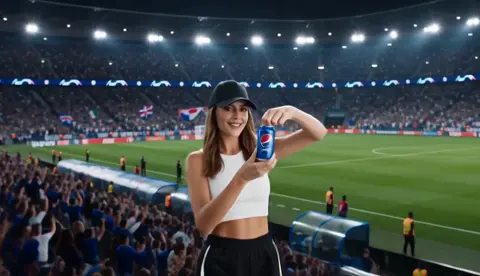
Video advertising has always been a mirror of its time. The best campaigns capture a cultural moment, distill a human truth, and deliver it with craft. Looking back at standout ads from the mid-2010s—especially the ones that dominated conversation during major events—reveals principles that remain startlingly relevant. Today, those principles can be amplified with artificial intelligence, but only if you know where AI helps and where human judgment must lead.
This guide is not a nostalgia trip. It is a practical playbook for modern creators and marketers who want to build video ads that resonate. We will examine what made classic spots work, how AI changes the production pipeline, and how to blend both into a workflow that is faster, cheaper, and still deeply human.
Why Video Ads from the Past Still Matter
The landscape of video advertising has shifted dramatically. Traditional broadcast-centric models have given way to a fragmented, digital-first ecosystem where attention is scattered across social feeds, streaming platforms, and short-form video apps. Yet the foundational rules of persuasion have not changed. A great ad still needs a hook, a story, and an emotional payoff.
In 2016, the most memorable video advertisements often transcended mere product promotion. They wove narratives that tapped into universal emotions: joy, nostalgia, frustration, hope. Super Bowl campaigns that year were a masterclass in emotional impact, with brands spending millions to tell stories that people actually wanted to watch. Purpose-driven advertising rose as brands took stands on social issues, and relatability became a currency. Humor, celebrity, and experiential marketing all played roles, but the through-line was a deep understanding of audience psychology.
Studying those ads is not an exercise in nostalgia. It is a way to extract timeless creative criteria. When you understand why a particular spot made people laugh, cry, or share, you can use that knowledge to brief AI tools more effectively. AI can generate options at scale, but it cannot decide what matters. That decision still comes from human insight.
The shift to digital also changed distribution. Mobile-first viewing and short-form video demanded new pacing and framing. Programmatic advertising and data-driven targeting allowed precise audience segmentation. Interactive video and emerging technologies hinted at what was coming. These developments set the stage for today's AI-driven workflows, where production speed and personalization are no longer luxuries but expectations.
The Emotional and Structural DNA of Effective Video Ads
If you break down any great video ad, you will find a few common elements. They are not formulas, but they are reliable patterns. Understanding them helps you direct AI tools with intent rather than hoping for a lucky output.
A Clear Narrative Arc
Most effective ads tell a story in miniature. There is a setup, a conflict or tension, and a resolution. Even a 30-second spot can follow this arc. AI can help you draft multiple narrative structures quickly, but you must choose the one that fits your brand and objective. A common mistake is letting AI generate a technically coherent story that lacks emotional stakes. Always ask: what does the character want, and what stands in the way?
Authentic Human Emotion
The best 2016 campaigns felt real. They featured real people, real moments, and real reactions. AI-generated humans can look convincing, but they often lack the micro-expressions and idiosyncrasies that signal authenticity. When using AI avatars or synthetic voices, pay extra attention to performance direction. Sometimes the most powerful choice is to use AI for post-production and enhancement rather than for primary performance.
Strong Brand Integration
A great ad works even if you remove the logo, but it works better with it. The brand should be woven into the story, not bolted on at the end. AI can help you test different integration points. For example, you can generate a version where the product is the hero, and another where it is a subtle enabler. Then you can compare how each feels in context.
Cultural Relevance
Ads that tap into the zeitgeist travel further. In 2016, social commentary and purpose-driven messaging resonated because they reflected real conversations. Today, AI can analyze trends and sentiment at scale, but it cannot feel the cultural temperature. Use AI to gather data, but use human teams to interpret it. A misjudged cultural reference can do more harm than a generic one.
Pacing and Rhythm
Pacing is where many AI-generated videos fall flat. AI models often produce clips that look good in isolation but do not cut together with energy. Study the editing rhythm of classic ads. Notice how cuts land on beats, how pauses create anticipation, and how sound design drives emotion. When you edit AI-generated footage, you must impose rhythm manually. Tools can help, but your ear and eye are still the final editors.
How AI Is Reshaping Video Ad Creation
AI has infiltrated every stage of video production, from ideation to distribution. The promise is speed and scale. The risk is homogenization. To use AI well, you need to understand what each type of tool does and where it fits.
Ideation and Scripting
Large language models can brainstorm concepts, write scripts, and generate variations on a theme. They are excellent at overcoming blank-page syndrome. You can prompt for ten different angles on a product benefit, then refine the best ones. However, AI scripts often lean on clichés and generic phrasing. Your job is to inject specificity, brand voice, and unexpected details. Treat AI as a junior copywriter who never sleeps but needs strong creative direction.
Storyboarding and Pre-Visualization
Text-to-image and image-to-video tools can turn a script into a visual storyboard in minutes. This is invaluable for pitching ideas and aligning stakeholders before expensive production begins. You can generate mood boards, character designs, and camera angles. The key is to iterate quickly and discard what does not work. Do not fall in love with the first render. Use AI to explore, then lock in a visual direction that feels intentional.
Asset Generation
Generative video tools can create footage from scratch, extend existing clips, or alter visual style. They are particularly useful for B-roll, abstract transitions, and scenes that would be too costly or dangerous to shoot. But they still struggle with complex human interactions, consistent characters, and precise product shots. For hero moments, consider a hybrid approach: shoot real footage for key elements and use AI for augmentation, background replacement, or cleanup.
Voice, Music, and Sound Design
AI voice synthesis has become remarkably natural. You can generate voiceovers in multiple languages, adjust tone, and even clone a brand spokesperson's voice with permission. AI music tools can compose custom tracks that match the mood of your ad. However, sound design is still a craft. Layering effects, balancing levels, and creating sonic branding require human taste. Use AI to generate options, then mix and master with intention.
Editing and Post-Production
AI-powered editors can automatically cut clips to music, remove silences, and color-grade footage. They can also help with object removal, upscaling, and stabilization. These tools save hours of tedious work. But they cannot decide what story to tell. The editor's role shifts from manual assembly to creative curation. You will spend more time selecting the best takes and shaping the narrative, and less time on technical chores.
Localization and Versioning
One of the biggest advantages of AI is the ability to create multiple versions of an ad for different audiences, platforms, and languages. You can easily swap voiceovers, adjust on-screen text, and change aspect ratios. This is a game-changer for performance marketing, where testing dozens of variations is standard. But beware of losing brand consistency. Establish a visual and tonal system, then let AI handle the mechanical variations.
A Step-by-Step AI-Assisted Video Ad Workflow
Putting it all together, here is a practical workflow you can adapt. It assumes you have a clear objective, a defined audience, and a brand guide.
Step 1: Research and Insight Mining
Start with data. Use AI analytics tools to scan social conversations, reviews, and search trends. Identify pain points, desires, and language patterns. This step grounds your creative in reality. Do not skip it. AI can process vast amounts of text, but you must extract the insight. Write a one-sentence creative brief that captures the core human truth.
Step 2: Script Drafting with AI
Feed your brief into an LLM and ask for multiple script concepts. Specify format, length, tone, and mandatory elements. Generate at least ten options. Then edit ruthlessly. Read each script aloud. If a line sounds like a robot wrote it, rewrite it. Add concrete details, sensory language, and emotional beats. The goal is a script that feels like it was written by a human who understands the audience.
Step 3: Generate Storyboards and Animatics
Use text-to-image tools to create a visual storyboard for your chosen script. Generate key frames for each scene. Then use image-to-video tools to create rough animatics. This helps you test pacing and transitions before committing to full production. Share these with stakeholders for feedback. Iterate until the visual story is clear and compelling.
Step 4: Produce or Assemble Footage
Decide what to shoot and what to generate. For product close-ups, testimonials, or human-led scenes, traditional filming often delivers better authenticity. For abstract concepts, background elements, or impossible shots, use AI generation. If you are blending sources, pay attention to lighting, color temperature, and grain. Consistency is key.
Step 5: Edit, Sound, and Motion Graphics
Assemble your footage in an editor. Use AI-assisted tools to rough cut, but refine manually. Add motion graphics for brand elements. Layer in voiceover, music, and sound effects. AI can help generate variations of voiceover reads and music beds. Mix carefully. The final sound should support the emotion, not overwhelm it.
Step 6: Create Multiple Versions for Testing
Generate versions for different platforms: a 15-second cut for social, a 30-second cut for YouTube, a vertical version for stories. Use AI to resize, re-frame, and adjust captions. Change the hook, the call to action, or the music to see what resonates. Keep a spreadsheet of what you are testing and why.
Step 7: Launch and Learn
Run your ads and collect performance data. Use AI analytics to identify patterns. Which opening hook had the highest retention? Which call to action drove the most clicks? Feed those insights back into your creative process. The loop should be continuous. AI makes iteration faster, but you still need to decide what to iterate on.
Choosing Tools for Each Stage of Production
There is no single AI tool that does everything well. Most professional workflows combine several specialized tools. Here is a breakdown of categories and what to look for.
- Script and ideation: Look for large language models that can follow detailed instructions and maintain a consistent tone. Experiment with different models; some are better at humor, others at emotional storytelling.
- Storyboarding and concept art: Text-to-image generators with strong style control. You want to be able to upload reference images and specify camera angles.
- Video generation: Text-to-video and image-to-video tools. Prioritize control over camera movement, consistency of characters, and resolution. Some tools are better for realistic footage, others for stylized animation.
- Voice and audio: AI voice synthesizers with multiple languages and emotional range. Music generation tools that can create loops and full tracks. Do not overlook dedicated sound design libraries.
- Editing and post: AI-assisted editors that can automate rough cuts, color correction, and object removal. Look for integration with your existing editing software.
- Analytics and testing: Platforms that can automatically generate and test variations. Look for tools that connect creative attributes to performance metrics.
When evaluating tools, consider your team's technical skill. Some tools require prompt engineering expertise; others are designed for marketers. Start with free trials and small projects before committing to an enterprise plan.
Creative Judgment: What AI Can't Do for Your Brand
AI is a powerful assistant, but it lacks taste, empathy, and strategic thinking. These are human responsibilities.
Taste
Taste is the ability to recognize what is good and what is merely acceptable. AI can generate a thousand options, but it cannot tell you which one is elegant. You need creative directors and editors who can curate. Invest in human talent and give them the time to refine AI output.
Strategy
AI can optimize for a metric, but it cannot decide which metric matters. Should you prioritize brand lift, direct response, or share of voice? That is a strategic decision based on business goals. AI can inform it with data, but leadership must set the direction.
Empathy
Great advertising understands how people feel. AI can analyze sentiment, but it cannot truly empathize. When you are telling a story about loss, joy, or aspiration, you need a human who has felt those things. Use AI to draft, but use human experience to elevate.
Brand Voice
Every brand has a distinct voice. AI can mimic it if given enough examples, but it often defaults to a generic, friendly tone. To maintain a unique voice, you must fine-tune models, provide detailed style guides, and review every output. Do not let AI flatten your brand into something forgettable.
Common Pitfalls and How to Avoid Them
Even with the best tools, teams make mistakes. Here are the most common ones and how to sidestep them.
Over-Reliance on Generation
It is tempting to let AI generate everything. The result often feels soulless. Mix AI-generated assets with real photography, real voices, and real stories. The contrast can be powerful.
Generic Prompts
If you prompt an AI with vague instructions, you will get vague results. Be specific about mood, lighting, camera movement, and subject. Provide reference images. Iterate on your prompts as if you were art-directing a shoot.
Ignoring Pacing
AI-generated clips often have a static, dreamlike quality. They lack the dynamic energy of a well-edited ad. When you assemble your timeline, cut aggressively. Add speed ramps, jump cuts, and sound effects to create rhythm.
Legal and Ethical Blind Spots
AI-generated content raises questions about copyright, likeness rights, and disclosure. Always check the licensing terms of the tools you use. If you are cloning a voice or likeness, get explicit permission. Be transparent with your audience when synthetic media is used, especially in sensitive contexts.
Forgetting the Hook
The first three seconds determine whether your ad gets watched. AI can help you generate multiple hooks, but you must test them. Do not bury your most compelling visual or line. Lead with it.
When to Use AI and When to Go Traditional
AI is not always the answer. Use this decision framework.
Use AI when:
- You need to produce a high volume of variations for testing.
- Your budget or timeline is tight.
- You need abstract or impossible visuals.
- You are localizing content for multiple markets.
- You want to prototype ideas quickly.
Go traditional when:
- The ad relies on nuanced human performance.
- You need to showcase a physical product with precise detail.
- Brand safety and legal compliance are paramount.
- The story requires a specific cultural authenticity that AI may miss.
- You have the budget and time for a fully crafted live-action shoot.
In reality, most projects will be a hybrid. The skill is knowing which parts to delegate to AI and which to keep human-led.
Frequently Asked Questions About AI Video Ads
Can AI make a complete video ad from start to finish?
Technically, yes, but the result is usually generic. AI is best used for specific stages: ideation, storyboarding, asset generation, and editing assistance. Human oversight is still required for strategy, taste, and final polish.
How do I keep AI-generated content from looking generic?
Provide detailed prompts, use reference images, and mix AI with real footage. Most importantly, inject specific details that only a human would know: a particular slang term, a local landmark, a quirky gesture. Specificity defeats genericness.
What about rights and licensing?
Always read the terms of service for each AI tool. Some claim rights to outputs; others grant you full ownership. Be cautious with voice and likeness cloning. When in doubt, consult a legal professional.
How long should a video ad be?
It depends on the platform. For social feeds, 6 to 15 seconds often works best. For YouTube, 30 seconds to 2 minutes. For connected TV, 15 to 30 seconds. Test different lengths and let the data guide you.
How do I measure success?
Define your objective first. If it is awareness, look at view-through rate and brand lift. If it is direct response, look at click-through rate and conversions. Use AI analytics to attribute performance to specific creative elements, such as the hook or the call to action.
Will AI replace human creatives?
No. It will change their roles. Creatives will spend less time on repetitive tasks and more time on strategy, storytelling, and curation. The most valuable skills will be taste, empathy, and the ability to direct AI tools effectively.
Bringing It All Together
The best video advertisements of the mid-2010s succeeded because they understood human emotion and cultural context. They were not just commercials; they were stories that people wanted to share. Today, AI gives us the power to produce and iterate at a speed that was unimaginable then. But speed without insight is noise.
The winning approach is a fusion. Start with a deep understanding of your audience. Craft a story that matters. Use AI to amplify your creativity, not replace it. Build a workflow that combines generative tools with human judgment at every critical juncture. Test relentlessly, learn from data, and never lose sight of the emotional core.
Whether you are a solo creator or part of a large marketing team, the principles remain the same. Respect the craft. Use the tools. And always remember that behind every great ad is a human truth waiting to be told.
As you plan your next campaign, ask yourself: what would make someone stop scrolling? What would make them feel something? Answer that, then let AI help you bring it to life.

Alexander
More Blogs
Read MoreVidu Q4 Alternatives: 4K AI Video Models Compared (2026)
Vidu Q4 alternatives compared: Kling 4.0, Seedance 2.5, Wan 3.0, and Runway Gen-4 — 4K support, input modes, durations, audio, and what each costs in credits on Domer.
Top 4K AI Image Generators in 2026: 5 Models Compared on Real Costs
The top 4K AI image generators on Domer compared: Flux 3 Klein, Nano Banana 2.1, GPT Image 2.5, GPT Image 2, and Nano Banana Pro — 4K credit costs, reference limits, and speed.
Nano Banana 2.1 vs GPT Image 2.5: Which Image Model Should You Use? (2026)
Nano Banana 2.1 vs GPT Image 2.5 Flare compared: credit costs per resolution, aspect ratios, reference images, text rendering, and which tasks fit each model.