

AI-Generated Video Ads: A Practical Workflow Guide
Oct 15, 2026

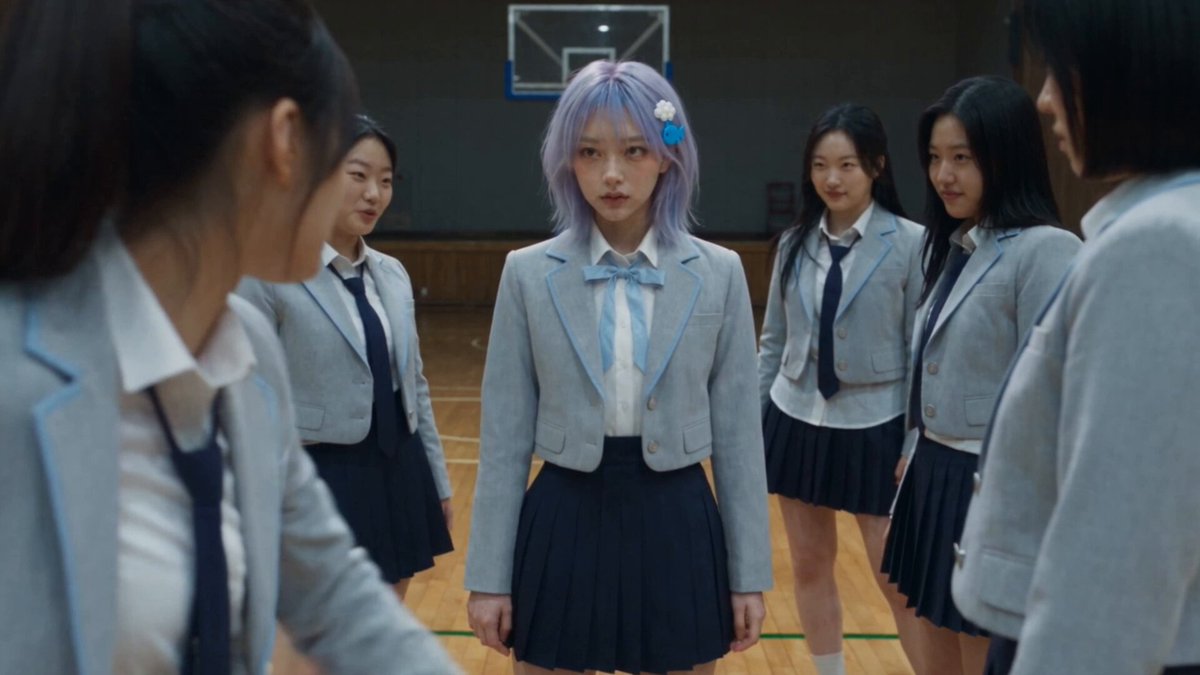
AI-generated video ads are no longer a fringe experiment. They are a practical way for lean teams to produce more creative variations, respond to trends faster, and keep visual quality consistent across channels. The promise is not magic—it is a workflow shift. Instead of booking a shoot for every concept, you build a repeatable pipeline where scripts, visuals, voiceover, captions, and edits are generated, reviewed, and assembled inside a controlled process. That process still needs strategy, taste, and measurement. The teams that win with AI video advertising treat generation as one stage in a larger conversion system, not as a replacement for marketing judgment.
Why AI-generated video ads are changing creative production
Video advertising has always been expensive because every idea competes for the same scarce resources: cameras, cast, locations, editors, and time. AI changes the economics of iteration. A single creative director can now explore dozens of hooks, visual styles, and narrative angles before committing to a final cut. That does not mean every output is ready to publish. It means the cost of discovering a strong direction drops dramatically.
The biggest shift is not the ability to generate images or clips. It is the ability to generate variations around a controlled concept. A brand can lock its tone, color palette, product appearance, and key message, then let the system produce multiple executions for different audiences, placements, and moments in the customer journey.
Speed without sacrificing strategy
Traditional production often moves in a straight line: brief, script, storyboard, shoot, edit, review, launch. AI production can move in loops. You generate a rough concept, test it against the brief, refine the prompt or reference, and generate again. This loop is fast, but it only works when the brief is sharp. A vague prompt produces vague ads. A precise creative brief gives the system constraints that improve relevance and brand fit.
Cost control across the funnel
AI video ads are especially useful for mid-funnel and lower-funnel content that needs frequent updates: retargeting sequences, product explainers, seasonal offers, feature announcements, and platform-native short clips. These formats rarely justify a full production budget, but they still need to look polished. AI helps teams maintain a baseline of visual quality while spending human time on strategy, offer positioning, and performance analysis.
What still needs human judgment
The technology does not decide what claim is credible, what emotion fits the brand, or what offer will convert. It also does not replace legal review, accessibility standards, or platform policy checks. Human oversight is what separates a clever demo from a reliable ad system. The best workflow assigns humans to judgment-heavy tasks and machines to repetitive generation, formatting, and versioning tasks.
The creative engine: how generative video pipelines work
A modern generative video pipeline usually combines several models and tools rather than relying on a single button. Understanding the stages helps you debug problems and improve output quality.
Script and concept generation
Language models can generate hooks, scripts, scene descriptions, and calls to action. They are useful for exploring angles quickly, but they should not be trusted to invent product facts. Feed the model a structured brief: audience, pain point, desired outcome, proof points, tone, forbidden claims, and required legal language. Then ask for multiple scripts with different emotional drivers, such as curiosity, urgency, social proof, or relief.
Visual generation and consistency
Image and video models can create scenes, characters, product contexts, and transitions. Consistency is the hard part. If a character appears in multiple shots, their face, clothing, and styling need to remain recognizable. If a product appears on screen, its shape, label, and color must stay accurate. Reference images, locked style prompts, and character reference tools help maintain continuity. Without them, the ad may look impressive in isolation but incoherent as a sequence.
Voice, music, and edit automation
Text-to-speech can generate voiceover in different ages, accents, and moods. Music generation can create a bed that matches the edit pace. Automatic captioning can add subtitles that improve silent-viewing performance. Editing tools can assemble scenes, apply transitions, and resize the final cut for multiple aspect ratios. The goal is not to automate every creative decision. The goal is to remove the mechanical work between a good idea and a publishable file.
Planning an AI video ad campaign that converts
AI generation is only as good as the campaign plan behind it. Before opening any tool, define the conversion logic.
Define the objective and audience
Ask what the ad must achieve: awareness, consideration, sign-up, trial, purchase, or retention. Then define the audience narrowly enough to matter. A broad audience produces generic creative. A specific audience allows you to speak to a real situation, objection, or desire. For example, a project management tool might create one ad for agency owners worried about missed deadlines and another for in-house managers frustrated by scattered feedback.
Build a message hierarchy
Every high-converting ad has a hierarchy: hook, problem, solution, proof, offer, and call to action. AI can generate many versions of each layer, but the hierarchy keeps the ad coherent. Decide which layer deserves the most screen time. A cold audience often needs a stronger hook and problem framing. A retargeting audience may only need a reminder, a specific benefit, and a clear offer.
Set format, duration, and platform constraints
Platform requirements should shape the script from the beginning. A six-second bumper ad cannot carry a complex narrative. A sixty-second YouTube ad can build a story and demonstrate a product. Vertical short-form demands fast pacing, large text, and early visual interest. Square in-feed placements may work better with centered subjects and clear captions. Write these constraints into the brief so the generative system produces usable material from the first draft.
A step-by-step production workflow
A repeatable workflow reduces randomness and makes quality easier to manage. The exact tools can vary, but the stages remain similar.
Write the creative brief
Include the campaign objective, audience, core message, proof points, tone, mandatory phrases, banned phrases, visual references, brand colors, logo usage, product accuracy requirements, and platform specs. This document is the source of truth. If the AI output misses, compare it to the brief before rewriting prompts blindly.
Generate multiple concepts
Ask for several distinct concepts rather than many minor variations of one idea. For example, request one concept built on a customer testimonial, one on a product demo, one on a before-and-after transformation, and one on a founder story. Diversity at the concept stage prevents the campaign from collapsing into a single creative assumption.
Assemble scenes with continuity checks
Once a concept is chosen, break it into shots. For each shot, define the subject, action, camera angle, lighting, background, and duration. Generate stills or clips, then review them for continuity. Check clothing, product details, background elements, and color temperature. Replace any shot that breaks the visual logic, even if it looks attractive on its own.
Add voice, captions, and sound
Record or generate voiceover after the visual edit is roughly timed. This avoids awkward pacing where the voice rushes to match a scene or drags behind it. Add captions that are readable on mobile, with strong contrast and safe margins. Choose music that supports the emotional arc rather than overpowering the message. Sound design should guide attention to the offer and call to action.
Review, render, and version
Run a final quality check for brand accuracy, legal language, pronunciation, caption accuracy, and platform specs. Then render the master file and create platform-specific versions. Keep a naming system that identifies campaign, audience, concept, format, and version. This makes reporting and iteration far easier.
Platform-specific optimization
A single ad rarely performs equally everywhere. AI makes it easier to adapt creative, but adaptation should be intentional.
Vertical short-form platforms
Short-form feeds reward immediate relevance. The first second must signal who the ad is for and why they should care. Use large captions, fast cuts, and a clear visual payoff. Avoid slow logo intros. For AI-generated content, keep motion natural and avoid overly complex scenes that become hard to parse on a small screen.
In-feed and square placements
Social feeds and display placements often appear alongside other content, so contrast matters. Use a strong central subject, readable text, and a simple composition. Square and four-by-five formats can carry more detail than vertical stories, but they still need a clear focal point. Test whether the product or the person should dominate the frame.
Longer video and connected TV
Longer formats allow for narrative, demonstration, and emotional build. Use the extra time to establish a problem, show the product in context, and resolve with proof. AI-generated scenes should feel cinematic but coherent. Avoid unnecessary camera moves and rapid style changes that make the ad feel like a reel of unrelated clips.
Advanced techniques: personalization, variants, and testing
Once the basic pipeline works, the real advantage appears: systematic iteration.
Dynamic creative variants
Create variants by swapping hooks, opening visuals, testimonials, offers, and calls to action. Keep the core message stable so you can learn which element drives performance. AI helps produce these variants quickly, but you still need a testing plan. Random variation creates noise. Structured variation creates insight.
A/B testing at scale
Test one major variable at a time when possible. If you change the hook, the visual style, the voice, and the offer simultaneously, you will not know what caused the result. Start with high-impact variables: the first three seconds, the main benefit, the proof element, and the call to action. Use statistically meaningful sample sizes before declaring a winner.
Sequential storytelling
AI can help build ad sequences that follow a viewer across platforms. A short teaser introduces a problem, a second ad explains the solution, and a third ad presents an offer or testimonial. Keep the visual language consistent so the sequence feels connected. This approach works well for considered purchases where one ad cannot carry the full argument.
Quality control, brand safety, and compliance
AI-generated video can look convincing, which makes quality control more important, not less.
Visual QA checklist
Check faces, hands, product labels, logos, text, reflections, shadows, and background details. Look for flicker, warped geometry, unnatural motion, and inconsistent lighting. Review on both a large screen and a phone. Many errors that are invisible on a monitor become obvious on mobile.
Claims and disclosure
Every claim needs evidence. Review AI-generated scripts for accidental promises, misleading comparisons, or missing disclaimers. If the ad uses synthetic presenters or generated voices, follow applicable disclosure rules and platform policies. When in doubt, involve legal and compliance early.
Accessibility
Captions, contrast, and clear audio benefit all viewers and are required in many contexts. Keep text on screen long enough to read. Avoid placing critical information only in the audio track. Use plain language for the call to action.
Common mistakes and how to avoid them
Many AI video ad failures come from process gaps rather than bad tools.
One common mistake is starting with the tool instead of the audience. The ad becomes a showcase of generative effects rather than a response to a customer need. Fix this by writing the brief before generating anything.
Another mistake is overloading the ad with too many ideas. AI can generate complexity quickly, but attention is limited. Cut anything that does not support the core message. If a scene does not advance the hook, problem, solution, proof, or offer, remove it.
A third mistake is ignoring brand consistency. Generated visuals may drift in color, typography, or tone. Use reference assets, locked style guides, and a final human review. Brand recognition is an asset; do not let novelty erode it.
Finally, teams often skip measurement. They publish AI-generated ads, see mixed results, and blame the technology. Instead, track hook rate, watch time, click-through rate, conversion rate, and cost per result. Use those metrics to decide what to generate next.
Choosing the right tool stack
There is no single perfect stack. Choose tools based on workflow fit, not feature count.
For concept and script generation, look for tools that accept structured briefs and allow you to reuse brand voice guidelines. For visuals, prioritize consistency controls, reference image support, and enough resolution for the target platforms. For editing, choose a system that handles multiple aspect ratios and captions without exporting and reimporting constantly. For voice, test pronunciation of brand and product names. For collaboration, make sure reviewers can leave time-coded feedback.
A practical stack might include a language model for scripts, an image and video generator for scenes, a voice tool for narration, and a timeline editor for final assembly. The best stack is the one your team can operate repeatedly without creating bottlenecks.
FAQ
How long should an AI-generated video ad be?
Match the duration to the platform and objective. Short-form social ads often work best between six and thirty seconds. YouTube and connected TV can support longer narratives, but the first five seconds still need to earn attention. If the message is simple, shorter is usually better.
Can AI-generated ads replace live-action production?
In some cases, yes, especially for product explainers, social variants, and concept testing. For high-end brand campaigns, live-action may still provide authenticity and production value that AI struggles to match. Many teams use a hybrid approach: AI for exploration and volume, live-action for hero assets.
How do I keep characters consistent across scenes?
Use reference images, character descriptions, style constraints, and seed controls where available. Generate all shots for a sequence in one session when possible. Review continuity before adding voiceover or music, because continuity errors become harder to fix later.
What should I test first?
The first three seconds are usually the highest-leverage variable. Test the hook, the opening visual, and the main promise before testing smaller elements like button text or end-card layout. Once you have a winning hook, test the proof and offer.
How do I avoid generic-looking AI ads?
Specificity is the antidote. Use real customer language, concrete product details, and a distinct visual point of view. Avoid prompts that could apply to any brand in the category. The more constraints you provide, the more original the output tends to feel.
Is AI video advertising safe for regulated industries?
It can be, but the review process must be rigorous. Regulated industries need documented claims, legal approval, and careful handling of disclosures. AI can accelerate drafting and versioning, but it should not bypass compliance workflows.
What metrics matter most?
Start with hook rate and watch time to judge creative attention. Then look at click-through rate and conversion rate to judge persuasion. Finally, monitor cost per result and return on ad spend. If a creative wins on attention but loses on conversion, the offer or landing experience may need work.
AI-generated video ads work best when they are treated as a production system, not a one-click trick. Define the audience, build a clear message hierarchy, generate diverse concepts, enforce visual continuity, and test structured variants. With that discipline, AI becomes a multiplier for creative capacity and a faster path to learning what actually converts.

Alexander
More Blogs
Read MoreVidu Q4 Alternatives: 4K AI Video Models Compared (2026)
Vidu Q4 alternatives compared: Kling 4.0, Seedance 2.5, Wan 3.0, and Runway Gen-4 — 4K support, input modes, durations, audio, and what each costs in credits on Domer.
Top 4K AI Image Generators in 2026: 5 Models Compared on Real Costs
The top 4K AI image generators on Domer compared: Flux 3 Klein, Nano Banana 2.1, GPT Image 2.5, GPT Image 2, and Nano Banana Pro — 4K credit costs, reference limits, and speed.
Nano Banana 2.1 vs GPT Image 2.5: Which Image Model Should You Use? (2026)
Nano Banana 2.1 vs GPT Image 2.5 Flare compared: credit costs per resolution, aspect ratios, reference images, text rendering, and which tasks fit each model.