
Utwórz
How AI Is Changing Video Advertising and Marketing Workflows
Oct 15, 2026

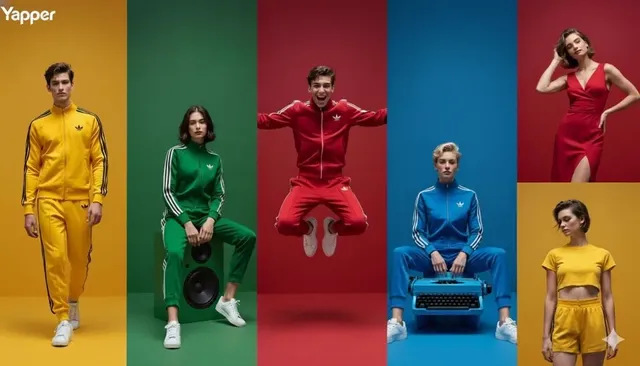
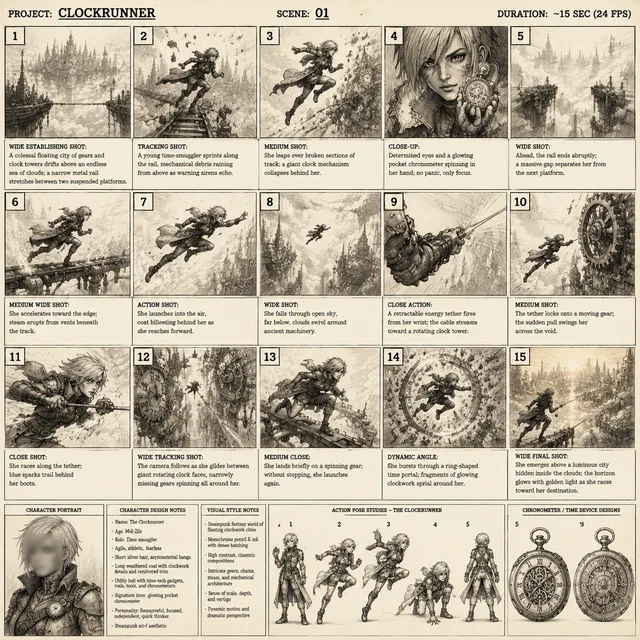
Video advertising used to be a craft measured in shoot days, edit suites, and long approval chains. A single hero spot could absorb weeks of planning, and any variation — a different voiceover, a localized end card, a shorter cut for a social feed — meant reopening the timeline and paying for it again. That economics shaped everything: how many concepts a brand dared to test, how many markets it could enter, how fast it could respond to a trend.
AI has collapsed that cost curve. Not by replacing craft wholesale, but by absorbing the repetitive, mechanical parts of production so human attention can go where it actually matters: the idea, the offer, the story. The result is a marketing environment where a small team can ship dozens of coherent video variants, learn from real performance data in days instead of quarters, and treat every ad as a living asset rather than a finished artifact.
What follows is a practical map of that shift — the new pipeline, the personalization patterns that work, the testing loops that keep quality honest, the disclosure questions synthetic media raises, and a workflow you can run yourself.
Why AI Is Rewriting the Rules of Video Advertising
The core change is not that machines can render pixels. It is that the marginal cost of a new version of a video has fallen dramatically. When versions are cheap, three things happen at once.
First, testing becomes continuous instead of ceremonial. Teams stop treating a campaign as a finished object and start treating it as a hypothesis with a running scoreboard. Hooks, openings, calls to action, pacing, aspect ratios, and voice tones can all be varied and measured independently.
Second, localization stops being a quarterly project. Subtitling, dubbing, on-screen text replacement, and culturally tuned imagery can be regenerated per market without rebuilding the whole edit. Brands that once entered four markets a year can now open twelve with the same headcount.
Third, creative volume stops being a luxury reserved for the biggest advertisers. A regional retailer with one editor can plausibly produce more distinct, on-brand video assets than a legacy agency team did five years ago.
The trade-off is that volume alone wins nothing. Cheap video means cheap clutter, and audiences are already skilled at ignoring anything that feels machine-stamped. The teams that benefit most are the ones that pair generative speed with a strict editorial filter — a point we will return to repeatedly.
The New Production Pipeline: From Brief to Finished Cut
The practical structure of video production has not vanished, but the sequence and the time allocation have shifted. Here is how a modern AI-assisted pipeline typically breaks down.
Scripting and concepting
Language models are genuinely useful as divergent-thinking partners. Give one a structured brief — audience, offer, platform, duration, tone, three mandatory brand claims — and ask for fifteen openers rather than one script. Then edit hard. The value is not the draft; it is the range of angles you would not have generated on your own.
A reliable practice is to separate structure from language. Generate twenty structural beats, choose three, then write the actual lines yourself or with a tighter prompt. This keeps the voice human and the pacing deliberate.
Storyboarding and look development
Image generation and frame-level video generation let you lock a visual direction before committing to a shoot or a long render. Build a reference board of eight to twelve frames covering the opening, the product moment, the human moment, and the closing card. Review it against brand guidelines. Only then move to motion.
This step also catches a common failure early: concepts that look brilliant as a single frame but have no visual logic across five seconds of movement.
Assembly, voice, and music
Synthetic voice has improved to the point where it is often undetectable in short-form narration, and it is unbeatable for iterating on pacing. Record or generate narration last, after the visual rhythm is final, so you are not re-recording every time a cut changes.
Music and sound design remain a place where human taste matters enormously. Auto-matched tracks are fine for drafts; for anything customer-facing, treat the score as a deliberate choice rather than a default.
Localization and versioning
This is where AI saves the most time. Translating subtitles, regenerating on-screen typography, adjusting pacing for languages with longer word counts, and swapping regional end cards can all be handled as parameters rather than as separate projects. Build your master timeline with these as variables from day one, and versioning becomes a batch operation instead of a rebuild.
Hyper-Personalization Without Losing the Brand
Personalization is often described as showing the right message to the right person. In practice, it is a constraint problem: you have a small number of elements that can safely vary, and everything else must stay locked to protect recognition.
What to vary — and what never to vary
Safe dynamic elements include product imagery, price or offer framing, location references, testimonial selection, call-to-action wording, and the opening three seconds. These are contextual and benefit from relevance.
Elements that should almost never vary include the core brand promise, logo treatment, typography system, colour palette, and the emotional register of the campaign. Recognition is the asset. If a viewer cannot tell the ad belongs to you with the sound off, personalization has gone too far.
Dynamic creative building blocks
Think in modules rather than in finished films. A thirty-second spot might be assembled from a hook module, a problem module, a product module, a proof module, and a close. Each module has two to five approved variants. The combinations multiply quickly, but every path passes through brand-reviewed material.
Consent, privacy, and platform limits
Personalization lives inside policy. Ad platforms restrict what categories of data can drive creative, many regions require clear consent for behavioural targeting, and some verticals have strict rules about claims and imagery. Before scaling variants, have a colleague confirm which data signals are permissible in each market and document it. It is far cheaper to design within the rules than to pull a campaign afterwards.
Performance Optimization: Turning Analytics into Edits
AI-assisted optimization is less about magic prediction and more about shortening the distance between a signal and an edit.
Automated variant testing
Instead of running two concepts against each other, run thirty variants of the same concept with one variable changed at a time. Modern tools will rotate them, find statistical separation faster, and retire losers automatically. The discipline is to keep the changes genuinely single-variable, otherwise you learn nothing actionable.
Reading the signals correctly
Hook rate, three-second retention, completion rate, click-through, and cost per acquisition tell different stories. A variant can win on retention and lose on conversion — often because the hook was entertaining but unrelated to the offer. Always evaluate variants against the metric that maps to revenue, and treat soft engagement metrics as diagnostics rather than goals.
Detecting creative fatigue early
Frequency rising while completion falls is the classic fatigue signature. When you see it, do not simply refresh the whole campaign. Swap the hook module, keep the rest, and measure again. Fatigue usually lives in the opening, because the opening is what people see most often.
Synthetic Media, Virtual Presenters, and Trust
AI-generated presenters and entirely synthetic personalities have moved from novelty to standard practice, particularly in categories where a human spokesperson carries risk or cost — technical explainers, always-on retail promotions, multilingual product tours, and internal training.
Where virtual talent genuinely helps
Synthetic presenters excel when you need consistency across hundreds of assets, when a script changes weekly, or when you need the same face speaking eight languages. They are also useful for A/B testing tone, age, and delivery style before hiring a real spokesperson.
Disclosure and platform policy
Rules differ by market and platform, and they are tightening. The safe operating norm is to disclose synthetic presenters clearly when a reasonable viewer could be misled, and to avoid implying that a generated person has personal experience they do not have. Testimonials delivered by synthetic characters are a particularly bad idea, legally and reputationally.
A quick risk checklist
Before publishing anything synthetic, confirm: the script makes no unverifiable personal claims, the visuals do not imitate a real identifiable person without permission, the audience would not feel deceived if they learned how it was made, and disclosure meets local requirements. If any answer is uncomfortable, reshoot or reframe.
Cost, Speed, and Quality: Choosing the Right Approach
Not every campaign should be AI-first. The decision usually comes down to how much the asset depends on authentic human presence and physical production value.
| Situation | Best approach |
|---|---|
| High-volume performance ads, weekly refreshes | AI-first generation with modular variants |
| Brand films, hero launches | Human-led shoot, AI for pre-vis and versioning |
| Localization at scale | AI dubbing and text replacement over a human master |
| Founder or expert-led content | Real footage, AI for editing, captions, and cutdowns |
| Explainers and product tours | Synthetic presenter with scripted visuals |
A useful rule of thumb: the more your differentiation depends on a real person's credibility or a physical place, the more you should shoot. The more it depends on iteration speed and relevance, the more you should generate.
A Practical Workflow You Can Run This Week
If you want to move from theory to output, this sequence works for a single campaign.
Step 1: Define one measurable objective
Write it as a sentence with a number: increase qualified demo requests from a cold audience by a defined margin within thirty days. Every creative decision will be judged against that.
Step 2: Build a modular script
Break the script into five blocks: hook, problem, product, proof, close. Write three variants of the hook and two of everything else. That gives you forty-eight combinations before you have touched a camera or a render queue.
Step 3: Lock the visual system
Choose typography, colour, motion behaviour, and pacing. Generate still frames for review. Approve once, then treat it as a constraint for every variant.
Step 4: Produce a master and a variant set
Produce one high-quality master carefully, then generate the variant set cheaply from the approved modules. Do not hand-polish variants; their job is to gather data.
Step 5: Launch in a controlled structure
Run the master alongside variants in a single campaign with consistent budget rules. Let the platform or your tool rotate them, and set a review checkpoint at day three and day seven.
Step 6: Promote winners and rebuild losers
When a variant wins, promote it to the master slot and generate a fresh set of variants around it. When a variant loses badly, note why before deleting it — the reason is usually the most useful data you will collect all quarter.
Step 7: Archive the learnings
Keep a simple log: hook type, claim, format, metric, outcome. After two months this log becomes more valuable than any single campaign, because it tells you which patterns repeatedly work for your audience.
Common Mistakes and How to Avoid Them
Producing volume without a filter
Generating fifty variants is easy; choosing which five deserve budget is the actual work. Assign one person as the editorial gatekeeper, and give them authority to reject anything off-brand regardless of how cheap it was to make.
Optimizing the wrong metric
Teams frequently optimize for watch time because it moves first. Watch time without commercial intent is entertainment, not advertising. Anchor decisions to downstream metrics.
Changing too many variables at once
If a variant wins, you need to know why. Single-variable discipline feels slow and is dramatically faster in practice.
Ignoring sound-off viewing
Most social video is watched without sound initially. Captions, on-screen text, and visual storytelling must carry the message independently of narration.
Skipping the human review pass
Generative tools occasionally produce uncanny hands, garbled text, or subtly wrong brand colours. A two-minute human review before launch prevents most public embarrassment.
Tooling and Decision Criteria
Rather than chasing specific product names, evaluate tools by capability category. Most teams need coverage in five areas: script and ideation assistance, image and video generation, synthetic voice and dubbing, automated editing and versioning, and performance analytics that feed back into creative decisions.
When comparing options, weigh these criteria:
- Output consistency. Can it maintain your visual system across hundreds of assets, or does every render drift?
- Editability. Can you adjust a script line or a frame without regenerating the entire piece?
- Localization depth. Does dubbing handle timing, tone, and on-screen text properly?
- Rights and licensing. Are generated voices, faces, and music cleared for commercial use in every market you sell in?
- Data handling. Where does your creative and performance data live, and who can access it?
- Handoff quality. Can you export editable files, or are you locked into one environment?
A pragmatic approach is to adopt one primary generation environment, one editing environment, and one analytics layer, then resist adding more until a specific gap is provably costing you performance.
FAQ
Do AI-generated videos actually perform as well as filmed ones?
For high-volume performance creative, generated variants often outperform filmed assets because they can be tested and refreshed faster, which matters more than production polish in feed environments. For brand storytelling and anything resting on a real person's credibility, filmed content still tends to win. The strongest results usually come from a filmed master with generated variants around it.
How many creative variants should a campaign run?
Enough to reach statistical clarity on your key metric, and no more than your team can genuinely review. As a starting point, eight to fifteen variants across three to five hooks gives useful signal for most mid-sized budgets without creating review chaos.
Is synthetic voice safe for brand advertising?
Yes, when the voice is licensed for commercial use, the pacing is natural, and the script does not pretend to be a real person's spontaneous statement. Always check the licence terms for the territory and duration you need, and disclose where audiences could reasonably be misled.
What should stay human in an AI-assisted pipeline?
Strategy, editorial judgement, the final quality review, and any moment where authenticity is the point — a founder speaking, a customer telling their story, a demonstration of something physical. Automate the repetition and protect the moments that carry meaning.
How do I keep a hundred variants on brand?
Lock a visual system before generating anything: type styles, colour values, logo placement, motion rules, and pacing. Store them as a reusable template, and treat deviation as a defect rather than a creative choice.
Where does localization fit best?
Build it in from the start. Design the master timeline so text, voice, and regional references are separate layers. Retrofitting localization onto a finished edit is where most of the time and cost creeps back in.
What is the biggest risk of moving fast?
Trust erosion. Audiences forgive unpolished production far more readily than they forgive feeling manipulated or misled. Speed is only an advantage when it is paired with clear disclosure, honest claims, and a consistent brand presence.
The shift toward AI-assisted video advertising is not a question of whether it happens but of how well it is managed. Teams that combine generative speed with strict editorial standards, disciplined testing, and transparent practices will keep getting better while everyone else produces more noise.

Alexander
More Blogs
Read MoreVidu Q4 Alternatives: 4K AI Video Models Compared (2026)
Vidu Q4 alternatives compared: Kling 4.0, Seedance 2.5, Wan 3.0, and Runway Gen-4 — 4K support, input modes, durations, audio, and what each costs in credits on Domer.
Top 4K AI Image Generators in 2026: 5 Models Compared on Real Costs
The top 4K AI image generators on Domer compared: Flux 3 Klein, Nano Banana 2.1, GPT Image 2.5, GPT Image 2, and Nano Banana Pro — 4K credit costs, reference limits, and speed.
Nano Banana 2.1 vs GPT Image 2.5: Which Image Model Should You Use? (2026)
Nano Banana 2.1 vs GPT Image 2.5 Flare compared: credit costs per resolution, aspect ratios, reference images, text rendering, and which tasks fit each model.