
Utwórz
Best AI Video Generation Tools: A Practical Comparison
Oct 13, 2026
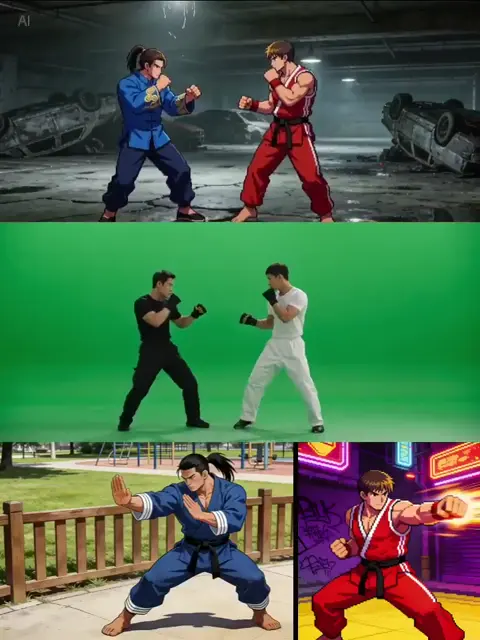
Why AI video generation reshaped production workflows
A decade ago, turning a script into a finished video meant booking a camera, a crew, a location, and an editing suite. Today one person with a laptop can move from written concept to a scored, edited sequence in an afternoon. That shift didn't come from one breakthrough model; it came from a stack of systems — diffusion-based visual generation, motion priors, speech synthesis, and AI editing assistants — learning to hand work off to each other.
The practical consequence is that the bottleneck moved. Rendering is no longer the hard part. Planning, iteration speed, and taste are. Modern generators are good enough that the gap between a forgettable clip and a convincing one is usually the operator's workflow rather than the model's size. That is why this comparison focuses less on feature checklists and more on how tools behave under real revision pressure.
Six criteria that separate a usable AI video tool from a demo
Feature lists are cheap to produce and rarely predict whether a tool survives contact with a real brief. Six criteria cover most real-world decisions: input flexibility, output fidelity, directorial control, iteration speed, audio handling, and consistency across a series.
Input flexibility: text, image, video, and audio
A generator that only accepts text prompts is an idea machine. A generator that accepts text, reference stills, existing footage, and an audio track is a production instrument. On client work you almost never start from nothing — you start from a brand guideline, a product photo, a rough voiceover, and a deadline.
Text-to-video is still the fastest way to explore tone. You describe a mood, a lens, a lighting setup, and you get several interpretations within minutes, which is useful precisely because it is disposable. Image-to-video is where most commercial work lands, because a still frame — a storyboard panel, a hero product shot, a character sheet — anchors the model and removes ambiguity about framing and identity. Multi-image inputs go further, letting you fuse a character from one reference with a location from another, which is roughly how continuity works in traditional animation pipelines.
Audio support adds a different lever: rhythm. Pacing shots to a music bed or a spoken line is far easier when the tool understands the waveform. Verify which combinations actually work, because some tools accept images but ignore audio-driven timing, which quietly breaks music-video and dialogue-driven workflows.
Fidelity, motion realism, and temporal consistency
Watching a generated clip for three seconds is easy. Watching it for thirty is where weaknesses appear: hands that re-form, faces that drift, backgrounds that melt, textures that crawl. Temporal consistency — the model's ability to keep the same world across time — is the most reliable predictor of whether output is usable.
Test any candidate tool with a sequence rather than a single shot. Generate six seconds of a person walking through a door and turning to camera. Do the clothing details hold? Does the door frame stay straight? Does the light direction stay fixed? If the answers wobble, the tool will cost you more in editing than it saves in generation.
Motion realism is related but distinct. Some models produce beautiful stills and mechanical movement; others produce slightly softer frames with convincing weight and momentum. For narrative work, believable motion usually beats maximum sharpness, because audiences forgive softness and never forgive wrong physics.
Directorial control: keyframes, camera moves, and seeds
The best tools give you steering, not just prompting. Look for start and end frame control, camera directives such as dolly, crane, orbit, and handheld, adjustable motion strength, and reproducible seeds so a shot you liked can be regenerated with one variable changed.
Seed locking is genuinely underrated. Without it, a fix to a lighting prompt reshuffles the entire composition and you lose the take you wanted. With it, you can iterate like a photographer: adjust one thing, keep the rest.
Keyframe control matters most in product and explainer work, where a shot has to land on a specific composition because the next shot cuts from it. If a tool can't accept an end frame, budget extra time for editing crops and stabilisation.
Speed, iteration cost, and hardware reality
Iteration speed decides how ambitious you can be. A tool that returns a usable draft in ninety seconds lets you try twelve ideas before lunch. A tool that takes twenty minutes per attempt forces you to over-plan, which usually produces safer, duller work.
Also weigh where the work happens. Cloud tools remove hardware constraints and make collaboration trivial, but queue times fluctuate. Local tools give predictable latency and private assets, but demand a capable GPU and patience with setup. Many teams use both: cloud for exploration, dedicated capacity for final passes where consistency matters. Check the resolution ladder too — generating small and upscaling deliberately is often faster and more controlled than forcing a large generation that fails three times.
Text-to-video: what it does well and where it falls apart
Text-to-video excels at mood, texture, and scale. Establishing shots, abstract transitions, weather, crowds, atmosphere — the things a human crew would spend a day staging — are exactly where prompt-driven generation shines. It is also the best brainstorming tool available: you can render a director's reference in minutes and discuss it concretely instead of arguing about adjectives.
Where it struggles is specificity. Anything with a legible logo, a precise gesture, a specific hand-off, or a line of dialogue tied to a mouth shape will probably need help. Text alone rarely survives a brief that says "she smiles with recognition, then looks down at the letter." That is two beats, and beats need shot-level control. The practical rule: use text-to-video for the world, and use other inputs for the characters and products inside it.
Image-to-video and multi-image fusion: the workhorse approach
If you only adopt one technique, adopt this one. Start with a strong still — a generated image, a photograph, a design render — and animate it. Because framing, colour, and identity are already decided, the model only has to solve motion, and motion is what these systems do best.
Multi-image fusion extends the idea. Feed a character reference, an environment reference, and a style reference, then describe the action. This is the closest thing AI video has to a shot list, and it scales well across a series: keep the same reference kit and you get recognisable continuity episode to episode.
Two practical cautions. First, reference images should agree on lighting; mixing a daylight portrait with a night-time location creates a fight the model resolves badly. Second, keep reference kits small — three or four images is usually stronger than ten, because conflicting signals dilute the anchor.
Audio, dialogue, and lip sync: where most projects break
Audio is where AI video pipelines most often fail, and it is rarely the visual model's fault. Speech synthesis produces clean voice tracks, but matching mouth movement to phonemes is a separate problem. Tools that handle lip sync natively save enormous time; tools that don't require you to shoot around dialogue, using reaction shots, over-the-shoulder angles, and cutaways.
A reliable strategy is to generate dialogue-adjacent shots rather than dialogue shots. Show the listener, not the speaker. Show hands, props, and environment while the voice continues underneath. Audiences accept this instantly because it is how documentary and interview editing has worked for decades.
For music-driven pieces, generate visuals to a click track or a marked-up waveform. Ask the tool for hits on specific beats, then cut on those frames. Even if timing drifts slightly, you gain a rhythm to edit against rather than a random sequence to rescue.
Style control, series consistency, and brand-safe output
Style transfer is the most visible feature and the most overrated in isolation. Anyone can make a clip look like watercolour. The harder problem is making forty clips look like the same watercolour.
Solve it with a written style contract: three to five sentences describing palette, lighting, lens behaviour, grain, and what to avoid. Paste that contract into every prompt rather than paraphrasing. Pair it with fixed reference images and fixed seeds for recurring characters. Then build a look-up library of ten to twenty approved frames that new shots must resemble — an internal visual style guide that outlives any single tool.
Brand safety deserves the same discipline. Logos should be added in editing rather than generated, text overlays should be laid on after generation, and any generated human likeness should follow your organisation's consent policy.
A repeatable end-to-end workflow from script to final cut
Lock the script and the beat sheet first
Write the script in beats, not paragraphs. Each beat is one intention: she notices the letter; the room darkens; the machine starts. Beats translate directly into shots, and shots are the unit of generation. Attempting to generate a narrative from flowing prose is the most common cause of unusable output.
Build a small visual reference kit
Collect or generate three to four images: the protagonist, the primary location, the key prop, and one frame that establishes the look. This kit becomes your anchor for every subsequent generation.
Generate in shots, never in scenes
Generate five to eight second clips, because longer generations drift. Number your files by beat and take, keep a simple shot log with prompt, seed, and reference used, and delete failures immediately so your library stays usable. Ten seconds of discipline per clip saves an hour of confusion later.
Assemble early, then refine selectively
Drop rough clips into an edit with temp music before polishing anything. Sequencing exposes problems fast: a shot that looked great in isolation can break the rhythm. Once the cut works, regenerate only the weak shots at higher quality. This rough-cut-first habit is where AI pipelines beat traditional ones outright.
Finish with sound and grade
Sound design carries more perceived quality than resolution. Add room tone, transition whooshes, and a gentle grade that unifies the shots. A consistent slight contrast curve hides more AI artefacts than any upscaler.
Common mistakes that waste the most time
- Writing prompts as keyword lists instead of describing a subject, an action, and a camera movement.
- Chasing a perfect single take instead of assembling several good fragments.
- Forgetting to lock seeds, then losing a take that was ninety percent right.
- Mixing reference images with contradictory lighting or art direction.
- Generating dialogue shots when cutaways would work better.
- Ignoring audio until the end, then discovering the pacing doesn't fit the track.
- Scaling resolution before the edit is locked, doubling render time for shots that get cut.
Choosing by use case: decision criteria that hold up
- High-volume social clips: prioritise speed and style presets over keyframe control.
- Product and brand films: prioritise image-to-video fidelity, end-frame control, and upscaling quality.
- Narrative shorts: prioritise temporal consistency, seed locking, and lip sync.
- Music visuals: prioritise audio-aware pacing and strong style transfer.
- Internal training and explainers: prioritise captioning, template workflows, and predictable rendering.
Pick two priorities per project and let them decide. Teams that try to optimise for everything usually finish nothing.
FAQ
Do I still need an editor if I use AI video tools? Yes, and editing becomes more important, not less. Generation produces fragments; editing produces meaning. Rough-cut assembly, sound design, and colour grading are what make a set of clips feel like a film.
How long should a generated clip be? Five to eight seconds is the sweet spot for most models. Longer clips drift in identity or motion. If you need a ten-second shot, generate two and cut them together on a natural action match.
Can AI video tools handle text and logos on screen? Poorly, and inconsistently. Generate clean plates and add typography, logos, and packaging labels in your editor or design tool. The result will be legible, on-brand, and editable.
What is the fastest way to improve output quality? Fix the input before touching the prompt. A well-lit, well-composed reference image improves results more than twenty extra words of description. After that, shorten prompts to the essential action and let the reference do the styling.
Is local generation worth the setup? If you produce regularly, handle sensitive material, or need predictable latency, yes. If you generate occasionally or collaborate with a distributed team, cloud tools are simpler. Many creators run both and route work accordingly.
How do I keep a series consistent? Write a style contract, keep a fixed reference kit, lock seeds for recurring characters, and maintain an approved-frame library. Treat consistency as a process rather than a prompt trick.

Alexander
More Blogs
Read MoreVidu Q4 Alternatives: 4K AI Video Models Compared (2026)
Vidu Q4 alternatives compared: Kling 4.0, Seedance 2.5, Wan 3.0, and Runway Gen-4 — 4K support, input modes, durations, audio, and what each costs in credits on Domer.
Top 4K AI Image Generators in 2026: 5 Models Compared on Real Costs
The top 4K AI image generators on Domer compared: Flux 3 Klein, Nano Banana 2.1, GPT Image 2.5, GPT Image 2, and Nano Banana Pro — 4K credit costs, reference limits, and speed.
Nano Banana 2.1 vs GPT Image 2.5: Which Image Model Should You Use? (2026)
Nano Banana 2.1 vs GPT Image 2.5 Flare compared: credit costs per resolution, aspect ratios, reference images, text rendering, and which tasks fit each model.