
Utwórz
Flux vs Runway Gen-4: AI Video Synthesis Tools Compared
Oct 13, 2026

Why This Comparison Still Matters for Working Creators
Every production team eventually asks the same question: which generative model should our pipeline be built around? The answer rarely comes from a feature checklist. It comes from the shape of your work — how many shots you generate each week, how consistent your characters need to be, and how much iteration you can afford before a deadline arrives.
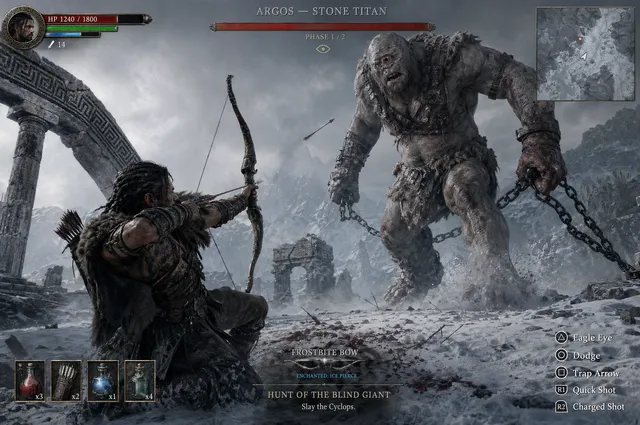
Flux and Runway Gen-4 get named in the same breath, but they are not the same kind of tool. Flux is best understood as a high-fidelity image synthesis family. It excels at generating still frames, key art, and storyboard panels that read as photographic or deliberately stylized, and it slots neatly into pipelines where a still frame is later animated. Runway Gen-4 is a native video generator. Give it a prompt, often alongside reference images, and it produces motion with temporal coherence built into the model rather than bolted on afterward.
That distinction shapes everything downstream. If your work is shot-led — characters, dialogue, performance, continuity across cuts — you will spend most of your time in a video model and use an image model to lock the look before you animate. If your work is asset-led — thumbnails, key art, product stills, short loops built from one strong frame — the image-first route often gets you to a finished deliverable faster and with fewer moving parts.
Treat this as a workflow decision rather than a leaderboard. Below you get a testing method, a shot-type breakdown, budget and throughput planning guidance, and a reusable decision framework.
How Flux and Runway Gen-4 Differ Architecturally
Training philosophy and model lineage
Flux models are trained primarily on still imagery at high resolution, which is why they produce clean geometry, believable skin texture, legible lettering in straightforward cases, and stable lighting. Their strength is fidelity per frame. When you generate a keyframe in Flux and pass it to a video model as a reference, you narrow the video model's search space dramatically: composition, palette, and subject identity are already decided, so the animation step only has to invent motion.
Runway Gen-4 was built from the opposite direction. Its training objective centers on sequences — how pixels move, how a face holds identity when the camera pans, how shadows shift as a light source travels. That is why it handles transitions between shots more gracefully and why it can carry a character reference into a new scene without rebuilding the visual language from scratch.
Neither philosophy wins in the abstract. Image-first control gives you more authority at the frame level and more predictable spend. Video-first generation removes a step and produces more natural motion out of the box.
Prompt-first control versus parametric control
Flux exposes a fairly wide parameter surface: seed, step count, guidance scale, aspect ratio, negative prompts, adapter weights, and structural conditioning such as depth, pose, or edge maps. That richness is a gift if you have a technical operator and a liability if you do not. Two seeds with identical prompts can produce wildly different results, and the skill lies in knowing which dial to turn when a face drifts or a background turns to mush.
Gen-4 leans toward natural-language direction combined with reference images. You describe the shot, the camera behavior, and the mood; you attach a character or style reference; you set duration and aspect ratio. Fewer dials, but the dials that exist matter a great deal. Reference strength and motion intensity are the two variables most teams underestimate, and both have a sweet spot that shifts depending on how much movement the shot requires.
Practically, the two tools demand different skills. Flux rewards systematic experimentation and parameter discipline. Gen-4 rewards clear shot description and good reference material.
Temporal consistency and artifact behavior
Frame-by-frame pipelines do not flicker on their own, because every frame is an independent still. The problem arrives during animation: textures breathe, hair edges crawl, and small details reinterpret themselves between frames. Consistency work in an image-first pipeline is therefore about locking seeds, reusing references, and keeping lighting language identical across a sequence.
Native video models reduce flicker but introduce their own failure modes. Backgrounds can soften or invent objects, fine texture can smear during fast motion, and identity can drift if a character turns far enough from the camera. The most useful habit is a two-pass approach: generate the motion, then repair problem frames with an image model rather than regenerating the whole shot and hoping.
Designing a Fair Test Before You Commit
Most tool comparisons fail because they test on a single cherry-picked prompt. A better approach takes half a day and saves weeks.
Build a five-shot test slate
Pick five shots that represent your actual production mix, not your most impressive idea:
- A wide establishing shot with terrain, weather, and depth.
- A medium shot of a recurring character speaking or reacting.
- A close-up where facial detail and skin texture carry the scene.
- A product or graphic shot with legible text and clean edges.
- A camera move — a slow push-in, an orbit, or a tracking shot.
Run all five through both workflows: Flux for keyframes plus a video model for motion, and Gen-4 for direct generation. Keep duration, aspect ratio, and output resolution identical so the comparison is about the model, not the settings.
Score with a simple rubric
| Criterion | What you are judging | Weight |
|---|---|---|
| Shot usability | Could this go into an edit with minor fixes? | High |
| Continuity | Does the subject survive a cut or a camera move? | High |
| Artifact load | How many frames need repair? | Medium |
| Time to first usable take | From prompt to approved clip | High |
| Iteration cost | Spend per finished second after retries | Medium |
| Direction feel | Does the result match the intended tone? | Medium |
Score each shot on a five-point scale, then weight. Teams consistently find that the tool winning on raw beauty is not always the tool winning on usable seconds per hour — and the second number is what pays the bills.
What Each Tool Does Best, Shot by Shot
Establishing shots and environments
Wide shots are the friendliest territory for image-first workflows. Generate a striking plate in Flux, refine composition with structural conditioning, then animate a slow move. Because there is no face to protect, the video step has latitude and rarely fails.
Gen-4 handles environments well too, and it can produce a decent establishing shot in one pass with no keyframe work. The trade-off is control: you get a good shot faster, but nudging the horizon line or the position of a landmark means re-rolling rather than editing.
Character-driven scenes
This is where native video generation earns its place. Gen-4's reference-based approach keeps a face recognizable across multiple shots, which is exactly what a narrative sequence needs. Build a reference sheet first — neutral expression, three-quarter view, full body, consistent wardrobe — and reuse it everywhere.
Flux contributes in a supporting role. Use it to generate the reference sheet, to repair frames where identity slips, and to create alternate angles that the video model can then animate. The combination typically beats either tool used in isolation.
Product, UI, and motion graphics
Product shots demand precision: straight lines, correct logo proportions, legible labels. Image models generally handle this better because you can iterate on a single frame until it is exact. If the deliverable is a short loop with gentle motion, a strong still plus a light animation pass is often cleaner than a fully generated clip.
Generated video becomes more useful when the shot involves physical behavior — liquid, fabric, steam, rotation. There, the model's understanding of motion matters more than frame-level precision.
Complex camera moves
Orbits, crane moves, and dolly zooms are stress tests. Native video models generally produce smoother arcs because they treat motion as a first-class concept. Image-first pipelines can approximate these moves through depth-aware animation, but geometry tends to warp at the extremes.
Rule of thumb: if the camera is the star of the shot, start with a video model. If the frame is the star, start with an image model.
Cost, Speed, and Throughput: Planning the Real Budget
Pricing shifts quickly, so plan around structure rather than specific numbers. Three variables dominate:
- Resolution and duration. Spend scales with both, often superlinearly. A clip at double the resolution and double the length can cost considerably more than four times a baseline clip.
- Iteration count. The first take is rarely the keeper. Budget for three to five attempts per hero shot and one to two for supporting shots.
- Repair passes. Fixing frames with an image model is usually cheaper than regenerating an entire clip, but it consumes operator time.
A practical planning method: estimate finished seconds first, multiply by an iteration factor, then add a repair allowance of roughly 15 percent. Track actual output against that estimate for two projects and you will have a reliable internal benchmark.
Throughput behaves differently on each path. Image-first pipelines can generate many keyframes in parallel, which makes them forgiving of long queues because work continues while clips render. Video-first pipelines are serial in nature: one prompt, one clip, one wait. If your deadline is tight and your shot list is long, parallelism matters more than per-clip speed.
Character Consistency and Non-Destructive Workflows
Consistency is the hardest problem in AI video, and it is where workflow design beats model choice.
Start with a locked character bible: a reference sheet, a defined palette, and written notes on wardrobe and props. Then treat every generated clip as a draft that feeds the next step rather than a final asset. Keep original prompts, seeds, and references in a project log so any shot can be rebuilt or branched without guesswork.
Non-destructive editing matters here. Use separate tracks for generated footage, repaired frames, and composited elements. When a client asks to change a jacket color in shot six, you want to regenerate one element, not re-render the sequence.
Gen-4's reference system makes the first part easier. Disciplined project structure makes the second part possible regardless of which model you use.
Multimodal Inputs and Pipeline Integration
Both tools accept more than text, but they accept different things. Image-first workflows thrive on structural inputs — depth maps, pose skeletons, edge maps, color references — because those inputs constrain composition precisely. Video-first workflows thrive on character and style references plus natural-language motion direction.
Think about where each tool sits in your pipeline. An image model is a pre-production and repair instrument: storyboards, key art, thumbnails, frame fixes. A video model is a production instrument: sequences, motion, performance. The handoff between them is where quality is won or lost, so define it explicitly — file naming, resolution, color space, and reference packaging.
Also plan for audio and edit compatibility. Lock frame rates early, export with consistent codecs, and keep a proxy version of every clip for fast timeline work.
Mistakes That Derail AI Video Projects
- Testing with only hero shots. Cherry-picked prompts hide the failure modes that appear under deadline pressure.
- Changing multiple variables at once. If you adjust prompt, reference strength, and duration together, you learn nothing.
- Skipping the reference sheet. Character drift is almost always a reference problem, not a model problem.
- Ignoring aspect ratio early. Cropping a generated clip after the fact destroys composition and detail.
- Over-generating. Ten mediocre takes cost more than three deliberate ones.
- Treating output as final. Plan a repair and finishing pass from the start.
- Forgetting the edit. A clip that looks impressive standalone can be unusable if it does not cut with its neighbors.
A Decision Framework You Can Reuse
Ask four questions in order:
- Is the frame or the motion the hard part? Frame-hard projects favor an image-first path; motion-hard projects favor native video.
- Does a character need to persist across shots? If yes, weight reference-based video generation heavily and build a character bible.
- How many finished seconds do you need, and by when? Long shot lists reward pipelines that parallelize.
- Who operates the tools? A team comfortable with parameters gets more from image-first control; a team that thinks in shots and direction gets more from prompt-led video generation.
Most mature studios end up with a hybrid: image models for look development and repair, video models for sequences, and a documented handoff between them.
FAQ
Can an image model replace a video model?
No. Image models produce frames; video models produce motion. You can animate a still with a motion pass, but complex performance and camera work still favor native video generation.
Which path produces better character consistency?
Reference-based video generation has the edge for multi-shot sequences. Image-first pipelines can match it, but only with disciplined seed and reference management.
How many attempts should I budget per shot?
Three to five for hero shots, one to two for supporting shots. Anything lower is optimism; anything higher usually signals a broken prompt or a weak reference set.
Do I need both tools?
Not for every project. Short asset-led work can live entirely in an image-first workflow. Narrative work almost always benefits from both.
What resolution should I generate at?
Generate at or above your delivery resolution. Upscaling generated video softens texture and amplifies artifacts.
How do I keep spend predictable?
Fix duration, resolution, and iteration caps before you start, then track finished seconds against estimated seconds for two projects to calibrate your baseline.
Closing Notes
The real advantage is not owning the better model. It is knowing which model to reach for at each stage, documenting the handoff, and keeping the pipeline boring enough that deadlines stop being a gamble. Test on your own shot mix, measure usable seconds rather than pretty frames, and let the numbers choose your default.

Alexander
More Blogs
Read MoreMontaggio video rapido: transizioni e software per l'AI
Guida pratica al montaggio video rapido con AI: transizioni fluide, software, workflow, coerenza visiva, errori da evitare e FAQ operative.
Building an AI Video Production Workflow From Concept to Cut
A practical guide to planning, generating, editing, and finishing AI-assisted videos with consistent characters, clear shot lists, and reliable review loops.
A Repeatable Post-Production Workflow for Polished AI Video
Build a repeatable AI video post-production pipeline: organize assets, cut story-first, design transitions, refine audio, and review versions calmly.