

Short-Form Video Marketing Trends and AI Workflow Guide
Oct 15, 2026


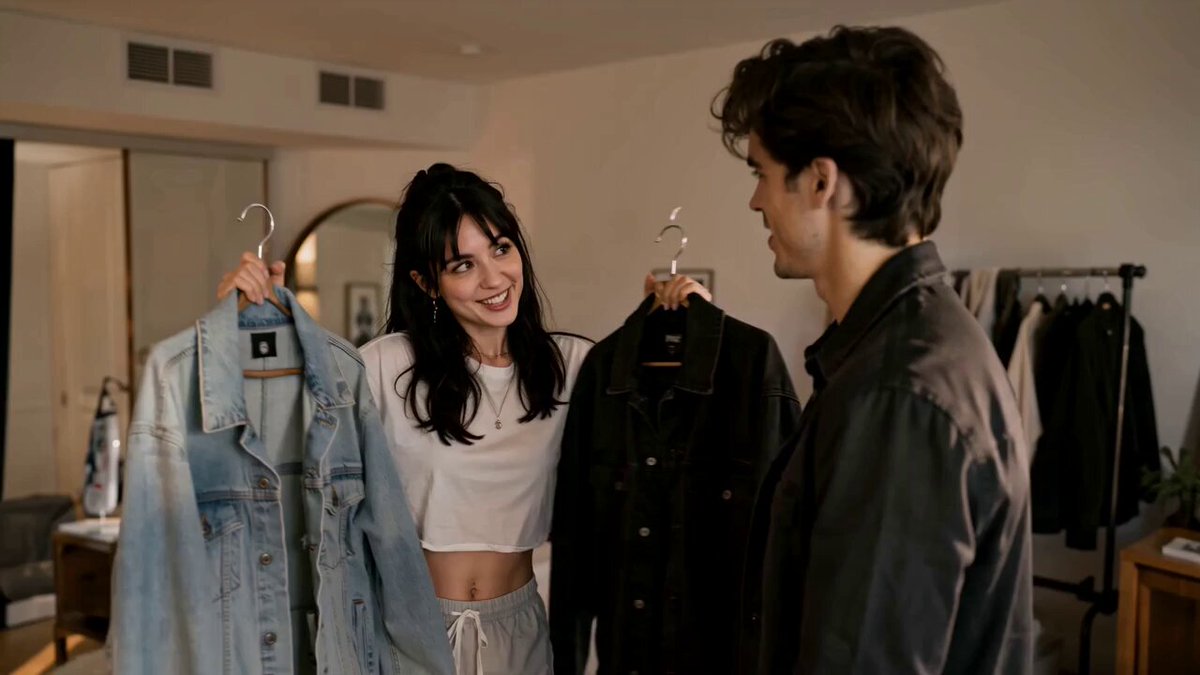
Short vertical video is no longer one channel among many. It is the surface where discovery happens, where brands are introduced, and where buying intent first forms. Audiences scroll with a thumb hovering over the screen and a decision window measured in fractions of a second. That reality rewrites the rules of production: a spot composed for a widescreen television and re-cropped with letterboxing will lose to something built natively for a hand-held frame, captioned, and paced to land its point before the viewer's finger moves.
This guide is about the production side of that reality. Not a list of trends to quote in a deck, but a working method for turning a brief into a consistent stream of vertical videos — using AI generation where it genuinely helps and human judgement where it still wins.
Why short vertical video still owns attention
Three structural forces keep vertical video dominant, and none of them are about novelty anymore.
The decision is instant. A viewer decides whether to keep watching somewhere in the first second, long before a logo appears or a value proposition is stated. This means the opening frame — not the opening line — carries the heaviest burden. Composition, contrast, motion, and a visible human face outperform almost any amount of clever copy.
Sound is optional. A large share of viewing happens in environments where audio is muted, in transit, or unwanted. If your video only works with sound on, you are effectively producing two different products: one for the attentive viewer and one for the scroller who never hears a word. Captions, on-screen text, and visual storytelling are not accessibility add-ons; they are the primary channel.
Completion is a ranking signal. Platforms reward videos people finish and rewatch, which pushes creators toward tighter runtimes and front-loaded payoff. A sixty-second video with a strong final ten seconds loses to a twenty-second video that is excellent throughout.
Put together, these forces create a format with unusually strict constraints: vertical composition, immediate clarity, no reliance on audio, and a ruthless edit. AI does not remove those constraints. It changes how quickly and how consistently you can satisfy them.
The short-form production pipeline, end to end
Most underperforming short-form output fails at the pipeline level, not the idea level. A brief arrives, someone opens a generation tool, and eighty clips later nobody remembers which variant performed or why. A working pipeline has four stages, and each one has a specific job.
Stage one: brief and hook design
Write the hook before anything else. A hook is not a headline; it is a visual promise. "We put a camera inside a dishwasher" is a hook. "Our new formula is better" is a claim. For each concept, produce three to five hook variations that differ structurally — not three synonyms of the same sentence, but genuinely different openings: a surprising object, an unfinished action, a direct question delivered to camera, a before-state.
At this stage, define the frame contract: aspect ratio, safe zones for captions, whether the subject is centred or offset, and how much headroom the composition allows. Getting this wrong is the single most expensive mistake in vertical production, because it invalidates every generated asset downstream.
Stage two: scripting and shot listing
Convert the winning hook into a shot list with explicit durations. A useful default for a twenty-second piece is: hook (0–2s), context (2–6s), demonstration or escalation (6–15s), payoff (15–18s), call to action (18–20s). Every shot should have a purpose you can name. If you cannot say what a shot accomplishes, cut it before generation, not after.
Keep the shot list in a spreadsheet or database rather than a chat thread. You will want to log the prompt, the selected take, and the final performance metric in the same row later.
Stage three: generation and assembly
This is where AI does the heavy lifting. Generate per-shot rather than per-video; short clips are easier to evaluate, easier to regenerate, and easier to reorder in the edit. Assemble on a timeline with hard cuts first, then decide whether transitions earn their place. Most vertical edits need fewer transitions than editors instinctively add.
Stage four: QA and delivery
QA is a checklist, not a vibe. Watch the finished piece muted, then at arm's length on a phone, then at full volume with headphones. Check for caption collisions, inconsistent wardrobe between shots, flickering lighting, and any moment where the viewer has to think about what they are looking at. Deliver in the native resolution and frame rate of each destination rather than re-encoding a single master for everything.
Personalisation at scale without breaking consistency
The hardest operational problem in short-form marketing is not making one good video. It is making two hundred variants that all look like they came from the same brand, without a human rebuilding the look from scratch each time.
Consistency starts with a fixed character reference
If a person appears in more than one clip, they need a reference set: a small collection of images covering front, three-quarter, and profile angles, plus a neutral expression and one dynamic expression. Build that set once, verify it against the brand's wardrobe rules, and reuse it. Most visual drift in AI-generated series comes from re-describing a character in words each time instead of anchoring to the same reference images.
When a character must change — a new season, a new product line — treat it as a deliberate version bump. Name the reference set (for example, "host-A-v2") and retire the old one so nobody mixes them in the same edit.
Segment by behaviour, not by demographics
Personalisation usually gets framed as audience targeting. In practice, the highest-leverage segmentation is behavioural: what the viewer already watched, what they abandoned, what they saved. That produces a small number of meaningful variants rather than dozens of cosmetic ones.
A practical structure is three axes: hook type (question, visual surprise, before-and-after), proof type (demo, testimonial, data), and length (short cut, standard cut, extended cut). Three by three by three is twenty-seven combinations — enough to learn from, few enough to produce well. Resist the urge to multiply axes further before you have data on the first set.
Write variants that do not feel templated
Script variants fail when they only swap nouns. A viewer who sees two versions of the same sentence structure in a row feels the machinery. Instead, vary the rhetorical shape: one variant opens with a problem, another with a confession, another with a demonstration that has no narration at all. Changing structure is what makes scale feel human.
Keep a swipe file of your own best-performing openings. Over time, this becomes the most valuable asset in the pipeline — more valuable than any individual model version.
Hitting cinematic standards in a vertical frame
Vertical framing is not a limitation to apologise for. It is a different grammar, closer to portrait photography than to widescreen cinema. Once you accept that, the production decisions become clearer.
Motion control and camera logic
A vertical shot needs a reason to move. Slow push-ins, subtle parallax, and gentle handheld drift all read well; fast pans and whip movements often read as noise in a narrow frame. Decide the camera behaviour per shot before generating, and keep it consistent within a sequence so the viewer's eye is not re-learning the grammar every three seconds.
For product shots, a locked-off frame with the object rotating is almost always stronger than a moving camera around a static object. The object is the performance.
Lens simulation, depth, and lighting
Depth cues matter more in vertical because the frame is narrow and the subject fills more of it. A shallow depth of field with a cleanly separated background reads as premium; a flat, evenly lit frame with a busy background reads as amateur regardless of how good the content is.
Practical rules that hold up across tools: keep the key light on the side of the face closest to the camera, avoid mixing colour temperatures within a shot, and reserve pure white backgrounds for contexts where the product is genuinely the only subject. Consistent lighting between shots is what makes an assembled sequence feel shot rather than generated.
Multi-reference scenes and continuity
Complex scenes — two people interacting, a product handled on camera, an environment that appears three times — need multiple references working together. The workflow that holds up is to lock the environment first, then the characters, then the action. Generating all three simultaneously and hoping for the best produces assets you cannot reuse.
Where a scene must match an existing shot, feed the previous frame as a reference and describe only what changes. Describing the whole scene again from scratch invites drift.
Choosing the right toolstack
There is no single best AI video tool, and the teams producing the most consistent work are almost always running a hybrid stack. Use the following criteria to choose.
| Criterion | What to look for | Why it matters |
|---|---|---|
| Reference fidelity | Accepts multiple image references per generation | Determines whether characters and products stay stable |
| Motion predictability | Consistent output across repeat runs with the same prompt | Makes shot planning possible |
| Vertical-native output | Native portrait rendering, not cropping | Avoids composition and resolution compromises |
| Iteration speed | Fast enough to try five options per shot | Quality comes from selection, not from one perfect prompt |
| Edit integration | Clean export formats and metadata | Keeps assembly from becoming a manual chore |
| Cost predictability | Understandable usage model at your volume | Protects the economics of high-frequency publishing |
A useful decision shortcut: if your bottleneck is generating enough raw material, prioritise iteration speed. If your bottleneck is that nothing matches, prioritise reference fidelity. Most teams believe they have the second problem when they actually have the first.
Where human review still wins
AI handles volume, variation, and first drafts. Humans still own taste, brand risk, and the final five percent. Concretely: a human should approve the hook, the wardrobe, the claims made on screen, and the final cut. Everything else can be templated.
A practical campaign sprint, day by day
A repeatable one-week cycle keeps short-form output steady without burning the team out.
Day one — research and hooks. Review last cycle's performance by hook type. Write fifteen hook options. Kill anything that cannot be shown visually in two seconds.
Day two — script and shot list. Convert the best eight hooks into shot lists. Define the frame contract and caption safe zones once, and apply it everywhere.
Day three — reference build. Create or update character, product, and environment reference sets. Verify wardrobe and lighting consistency before generating anything long.
Day four — generation. Produce per-shot clips. Generate multiple takes per shot and select immediately rather than accumulating an unmanageable library.
Day five — assembly and sound. Rough cut with hard cuts, then add captions, music, and only the transitions that earn their place. Cut the first two seconds three different ways and pick the best.
Day six — QA and scheduling. Run the muted watch, the phone watch, and the headphone watch. Schedule across destinations with native exports.
Day seven — measure and log. Record which hook, proof type, and length each published piece used. This log is what turns a week of work into compounding knowledge.
Mistakes that kill short-form performance
| Symptom | Likely cause | Fix |
|---|---|---|
| High impressions, low completion | Hook is a claim, not a visual event | Rebuild the first two seconds around an image, not a sentence |
| Consistent look, flat results | Every variant uses the same rhetorical structure | Vary the shape of the script, not just the nouns |
| Character drifts between clips | Text descriptions used instead of locked references | Build and version a reference set |
| Good on desktop, weak on mobile | Widescreen thinking, small subject, low contrast | Re-frame for portrait and re-check safe zones |
| Viewers drop at the midpoint | Middle section repeats the hook instead of escalating | Replace recap with new information |
| Volume without learning | No logging of creative variables | Add hook, proof, and length fields to the shot list |
The last one is the quiet killer. Teams that produce aggressively but record nothing end up with a large library and no idea which part of it works.
Measurement, feedback, and the compounding loop
Short-form marketing rewards iteration speed more than production perfection. That means the measurement loop should be as short as the content cycle.
Track three layers. Creative variables — hook type, proof type, runtime, presenter presence. Platform signals — completion rate, rewatch rate, saves and shares. Business signals — click-through, qualified traffic, conversion where attribution allows.
The middle layer is the most instructive and the most ignored. Saves and shares tell you the content was useful or memorable in a way that views never will. A video with modest reach and high saves is often a better template to clone than a viral clip nobody acted on.
Build the feedback loop into the pipeline itself: at the end of each cycle, promote the two best-performing structures into the default template and retire the two worst. Over a few months, the template becomes specific to your audience in a way no external trend list can replicate.
Frequently asked questions
How much of a short-form video can realistically be AI-generated?
In practice, most successful workflows generate the visual shots with AI and handle the script, structure, captions, and sound design with human decisions. Full automation is possible but rarely produces work that competes on taste. Treat AI as the camera and the crew, not the director.
What is the minimum viable reference set for a recurring presenter?
Four to six images: straight-on, three-quarter left, three-quarter right, profile, a neutral expression, and one animated expression. Add a full-body shot if wardrobe continuity matters. Verify the set against brand rules before you build a library on top of it.
How long should a vertical marketing video be?
As short as the idea allows. If the payoff lands at twelve seconds, publish twelve seconds. Stretching to a standard runtime to feel substantial costs completion rate and therefore reach. Where a longer story genuinely needs room, split it into a series rather than one long clip.
Do I need to produce separate versions for every platform?
Not separate creative, but separate exports. Keep one edit and render native aspect ratio, resolution, and duration for each destination. Re-encoding a single master for all platforms is the most common cause of soft-looking vertical video.
How do I stop AI output from looking generic?
Specificity beats style prompts. Name the room, the light source, the material of the clothing, the exact action in progress. Generic descriptions produce generic results, and no model version fixes a vague brief.
What should a small team automate first?
Captions, exports, and the logging of creative variables. These are low-risk, high-friction tasks. Automate generation last, because it is the stage where human selection adds the most value.
Where to start this week
The barriers to publishing vertical video have collapsed; the barrier now is consistency. Pick one product, one presenter or one hero object, and build a single reference set. Write five structurally different hooks. Produce one twenty-second video per hook, muted-first, captioned, native portrait. Publish all five, log the variables, and let the data tell you which structure to clone.
That single loop — reference set, structured variants, muted QA, logged results — is the whole method. Everything else in short-form video marketing is a variation on how fast and how reliably you can run it.

Alexander
More Blogs
Read MoreVidu Q4 Alternatives: 4K AI Video Models Compared (2026)
Vidu Q4 alternatives compared: Kling 4.0, Seedance 2.5, Wan 3.0, and Runway Gen-4 — 4K support, input modes, durations, audio, and what each costs in credits on Domer.
Top 4K AI Image Generators in 2026: 5 Models Compared on Real Costs
The top 4K AI image generators on Domer compared: Flux 3 Klein, Nano Banana 2.1, GPT Image 2.5, GPT Image 2, and Nano Banana Pro — 4K credit costs, reference limits, and speed.
Nano Banana 2.1 vs GPT Image 2.5: Which Image Model Should You Use? (2026)
Nano Banana 2.1 vs GPT Image 2.5 Flare compared: credit costs per resolution, aspect ratios, reference images, text rendering, and which tasks fit each model.