
Writing a prompt for AI art used to mean stringing a few adjectives together and hoping for the best. That approach gets you a pretty image now and then, but it rarely gets you a scene, a character, or a story. If your goal is to build visual narratives rather than one-off pictures, you need to treat prompts less like captions and more like a director's shot list: specific, structured, and informed by a clear sense of what the model actually responds to.
The good news is that prompt engineering for image and video generation has matured quickly. What started as a hidden-art skill shared between early adopters has become a repeatable craft, one you can learn, practice, and use to produce work that looks unmistakably yours. This guide walks you through a practical, layered approach to prompts that produce unique visual narratives, and it explains why the models you choose matter just as much as the words you type.
Why a Narrative Is More Than a Pretty Image
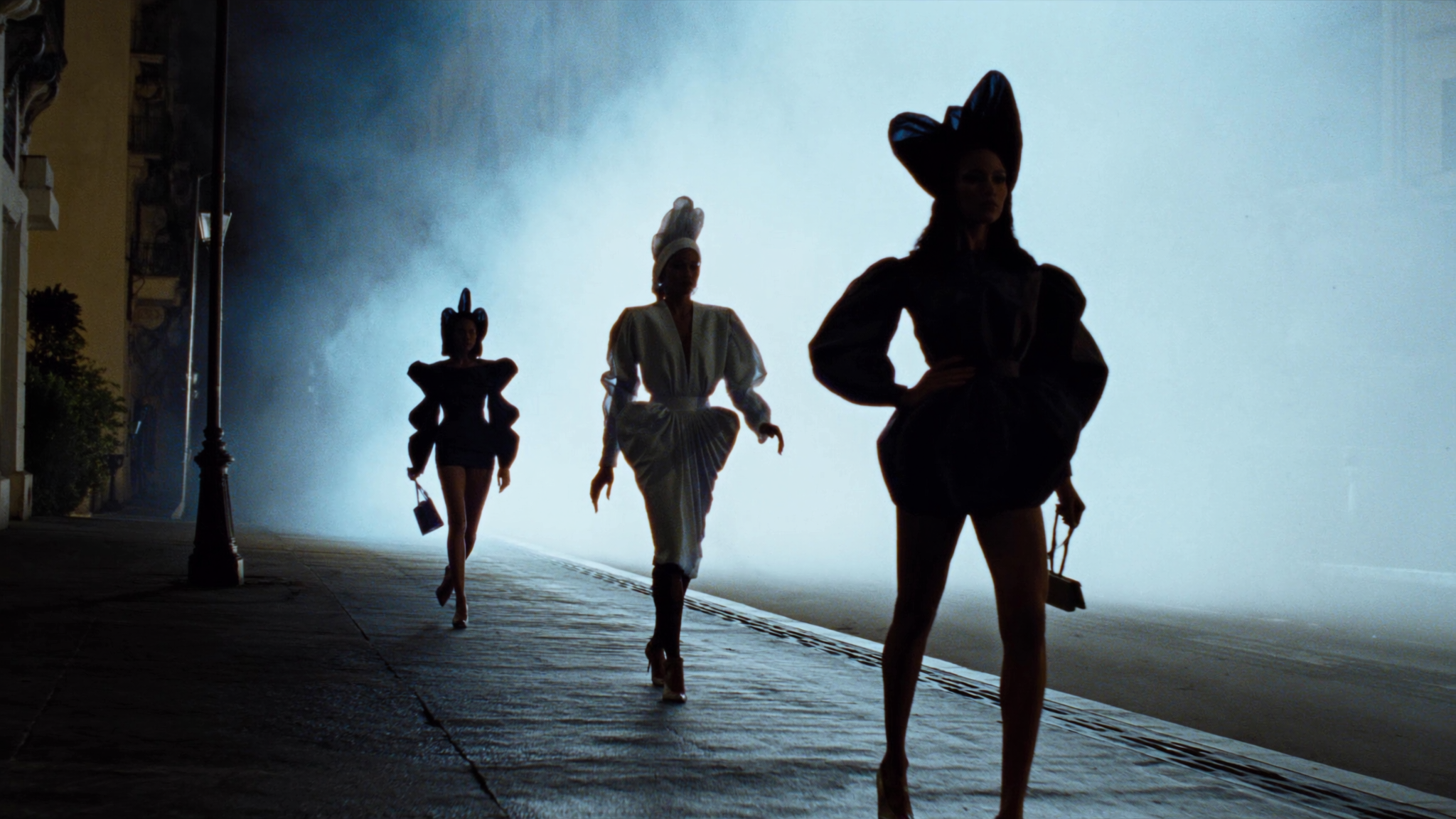
An illustration of a robot reading a book can be technically excellent and emotionally inert. The same robot, seated in a rain-swept library at midnight with a single warm lamp, reaching for a spool of red thread, tells a story the moment you look at it. That is the difference between decorating and narrating.
Narrative images succeed because they give the viewer something to resolve. They contain an implied before and after, a relationship between elements, or a question that the frame does not fully answer. When you prompt for AI art, you are trying to communicate that implied story across a narrow channel: text that a model turns into pixels.
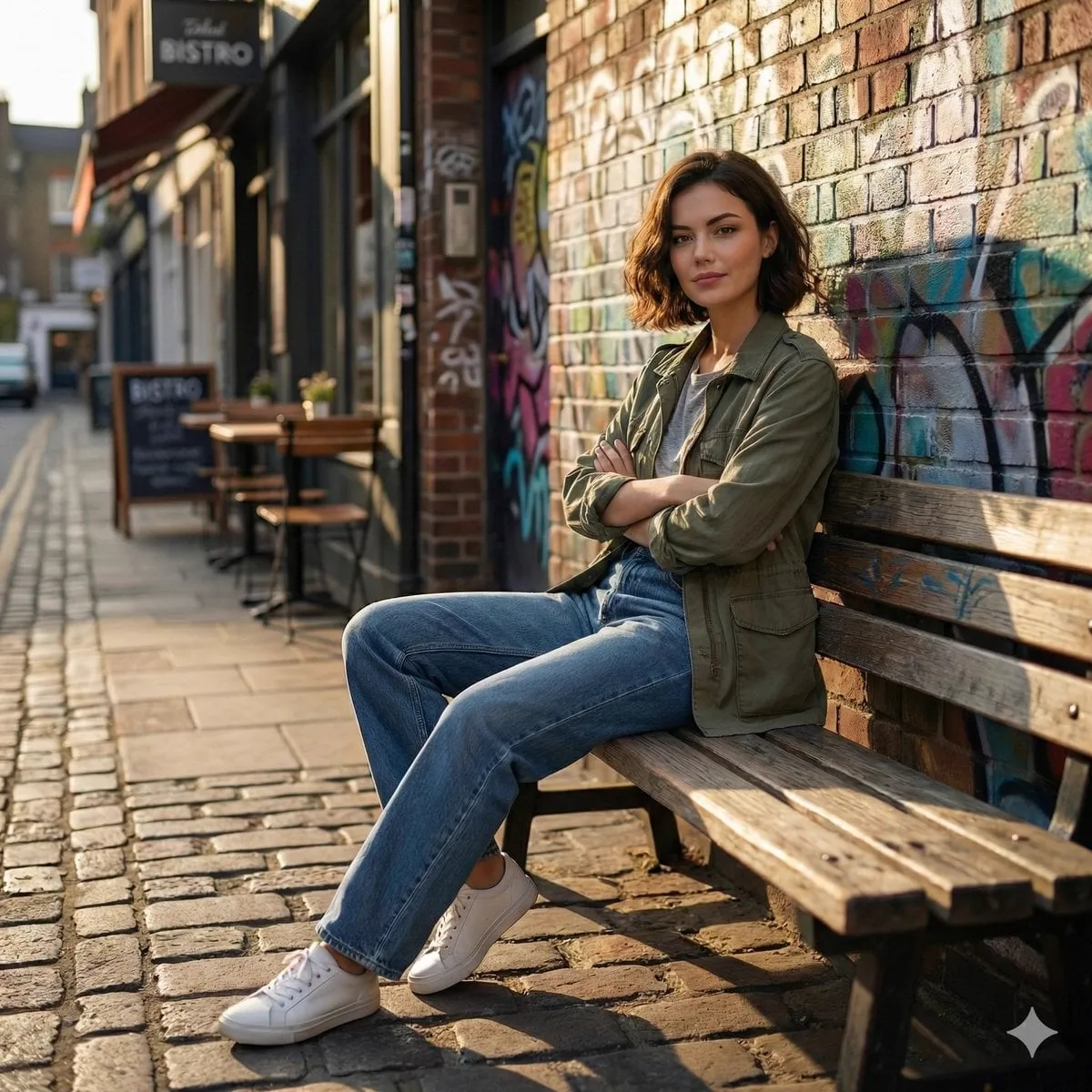
The practical takeaway is to prompt for situations, not subjects. Ask for a character performing an action inside a specific environment under specific light, with a mood and a point of attention. That single shift, from listing nouns to describing a moment, is what most beginning prompt writers miss and what working artists rely on.
The Building Blocks of a Structured Prompt
Rather than a single wall of text, think of a good prompt as several functional blocks assembled in a reliable order. You can arrange these flexibly, but each block should exist somewhere in your prompt or your notes:
- Subject definition: who or what is in the frame, with enough detail to be specific without becoming a paragraph.
- Style and medium: illustration, photoreal, oil painting, claymation, pixel art, film still, and so on.
- Cinematic parameters: lens, framing, lighting, color grade, and depth of field.
- Narrative context: the situation, the emotion, the implied action, and the relationship between elements.
- Composition and negative space: what fills the frame and what you explicitly want to leave out.
Once you can see these blocks in your prompt, inconsistencies become easy to find. If the model keeps changing your character's jacket, your character description is probably mixed in with the style block instead of isolated. If the lighting looks flat, the cinematic block is probably missing explicit descriptors.
Choosing the Right Verbs
Models respond to action verbs and scene states more reliably than they respond to vague mood words. Compare "a sad ship" with "a ship listing in calm water, its sails torn, a single seagull circling a broken mast." The second triggers spatial relationships and scene physics that the first one leaves to chance.
Write prompts as though you are giving directions to a hyper-literal cinematographer who has never seen the film. Be concrete about motion, about what elements touch, about where the light comes from, and about what the frame is looking at.
Negative Prompts: Controlling What Does NOT Appear
Almost every modern image model lets you describe what you do not want. Negative prompting is the counterweight to your main prompt, and it is the fastest way to eliminate the recurring artifacts that models love: extra fingers, warped limbs, duplicated faces, unwanted text, watermarks, and low-detail backgrounds.
Keep your negative list tight and topical. Dumping thirty generic negatives into every prompt can sometimes fight the main prompt and muddy the result. A lean negative list that targets the specific failure you are seeing, like extra fingers, wonky hands, text artifacts, compression noise, and flat lighting, usually outperforms a giant catch-all.
Treat negative prompting as an iterative tool. Generate a batch, look for a repeatable flaw, add the precise negative for that flaw, and regenerate. That loop, generate, diagnose, refine, is the core of getting consistent results.
Iteration and Seed Control for Consistency
Randomness is a feature of generative art, but it is a problem when you are trying to keep one character or one environment consistent across several frames. Two tools help you restrain that randomness: seeds and iteration.
A seed is the starting number a model uses to draw. The same prompt and the same seed produces the same image. When a result contains something worth keeping, lock that seed down, then change small parts of the prompt to explore variations without losing the base composition. This lets you explore a family of images instead of rolling a fresh set of dice every time.
For consistency across a series, you can also fix the descriptive core of your subject in your prompt and only vary the scene. Keep the same character name, the same physical descriptors, the same outfit note, and the same lighting direction in every frame, then change the action and background. Over time that discipline produces a character that a viewer recognizes as the same person across images.
Matching Models to Your Narrative
Different models have different strengths, and the best prompt in the world will not overcome a mismatch between the tool and the job. Some models excel at photorealistic detail and are ideal for cinematic, real-world scenes. Others are trained heavily on stylized art and produce exceptional concept art, anime, or painterly results. Niche models can be tuned toward a specific look that generic models flatten.
Before you write a single prompt, make a short list of the qualities your narrative needs most: realism, stylization, character consistency, motion, or speed. Then choose a tool family that is known for that strength. You will get dramatically better results using the right model with a so-so prompt than using the wrong model with an excellent one.
Blending Multiple Sources
One of the strongest techniques for unique narratives is source-image fusion. If your tool supports it, feed the model two or three reference images that represent what you want to combine, a character from one study, a lighting setup from another, a costume detail from a third, and prompt for the synthesis. This is how artists create characters and environments that feel genuinely invented rather than sampled.
The technique also solves consistency problems before they start. When you have a canonical reference for a character, you can ask the model to reuse it across scenes instead of trying to describe the character back to the model from memory words.
The Workflow of a Visual Narrative Series
A narrative series asks more of you than an isolated image, because every frame has to agree with the ones before it. A practical production workflow looks like this:
- Lock the concept: a one-sentence premise, a mood, and a palette.
- Build the character bible: a written description you reuse verbatim in every prompt.
- Establish the environment: one canonical setting reference and a lighting direction.
- Write the shot list: a sequence of frames that advances the story.
- Generate and refine: work through the list one frame at a time, locking good seeds.
- Verify consistency: lay the frames side by side and reconcile obvious drifts.
The character bible is the step most people skip, and it is the step that makes or breaks a series. Type your character description once, keep it in a text file, and paste it into every prompt. Resist the urge to paraphrase it as you go; paraphrase is how consistency quietly evaporates.
When to Keep It Simple
Not every visual narrative needs a full production system. If you are making concept thumbnails, exploring a mood, or testing ideas for a client, a loose prompt gets you to a useful sketch faster than a rigid pipeline. The layered approach above is powerful, but it is also slower. Match your process to the stakes: invest heavily in structure when consistency matters, and invest lightly when you are ideating.
The deeper skill is knowing when a result is good enough to move on. Generative AI makes it easy to chase endless variations and never ship anything. Decide in advance what "done" means for each piece, and hold yourself to it.
Common Pitfalls and How to Avoid Them
- Over-stuffing the prompt: too many competing descriptors confuse the model. Trim toward a clear hierarchy of importance.
- Chasing every idea at once: finish one visual thought before starting the next.
- Ignoring the reference: if your series has a canonical look, compare every frame against it.
- Forgetting the light: lighting is often the difference between "generated" and "cinematic."
- Saving no seeds: keep the parameters that worked, or you will not be able to reproduce them.
The Craft of Pacing and Negative Space
A narrative image is a single frozen moment, so the pacing of your story has to live in the composition itself. The tools for that are negative space, implied motion, and the distribution of visual weight across the frame.
Negative space is not emptiness; it is tension. A lone figure standing at the edge of a wide, empty plaza reads as loneliness or anticipation. The same figure in a cramped, cluttered room reads as anxiety or entanglement. When you write your narrative block, decide what the frame should feel empty of, and state it. A prompt that asks for "an empty plaza, one figure at the far left, long shadows" generates a completely different emotional register than one that asks for "a crowded market, one figure centered."
Implied motion works through posture and blur. A character about to step off a curb, hair caught mid-shift, a hand reaching toward an object just out of frame: each signals what happens next without needing an actual animation. Use verbs that suggest a state of becoming, "reaching," "turning," "about to enter," instead of static position words.
Consistency of style is itself a pacing tool. If every frame in a series uses the same lens character and the same color grade, the sequence feels authored. If each frame wanders stylistically, the series reads as a pile of unrelated images no matter how good each one is. Decide your visual grammar once and enforce it in every prompt block.
Breathing Room for the Viewer
Great visual narratives do not explain everything. Leave a detail unexplained, a face half in shadow, an object whose purpose is unclear, and your audience will supply the story. That participation is what turns a generated illustration into something a viewer remembers. When you review a batch, ask not only "is it technically clean" but "does it leave a question I am happy for the audience to keep?"
Working With a Shot List
For a real narrative arc, moving between single images, write a shot list before you generate anything. A shot list is a short, ordered table: shot number, subject, action, camera, mood, and the single line of the story it advances. This forces you to think sequentially and makes consistency checks fast, because you can compare any frame against its planned role.
A workable arc for a short visual story might be: an establishing wide of a setting, a medium shot introducing a character and their goal, a close detail shot that hints at an obstacle, a turning point in which the character moves, and a final wide that echoes the opening but with the character in a different position. You do not need dozens of beats for a compelling loop. A clear beginning, an escalation, and a resolution printed as three reinforced frames is enough to feel narratively complete.
Frequently Asked Questions
How long should a prompt be? Long enough to be specific and short enough to stay coherent, usually a few clear sentences broken into blocks. Specificity beats raw length.
What is negative prompting for? It suppresses the recurring artifacts a model tends to add, like extra fingers, unwanted text, and blurs. Keep the negative list topical.
How do I keep a character consistent across images? Use a canonical description you reuse verbatim, lock seeds when a base works, and lean on reference-image fusion when available.
Do I need the most expensive model? Usually not. Pick the tool family best matched to the aesthetic your narrative needs, and invest there.
How do I make my work look unique? Combine distinct reference sources, use your own character bible and palette, and push a specific mood rather than generic beauty.
What are the first steps for a complete beginner? Start small. Pick one subject, one style block, and one narrative situation. Generate until you can describe why a result works, then add blocks one at a time. Skip the heavy workflow until the basics feel automatic.
Turning the Craft Into a Habit
Prompting for AI art is a skill with a real learning curve, but it is learned the same way any creative craft is learned: by producing a lot of work and studying what succeeded. Keep a prompt library, note which blocks produced which results, and refine your conventions as your taste sharpens.
The artists who stand out are not the ones with secret formulas. They are the ones who treat every generation as a draft, who keep a consistent subject bible, and who know which model serves each story they want to tell. Build those habits, and the uniquely visual narratives you are trying to make will start showing up in your output more and more often.
