
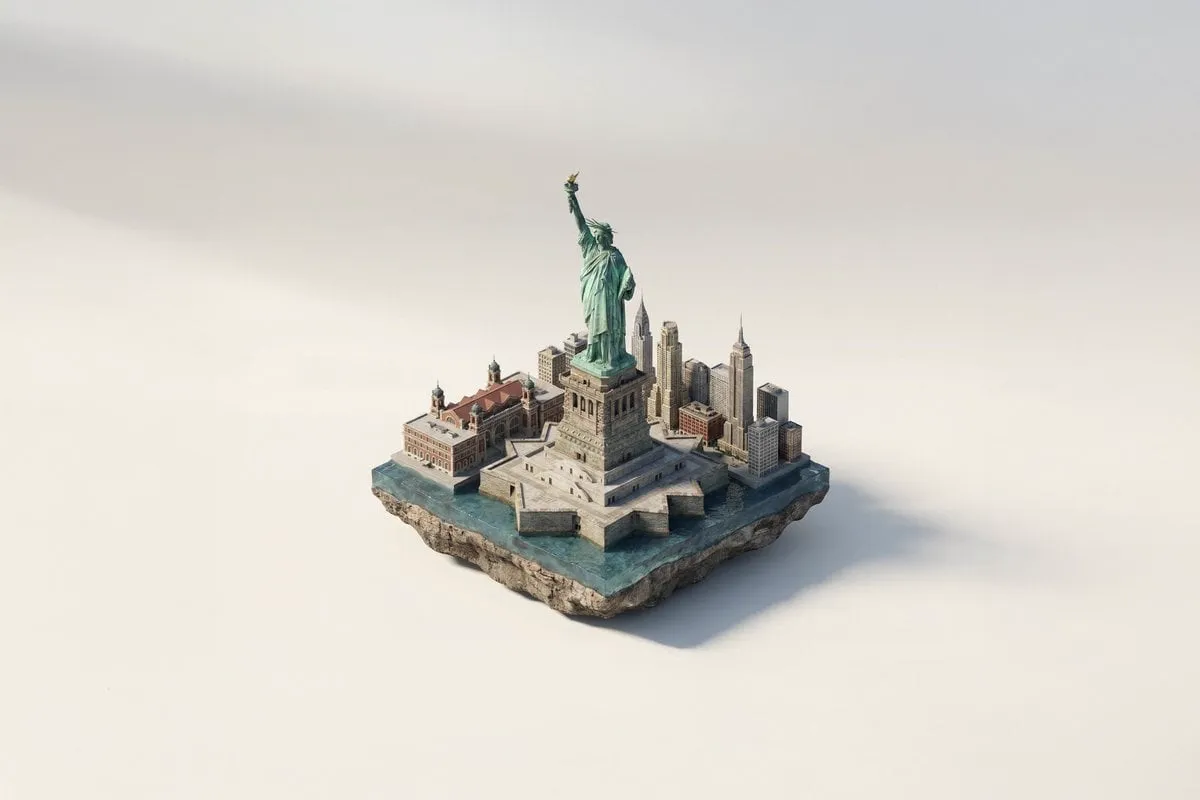

A video's background is doing more work than you might think. It sets the mood, establishes the world, and quietly tells the viewer whether this frame was made with intention or assembled by accident. Yet background is the easiest thing to overlook when the subject looks good. The creators whose videos feel polished have internalized a simple truth: a strong background is what makes a good subject look professional. In this guide you will learn how to write AI prompts that produce backgrounds worth building your shot around.
Why the Background Is the Quiet Difference-Maker
When a clip first appears, the eye is drawn to the subject, but background processing happens almost instantly beneath awareness. A coherent, intentional background signals that someone composed this frame; an empty, generic, or mismatched one triggers a vague feeling that something is off, long before the viewer can name it. That feeling is the difference between "this looks like a pro made it" and "this looks generated."
Background also anchors the story. A detective framed against rain-streaked neon says something different from the same detective against a sterile office wall. Choosing the background deliberately is therefore not decoration; it is storytelling. When you can control the environment with a prompt, you gain a director's lever that used to require sets, locations, and permission.
The practical payoff is velocity. Because backgrounds can be iterated in parallel with the subject, you can audition several environments for the same clip and keep the one that lifts the scene most. That flexibility is a genuine advantage in a medium where every other factor is increasingly easy to match.
The Structure of a Background-Focused Prompt
The same prompt discipline that governs subjects applies to backgrounds, but with its own priorities. Build your environment description from four building blocks, each answering a distinct question. The first is who or what is present, the second is where the scene is set, the third is the art direction and style, and the fourth is the technical parameters that control depth and look. Naming all four deliberately gives the model a complete picture instead of leaving the background to fill itself in.
Where the environment block is weak, the model fills gaps with its defaults, which is why so many generated backgrounds look similar: they are all the model's idea of a safe scene. Break that by being specific about place and time. A "sun-washed courtyard in late afternoon" is a world; a "background" is a blank. Specificity in the where is what separates a considered scene from a default one.
Environment, Style, and Technical Parameters
Treat the environment as the heart of the background and describe it as a place someone could stand in. Name its layout, its light, its notable objects, and the mood those choices create. The style block then binds the environment to a coherent look, whether photoreal, painterly, stylized animation, or anything between. Pick one primary style and reinforce it with palette and texture rather than stacking contradictory descriptors.
Technical parameters are the final layer and the most underused. Deciding how much the environment falls out of focus, how wide or compressed the perspective is, and where the horizon sits gives the background depth and lets the subject breathe. A background that recedes properly with depth of field feels dimensional, while a background rendered at the same sharpness as the subject flattens the whole frame.
Keeping Backgrounds Free of Distractions
A great background serves the subject, and that sometimes means deciding what to keep out. Visual noise distracts from the character and breaks engagement. Negative prompts are the tool for this. Stating explicitly what you do not want, such as extra people, text, watermarks, or clutter, tells the model to steer the background toward clean composition instead of accidental busyness.
Use exclusions sparingly and specifically. A short list of three or four precise negatives achieves more than a long paragraph of vague ones, which can choke the model into producing nothing useful. Pair the exclusions with a clear positive vision: say what you want the space to feel like and what belongs there, alongside what should not.
Silence and simplicity also have power. Not every background needs a lot of content. A well-lit, gently textured expanse can be more cinematic than a cluttered set, especially when the subject needs focus. Choosing restraint when the shot calls for it is a mark of professional judgment.
Weighting and Blending for Complex Backgrounds
When a scene needs more than one visual idea coexisting, prompt weighting and blending come into play. Weighting lets you emphasize one element over another so the model balances them intentionally rather than averaging them into mush. If you want the environment to loom larger than the props, say which one carries more importance and describe accordingly.
Blending is for layering moods or styles. A calm interior with a hint of something strange beyond the window, or a realistic street colored by a dreamlike palette, can be prompted by giving both impulses their own clear language. The skill is describing each layer distinctly so the model can reconcile them instead of compromising on everything. Practice with small blends first; more elements raise the chance of incoherence.
Choosing the Right Generator for the Background
Generators have different strengths, and matching them to your background goals saves real time. Photoreal environments for cinematic scenes reward models with strong physical and lighting discipline. Stylized or animated backgrounds reward models with consistent art direction. Fast generators suit quick iteration when you need to compare many environments; higher-fidelity models earn their cost when the background carries the shot.
Prototype cheap, refine expensive. Sketch a background fast to confirm it supports the subject, then rerender the promising versions at full quality. And keep a small library of your favorite environment prompts, organized by mood, so a good courtyard, a moody alley, or a clean studio can be reused and adapted instead of reinvented across projects.
Creating Depth: Depth of Field and Perspective
Depth is what separates a flat image from a world. Depth of field controls the focus plane: a sharp subject against a softly blurred background concentrates attention and mimics a real lens, while a deep focus pulls the whole environment into crispness and suits scenes where the space is the point. Match the focus to the intent rather than always applying shallow blur as a style default.
Perspective does complementary work. Low camera positions bow tall backgrounds into imposing shapes; high positions open a scene into scale; wide-angle lenses exaggerate depth; longer lenses compress distance and intimacy. Choose one perspective for the scene and state it plainly. The combination of depth-of-field choice and camera perspective is the fastest reliable lever for making a generated background feel like real space.
Lighting and Color as the Background's Mood Engine
The single most powerful way to change what a background communicates is to change how it is lit. The same alley in daylight reads as ordinary, in blue dusk as contemplative, and in harsh neon as dangerous or stylish. Specify the light source, its color, and its quality. Window light, practical lamps, firelight, and hard artificial sources each carry a different emotional temperature, and naming that temperature is what makes the environment feel authored rather than incidental.
Color grading finishes the mood. A cohesive palette ties the background and subject into one frame and buries the sense that they were generated separately. Roughly 70-30 distribution is a useful rule of thumb: let one dominant color set the mood and an accent color add a point of tension or interest. A well-graded environment reads instantly as intentional, while a neutral or drifting palette weakens the whole shot.
Bringing the Background Alive With Motion and Camera
A background is rarely static in a real scene, and controlled motion is what sells the space as a place rather than a painted backdrop. Leaves shifting, fabric moving, traffic passing, or clouds eddying add life that pulls the viewer into the frame. Describe the environment's motion in physical terms and keep it modest; background motion should support the subject, never compete with it.
Camera movement lets the environment unfold over time. A slow lateral move as the subject stands still reveals more of the space and adds depth; a subtle push-in draws the viewer toward a particular corner. Coordinate camera behavior with the background so the space behaves consistently as the camera travels. When background motion and camera motion agree, the scene feels like one continuous place, which raises the completion of the clip and the credibility of the whole production.
Using Reference Images for Environment Consistency
Text is not the only way to direct a background, and often not the strongest. Reference images give the model a concrete target for style, composition, and specific visual identity that words can only approximate. This is especially valuable when a background must match an established setting across many shots or align with brand art direction.
The workflow is a division of labor: use the reference image to lock the look and layout, and use text to add the story-specific elements such as an object the plot needs or a shift in light for the moment. Keep the reference stable between frames. If you swap references halfway through a sequence, the environment will visibly change, and that inconsistency is exactly the kind of detail that turns viewers off.
Troubleshooting Common Background Failures
When a background disappoints, the cause is usually one of a few recurring problems, and diagnosing is faster than blindly regenerating. If the environment is generic or default-looking, the environment language is too vague, so name the place and light more precisely. If the background distracts from the subject, quiet the negatives and simplify the composition. If the scene looks flat, the depth-of-field and perspective controls are underused. If the background changes between shots, the environment language or reference image is inconsistent, so freeze it verbatim.
Keep a decision focus: change one thing per retry and observe what moves. This builds reliable knowledge about which word controls which part of the environment, which is the real payoff of mastering background prompts. Over time, the background becomes one of the fastest parts of your video to get right, precisely because you have learned its few recurring failure modes and their cures.
Building a Repeatable Background Workflow
Consistency across a project comes from reusing the same environment language rather than rewriting from scratch each time. Establish a background section and keep it verbatim across prompts for shots in the same location. This discipline prevents the most common coherence failure, which is the same room, street, or studio looking slightly different from one shot to the next.
Run a short quality gate on every background before you build the full shot. Confirm the environment matches the mood you want, that nothing distracts, and that the depth reads as intentional. Fixing a background early is cheap; fixing it after the motion is rendered is expensive. A two-minute background check before rendering the full clip saves hours and keeps the whole production consistent.
Frequently Asked Questions
Why do my AI backgrounds always come out generic? Because the environment language is too vague. Name the place, the light, the time of day, and a couple of defining objects so the model has something specific to build.
Should the background always be blurred? No, match to intent. Use shallow depth of field to focus on the subject, and deep focus when the environment itself is meaningful. Choose deliberately rather than by default.
How do I stop clutter from appearing in backgrounds? Use a short, precise negative prompt that excludes extra people, text, and objects, while giving a clear positive description of the clean composition you want.
Is it worth using a slower model just for backgrounds? For hero shots where the environment carries the story, yes. For ordinary cut-aways, iterate fast and spend only where the background earns it.
Put It Into Practice
Take one simple subject and render the same clip against three very different environments: a clean, softly lit studio, a moody rain-soaked street, and a broad sunlit landscape. Watch how the same subject changes in emotional weight for each. Then pick the strongest environment, add a precise negative prompt to clear any clutter, and render the full shot with deliberate depth of field. You will feel the background shift from a default afterthought to an intentional creative choice, and that is the whole point of learning to prompt environments like a director would.
