
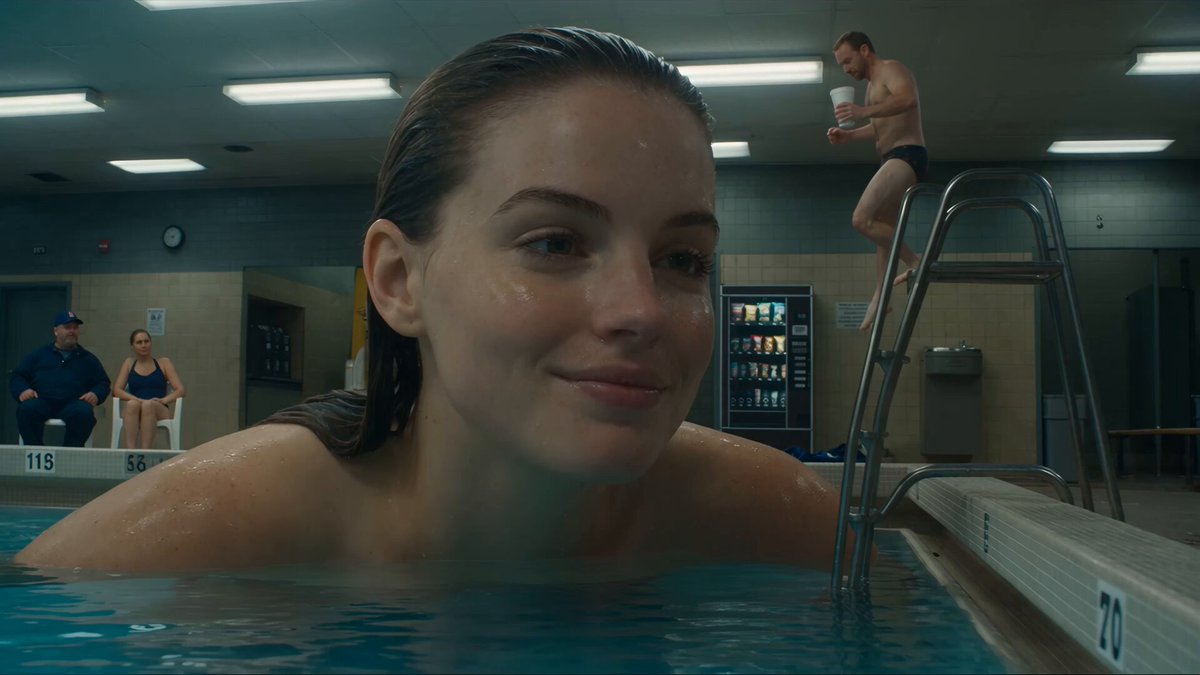
How to Build AI Video Campaigns That Drive Real Engagement
Oct 15, 2026

Why Video Remains the Highest-Leverage Format in Marketing
Attention is the scarcest resource in modern marketing, and video is still the most efficient way to win it. A well-crafted 15-second clip can communicate tone, product value, and personality faster than a landing page, an email, or a banner ever could. That is why video sits at the center of most campaign plans — and why the bottleneck has never been the idea, but the production capacity to execute enough variations of it.
That bottleneck is what generative video tooling changed. Producing a single polished ad used to require a shoot day, a crew, a location, talent, editing, color, sound design, and weeks of coordination. Producing twenty versions of that ad for twenty audience segments was simply impossible for most teams. Now the marginal cost of an additional variant is measured in hours rather than weeks, which means the strategic question shifts from "can we make this?" to "which versions deserve to exist?"
This guide is about the second question. It covers how to plan an AI-assisted video campaign, how to build a production workflow that stays consistent, how to personalize without fragmenting your brand, how to measure what actually matters, and which mistakes quietly destroy performance before a campaign ever scales.
What AI Actually Changes in a Campaign Lifecycle
It helps to separate the hype from the mechanics. Generative tools do not replace campaign strategy — they compress the distance between a strategy and its testable outputs.
From one hero asset to a system of assets
The traditional model produced a hero video and a handful of cutdowns. The modern model produces a system: a master narrative, then modular components — different hooks, different proof points, different calls to action, different aspect ratios — recombined per channel and per audience. AI makes that modularity affordable because each component can be regenerated without re-shooting everything around it.
Faster feedback loops
When a concept takes six weeks to produce, you can only test a few ideas per quarter, and you learn slowly. When a concept takes a day, you can test twelve hooks in a fortnight and learn which emotional angle actually moves people. The competitive advantage is not speed for its own sake; it is the number of learning cycles you complete before your competitor finishes their first round.
Where human judgment still decides outcomes
AI is weakest at exactly the things that separate forgettable video from memorable video: choosing the right tension, deciding what to leave out, knowing when a joke lands or dies, and understanding the cultural context of a specific market. Treat generation as an execution layer and keep taste, positioning, and editing judgment firmly human.
The Anatomy of a Video That Earns Attention
Before touching a tool, define what a successful asset looks like. High-performing marketing video tends to share four structural traits.
The opening beat
The first two to three seconds determine whether the rest of the video exists. Effective openings do one of four things: state a tension the viewer already feels, show a surprising visual, make a specific promise, or open a loop the viewer wants closed. Generic brand introductions do none of these. If your video starts with a logo animation, you are paying to lose viewers.
A clear emotional arc
Every video needs movement — a before and an after, a problem and a resolution, a question and an answer. Map it explicitly: state, tension, turn, resolution. When you brief a generative tool or an editor, describe the arc in emotional terms, not just visual ones. "Frustration giving way to relief" produces different pacing, music, and framing than "calm confidence."
Character consistency and visual cohesion
Nothing breaks immersion faster than a protagonist who changes face between shots, a product that shifts shape, or lighting that jumps between cuts. Establish a small set of locked references — character, wardrobe, palette, lens character, grade — and treat them as non-negotiable constraints across every generated asset. Consistency is not a technical nicety; it is the difference between content that feels like a brand and content that feels like a template.
A call to action that fits the placement
A call to action should match the viewer's stage of consideration. Top-of-funnel viewers respond to a low-commitment next step — watching a longer piece, exploring a single product. Bottom-of-funnel viewers need specificity: which plan, which offer, which deadline. Reusing one CTA across every placement wastes the personalization work you did everywhere else.
A Repeatable Production Workflow
A workflow beats inspiration because it survives deadlines. Here is a sequence that scales from a two-person team to a full creative department.
Step 1 — Define audience, offer, and a single message
Write one sentence per audience segment: For [audience], we want them to believe [single message], so they take [action]. If you cannot fill in that sentence, no amount of generation will save the campaign. Resist the urge to combine segments at this stage; combining is a later optimization, not a starting assumption.
Step 2 — Script for structure, not length
Draft the script as beats rather than paragraphs. Each beat gets a purpose, an approximate duration, and a visual idea. Write hooks separately and generate at least ten candidates — this is the cheapest place in the entire process to find a winner, so it deserves disproportionate effort. Read everything aloud; lines that look sharp on screen often collapse when spoken.
Step 3 — Build a shot list and reference pack
Translate beats into shots with framing notes, motion notes, and continuity constraints. Assemble a reference pack: mood boards, color palettes, type treatments, music references, and a locked character or product sheet. A tight reference pack reduces iteration time dramatically because reviewers can point at a shared target instead of arguing about adjectives.
Step 4 — Generate broadly, curate ruthlessly
Generate more options than you need and cut hard. For each shot, evaluate against three gates: does it read instantly, does it match the reference pack, and does it serve the beat? Anything that fails two of three gates gets discarded regardless of how impressive it looks in isolation. Keep a rejected-assets folder — good shots frequently become useful in a different campaign.
Step 5 — Assemble, sound design, and caption
Editing is where AI output becomes a video. Cut on motion and on emotional beats, not on fixed intervals. Add sound design before you add music: room tone, footsteps, and small textures do more for perceived production value than a cinematic track. Burn in captions or add accurate subtitles — a large share of viewers watch without sound, and accessible video consistently performs better on paid placements.
Step 6 — Version for each placement
Produce native versions rather than cropping a single master. Vertical for short-form feeds, square for mid-feed placements, landscape for embedded and streaming contexts, and a longer cut for landing pages where intent is already high. Adjust pacing, not just dimensions: short-form versions need the payoff earlier, while landing-page versions can afford context.
Personalization Without Fragmenting Your Brand
Personalization fails when it becomes an excuse to abandon consistency. The reliable approach is to hold the brand layer fixed and vary the message layer.
- Fixed: logo treatment, type system, color palette, tone of voice, character or product identity, sound signature.
- Variable: opening hook, featured benefit, social proof, offer framing, CTA, pacing.
This structure lets you produce dozens of genuinely distinct assets that still feel like one brand. It also keeps your review process sane: reviewers check the brand layer once, then evaluate variants purely on message fit.
A practical way to keep personalization honest is to write a one-line rationale for every variant you ship. "This version leads with time savings because this segment is small teams without dedicated operations staff." If you cannot write the rationale, you are generating noise, not personalization.
Measurement: From Vanity Views to Business Outcomes
Views are a distribution metric, not a performance metric. Build a measurement plan that distinguishes what predicts success from what proves it.
Leading indicators
- Three-second view rate: did the opening beat work?
- Average watch time and drop-off curve: identify the exact second attention collapses.
- Completion rate on short-form: a strong signal of narrative fit.
- Sound-on rate: tells you whether audio-led creative is viable for that placement.
Business indicators
- Assisted conversions and pipeline influence: track video exposure against downstream actions, not just last-click.
- Return-visit and branded-search lift: the clearest early signal of brand-building effect.
- Cost per qualified action: normalize spend across variants so cheap traffic does not masquerade as performance.
- Retention or repeat-purchase changes: the long-horizon outcome loyalty campaigns should be judged on.
A simple testing framework
Test one variable at a time when the budget allows: hook, then offer, then CTA, then format. Run tests long enough to clear a full purchase cycle for considered products. Pre-register what result would change your decision — if no outcome would change what you do next, the test is entertainment, not research.
Be realistic about attribution. Video rarely converts on first contact. Use holdout groups where possible, and treat platform-reported view-through metrics as directional rather than definitive.
Choosing Tools Without Getting Locked In
Evaluate tools against the workflow, not the demo reel. Useful criteria:
| Criterion | What to check |
|---|---|
| Consistency control | Can you lock characters, products, and style across shots? |
| Revision speed | How long does one shot take to regenerate after feedback? |
| Format coverage | Native vertical, square, and landscape output |
| Rights clarity | Commercial usage terms and training-data posture stated plainly |
| Export quality | Resolution, bitrate, and codec support for paid placements |
| Integration | Handoff to your editor, DAM, and localization pipeline |
| Team access | Seats, review flows, and version history for collaborators |
Pilot two or three options on a real brief with a real deadline. Demos are optimized for first impressions; production work reveals friction.
Common Mistakes and How to Avoid Them
Over-generating. Producing hundreds of variants without a hypothesis creates review fatigue and dilutes learning. Cap variant counts per round.
Ignoring the hook. Most underperforming video is not badly produced — it is badly opened. Spend more time on the first three seconds than on the final grade.
Generic voiceover. Templated narration flattens emotional impact. Write narration specific to the segment, or skip it entirely and let visuals and text carry the message.
Treating AI output as final. Unedited generation rarely reads as intentional. Plan for a human editing pass on every asset.
Skipping captions. Silent viewing is the norm in most feeds. Captions are not an accessibility afterthought; they are a performance lever.
No naming convention. Without a disciplined file and variant naming scheme, you cannot attribute results. Decide the convention before you generate anything.
Rights, Consent, and Brand Safety
Before publishing, confirm you hold appropriate rights for every face, voice, location, and music element in the asset. If synthetic voices or likenesses appear, disclose them where your market or platform requires it. Avoid prompts that imitate identifiable public figures or reproduce protected characters. Keep a simple review checklist — rights, claims, accessibility, and legal sign-off — and run it before any asset leaves the building.
Frequently Asked Questions
Do AI-generated videos perform worse than traditionally shot video?
Not inherently. Performance tracks narrative clarity, hook quality, and audience fit. Generated assets can underperform when they look inconsistent or generic, which is a craft problem rather than a format limitation.
How many variants should a single campaign include?
Start with three to five distinct hooks, two offers, and two CTA styles, then combine selectively. More than that in a first round makes attribution impossible.
How long should a marketing video be?
As short as the idea requires and no longer. Short-form benefits from 10–20 seconds with an early payoff; landing-page video can run 45–90 seconds when the viewer already has intent.
Can a small team run this workflow?
Yes. The constraint is review discipline, not headcount. A clear reference pack, a locked brand layer, and a naming convention let two people manage a variant set that once required a department.
Where should AI not be used?
Final strategic positioning, sensitive claims, regulated statements, and anything requiring documented human accountability. Keep a human owner for every published asset.
How do we prevent brand drift across dozens of assets?
Enforce a fixed brand layer, review variants against the reference pack rather than against each other, and audit a random sample monthly.
A Practical Starting Sprint
If you want to move from theory to output, run a focused two-week sprint. Days one and two: pick one audience, write the single-message sentence, and generate ten hooks. Days three and four: build the reference pack and shot list. Days five through eight: generate, curate, and assemble one master cut. Days nine and ten: produce three personalized variants and native format versions. Days eleven through fourteen: launch with a defined test variable, a measurement plan, and a review date.
The point of the sprint is not the first video. It is the workflow you keep — a repeatable path from audience insight to published asset, with consistency, measurement, and human judgment built in from the start. Teams that internalize that path stop treating video as a periodic production event and start treating it as an ongoing system for learning about their audience, one honest test at a time.

Alexander
More Blogs
Read MoreVidu Q4 Alternatives: 4K AI Video Models Compared (2026)
Vidu Q4 alternatives compared: Kling 4.0, Seedance 2.5, Wan 3.0, and Runway Gen-4 — 4K support, input modes, durations, audio, and what each costs in credits on Domer.
Top 4K AI Image Generators in 2026: 5 Models Compared on Real Costs
The top 4K AI image generators on Domer compared: Flux 3 Klein, Nano Banana 2.1, GPT Image 2.5, GPT Image 2, and Nano Banana Pro — 4K credit costs, reference limits, and speed.
Nano Banana 2.1 vs GPT Image 2.5: Which Image Model Should You Use? (2026)
Nano Banana 2.1 vs GPT Image 2.5 Flare compared: credit costs per resolution, aspect ratios, reference images, text rendering, and which tasks fit each model.