
Text-to-video generation has moved remarkably fast. Models that a short while ago produced abstract, flickering clips now generate footage with real physics, coherent characters, and cinematic lighting. The leading systems set a high bar: Sora established what realism and narrative understanding look like, while Kling and PixVerse pushed specific strengths in motion and creative control. For creators, the question is no longer whether AI can make video but how to get output that reliably matches, and in some respects exceeds, what the flagship models deliver.
This guide looks at the practical path to high-quality AI video. We will examine what the major models do well and where they fall short, the central challenge of keeping a character consistent across a clip, and the production techniques and model choices that let you push quality beyond default settings. The goal is not to promise a single tool that beats all others but to give you a strategy for getting the best results from the tools available.
What the flagship models are actually good at
Each major text-to-video model has a distinct personality. Understanding those strengths is the first step to using them well. Sora is renowned for its world modeling: it understands how objects behave in physical space, how light falls, and how a scene should unfold with narrative coherence. Its output tends to feel fluid and understands cause and effect better than most rivals.
Kling built its reputation on motion and on handling complex character-or-object movement with relatively high stability. It is often praised for keeping subjects recognizable while they move through a scene. PixVerse, in turn, emphasizes accessibility and creative control, offering a broad range of styles and a workflow that lowers the barrier to producing polished clips without deep technical knowledge.
This variety is a feature, not a problem. Different projects call for different strengths. A cinematic brand spot benefits from strong world modeling, while an action-heavy clip benefits from sharp motion control. The right answer is usually to match the model to the job rather than to crown a single winner.
Where even the best models still fall short
Despite rapid progress, every model shares weaknesses. The most persistent is identity drift: keeping a specific character's face, clothing, and features identical across the whole clip and across multiple shots. Faces subtly change between frames, costumes shift, and background details warp. This is a known limitation, and it is the reason that long-form or multi-scene AI narratives are so difficult.
Physical consistency is another issue. Small objects, hands, and precise interactions still trip up motion models, producing a hand with the wrong number of fingers or an object that momentarily passes through another. Water, smoke, and hair look good but remain hard to control precisely. And at high resolution or with complex scenes, generation time and cost rise, making iteration slower.
The final limitation is intentional control. Telling a model to produce "a dramatic sunset over a city" is easy; telling it to produce a specific camera move, a specific story beat, or a specific emotional arc requires careful prompting and often multiple passes. Getting creative control is a skill in itself.
The core challenge: character consistency
Character consistency is the single biggest hurdle in professional AI video, because most real projects require the same person or creature to appear throughout. When a hero wanders through a scene across multiple shots, any drift in their face or outfit breaks the illusion and ruins the realism you worked to create.
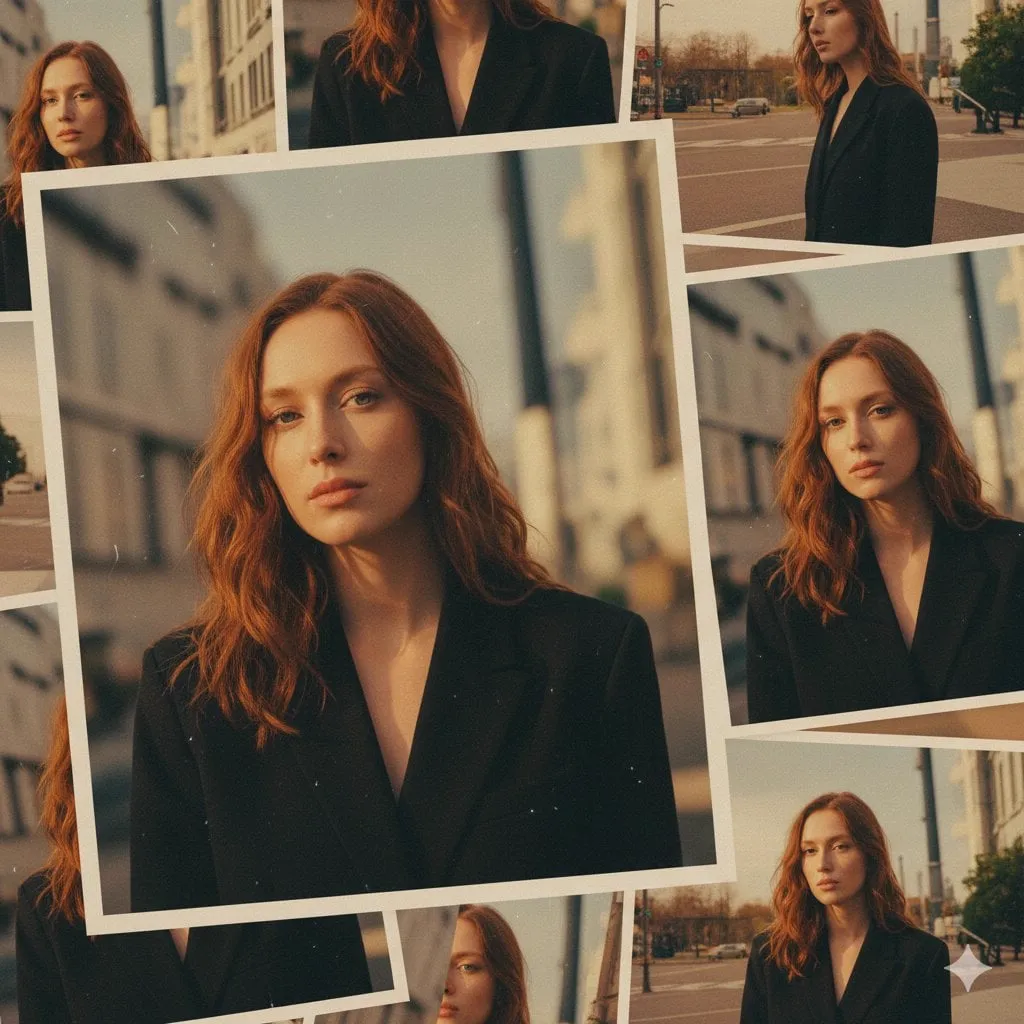
The practical strategies for improving consistency fall into a few buckets. One is providing strong references. Many workflows generate a reference image of the character first, then use that image to drive the video generation, which anchors the identity far better than describing the character in text alone. Another is the trend of multi-image or multi-frame fusion, where you feed the model several consistent frames and let it interpolate between them, dramatically reducing drift.
A third strategy is working in segments. Rather than asking for one long clip with a constant character, generate several shorter shots with rigorous attention to the character reference in each, then assemble them in editing. This gives you far more control over identity and is often faster to refine than regenerating a long clip that drifts halfway through.
Matching the model to the project
Model choice is a real lever on output quality. If your clip depends on realistic physics and narrative coherence, prioritize a model with strong world modeling. If your clip is action-driven and you need clear, controlled motion, favor a model whose motion handling is best in class. If you are exploring creative styles and want rapid iteration, an accessible multivariation platform lets you run many concepts cheaply before committing.
You can also combine models across a single project, using one for a hero shot and another for a supporting clip where its strength matters more. The best workflows treat the model as one tool among several, selecting it per scene rather than forcing a single engine to do everything. This is how professional pipelines get results that feel more polished than any single model alone.
Managing generation cost and iteration
Quality in AI video correlates directly with how much you iterate. A first generation is rarely the best; you experiment, tune prompts, adjust references, and rerun until the clip is right. That iteration has a cost in time and compute, so managing it matters as much as prompt quality.
One approach is to iterate cheaply before committing to expensive generations. Use the model's lowest-cost, quickest setting to test the concept, motion plan, and framing. Only when the direction is right do you run a higher-quality pass. This staging prevents you from spending the expensive passes on ideas that are not worth pursuing.
Segmenting your video also helps manage cost. Instead of generating a long clip that is hard to control, break the narrative into shots, generate each at a size where iteration is affordable, and assemble them. The control you gain over character and pacing usually outweighs the added assembly work.
Prompt engineering that actually raises quality
The prompt is the interface between your intention and the model's output, and better prompts consistently produce better footage. The most effective prompts go beyond adjectives and describe structure: camera angle, shot size, motion, subject placement, lighting quality, and atmosphere. A muddy "a beautiful car driving" prompt will underperform a structured one that specifies the angle, how the car moves, and how the light plays across the body.
It also helps to use the model's known vocabulary. Each model understands certain descriptive terms well, and exploring its documentation or community examples reveals phrasing that produces the results you want. Build a library of your own tested prompts, noting what worked and what did not, so you do not re-derive the same lessons on every project.
For character work, fold the reference into the prompt and be explicit about maintaining identity across the action. Even with a reference image, describing the continuity in the prompt reinforces the behavior the model needs to follow.
Advanced techniques for going beyond defaults
Once basics are solid, several advanced techniques push quality further. One is negative prompting, explicitly describing what you do not want, which helps suppress common artifacts like distorted hands or inconsistent backgrounds. Another is using image references, not just for characters but for style, palette, and composition, which gives the model a concrete target rather than a purely textual guess.
Another technique is the multi-pass workflow. Generate a base clip, then use an upscaling or refinement pass to improve resolution and detail. Some creators even composite AI footage with traditional footage, using the AI for hero elements and real shots for the parts where physical precision matters. This blending gives you the best of both worlds.
The most underrated technique is rigorous curation. You will generate many frames that are not perfect; the skill of a professional is knowing which generations are shippable and which need regeneration. A strong eye, built by reviewing your own output critically, steadily raises the quality bar of everything you release.
A quality checklist before you generate
Before running an expensive generation, run through a short checklist to raise the odds of a usable result. First, is the subject reference present and consistent for any recurring character or object? Second, is the prompt structured with camera, motion, and lighting rather than adjectives alone? Third, is the shot scoped so that the action stays within what the model handles well? Fourth, is the negative space described so the model knows what to avoid? Fifth, have you chosen a model that matches the dominant quality the shot needs?
Going through these few questions takes seconds but prevents most failed generations. The discipline is especially valuable when you are on a deadline, because it turns generation from a hopeful gamble into a deliberate attempt at a defined target. Over time, running this checklist becomes instinct, and your first-pass success rate climbs enough to change how much time a project takes.
Troubleshooting common artifacts and drift
Even careful producers hit artifacts. The most common are distorted hands, background warping, objects passing through one another, and the quieter problem of identity drift, where a character's face or outfit subtly changes. The response should be diagnostic rather than frustrated. For hands and small objects, simplify the action or crop the shot so the detail is not the focus. For background warping, reduce motion in the prompt or generate at a smaller scope. For drift, strengthen the reference and consider a segmented approach.
When a problem persists, change more than one variable at once only as a last resort. Adjusting a single element, like the prompt, the reference, or the model, lets you see its actual effect. Change one thing, review, then adjust the next. This systematic narrowing is faster in the long run than repeatedly regenerating with random tweaks, and it builds the diagnosis skill that separates strong producers from lucky ones.
Building a shot-by-shot workflow
The most reliable production method for anything longer than a single clip is a shot list. From your script, break the visual story into individual shots. For each, record three things: the subject and its constant identity, the action and camera move, and the reference material that anchors style. Generate each shot, review it against its own definition, refine, and only then assemble the finished sequence in your editor.
This discipline prevents the common failure of regenerating a long, drifting clip over and over. By controlling each shot separately, you contain problems to the shot in which they occur and fix them without disturbing the rest of the project. It also makes editorial choices explicit, so you can reorder, cut, or extend shots with full understanding of what each contributes. For professional, repeatable results, the shot list is the backbone of the whole workflow.
Building a repeatable production workflow
As with any craft, consistency comes from process. A repeatable AI video workflow starts with a shot list derived from your script. For each shot, define the subject, the action, the camera move, and the reference material. Generate an initial pass, review against the shot list, refine, and only then assemble. Document the prompts and settings that worked so you can reproduce and improve on them.
This workflow turns scattered attempts into a pipeline. You move from "let's see what the model gives me" to "here is the shot I need and here is how I will produce it." That shift is what separates one-off experiments from a serious content operation, and it is the reason consistent creators keep their quality high across many videos.
How to build your skill over time
Mastery of AI video is not about memorizing the latest model but about building a mental model of how these systems behave. With practice, you learn to predict where a model will drift, which prompts produce which motions, and when it is worth regenerating versus fixing in edit. That intuition is activated through volume: generate a lot, review critically, and log your results.
It also helps to stay flexible. The tool landscape is moving fast, and a workflow built on one fixed model will age quickly. Build your pipeline around concepts that transfer, like reference-based consistency, structured prompting, and segmenting for control, rather than around any single brand. Then when a new model arrives, you can adopt it quickly without rebuilding everything.
Putting it all together
Reaching Sora-grade quality, and surpassing it in specific areas, is not about a single magic tool. It is about understanding what each model does best, managing the unavoidable limits like identity drift, and applying a disciplined production workflow built on references, structured prompts, and deliberate iteration. The models give you raw capability; your process turns that capability into reliable, high-quality output.
Start by benchmarking the tools yourself on a small project. Define a shot, generate it across a few models, and compare the tradeoffs directly. Build a consistent character workflow with references and segmented shots. Iterate until your pipeline produces the quality you need. The gap between default output and professional quality is not as wide as it seems, and it narrows quickly once you treat AI video as a craft to be practiced rather than a button to be pressed.
