

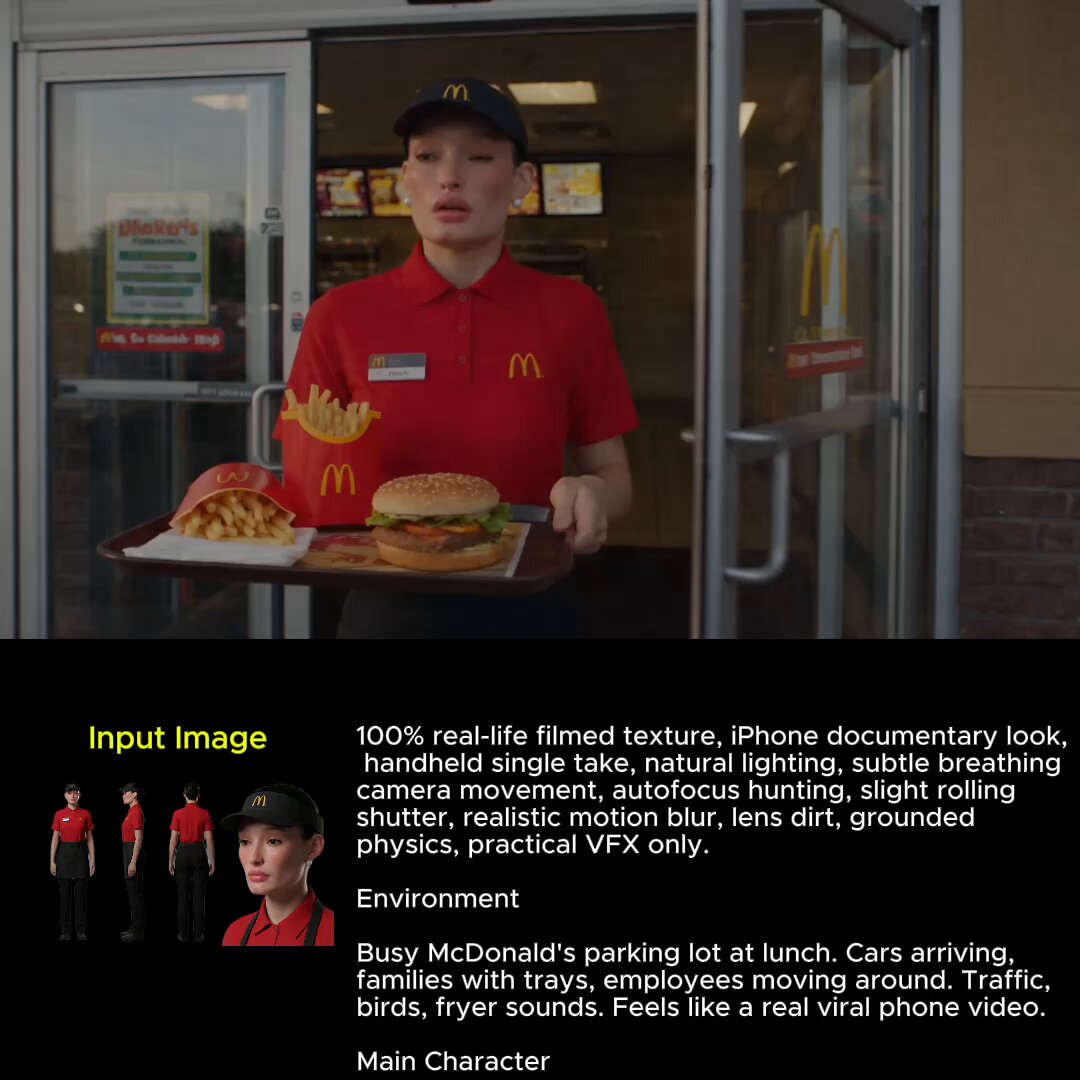

The content creation landscape has changed quickly. Making a video used to mean recording, editing frame by frame, animating or sourcing footage, and a lot of manual labour in between. Today, an AI-assisted creator can move from a written idea to a finished clip far faster, and what was once a team project can now be handled by one person with the right set of tools. This article walks through why creators are shifting to AI video platforms, what to look for when choosing one, and how to build a workflow that turns speed into consistent output instead of a pile of discarded drafts.
Why content creation is becoming a video-first game
Demand for video keeps climbing. Even a modest rise in online video consumption reshapes which formats get the most attention, and short clips in feeds are competing with every other post for one scarce resource: the viewer's time. Creators who can keep up with that pace have an edge, and that pace is hard to sustain with only traditional editing.
The real shift is not just in quantity. Platforms reward consistency, so posting more frequently and keeping a recognisable style becomes part of the algorithm. That is exactly the kind of pressure that makes manual video production expensive and exhausting. AI tools step in at the right moment, removing the grinding tasks so a creator can focus on ideas, tone and story.
What sets a great AI video platform apart
Not all AI video tools are equal, and "has a lot of models" is not the same as "helps me ship videos". The platforms that matter share a few traits:
- A broad and current library of models so you can match the tool to the task instead of forcing everything through one generator.
- Solid character and visual consistency, because a hero who changes face between clips kills a series.
- Integrated support for the things around video: narration, subtitles, sound and export formats.
- A predictable cost model, so producing a batch does not surprise you halfway through.
When a platform gets these right, it stops being an isolated toy and becomes the backbone of a repeatable creative process.
Diversity of models beats a single silver bullet
A product film, an explainer, a stylised brand clip and a meme-style short all need different things. Some want realism, some want motion, some want a distinctive art direction. A platform that lets you pick among specialised models for each task gives you flexibility that a single-model app cannot. The variety is less about bragging rights and more about letting you solve problems with the right tool.
Keeping a coherent look across your content
The hardest problem in AI video is often not generating a good single clip, but keeping a consistent world when you make many of them. Viewers feel the difference when the same character drifts between designs or the lighting changes for no reason. Consistency is what makes a series feel intentional rather than random.
Lock your style early. Define a reference for your main character or mascot and keep it constant. Set a tone and colour language that appears across your work. And treat your prompts like a style sheet, filling in the same elements every time. Doing this once at the start saves you from endless retakes later.
Automated direction for repetitive work
Some platforms include an agent that acts a bit like an assistant director. Instead of specifying every shot, you set an overall intention and the system proposes a structure, composition and sequence. It does not replace human taste, but it does absorb the mechanical decisions that are easy to second-guess forever. This is especially valuable when you need several clips in the same style: the assistant keeps the direction consistent so you can focus on the moments that truly need your judgment.
Building a repeatable workflow
Speed fades quickly if every video starts from zero. The creators who post regularly treat production as a pipeline, not a series of one-off adventures. A workable pipeline looks something like this:
- Idea intake: keep a running list of formats, hooks and topics you can act on fast.
- Style base: one reference pack for character, colour and tone that applies to everything.
- Generation: produce clips in batches using the right model for each type of shot.
- Assembly: edit, add narration and subtitles, and export in each platform's preferred format.
- Review and learn: track which hooks hold attention and which do not, then feed that back into the next batch.
Batch is better than one-off
When you are in a creative frame of mind, use it. Produce several clips in one session while the style and prompts are fresh. Batching reduces context switching, keeps the look consistent and gives you a small buffer of finished content you can schedule. A little planning on the front end removes the daily panic of needing something to post.
Choosing the platform that fits your niche
Ask yourself what your niche actually demands before you commit. A finance explainer and a music visualiser need very different levels of realism and motion control. If you tell stories with recurring characters, favour platforms with strong consistency features. If you produce volume content, prioritise speed and a pleasant batch workflow. If your content is about polishing a distinctive art style, look for model variety and good fine-tuning options.
Pricing matters but should not be the only factor. A cheaper platform that makes you redo every clip is more expensive in time than a pricier one that gets things right the first time. Calculate your real cost as time plus money, not just the price tag.
Balancing speed and originality
It is easy to let templates take over until everything starts to look the same. Guard your voice. Use the tools to accelerate execution, not to erase your point of view. The same structure can carry many different ideas, and your specific take, language and humour are what make the content yours. The goal is to keep a consistent style without becoming indistinguishable from every other channel using the same pipeline.
Frequently asked questions
Do I need editing skills to use an AI video platform?
Basic editing still helps you refine clips, but far less hand work is required. Many platforms cover generation, subtitles and simple assembly, so beginners can produce passable content quickly and grow from there.
How do I keep my character consistent across many videos?
Use reference images as a base, keep your prompts aligned, and reuse a single character sheet. Consistency is a habit, not a feature you switch on once.
Is AI content worth saving for my brand?
When you keep a coherent style and add genuinely useful or entertaining ideas, AI-assisted content works well for most brands. The mistake is publishing rushed, generic material and expecting magic.
How often should I post?
Consistency beats frequency in isolation. A steady, sustainable cadence that you can actually maintain will outperform a week of frantic posting followed by silence. Match your volume to your capacity.
Final thoughts
AI video platforms have lowered the barrier to producing content at scale, but the durable advantage still belongs to creators with a clear point of view and a repeatable process. Choose a platform that fits your niche, lock your style so your work feels intentional, and build a pipeline that lets you publish steadily. The tooling will keep changing, but a consistent voice and a smooth workflow will keep working for you no matter which model comes next.
Building your style guide before you start
The fastest way to look inconsistent is to skip the style guide and improvise on every video. Spend an hour early on making a simple reference: your colour palette, the two or three type styles you use for captions, your mood or tone words, and one reference image for your recurring character or mascot. Keep it short enough to enforce. When every clip follows the same few rules, your catalogue starts to feel like a single body of work rather than a random mix of experiments. Review the guide every few weeks and update it as your brand matures, but avoid changing it reactively after every video. Consistency comes from a stable reference, not from chasing every new effect.
A checklist for your first batch
- Write three to five hooks that fit your niche before generating anything.
- Lock one character reference and one colour set.
- Generate drafts at the lowest resolution you can tolerate, review, then upgrade the winners.
- Export in the format your main channel prefers.
- Track what you posted, what it earned and what you changed next time.
Different niches, different rules
A finance explainer, a workout coach and a meme page will use AI video very differently. The finance explainer wants clean diagrams, clear narration and a calm, trustworthy tone; slower pacing is fine. The workout coach wants energetic motion, quick cuts and a motivating beat that keeps attention high. The meme page wants speed above all, chasing formats quickly and accepting that most attempts will not land. Match your tools, your characters and your pacing to what your specific audience expects. There is no single "right way" to use AI video; there is only the way that fits the niche you have chosen.
Realism versus stylisation
Some niches reward realism because trust matters: product reviews, tutorials, corporate explainers. Others reward stylisation because distinctiveness matters: music, fashion, art and branding. Decide where your niche sits and choose models accordingly. Pushing realism on a niche that wants a strong style wastes effort, and chasing stylisation where viewers want to trust the information undermines credibility. Your style guide should reflect that decision explicitly so you are not re-litigating it in every video.
Handling the boring but necessary parts
Not every step is fun, and the platform won't fix the parts you skip. Report, thumbnails, captions and proper exports are what make a good video findable and watchable. Speed fades if every clip needs hours of cleanup because you ignored naming, resolution and file hygiene. Use consistent file names, archive finished source clips and keep templates for the repeated parts like intro cards and end screens. The more you automate the uninspiring steps, the more energy you conserve for the creative decisions that actually differentiate you.
Avoiding burnout while staying consistent
Consistency is a steady cadence, not an impossible schedule. It is better to publish three strong videos a week for a year than to publish three a day for a month and disappear. Guard your energy: batch production so you are not scrambling every day, keep a buffer of finished content, and learn to say no to trends that pull you away from your niche. A sustainable process is the one you can repeat with pleasure, and pleasure keeps you creating long enough to build an audience.
Frequently asked questions
How much does it cost to get started with AI video production?
You can start free with several platforms and upgrade as you validate ideas. Reserve paid models for hero content. The real cost is your time, so an efficient workflow saves more than any free tier.
Will viewers be able to tell my content is AI-generated?
Often, and that is not automatically a problem. Audiences accept AI-assisted content when the idea is useful or entertaining and the style is coherent. The problem is generic, rushed output, not the label itself.
Should I reveal that I use AI?
It depends on your niche and audience trust. Transparency usually builds trust, especially in tutorials and informational content. Decide based on your viewers' expectations rather than hiding it and risking backlash.
Can one person really run a full content pipeline?
Yes, with the right process. The bottleneck is not capability but organisation. Batch production, reusable assets and a fixed review routine let an individual sustain a cadence that used to require a team.
Ten steps to publish your first consistent short today
- Pick one niche and one platform to focus on.
- Write ten hook ideas in one sitting.
- Define a minimal style guide.
- Generate a handful of clips from your strongest hook.
- Review each clip against consistency and pacing.
- Assemble one finished short with captions and audio.
- Export for your platform's format.
- Publish and write down what happened.
- Schedule the next piece while motivation is high.
- Repeat with what you learned.
Closing thought
The creator economy rewards people who can ship useful, entertaining content again and again, and AI video platforms exist to make that sustainable. Choose your tools intentionally, protect your distinctive voice, and build a process that your energy can actually sustain. The specific models will change often, but the habits of a deliberate, consistent creator will keep working for you through every generation of technology.
