

Why character consistency is the biggest problem in AI video
If you have spent any time generating video with artificial intelligence, you have likely run into the same frustrating wall: a character looks perfect in one shot and unrecognizable in the next. Eyes change, skin tone shifts, clothing details morph, and the hairline decides to wander. This problem — technical people call it character consistency — is arguably the single biggest obstacle between AI-generated content and genuinely usable narrative work.
The reason is structural. Most text-to-video models generate each shot by sampling from noise, guided only by your prompt. Without an anchor, the model reinvents the character every time. Facial features, proportions and even the identity of the subject are reinterpreted from scratch, which is exactly why a series of AI clips can feel disconnected even when every individual clip looks great.
This article explains how multi-image fusion solves that problem. Instead of relying on text alone, this approach feeds multiple reference images into the model so it can preserve the essential identity of a character across every scene. You will learn how it works under the hood, why it matters now more than ever, and how to put it to work in film, marketing and personalized content.
Why consistency has become a baseline requirement
There was a time when generating short, impressive AI clips was enough. Creators could wow an audience with a stunning eight-second loop and call it a day. That era is over. As generative video matured, the field expanded from single clips to multi-scene narratives — series, pilot episodes, branded campaigns. And the moment you need a character to appear in more than one shot, coherence stops being a nice-to-have and becomes mandatory.
Think about your favorite TV series. Half the reason it feels like a coherent story is that the same actor plays the same character in scene after scene. When an AI-generated protagonist changes appearance between cuts, the illusion collapses immediately. Audiences may not be able to articulate what went wrong, but they can feel it, and it destroys their suspension of disbelief.
Modern flagship models — from OpenAI's Sora line to advanced offerings from Runway and others — have pushed physical realism and contextual understanding to remarkable levels. They understand prompt composition, lighting and camera motion far better than earlier generations. But even the best of them struggle to keep a single face stable across arbitrarily many frames without explicit guidance. That is precisely the gap that multi-image fusion is designed to close.
The core idea: anchoring identity with multiple references
So what exactly is multi-image fusion? At its simplest, it is the practice of supplying several images of the same subject so the generator can isolate what makes that subject unique and reuse it wherever needed.
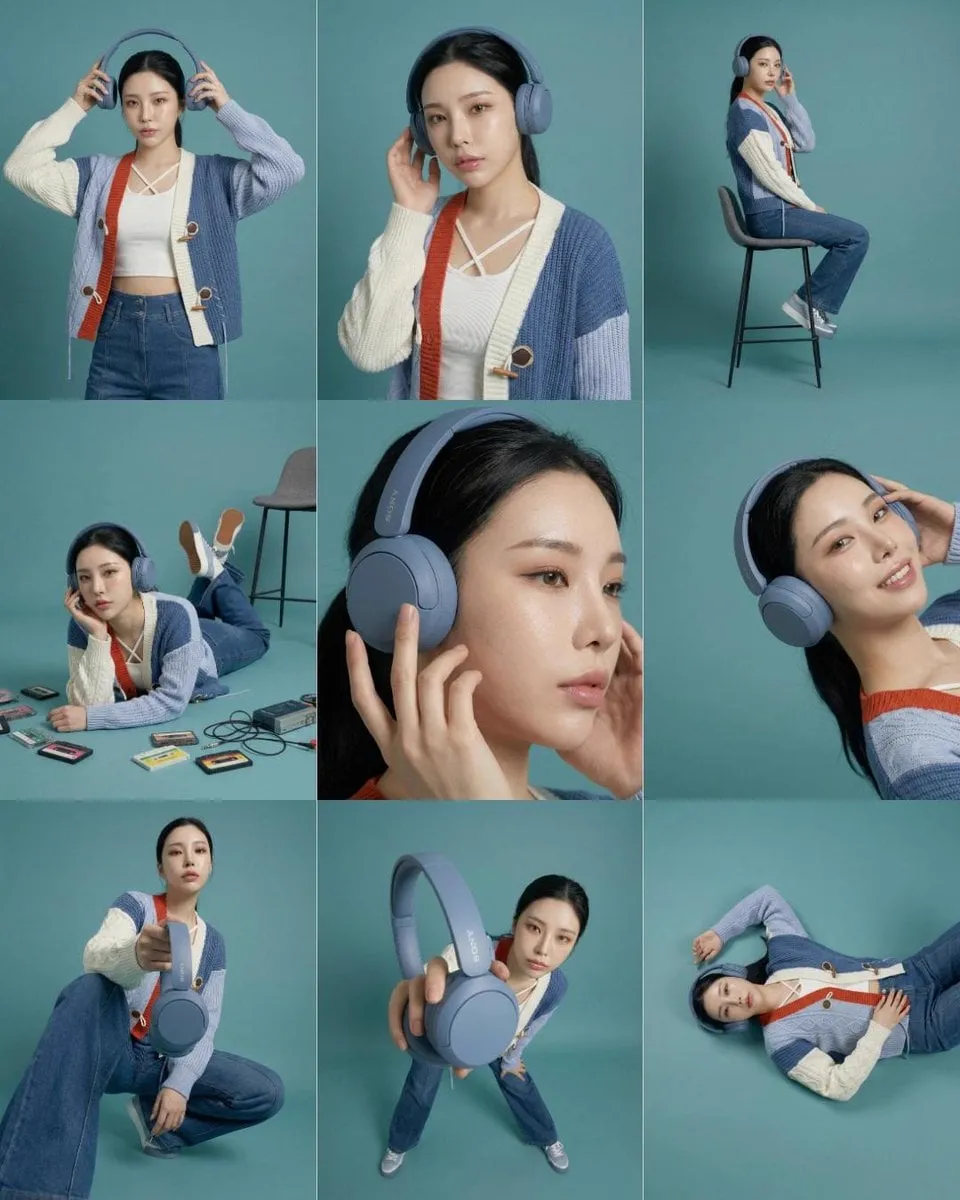
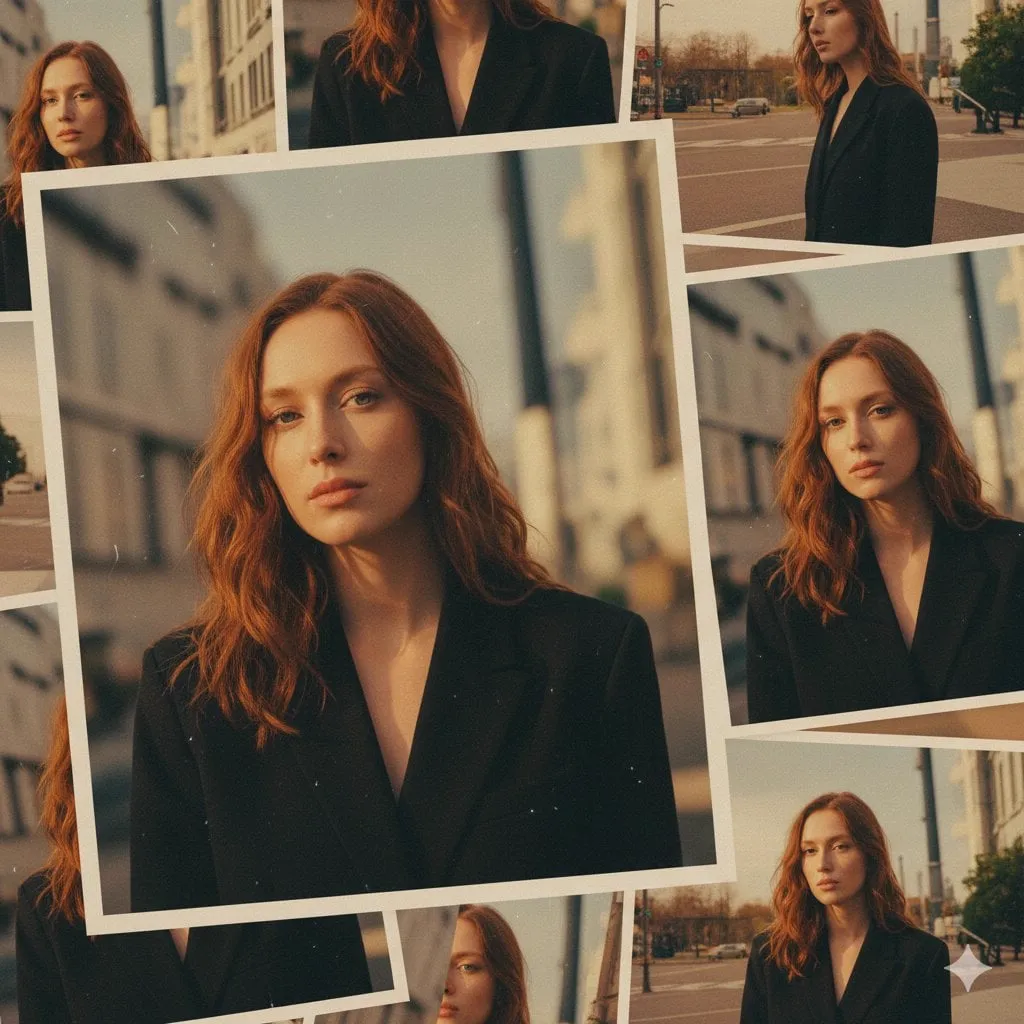
Imagine you are trying to keep a protagonist consistent through a three-scene sequence. Instead of describing her purely in words, you upload a dozen reference photos: front and profile shots, different outfits, varied lighting, multiple angles. The system does not simply average these pictures together. Averaging would produce a muddy, directionless blur. Instead, it analyzes the set, identifies the key identity vectors — the shape of the jaw, the placement of the eyes, skin tone, hair texture, defining accessories — and stores them as a reusable signature.
When it comes time to generate a new frame, the model injects that signature into the diffusion process. Every shot already knows who the character is before a single pixel is generated. The environment, the pose and the mood can change completely, but the identity stays anchored. This is the practical secret behind projects that seem to break the "AI looks off" curse: they are not relying on luck, they are relying on structure.
The same logic applies to objects, props and even environments. Brand mascots, specific product designs, recurring vehicles — anything that must remain recognizable benefits from reference anchoring rather than text descriptions.
What happens under the hood
You do not need to be an engineer to benefit from this technique, but a rough mental model of the mechanics helps you use it well.
The first stage is feature extraction. Each reference image is passed through a vision encoder that converts it into a high-dimensional representation. In earlier image-editing terminology, this process cleaned the input and highlighted the distinctive traits while discarding noise. The result is a set of numeric vectors capturing the subject's identity in a way a neural network can reason about.
The second stage is mapping those features into the space the video model uses. By positioning identity vectors in the right region of that space, the generator knows how to bias its output toward the desired appearance. When it samples new frames, it is nudged toward those vectors instead of wandering freely.
The third stage is frame-level application. Consistency is applied across every frame of a shot and between shots. This frame-wise consistency is what prevents the character from flickering when the camera moves or when a cut lands. The references are not just for the first frame; they constrain the entire temporal sequence.
Finally, because generating this kind of output is computationally demanding, systems typically manage GPU resources carefully. By optimizing when and how the reference signature is injected, they can keep consistency high without turning every generation into a slow, expensive ordeal. For the user, this means you can run a long project through without babysitting each frame.
Using fusion to strengthen visual storytelling
The most obvious application of consistent characters is narrative work: films and series. In traditional animation and VFX pipelines, keeping a character on-model across a production is a demanding, manual discipline. Multi-image fusion brings a similar guarantee to fully generated footage.
Consider an indie filmmaker who wants to produce shots of a protagonist in three different locations on the same day. With text prompts alone, the protagonist would likely look noticeably different in each location. With a set of reference images driving the generation, those three shots can be assembled into a seamless sequence that a pilot or short film depends on. The director gains the ability to plan multi-scene coverage almost as if working with a real actor who stays perfectly on-model.
This is not limited to human characters. Creatures, fantasy designs, vehicles and historical reconstructions all benefit from the same anchoring. The pipeline scales to whatever must remain visually stable across your story.
Keeping brand identity intact across campaigns
Marketing is another arena where consistency earns its keep. A brand's mascot, logo, product or representative should look the same whether it appears in a hero video, a social clip or a local ad. Incoherence in branded visuals undermines trust and dilutes recognition.
With multi-image fusion, a marketing team can generate dozens of variations — different scenes, moods, camera angles — all starring the same on-brand subject. The product is always the right product, the mascot always has the same friendly face, and the color palette remains faithful to the guidelines. This lets teams iterate on creative directions without fear that the output will drift off-brand halfway through.
The practical benefit is efficiency. Instead of re-shooting or hand-fixing every asset, teams generate close-to-final material and spend their time on the creative refinement that actually moves the needle. For agencies producing localized versions of a campaign for multiple markets, this combination of consistency and speed is especially valuable.
Enabling truly personalized content
Personalized content is the frontier, and consistent character anchoring is one of its foundations. Imagine a service that lets a parent place their child's likeness into a storybook animation, or a brand that shows the customer's own car or home in an advertisement. For such experiences to be convincing — and safe — the generated subject must remain faithful to the reference every time.
This pushes several requirements. First, the reference extraction must be robust enough to work from imperfect photos taken in varied conditions. Second, the framing and styling choices must prevent the personalized element from looking pasted on. Third, the technical pipeline must keep the identity stable even in dynamic scenes with movement and changing light.
When all three are handled well, the result feels magical rather than mechanical. The technology removes the distance between a generic showcase and an experience that a specific person can see themselves in.
Building it into a production pipeline
Putting multi-image fusion to work is less about any single magical feature and more about how you integrate it into a repeatable process. A modular pipeline helps here.
Start by treating reference collection as a deliberate phase. Before you generate anything, gather your reference set and review it. Are the images consistent with each other? Do they cover the angles and conditions you need? A small, high-quality set beats a large, messy one. Wasteful inputs confuse the extraction stage and dilute the identity signature.
Next, separate concerns in your pipeline. Use one set of tooling for image work and another for the video stage. Many teams use dedicated image-editing modules to clean up references before they feed the video model. Clean, focused inputs produce far more reliable output than raw, cluttered photos.
Finally, keep the pipeline modular so you can swap components as the ecosystem improves. Fast-moving technology rewards builders who avoid lock-in. If a better extraction method or a more capable video model appears, you want to be able to adopt it without rebuilding everything.
Practical tips for getting consistent results
Beyond the architecture, a handful of practical habits will noticeably improve your consistency.
Use many angles, not just one flattering shot. A front-facing portrait anchors the face, but profile and three-quarter views give the model the information it needs when the subject turns toward or away from camera.
Vary the lighting gently across references. If every reference is shot in identical studio light, the model may internalize that lighting as part of the identity. A little variation teaches it which visual traits are constant and which are environmental.
Keep accessories and defining details consistent. If the character wears a distinctive scarf or carries a recognizable weapon, make sure it appears similarly across references. These elements become part of the identity signature.
Iterate in small steps. Do not regenerate a whole scene because one detail drifted. Adjust the offending detail, rerun, and confirm the other frames still hold. Small, targeted iterations are faster and more stable than large rewrites.
Balance prompt specificity with the references. The references anchor identity; the prompt controls action and mood. Keep the two roles clear, and you avoid the model trying to reinvent the subject when you change the scene description.
Common mistakes to avoid
People frequently assume that more references are always better. They are not. A huge, contradictory set can confuse the extraction stage and produce a weaker signature. Curate a tight, consistent set instead.
Another mistake is neglecting the prompt still. References solve identity, but they do not remove the need to describe the scene. If your prompt is vague about the action, you will get vague action regardless of how well the identity is anchored.
Skipping review of the first generation is also widespread. Check the very first frames carefully. If the subject looks off there, fix the references or the prompt before you let the model run a whole sequence.
Finally, do not expect photography-grade realism from every model, even with references. Different models excel at different styles. Match the model to the aesthetic you actually want, not to the one with the most hype.
Frequently asked questions
How many reference images should I use?
Enough to capture the subject from useful angles and conditions — often four to a dozen well-chosen images. Prioritize quality and consistency over raw quantity.
Does multi-image fusion work for objects too?
Yes. Any subject that must stay recognizable — products, mascots, vehicles, environments — benefits from reference anchoring.
Is consistency only about faces?
No. It extends to body proportions, clothing, props, color palette and even the mood of the subject across a scene.
Will better references slow down generation?
They add a preliminary processing step, but the savings from fewer failed generations usually outweigh the extra cost.
Can I reuse a character across different projects?
If your references represent the same subject, you can carry that identity into new scenes, settings and even new storylines.
Conclusion
Character consistency is not a luxury feature for AI video — it is the requirement that turns disjointed clips into stories people believe. Multi-image fusion solves the problem at its root by anchoring identity with references instead of trusting text alone. The technique preserves what makes a subject unique, applies it across every frame and every scene, and unlocks film work, branded campaigns and personalized experiences that were simply not practical before.
The principle travels well across still-evolving technology. As long as you gather consistent references, understand how identity is extracted and injected, and integrate the approach into a clean pipeline, you will be ready for whatever the next generation of models brings.
Building your first consistent multi-scene project
To make all of this concrete, here is a simple starting project. Choose a character you can reference, collect six to ten consistent images, then generate a single action in three different environments. Review the output: does the character remain recognizable in all three? If any clip drifts, refine the references and iterate. This small experiment teaches you more about the craft than a month of reading.
From there, scale up gradually — add camera movement, add secondary characters, extend the sequence length. Each step will test your pipeline and sharpen your instincts. Before long, the idea of an AI-driven series with a stable cast will no longer feel ambitious at all.
