
The aspiration for Hollywood-grade graphics has long been synonymous with laborious, high-cost 3D modeling and complex rendering pipelines dominated by specialized software like Cinema 4D, Maya, and Houdini. These tools grant artists granular control over every facet of a digital scene — from subsurface scattering in materials to intricate camera rigging and motion paths. However, the barrier to entry, both in technical expertise and computational resources, has historically excluded independent creators. Today, this barrier is dissolving rapidly due to the maturation of AI video generators. The current landscape is defined by the convergence of foundational 3D principles and large-scale diffusion models: creators are no longer just typing prompts; they are implicitly directing virtual cameras and setting up virtual lighting rigs using natural language or reference images.
Emulating Material and Lighting Pipelines in AI Prompts
The heart of Hollywood-grade graphics lies in photorealistic shading and environmental lighting, areas where Cinema 4D excels through advanced renderers. Translating concepts like PBR values, subsurface scattering, or controlled global illumination into text prompts requires a deep understanding of their visual impact. Creators must learn to substitute complex node setups with evocative keywords that AI models are trained to interpret spatially.
Instead of adjusting a material's roughness map, a creator might specify “ultra-fine grain matte texture, heavily weathered metal.” Articulating desired surface qualities — sheen, metallic reflection, translucency — through precise language allows AI models to approximate material definitions. Prompting for environmental lighting cues, such as “soft overcast studio light” or “harsh directional sunlight with clear shadow definition,” forces the AI to simulate complex light bouncing, akin to setting up an HDRI in a 3D scene.
Translating Camera Movement and Composition
In Cinema 4D, camera work involves defining focal length, aperture, depth of field, and precise motion paths. Achieving Hollywood-grade graphics requires replicating this deterministic camera behavior in generative video. Modern AI tools are integrating explicit camera control parameters. Creators must learn to prompt for cinematic vocabulary: “slow dolly in, rack focus from foreground character to background architecture,” or “tight Dutch angle reveal.” These terms directly map to 3D animation keyframes and camera settings.
Specifying the subject plane sharpness versus background blur directly mimics setting the aperture in a 3D camera rig. Explicitly requesting effects like “anamorphic lens flare” or “slight vignetting” forces the AI to simulate the optical imperfections that define high-end cinema lenses. Instead of simple pans, advanced users prompt for intricate movements like a “circular crane shot around a central object” or “a tracking shot matching a complex actor movement.”
Procedural Generation Analogues: Structure and Repetition
One of Cinema 4D's strengths is its procedural workflow, allowing vast, complex scenes to be generated from simple rules. AI video generators approximate this through prompt repetition and the application of style transfer across frames. When a creator needs 100 identical, stylized soldiers, they are essentially invoking a procedural instancing rule set. Directing the AI to generate many similar, yet unique, instances of an object — “a thousand floating debris shards” — requires the AI to manage object hierarchies and placement, mirroring instancing efficiency.
Understanding how to manipulate initial seeds or leverage reference images allows for the enforcement of a consistent visual “rule set” across the entire generation, akin to a global procedural setup. This mimicry of procedural logic is what elevates output from random generation to structured, Hollywood-grade graphics.
Advanced Motion Consistency: Replicating Rigging and Animation
A key challenge in AI video is ensuring objects move believably and consistently. In Cinema 4D this is managed through rigging and keyframe animation. While AI doesn't use traditional bones, models are increasingly successful at inferring physical constraints. Creators must use language that implies physics and structure, such as “rigid object movement” or “fluid, articulated motion of limbs,” mimicking defining constraints on a 3D model's joints.
The ability to specify video-to-video transformations allows creators to input a rough animation and have the AI generator render it with Hollywood-grade textures and lighting. Providing a rudimentary animated GIF or sketch video acts as the AI's “rig guide.” Prompting for “object collision” or “gravity-affected dynamics” requires the AI to solve basic physics simulations on the fly, effectively bypassing the need to build complex rigid body dynamics simulations manually.
Maintaining Character and Object Consistency
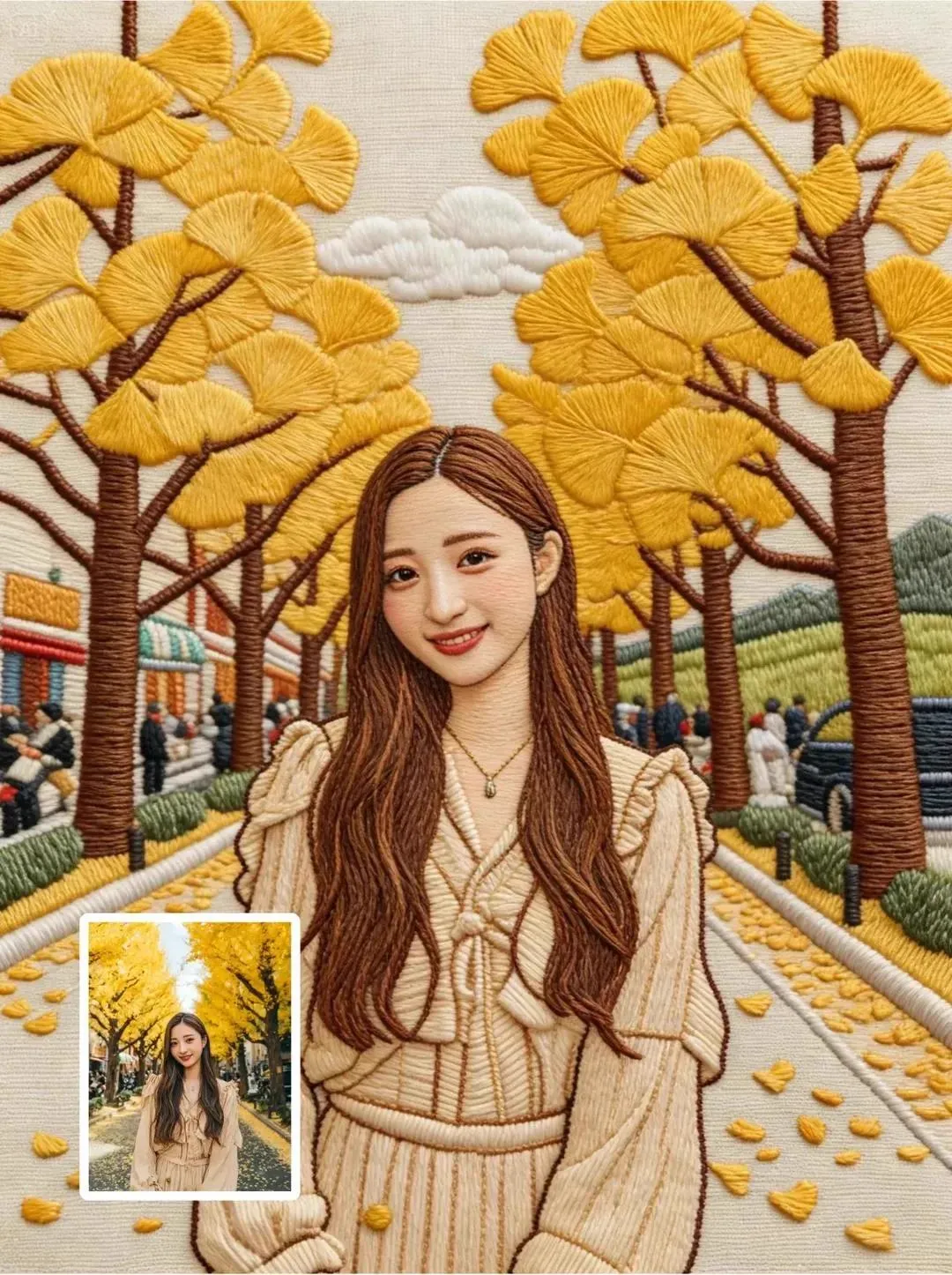
The incorporation of multi-image fusion technology directly addresses the need for character keyframe consistency, a direct analogue to setting up robust rigs and weight maps in 3D modeling. Reference images act as stable anchors for procedural character generation across scenes. When a creator needs a character to persist across different shots, styles, or even models, the reference set defines the visual identity that every generation must respect.
This is essential for maintaining texture coherence across frames, a common failure point in early AI models. Multi-image fusion mimics the stability of a locked-down 3D material assigned to a specific mesh, ensuring that even as the scene evolves, the character's identity remains intact.
Structured Scene Organization with AI Direction
AI director agents bring an additional layer of control to the workflow. They can structure narrative by translating initial scene outlines into explicit scene graphs, managing the placement and repetition of visual elements — a foundational step in procedural scene building. For a novice creator, this transforms a simple prompt into a visually balanced sequence, increasing the aesthetic value of the production immediately.
Advanced agents also handle multi-image fusion and keyframe control automatically, ensuring continuity markers like lighting conditions, background elements, or character orientation are respected between generations. This automation reduces the need for manual post-production correction, allowing creators to focus on the story.
Conclusion
Mastering Cinema 4D techniques within AI video generators is about understanding the why behind high-end visuals, not just the how of prompting. Materials, lighting, camera movement, procedural structure, and consistency are the pillars of professional output. To start, create your reference images and character sheets with an AI image generator, then generate your sequences with an AI video generator. For refining and restyling existing visuals, explore image-to-image tools. With practice, you can translate the rigor of 3D production into the speed of generative AI.
