


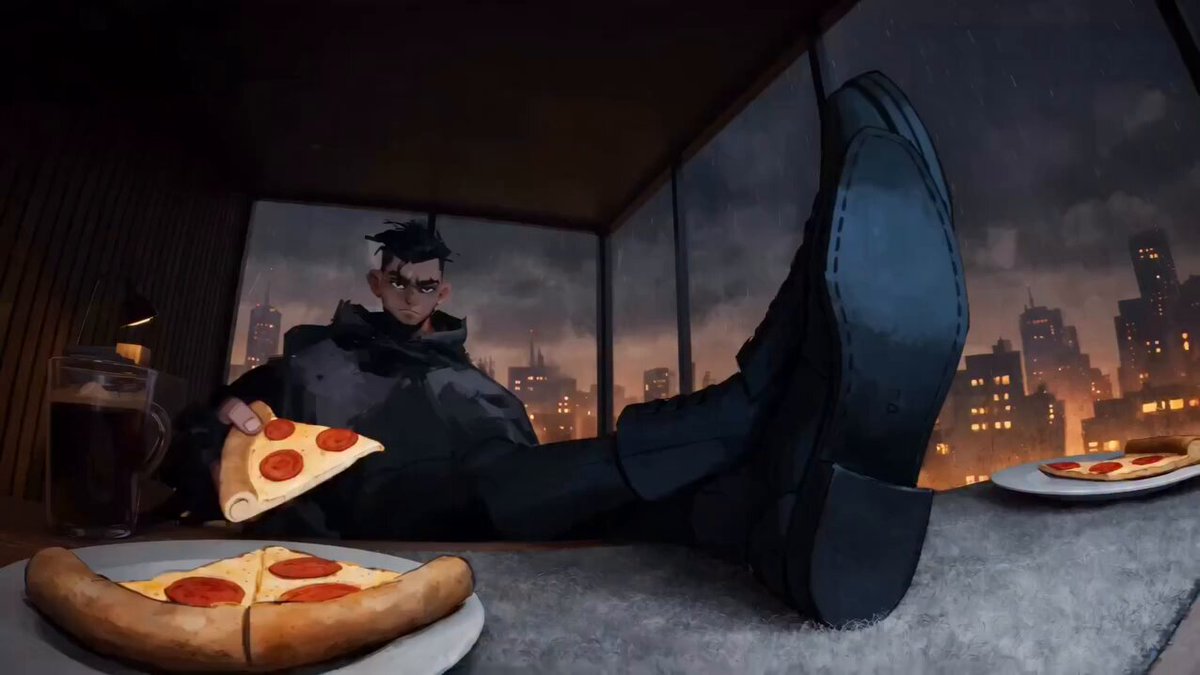
Why Visual Narrative Outperforms Generic Advertising
Most marketing videos fail for the same boring reason: they describe a product instead of telling a story. A viewer scrolling at speed does not care about features. They care about tension, curiosity, and a payoff they can feel in ten seconds. That is the entire job of visual narrative — to convert an abstract brand promise into a sequence of moments a person can experience.
The economics behind this are simple. Attention is finite and platforms are saturated, so the cost of interrupting someone keeps rising while the value of being chosen keeps climbing. A story earns attention rather than buying it. When a viewer wants to know what happens next, they stop scrolling voluntarily, and voluntary attention is worth far more than an impression that was forced on someone.
Visual narrative also travels better. A well-told story survives being cropped, muted, captioned, reposted, and remixed. A purely informational ad does not — remove the audio and the headline and nothing is left. If your creative only works in one exact format on one exact placement, it is not a story, it is an advertisement that happens to have moving pictures.
The practical takeaway: treat every marketing video as a small film with a protagonist, stakes, and a change. Then use modern AI video tooling to produce that film faster without flattening it into stock-footage mush.
The Anatomy of a Story That Holds Attention
Before touching any generation tool, it helps to name the parts you are assembling. Most short-form brand stories run on the same skeleton, whether they were shot on a phone or rendered by a model.
Character and stakes
A character does not need a name, backstory, or dialogue. It needs a want. A dancer who wants to nail a move. A founder who wants the packaging to feel right. A commuter who wants five more minutes of quiet. Once there is a want, there is friction, and friction is what the audience leans into.
State the want visually in the first two seconds. If the opening frame is a generic wide shot of a city, you have spent your most valuable second on atmosphere instead of tension.
Conflict and the turn
Every story needs a hinge — a moment where the situation changes. In a 15-second spot, the turn might be a single cut: the clumsy attempt, then the confident one. In a 60-second brand film, the turn can be a decision that reframes everything before it.
Without a turn, the video is a montage. Montages are pleasant and forgettable. Audiences remember change.
Seam versus billboard
There are two honest ways to place a brand in a narrative. The seam approach weaves the product into the plot: it is the reason the character can do the thing. The billboard approach stops the story, presents the product, and resumes.
Seam integration almost always performs better on retention, because the product arrives as a resolution rather than an interruption. Billboard integration can still work when a brand is already famous and the audience enjoys the interruption as part of the entertainment. Choose deliberately; don't drift into billboard by accident because the legal team wanted the logo centered.
A spine you can write in one page
Keep a single-page document with five lines: who wants what, what blocks them, what the turn is, what changes, and where the brand sits. If you cannot fill those five lines, more production budget will not save the piece.
Planning the Story Before You Generate a Frame
Generation tools reward clarity. The fastest route to a coherent video is a shot list that maps emotion to frames.
Create a table with four columns: shot number, what the audience should feel, what is visible, and the duration. The emotional column is the important one, because it prevents the classic error of generating beautiful clips that add up to nothing.
Then write a simple continuity bible. It does not need to be more than a page: character description, wardrobe, key props, color palette, lighting direction, and the two or three locations involved. Give the palette hex-style names if it helps — "sodium streetlight amber," "clinic white" — because vivid labels produce more consistent outputs than abstract adjectives.
Finally, decide the format family before you build anything. A vertical 9:16 cut, a 1:1 social cut, and a 16:9 landscape cut require different framing logic. Filming or generating wide and cropping later almost always produces mushy compositions. Plan the vertical frame first; it is the hardest one to fake.
Cinematic Language for Small Screens
Cinematic language is not decoration. Camera distance, lens choice, movement, and cut rhythm all encode meaning, and a model will follow your cues if you give them.
Distance and intimacy
Extreme close-ups signal intimacy or pressure. Medium shots signal conversation and context. Wide shots signal isolation or scale. If your story moves a character from doubt to confidence, moving the camera closer across the piece tells that story without a single line of copy.
Pacing math
Short-form video lives on cut rhythm. A useful starting rule: cut every 1.5 to 2.5 seconds during the setup, lengthen to 3 to 4 seconds at the emotional turn, then tighten again for the resolution. That contrast makes the turn feel significant instead of just being another beat.
Silence matters as much as sound. A single beat of quiet before the payoff — no music, no voiceover — reads as confidence and pulls attention forward.
Motion with purpose
Handheld framing suggests immediacy and authenticity. Locked-off frames suggest control and premium polish. Slow push-ins create anticipation; slow pull-outs create resolution. Aerial and drone-style moves create grandeur, which is precisely why they should be rare in a story about one person.
Color as continuity
Assign warm tones to the "before" state and cooler or cleaner tones to the "after" state, or invert it — just be consistent. Viewers will not consciously notice a controlled palette, but they will feel a piece as cohesive rather than stitched together.
An AI-Assisted Production Workflow, Step by Step
This is a practical pipeline that works for a 30-second brand story and scales down to a 10-second hook.
Step 1: Script the beats, not the dialogue
Write the five-line spine, then break it into six to ten beats. Each beat gets one sentence describing action. Keep action verbs physical: she opens, he lifts, the light changes. Abstract verbs produce abstract footage.
Step 2: Build a lookbook of three to five reference stills
Generate or source stills that establish your character, wardrobe, location, and lighting. These are your anchors. Every subsequent shot should feel like it belongs in the same film as these five images.
Step 3: Generate shots individually, then in motion
Generate the key frames first as stills, approve them, then animate. Approving stills before animating saves enormous time because composition problems are cheap to fix and motion problems are not.
Step 4: Lock continuity before you fall in love with a shot
Run a continuity pass: same face, same jacket, same window light direction, same screen direction of movement. If a shot breaks the world, either regenerate it or design a motivated cut that hides the shift — for example, a cut on a hand passing in front of the lens.
Step 5: Assemble, then cut for rhythm
Drop everything onto a timeline and cut specifically for pace. Many editors add music first and cut to the beat, which produces a technically tight but emotionally flat piece. Cut for meaning, then let the music support the pauses.
Step 6: Add sound design, not just music
A door click, fabric rustle, footsteps, a breath. Small foley makes generated footage feel significantly more real, because the ear is less forgiving than the eye about a mismatch between image and sound.
Step 7: Caption and version
Burn in captions for muted autoplay, then export the full format family: 9:16 primary, 1:1 and 16:9 secondary, plus a six-second hook cut for paid placements.
Step 8: Iterate on the hook only
Once a video works, resist the urge to rebuild it. Change the first two seconds, keep everything else, and re-test. Hook variation is the highest-leverage optimization in short-form marketing.
Keeping Characters and Worlds Consistent Across a Series
Consistency is the hardest technical problem in AI-assisted storytelling, and it is also the most commercially valuable, because a recognizable character can carry an entire campaign.
Use a character sheet. One image showing face, hair, and wardrobe, plus a short written description that never changes. Reuse that same description as the opening of every prompt rather than paraphrasing it differently each time — small wording drift produces large visual drift.
Reuse your lighting language too. If your world is lit by a single soft window, say so in every prompt. Mixed lighting conditions are the fastest way to make a series look like unrelated clips.
Build a shot library. Once you have an approved close-up, a medium, and a wide of your character, keep them as a private reference set. New shots can be scaffolded from the approved ones, which keeps the series coherent and speeds up production dramatically.
Finally, standardize your edit. Same caption font, same lower-third position, same transition vocabulary, same color treatment. Series recognition lives in the edit more than in the generation.
One Story, Many Formats
A single narrative should feed every placement you own. The trick is to re-cut rather than re-shoot.
For vertical, crop tighter and move the turn earlier. For square, center your subject and reduce horizontal movement. For landscape, allow wider establishing frames and slower pacing. For paid hook cuts, isolate the most surprising two seconds and add a caption that creates an open loop.
If you are writing copy alongside the video, keep it subordinate to the image. The best-performing short-form ads usually pair minimal text with a strong visual beat, letting the picture do the work of the hook.
Measurement That Actually Matters
Views are a vanity metric in a saturated feed. Track these instead:
- Three-second and five-second retention — measures whether the hook works.
- Median watch time and completion rate — measures whether the story holds.
- Re-watches — the strongest signal that a piece is genuinely enjoyable.
- Sound-on share — tells you whether your sound design is contributing.
- Cost per completed view — the honest efficiency metric for paid distribution.
- Assisted conversions or brand search lift — the slow, real business outcome.
Read these as a diagnostic. High three-second retention but low completion means the hook is strong and the middle is weak: shorten it. Low three-second retention means the opening frame is not creating tension.
Common Mistakes and How to Fix Them
Starting with a logo. Front-loading branding costs you the scroll. Introduce the brand at or after the turn.
Chasing generation quality over story. A slightly imperfect shot inside a compelling narrative beats a flawless shot inside a meaningless one, every time.
Over-writing prompts. Long, contradictory prompts produce averaged, bland results. Describe subject, action, lighting, and camera in that order and stop.
Ignoring screen direction. If your character moves left to right and then right to left in the next shot, the audience reads confusion. Pick a direction and hold it.
No sound pass. Generated footage with a music bed only will always feel synthetic. Add two or three foley layers.
Rebuilding instead of iterating. Once something works, change one variable at a time so you learn what caused the improvement.
Abandoning the character. Audiences build relationships with recurring faces. If a character performs, keep them and write the next chapter rather than starting over.
FAQ
Do I need a full production team to do this?
No. A single competent editor with a clear story spine and a consistent character sheet can produce a campaign. Most of the work is pre-production thinking, not rendering.
How long should a brand story be?
As short as the story allows and no longer. Fifteen to thirty seconds is a strong default for social, with a six-second cut for paid hooks. Longer pieces work when the narrative genuinely needs room to breathe.
How do I stop AI footage from looking generic?
Specificity. Specific wardrobe, specific time of day, specific camera distance, specific gesture. Generic prompts produce generic results, and generic results are the single biggest reason AI video underperforms.
Should the product appear in every shot?
No. Show the product when it resolves the tension. Constant presence turns a story into a catalogue.
What is the best first step if I am starting from scratch?
Write the five-line spine. If that page is strong, everything downstream — generation, editing, distribution — gets easier and cheaper.
How do I keep a series from feeling repetitive?
Keep the world and the character constant, but vary the want and the obstacle each episode. Consistency in style with novelty in situation is what keeps an audience returning.
