
Why Prompting Is Now the Core Creative Skill in Video
For decades, the highest barrier to making a video was production: getting access to cameras, actors, sets, and editing suites. Generative AI did not simply lower that barrier, it relocated it. The scarce resources now are not hardware but articulation: the ability to describe, precisely and repeatedly, what the moving image should look like and feel like. One person with a strong prompt can direct what once required a crew, and two people with the same tool produce wildly different results purely from how they spec the request. Prompting has become a creative discipline in its own right.
This shift is especially acute in video generation, which is harder to control than static image generation. A single image must establish a space, but a video must carry a space through time, moving a camera, sustaining a character, and following a mood across many frames. Each of those demands a prompt that speaks the model's language. This guide lays out the mental model, techniques, and workflow for writing prompts that reliably produce the video you actually want.
What the Model Is Actually Trying to Do
Before writing prompts, it helps to know what the model is trying to solve. A video generation model aims to predict a coherent sequence of frames that matches a text description and any reference material. Because it has trained on vast amounts of footage, it carries implicit assumptions about how the world moves: how light falls, how fabric sways, how a camera tracks a subject. Effective prompts work with those assumptions rather than against them.
The model wants unambiguous structure
Videos are typically parsed by the model in terms of well-defined elements: a subject, its environment, the light, the camera, and the motion. A prompt that separates these explicitly signals to the model how to allocate its effort. Naming the subject, placing it in a space, describing the quality of light, and stating a camera move gives the model a scaffold instead of a mystery. The more clearly you decompose a scene, the more control you retain.
Motion must be described, not assumed
Many new prompters describe a static picture and expect motion to appear. In video prompting, you must specify what moves and how. Is the camera dollying, panning, zooming? Is the subject walking, turning, breathing? Does water ripple, leaves drift, cloth flow? Explicit motion cues are the difference between a flat still wobble and an intentional sequence. If you want motion, say what is moving and at what character.
Writing Prompts in Layers
A useful habit is to build prompts by adding layers of responsibility rather than dumping a wall of adjectives. The layers tend to be, in this order: subject, environment, light, camera, motion, and finally style or mood. This structure keeps each job independent so you can debug one element without rewriting everything.
Start with a precise subject
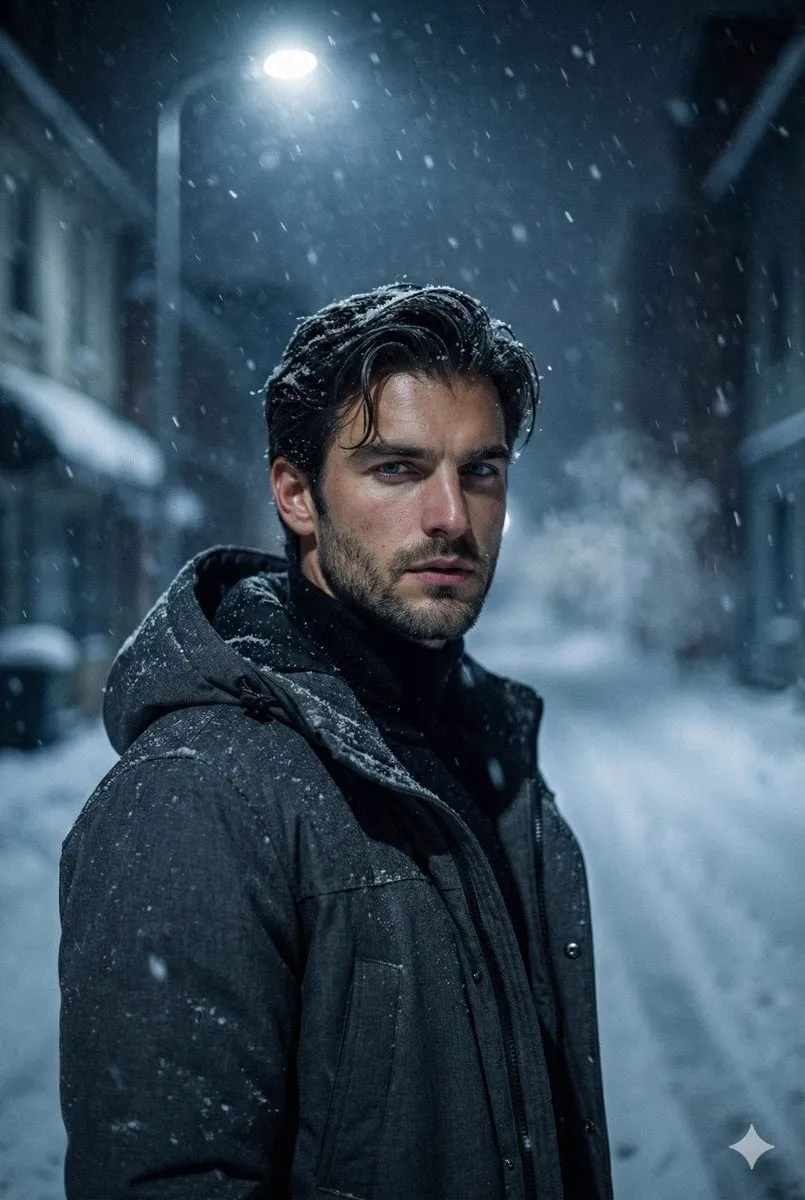
Be specific about the subject: what it is, what it looks like, its key features, its pose, and its scale in frame. "A woman" is weak; "a woman in a red coat standing beside a steamed window, her hand resting on the glass" gives the model something concrete to anchor the sequence to. If you have a reference image, name that you are preserving it and describe what may and may not change.
Pin down the environment and light
Place the subject in a space and define the light. Light is one of the strongest mood variables and the most frequently neglected. "Soft golden afternoon light entering from the left" tells the model who the scene answers to. Indoor or outdoor, time of day, weather, and the dominant light source are all worth stating explicitly, because they shape color and shadow across every frame.
Direct the camera like a cinematographer
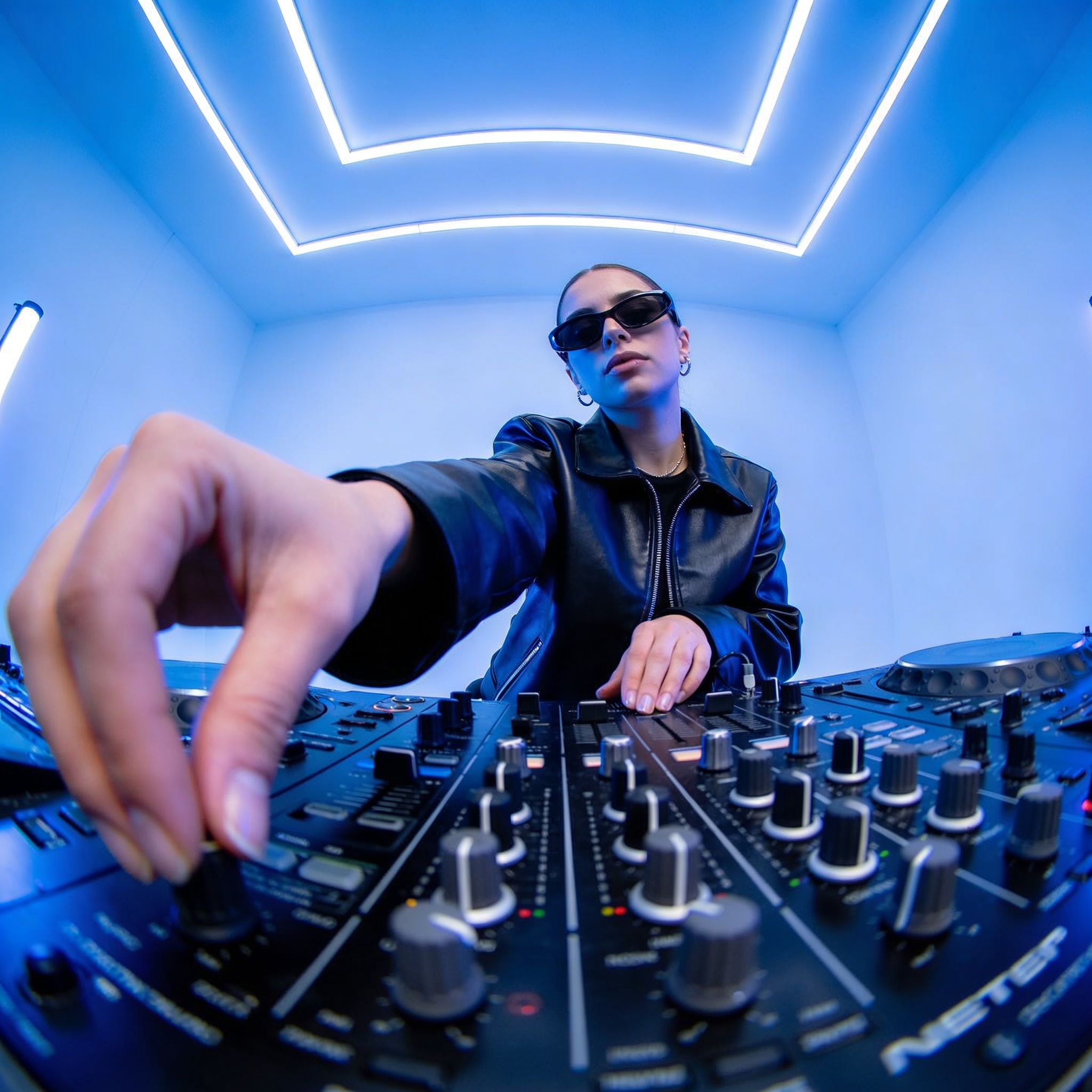
Camera language gives your video its cinematic grammar. Choose concrete moves: "slow dolly in," "lateral pan across the room settling on the subject," "gentle push toward the window." State the framing you want, such as close-up, medium shot, or wide establishing shot, and how much the camera should move. A little precise camera direction transforms an amateur-looking clip into a composed one.
Specify the motion physics
Beyond the camera, decide how things inside the scene move. Is there a breeze moving curtains or hair? Does the subject perform an action over the duration, or stay relatively still while the environment breathes? Realism lives in believable small motion, so adding one or two natural physical cues, like a flickering candle or drifting traffic in a distant window, makes the clip feel alive rather than simply "animated."
Lock the style and mood last
Style and mood are the emotional wrapper. Words like "cinematic," "documentary realism," "soft dreamlike haze," or "moody, melancholic" tune the output's feel. Because stylistic terms can be interpreted loosely, pair them with concrete references you actually want, such as a naturalistic color palette, shallow depth of field, or a specific era of film look. Reusing consistent style language across related clips is how you keep a series feeling unified.
Building Prompts That Survive Long Videos
Short clips are the easy case. When you want a longer video or a sequence that changes over time, the difficulty multiplies, because every boundary threatens continuity. The character at the start must look like the character at the end, and the mood must not wander. Managing this is largely a prompting discipline.
Anchor identity from the first frame
If a character or object must persist, establish and reference a stable identity. Keep a single consistent description or a reference image and reuse it across every segment of the sequence. Any change in phrasing risks drifting the character. When you do need a different look, make the change deliberate and local to one segment, and verify the transition reads as intentional.
Treat transitions as first-class scenes
The trickiest moment in a long video is the cut. Rather than assume the model bridges scenes smoothly, describe the transition itself. A fade through a neutral color, a slow push through an object, or a match on a gesture can turn an abrupt jump into a deliberate visual decision. Prompting the transition turns continuity risk into an editorial advantage.
Keep audio and visuals in sync
A video is never just pictures. If your sequence includes dialogue, voiceover, or sound effects, prompt for how the audio relates to the action. A whisper on a close-up, the noise of traffic behind a window scene, or music swelling at a specific moment are all things you can specify. Multimodal attention to sound stops the clip from feeling like silent animation with music slapped on top.
Using a Director or Agent to Hold the Thread
Writing prompts for a single clip is manageable, but orchestrating an entire video, with its planning, shot list, and continuity, is a large cognitive load. Some advanced tools provide a director-like assistant that holds your overall intention and produces or guides the individual scene prompts for you. Working this way has a distinct advantage: you state the vision once at the top, in broad terms, and let the assistant translate that into the granular prompts for each shot while keeping the identity and mood consistent.
Speaking the brief, not the shader
When you work through such an assistant, your job is to communicate the story and intent rather than to micro-specify every technical parameter. Describe the arc, the tone, the key beats, and the constraints you care about, such as keeping a character recognizable or keeping a color palette intact. The assistant managers the technical translation. The reward is a faster path from idea to a structured, shootable plan.
Keeping editorial control
Using a director assistant does not mean surrendering judgment. Review the plan it proposes, adjust the shots that miss the mark, and keep refining the top-level brief as it learns what you mean. The strongest workflows treat the assistant as a thought partner that drafts the structure so you can spend your attention on taste, pacing, and emotion rather than on formula.
A Repeatable Prompting Workflow
Treat prompting as a cycle, not a single shot. The following workflow reliably produces strong results with diminishing frustration.
- Clarify the intent first. Write one sentence describing the emotion and message of the clip before any technical detail. Everything else serves that sentence.
- Draft the structural layers. Subject, environment, light, camera, motion, style, in that order, keeping each job separate in your head.
- Generate a first pass quickly. Do not polish a prompt you have not tested. See what the model returns before investing in refinement.
- Diagnose against intent. Compare the output to your intent sentence. Is the problem subject, light, camera, or motion? Fix that layer only.
- Reuse what works. Save strong prompt templates and their settings. The faster you build a library of proven language, the faster future jobs go.
- Guard consistency with references. For series, keep reference images and stable identity language in one place and reuse them religiously.
The Vocabulary of Directional Cues
One practical way to improve prompts quickly is to build a personal vocabulary of directional terms that map to visual outcomes. Cinematographers have this vocabulary already, and adopting a few of their terms pays off immediately. Camera language like dolly, pan, tilt, zoom, crane, and follow gives you precise moves the model recognizes. Light language like rim light, hard key light, soft fill, golden hour, and low-key distinguishes one mood from another. Motion language like "slow drift," "micro-movements," "repeating cycle," and "looping" tells the model what kind of motion repeats versus what develops once. Style language like "film grain," "anamorphic," "documentary," "stop-motion," and "painterly" set expectations for the look.
A disciplined habit is keeping a short reference sheet of the terms you have tested, grouped by job, such as camera, light, motion, and style. When a term produces a stable, desirable result, keep it; when it causes drift or noise, drop it. Over time this sheet becomes a living grammar of your own, and writing a strong prompt stops feeling like improvisation and starts feeling like using a reliable language you have mastered. Naming what you want with tested, specific vocabulary is what separates consistent professional output from one-off luck.
Negative Prompts: Telling the Model What to Avoid
For most video generation tasks, what a model omits within your prompt is as important as what you include. Explicitly telling the model what not to produce, such as distorted anatomy, warped text, excessive blur, flickering light, jumps between cuts, or unwanted watermarking artifacts, can meaningfully clean up the output. The instruction works by influencing the model to avoid those patterns rather than leaving them unguarded.
The skill is choosing negatives that are specific and directional rather than a long list of everything you can imagine. A wall of prohibitions can distract the model from your constructive direction, so reserve negatives for the few failure modes that actually appear in your results. As you iterate, note which errors recur and add exactly those to your negative set. Editing your negative cues is iterative, just like the prompts themselves, so treat the set of things to avoid as a maintained, growing list that reflects the specific weaknesses of the particular tool and style you are working with.
Structuring a Reusable Prompt Library
The fastest path to consistent video production is to stop writing every prompt from scratch. Organize the prompts that produced results you trust into a small library, described by project, mood, style, and the model it ran on. Alongside each strong prompt, record the settings that mattered: the seed, duration, framing, and any reference assets. When a brief arrives that resembles past work, you start from the proven example rather than an empty editor.
This library pays for itself fast. It makes experimentation cheap, because you can branch from a known-good prompt instead of risking a fresh one. It keeps style consistent across a series, because the same directional vocabulary and identity language are reused. And it makes on-boarding new collaborators easy, because a well-tagged library communicates your conventions faster than any conversation. Treat the prompt library as a real asset, refine it after every project, and you will find that the quality bar of your video output rises steadily with the maturity of the library that supports it.
Common Prompting Mistakes to Avoid
- Describing only a still scene and expecting spontaneous motion. If you want movement, prompt for it explicitly.
- Burying the subject under a pile of adjectives. Restraint and clarity outperform a dense fog of style words.
- Never describing light. Light shapes mood far more than most beginners expect, so always set it.
- Expecting a long video from one prompt. Build long content from planned segments with carefully prompted transitions.
- Changing identity language between shots. Continuity failure is usually a prompting inconsistency in disguise.
- Avoiding reusable templates. Starting from scratch every time is the slowest, least consistent approach there is.
Frequently Asked Questions
How long should a prompt be? Enough to set subject, environment, light, camera, motion, and style, and no longer. Long, rambling prompts often confuse a model more than they help. Precision beats volume.
Do I need to understand the model's technical internals? No. Understanding the conceptual structure, that the model parses subject, space, light, camera, and motion, is enough to write good prompts. You do not need to know the underlying math to direct creatively.
Can I use natural, conversational language? Yes. Most tools accept ordinary language, but structuring your scene into layers within that natural language still helps. You can sound human while staying organized.
Why do unrelated words get ignored? Models weigh tokens relative to each other. Crucial cues can be drowned out if a prompt is cluttered with weak or competing descriptors. Trim the noise so the important instructions stand out.
How do I keep a character stable across many clips? Combine a consistent reference image, a fixed identity description, and unchanged style cues. Avoid meandering character adjectives between shots, and validate every clip before proceeding to the next.
Directing Is Decision-Making
Prompting, done well, is not about memorizing magic phrases. It is about knowing what you want and making clear, layered decisions that a model can act on. You are the director: picking the subject, settling the light, moving the camera, and setting the mood. The model is attentive and tireless but literal, so the quality of the film lives or dies on the clarity of the direction. Master the layer-by-layer discipline, learn to diagnose and iterate, and reuse a growing library of what works. In a moment when anyone can summon images and motion from words, the people who command attention will be the ones who articulate intention with precision, patience, and taste.
