


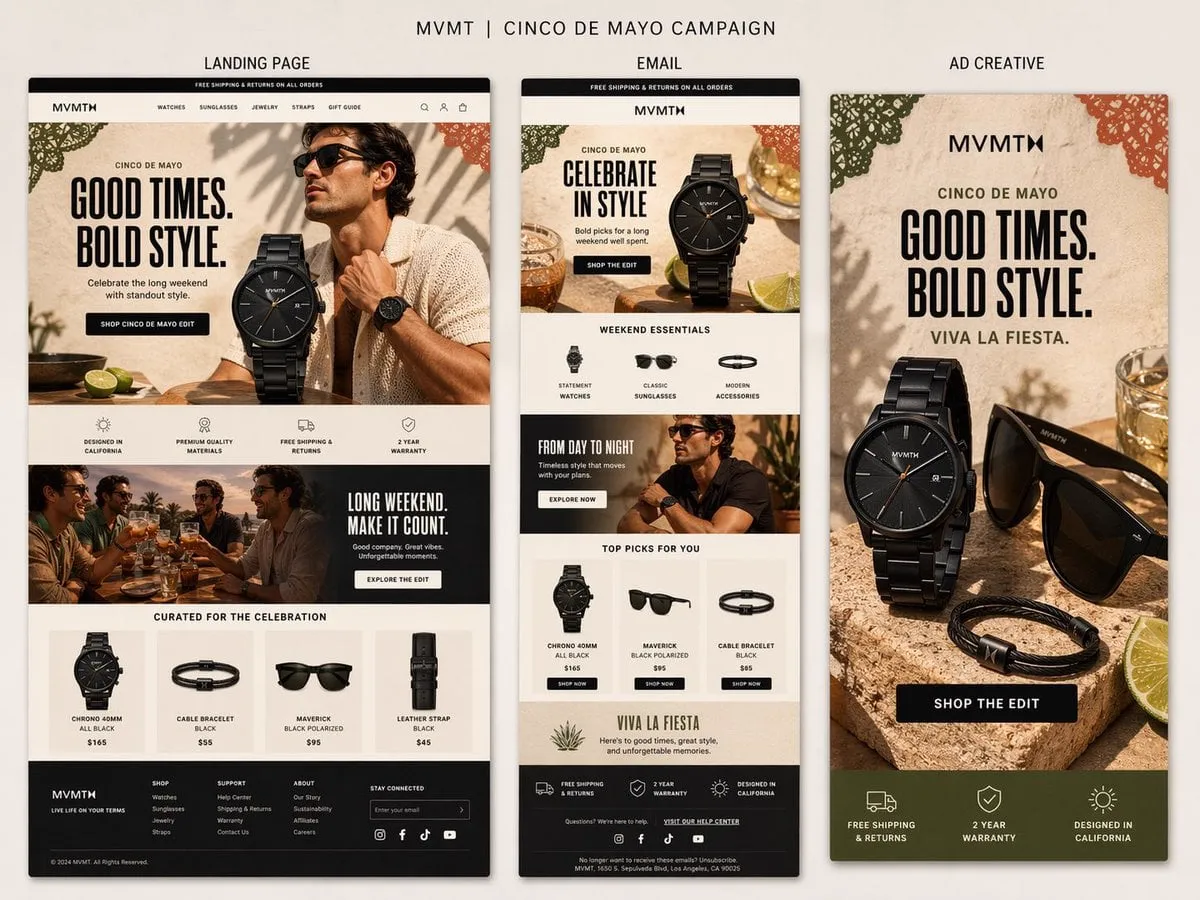
Cybernetics marketing sounds academic, but it captures something practical: treating your advertising machine as a living system that learns and corrects itself. Instead of setting a campaign and hoping, you build feedback loops where performance data flows back into creative, targeting, and budget decisions automatically. In a crowded digital advertising environment, this self-correcting approach is one of the most reliable ways to lift campaign results.
At its core, cybernetics is the study of systems that regulate themselves through feedback. When you apply it to marketing, you stop viewing a campaign as a one-off launch and start viewing it as a continuous loop: define a goal, run, measure, learn, adjust, repeat. The winning teams build this loop into their daily operations, and AI accelerates every step.
This guide explains the key principles, shows how to build the data infrastructure behind them, and gives you a concrete roadmap for making dynamic creative and smart budget allocation a daily habit.
What cybernetics marketing actually means
Marketing today faces two pressures at once: data keeps growing in volume, and consumer behavior keeps getting harder to predict. A static campaign plan breaks under both pressures. Cybernetics provides a better mental model because it treats the whole system as interconnected loops that react to changing conditions.
In plain terms, you want four things working together:
- A clear target state. Your campaign objective, whether it is a cost cap, a conversion rate, or a return target.
- Sensing. Real-time data about impressions, clicks, conversions, and cost.
- Decision and action. The ability to change creative, targeting, bids, or budgets when signals shift.
- Correction. Rules that keep the system pointed back toward the goal when it drifts.
When all four exist, a campaign becomes self-regulating. You are no longer guessing; you are steering a system that reports where it is and adjusts itself.
Why feedback loops beat one-off experiments
Single experiments tell you what worked once. Feedback loops tell you what keeps working, and they adapt when the environment changes. Competition enters, seasons shift, budgets move, and consumer taste changes. A loop built to absorb those changes is more durable than a one-time winning test.
The practical benefit is compounding. Every successful adjustment produces better data, which produces better targeting, which produces better creative, which lowers costs and increases scale. Over a quarter, these compounding loops create results that a static plan cannot match.
The principle of self-regulation in campaigns
Think of a campaign like a thermostat, but for outcomes. The thermostat does not just measure temperature; it compares the current reading to the target and turns heating on or off to close the gap.
Applied to advertising, self-regulation means the system should notice when an audience is fatigued and refresh creative, or when a placement is underperforming and shift budget elsewhere. You encode those decisions as rules or let an optimization engine make them, but either way, the campaign holds itself toward the target instead of drifting.
Step one: build the data backbone
Before any loop can close, you need reliable data. This is the foundation and the place most teams quietly struggle.
Start with an event taxonomy. Define exactly what counts as a view, an engagement, a lead, and a purchase, and document it so everyone measures the same thing. Next, instrument your tracking so conversions are attributed correctly, even across devices. Finally, consolidate signals in one place rather than juggling spreadsheets and separate dashboards.
A clean data backbone makes every later step easier. It lets you compare creative variants, spot fatiguing audiences, and allocate budget with confidence instead of instinct.
Step two: design the control loop
With data flowing, decide how decisions get made. You have two broad options.
Rule-based control works well when the logic is clear and stable. For example: if reach rises but conversions fall, rotate creative. If cost per acquisition passes the cap for two consecutive days, lower the bid or move budget.
Model-driven control works best when interactions are complex. An AI engine can weigh dozens of signals, detect patterns you would miss, and propose shifts automatically. This is where modern optimization tools shine, offloading the routine decisions so you focus on strategy.
Most successful teams use a blend: rules for the obvious cases and a model for the subtle ones. Either way, the loop is the same: perceive, decide, act, observe, repeat.
Step three: make creative dynamic
Creative is where advertising performance is won or lost, and it is the most natural place to apply AI. Instead of designing one ad and hoping, you generate many variants quickly and let performance data pick winners.
A dynamic creative workflow looks like this:
- Define hooks. Capture several opening lines that appeal to different motivations.
- Generate variants. Produce multiple visual and text versions around those hooks.
- Test in parallel. Launch them together against the same audience.
- Read the results. Let clicks, engagement, and conversions rank the variants.
- Scale winners, retire losers. Feed the winning concepts back into new variations.
The key is speed. When generating and testing are cheap, you can continuously refresh creative before fatigue sets in, keeping your account healthy and your costs down.
Step four: optimize budget as a live decision
Budget is a lever you can pull every day. In a cybernetic system, allocation flows toward what is currently winning.
Set up daily allocation rules or an optimization engine that watches return on ad spend and shifts budget toward the best-performing placements, audiences, and formats. At the same time, set floor and cap rules so no single change tanks the whole account. Guardrails protect you from volatility while the loop still captures upside.
Reserve a small slice of budget for ongoing experiments. If all your spend sits in proven winners, you never discover the next one. A disciplined test budget keeps the discovery engine alive.
How AI changes the campaign control center
Generative AI has made control loops far more powerful because it removes the creative bottleneck. One person can now produce more ad variants, brainstorm faster, and respond to data within hours instead of days.
AI contributes in several places:
- Insight summarization. Turning raw campaign data into clear, actionable summaries about what changed and why.
- Creative generation. Producing fresh hooks, scripts, and visuals tuned to specific audiences on demand.
- Scenario planning. Projecting what happens if you shift budget or change targeting before you commit.
- Automated iteration. Closing the loop by generating the next round of variants based on the latest winners.
The result is a campaign control room where humans set direction and guardrails while AI handles the heavy, repetitive optimization work.
A practical weekly operating rhythm
Cybernetics is a habit, not a one-time setup. A rhythm keeps the loop running.
- Monday: review. Read last week's performance summaries and identify what drifted from target.
- Tuesday: refresh. Generate and launch new creative variants based on the winners and new angles.
- Midweek: adjust. Shift budget and bids based on midweek signals, applying your guardrails.
- Friday: report. Capture learnings into a shared log so knowledge compounds across the team.
- Continuously: watch. Let alerts notify you when a metric crosses a threshold you care about.
This cadence makes optimization part of the work week rather than an afterthought.
Common mistakes and how to avoid them
A few errors weaken even well-meant loops.
Overfitting to noise. Small day-to-day swings can trick you into constant changes. Use thresholds and minimum sample sizes before acting.
Confusing activity with optimization. Generating endless variants without reading results is just motion. Every action should trace back to a decision informed by data.
Neglecting data hygiene. If tracking is wrong, every downstream decision inherits the error. Fix the backbone first.
Risking the account with one lever. Moving all budget on a single signal invites volatility. Use guardrails and incremental shifts.
Forgetting the customer. Optimization loops must serve real people, not just metrics. Keep an eye on brand safety and message relevance.
Building a team and tools that can run the loop
You do not need a giant team. You need clear ownership and the right tools. Assign someone to own the feedback loop, invest in tracking quality, choose an optimization platform that fits your scale, and adopt a generative tool for creative production.
Document your goals, your event definitions, and your operating rules in one place. When ownership is clear and the playbook is written down, the loop runs even when people change.
Putting ethics and relevance in the loop
Optimization is powerful, but it must serve real people rather than chase metrics blindly. As you tune toward lower cost per acquisition, watch for signs that the loop is drifting into ethically or strategically bad territory.
Keep human judgment on brand safety. Automated systems can push you toward audiences or messages that perform numerically but damage the brand. Set explicit guardrails that stop the system from targeting certain segments, using certain claims, or running in placements you want to avoid.
Relevance matters too. A high click rate with zero repeat behavior is a warning, not a win. Track a measure of genuine value alongside the optimization metrics, such as conversion quality or repeat purchase rate. If performance improves but real outcomes worsen, the loop is optimizing the wrong thing, and you need to redefine the objective.
None of this slows the system down. In fact, principled constraints make optimization more reliable by preventing short-sighted pivots that burn budget and trust.
A starter checklist for your first loop
To put everything together, use this checklist when you set up your first cybernetics-driven campaign.
- Define one target metric and one guardrail metric.
- Confirm tracking fires correctly across your key sources.
- Consolidate signals into a single dashboard.
- Launch two to three creative variants in parallel.
- Set budget floors, caps, and rotation rules.
- Schedule a fixed weekly review and log learnings.
- Review brand safety and relevance every cycle.
Work through these once, and you will have the skeleton of a self-correcting system. Refine it week by week as the data teaches you where the loop can react faster or smarter, and keep the guardrails tight in the early weeks to avoid overcorrecting on volatile signals.
Frequently asked questions
Is cybernetics marketing only for big brands with big budgets? No. The principles apply at any scale. Even a small campaign can set a goal, watch one or two key signals, and adjust creative and budget weekly.
Do I need to know control theory or write code? No. Modern tools package the loops behind simple dashboards and rules. The discipline is in defining goals and reading results, not in mathematics.
How fast should the loop run? It depends on volume. High-traffic campaigns can react daily; niche campaigns with little data should optimize weekly or monthly to avoid overreacting to noise.
What is the most important first step? Clean, consistent data. Without it, every adjustment is guesswork.
Will AI replace the marketer? No. AI removes the creative and analytical grunt work, but someone still sets direction, defines audiences, and ensures the work stays relevant and ethical.
How do I know my loop is working? The clearest proof is that performance improves while quality holds, and that your adjustments compound over several cycles. If constant changes produce no gain, you are likely reacting to noise rather than a real signal, so slow down and revisit your data quality.
Final thoughts
Cybernetics marketing is really a shift in attitude: from treating campaigns as projects to treating them as living systems. Build the data backbone, close the loop with feedback, make creative dynamic, and let budget follow performance. AI simply makes each step faster and sharper.
Start with one campaign. Set a target, wire up the measurements, launch a few dynamic variants, and commit to a weekly review small enough to keep up. Within a month you will see how compounding feedback outperforms static planning, and you will have built a discipline that keeps improving long after any single launch ends.
