

Making a TikTok video go viral increasingly looks less like luck and more like a repeatable craft. The short-form video landscape has become fiercely competitive, and creators who win are the ones who combine a sharp read on platform trends with a reliable, fast way to produce polished clips. The good news is that artificial intelligence has matured into a practical co-creator for exactly this job. This guide walks through how to study viral patterns, design clips that hold attention, and use AI video generation tools to turn ideas into finished posts with far less friction than a traditional editing workflow.
Why Viral Short-Form Content Is No Longer About Luck
For years, creators treated virality as a lottery. A video would take off, or it would not, and nobody could quite explain why. The algorithm rewarded novelty, but novelty is hard to schedule. That framing changed once short-form platforms matured. Today, virality is better understood as the intersection of three controllable factors: timing relative to an emerging trend, an emotionally legible concept, and a technical package that keeps a viewer watching to the final frame.
The rise of AI tools has shifted the balance further. When generating a clip used to require a camera, actors, a set, and hours of editing, experimentation was expensive. AI video generation collapses that cost almost to zero for the ideation and pre-visualization stages. That means a single creator can test a dozen concepts in the time it used to take to produce one. More iteration means more chances to land on a hook that resonates, which is the real engine of short-form success.
There is also a psychological dimension. We scroll quickly, and our first decision is not whether to like a video but whether to keep watching. Retention is the metric that platforms reward most directly because it signals that the content deserves a wider audience. Tools that help you front-load a strong hook, maintain visual continuity across scenes, and keep pacing tight are therefore not optional polish; they are the difference between being surfaced and being buried.
The Anatomy of a Short-Form Hook
The first one to three seconds decide almost everything. On TikTok specifically, creators often pre-load the payoff, tease a transformation, or present an unexpected contrast within the opening beat. Common hook patterns include the open loop, where you pose a question or show a result before explaining how it happened, and the pattern interrupt, where you suddenly change the visual or audio register to reset attention.
Once you understand hook patterns, you can generate far more effectively. Instead of writing a generic prompt, you write a prompt that encodes a hook: a before-and-after shot, a close-up on a surprising detail, or a fast cut sequence. AI video models respond well to explicit direction about framing and motion, so describing the opening shot, the payoff shot, and the pacing gives better results than a vague description of a scene.
How to Spot a Trend That Will Actually Perform
Trends spread through TikTok through a mix of signals you can track deliberately. The most obvious signal is sound. When a specific audio track spikes in use across many unrelated videos, that is a strong indicator a format is forming around it. Creators often ride these waves because the platform temporarily amplifies the sound, which gives new videos that use it a visibility tail.
Signals Worth Watching
Beyond audio, pay attention to format repetition. If you see the same camera setup, transition, or visual motif appear from several unrelated accounts within a narrow window, a trend is forming. The key is catching a trend early, while it still has room to grow, rather than joining at the saturation peak when the algorithm has already pushed that content to everyone.
Niche storytelling is another important signal. Many of the strongest trends are not universal dance challenges but tighter formats tied to a specific aesthetic or community. These videos perform exceptionally well because the algorithm groups them for a clearly interested audience, and watch time tends to be long relative to the video length.
Translating Signals Into Concepts
Once you identify a signal, translate it into a concrete concept you can generate. The translation step is where creators differ most. A weak translation produces a generic riff on a trend. A strong translation isolates the essence, the emotional beat or the structural trick, and applies it to a fresh subject. That keeps the recognition value of the trend while avoiding the monotony that comes from directly copying a viral format.
Building Character and Style Consistency With AI
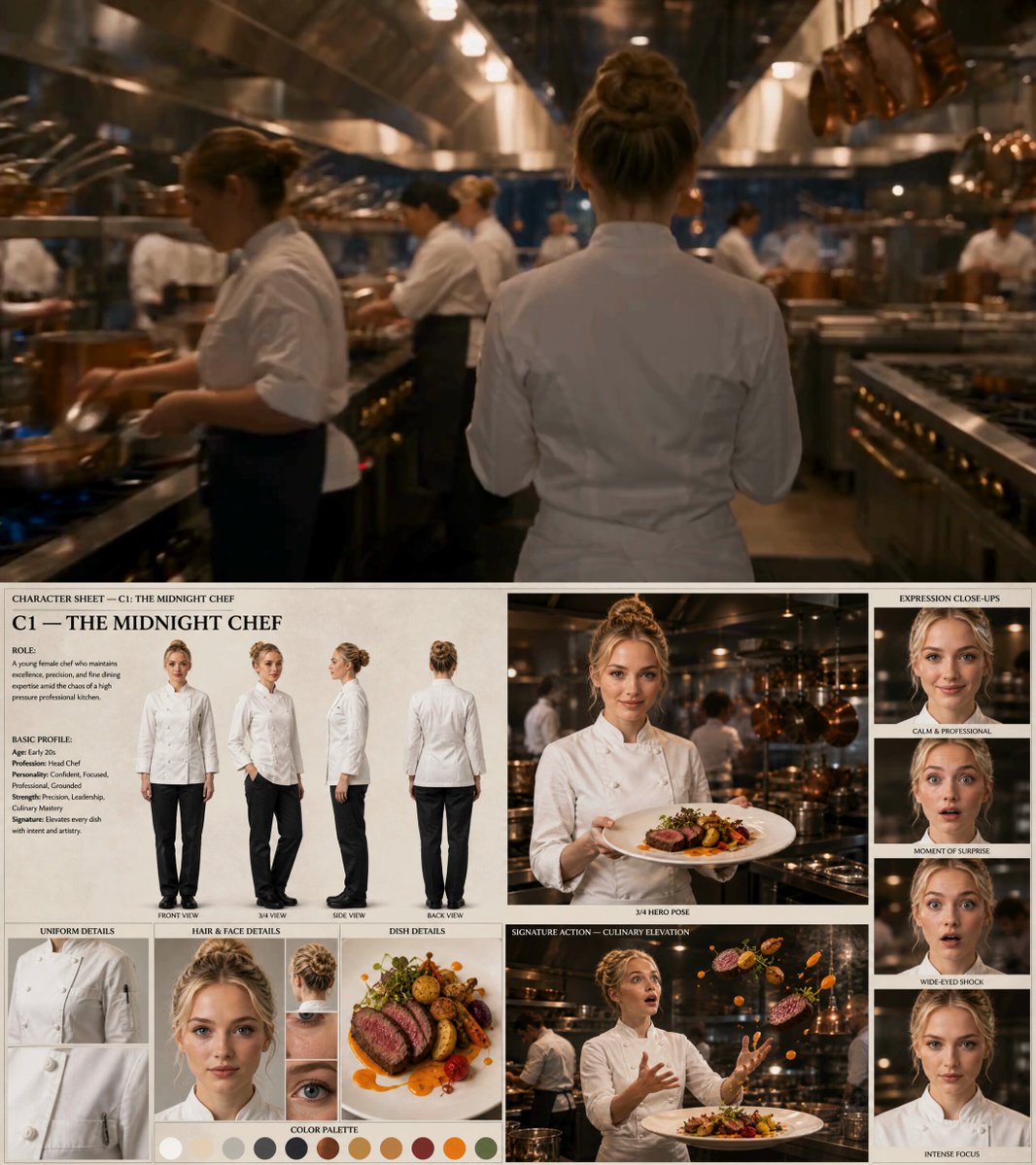
One of the historical weaknesses of AI video was inconsistency. A character's face would shift subtly between shots, a color grade would drift, or clothing would change mid-scene. For narrative short-form content, those breaks are fatal, because they shatter the immersion a viewer needs to stay engaged. Multi-image fusion and reference-based generation have largely solved this problem, and they matter more for viral work than for any other format because short-form relies so heavily on instant recognition.
What Multi-Image Fusion Gives You
The core idea is that you no longer describe a character with words alone. You supply reference images, and the model derives the identity from them. This is a far more reliable way to keep a lead character looking the same across a full collection of clips. For serialized content, where each TikTok references a previous one, consistent identity becomes a competitive advantage that viewers reward with followership.
Controlling the Style Layer
Consistency is not only about faces. A cohesive color palette, a repeating camera language, and a consistent prop design all reinforce a channel identity. You can encode these elements into your generation workflow by reusing reference frames and by writing prompts that repeat the visual signature. Over time, a small set of recurring visual cues becomes your brand, and audiences recognize your content before they even read the text overlay.
Making Attention-Grabbing Visuals With Layered Prompts
Generating a compelling shot is easiest when you treat the prompt as a layered instruction rather than a single sentence. The prompt has to communicate subject, composition, motion, lighting, and mood. Models respond best when each of those layers is explicit and concise.
A Practical Prompt Recipe
Start with the subject and its action, then add the camera treatment, then the environment, then the light and the mood. For example, instead of writing a vague sentence about a stylish character dancing, write layers such as a confident lead character in a neon-lit street, moving in sync with a fast beat, shot on a low-angle traveling camera, with shallow depth of field and a teal-and-orange grade. Each layer narrows the model's interpretation and reduces the chance of a generic result.
When you want a sequence rather than a single shot, describe the shot order explicitly. Many models can honor a simple one-two-three structure, such as a wide establishing shot, a close-up of a product, and a final reveal. Encoding pacing into the generation step saves substantial editing time later.
Matching the Right AI Model to the Job
Different generations of AI video tools have different strengths. Recognizing those differences lets you pick the right tool for each clip rather than forcing every idea through one model. Some models excel at photorealistic human motion and are ideal for character-driven skits. Others are stronger at stylized or animated looks, which can be a better fit for trend formats built around an aesthetic. A few are optimized for fast iteration, trading a little fidelity for quicker previews.
That model-agnostic perspective is useful because the tool landscape changes quickly. Rather than memorizing specific release notes, evaluate any new tool on three questions: how consistent does it keep a subject across multiple shots, how much control does it give over framing via prompt, and how quickly can you regenerate when a result misses. Answer those three questions and you can adapt as tools evolve.
Weaving Sound Into the Edit
Audio is half of a viral short-form video. A clip that looks great but sounds generic will not hold a viewer against a platform full of carefully scored competitors. AI audio generation has made it practical to create original background music and even spoken narration that match the tone of a clip without licensing battles.
Because Music Choice Is a Retention Lever
When you generate a music bed rather than pulling a widely used track, two things happen. First, you remove the risk of a copyright flag that could take the video down or demonetize it. Second, you gain a musical identity distinct from the flood of videos using the same popular audio, which helps your content stand out in a crowded feed.
Descriptive prompts work for audio the same way they work for video. Specify the genre, the tempo, the instruments, and the emotional register. If you want a clip to feel energetic, generate an upbeat bed with a driving rhythm. If you want a reflective tone, generate something sparser and slower. Then sync the music to the cuts so the pacing of the edit and the pacing of the track reinforce each other.
A Repeatable Workflow for Consistent Posting
Viral accounts rarely rely on a single lucky video. They publish on a cadence, and each post is an experiment that feeds the next one. Building a repeatable workflow is therefore the most valuable habit you can adopt.
Step One: Batch the Ideation
Set aside focused time to generate concepts in bulk from your trend research. Aim for a backlog of ideas rather than a single idea when you sit down to create. This makes the creative energy smooth and prevents the paralysis of facing a blank page.
Step Two: Standardize the Generation Pass
Create prompt templates for the recurring shots in your format, such as an opener, a payoff, and an outro. Standardize how you write lighting and camera directions across templates. Consistency in the prompt layer carries through to consistency in the output, and it makes regeneration predictable when a shot misses.
Step Three: Automate the Assembly
String generated shots together in your editor, drop in your generated music bed, and add short text overlays for accessibility. Keep the edit tight. If you can trim a beat, trim it. Short-form rewards brevity, and every retained viewer is one who needed something more from the content.
Measuring What Reshapes the Next Batch
After posting, resist the urge to judge a video the moment it goes live. Give it time, then read the analytics that matter. Watch time and average view duration tell you whether the hook worked. A high completion rate on a clip that never got many views is still valuable information, because it means the format is good and the concept was not the problem. Save the thumbnails, sounds, and prompt patterns that produced your best results, and fold them into your templates. Over a series of posts, these small compounding gains are what turn an accidental hit into a repeatable channel strategy.
Common Mistakes New AI Creators Make
Two mistakes come up again and again with creators new to AI-assisted short-form work. The first is over-relying on the model to do the thinking. A strong concept and a strong hook matter more than any generation tool, and the tool cannot rescue a weak idea. The second is treating consistency as optional. If you publish serialized content, you must protect the identity of your recurring character and the look of your channel, or audiences will not develop the recognition that drives follows.
A third mistake is skipping the audio pass. A technically clean but sonically flat clip reads as unfinished next to competitors who invested in scoring. Budget real time for sound, even when the rest of the pipeline is fast.
Quick Answers for New Creators
How long should a viral-style clip be?
For feed-driven discovery, keep videos short enough to hold retention, usually under thirty seconds for a single hook-and-payoff beat. If a concept genuinely needs more time, structure it with an early payoff so viewers who drop off still got something.
Do I need an external editor if I generate video?
You still need an editing step for pacing, text overlays, and audio mixing. The generation tool produces shots, not the final cut. Editing remains where you assemble the story and tune the rhythm.
Can AI-generated content pass as consistent across a series?
Yes, if you anchor identity with reference images and reuse those references across clips. Without reframes, subtle drift can creep in, so always regenerate from the established reference rather than describing the character from scratch.
Is it better to follow a trend exactly or adapt it?
Adapt. Rides the visibility of a trend while keeping originality that distinguishes you. A direct copy has no staying power once the wave passes, whereas an adapted take can grow your own audience.
Putting It All Together
Viral TikTok video trends will keep moving, but the skills behind chasing them are stable. Learn to read platform signals, design a hook that survives the first second, protect character and style consistency with reference-driven generation, and treat audio as a first-class element. Then wrap all of it in an iterable workflow that turns every post into data for the next one. AI tools make it possible to operate at a speed and scale that were unthinkable a few years ago, but the creative judgment about what is worth making is still yours. Use the tools to remove the mechanical friction, and spend your attention on the ideas that deserve it.
