


Why script-first video production is losing ground
For two decades, the default path to a marketing video looked the same: someone wrote a script, the script became a storyboard, the storyboard became a shoot day, the shoot day became an edit, and the edit became three rounds of feedback. Every step had a gatekeeper, and every gatekeeper added latency. A single 30-second spot could consume six weeks of calendar time before it ever reached a feed.
That pipeline still produces beautiful work. The problem is that it cannot keep pace with how modern marketing channels actually behave. Social platforms reward frequency and iteration. A hook that worked last month decays. Creative teams are asked to test five opening frames, three lengths, and two tones for the same campaign — on a timeline that treats a three-day turnaround as generous.
AI video generation changes the bottleneck. Instead of writing lines that someone must later translate into visuals, you describe the visuals directly and let a model render them. The written script does not disappear entirely — a version of it survives as captions, voiceover, and on-screen text — but it stops being the primary control surface. The prompt becomes the brief.
What follows is a practical, tool-agnostic workflow for producing marketing video with generative models. It covers planning, prompt design, brand consistency, model selection, realistic expectations, capacity planning, and the mistakes that make AI output look amateur. The goal is not to replace craft. It is to move craft earlier, where decisions are cheaper.
What prompt-first video production actually means
Prompt-first production is not "type a sentence, get an ad." It is a discipline with its own vocabulary. Understanding what a generative model actually needs will save more time than any single tool choice.
The three inputs every generation needs
Almost every consumer-facing video model responds to the same trio of inputs, whether or not the interface makes them explicit:
- Intent. What should the viewer feel or do? This is the part a script used to carry. "This clip should make a skeptical small-business owner feel that invoicing is finally simple" is intent. It guides tone, pacing, and subject matter.
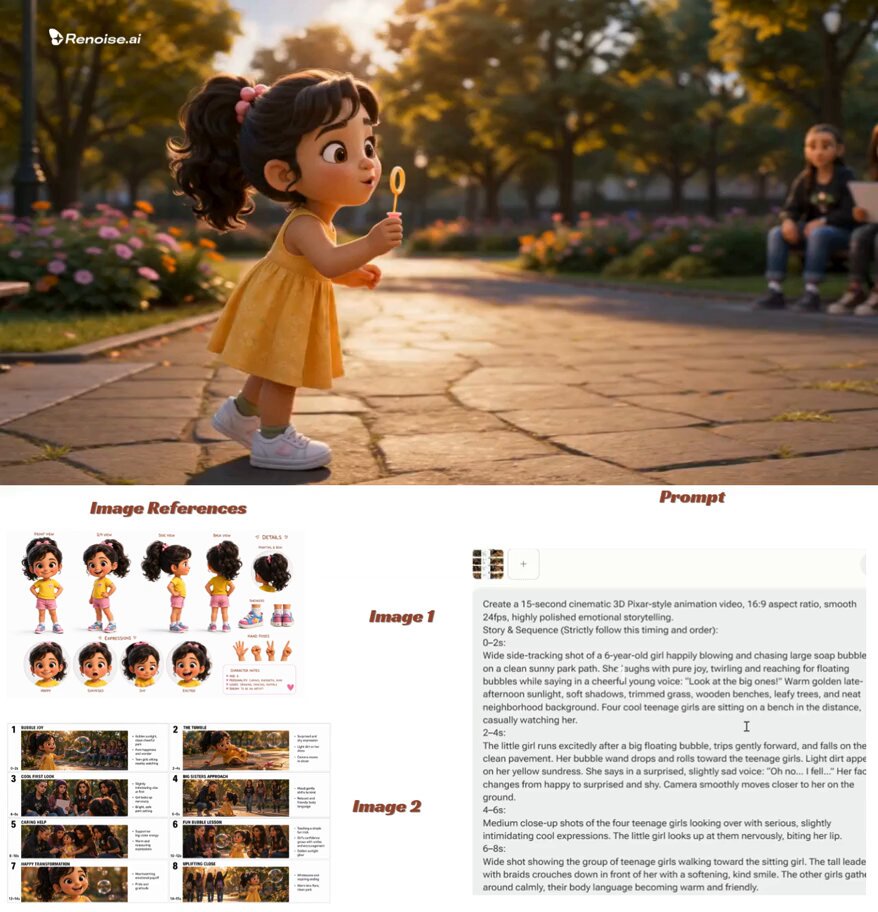
- Visual reference. Text alone gives the model enormous latitude. A reference image, a previous frame, or a defined style anchor narrows that latitude fast. Image conditioning is the single most reliable way to get consistent output.
- Constraints. Aspect ratio, duration, motion intensity, camera behavior, lighting mood, and negative instructions ("no logos, no readable text, no crowds"). Constraints prevent the model from making decisions you will have to undo later.
A prompt is a shot, not a screenplay
New users often write paragraph-long narratives and wonder why the output drifts. Long, multi-scene prompts force the model to average multiple ideas into one blurry result. It is more effective to write one prompt per shot, keep each to a few concrete visual sentences, and assemble the sequence in the edit.
A workable prompt structure looks like this: subject, action, environment, camera, lighting, and style. For example — "A ceramic coffee cup on a pale oak desk, steam rising, slow push-in from a low angle, soft morning window light from the left, shallow depth of field, calm documentary tone." That is directly renderable. A paragraph about brand values is not.
Where writing still matters
The written word has not lost value; it has moved. Copy now lives in the hook frame, the caption, the voiceover, the end card, and the on-screen text overlays. Those elements are what the viewer reads and remembers. Treating them as an afterthought is the fastest way to make a beautiful AI clip that converts nothing.
A repeatable workflow: from message brief to published clip
The workflow below is designed for teams producing between five and fifty short videos per month. It assumes a mix of generative models and a standard editing tool.
Step 1 — Write a message brief, not a script
One page maximum. Include the audience, the single idea the video must land, the desired action, the platform, the aspect ratio, and the target duration. If you cannot state the single idea in one sentence, the video will not work regardless of how good the generation is.
Step 2 — Turn the brief into a shot list
A typical 20-second marketing video needs four to eight shots. Write each as a prompt, and note the role of each shot: hook, problem, product, proof, emotional beat, or call to action. Keep a column for the asset each shot requires — a product photo, a founder portrait, a logo, or nothing at all.
Step 3 — Generate variations, not final renders
Generate three to five variations per shot at low resolution. The purpose of this pass is exploration: framing, motion, and mood. Do not evaluate fine detail yet, and do not fall in love with a frame that has not survived the edit.
Step 4 — Select, then re-render the winners
Once you know which shots earn their place, re-render those at higher resolution and, where available, extend duration. This two-pass approach keeps generation volume manageable and concentrates quality spend on the shots that matter.
Step 5 — Assemble with sound and text
An edit is where AI video becomes a marketing asset. Add a music bed, a voiceover or on-screen text, captions burned in or uploaded as a subtitle track, and a clear end card. Cut the first second aggressively — the hook must land before the viewer's thumb moves.
Step 6 — Export platform-specific versions
One master, three exports: vertical 9:16 for short-form feeds, square or 4:5 for in-feed placements, and 16:9 for sites and presentations. Reframe rather than crop blindly, and reposition text so it sits inside each platform's safe zones.
Keeping brand consistency across dozens of clips
Consistency is the difference between a recognizable brand and a pile of unrelated clips. Generative models default to novelty, so consistency has to be engineered.
Anchor your style with references
Build a small style kit: two or three reference images that define color, lighting, and texture; a written style description of no more than two sentences; and a list of negative prompts for anything off-brand. Feeding the same kit into every generation session does more for cohesion than any post-production fix.
Lock the constants
Decide which elements never change: logo placement, end card layout, caption font, color grade, and the tone of the voiceover. Everything else can vary. When a model offers style transfer or image conditioning, use it to carry those constants from shot to shot rather than re-describing them in every prompt.
Reuse templates ruthlessly
Create three or four reusable video structures — a problem/solution structure, a three-benefit structure, a testimonial structure, and a product-in-context structure. The creative work then shifts from inventing a format each time to filling a known format with new material, which is both faster and more consistent.
Run a consistency check before publishing
A five-point check catches most problems: Is the color temperature the same across shots? Does the pacing match the platform? Is the caption font identical to the last video? Does the end card appear for at least two seconds? Is the logo legible on a phone screen? These take ninety seconds and prevent the most common brand slips.
Choosing the right generation approach for each shot type
Different shots call for different techniques. Matching the technique to the shot is more valuable than finding one "best" model.
Text-to-video works best for environments, abstract concepts, and atmospheric b-roll where no specific product accuracy is required. It is fast and flexible but unpredictable in fine detail.
Image-to-video is the workhorse for product marketing. Start from an accurate still — a photograph or a rendered product image — and animate it. This keeps the product faithful while adding motion, light, and camera movement.
Motion transfer and performance capture suit human-centered shots where a specific gesture or delivery matters. Use them for spokesperson beats rather than long dialogue.
Synthetic presenters are appropriate for explainer content, internal communication, and localized versions of the same message. They are least convincing in emotional storytelling, so keep them in informational roles.
Practical footage plus generative enhancement remains the highest-quality option when you already have real material. Use AI to extend scenes, clean up backgrounds, generate transitions, or create matching b-roll around genuine footage.
A sensible default for most marketing teams: image-to-video for product shots, text-to-video for b-roll and atmosphere, and real footage wherever trust is the deciding factor.
Speed versus quality: setting realistic expectations
AI video is fast at some things and slow at others. Being honest about the split prevents both disappointment and overspending.
Generative models excel at b-roll, environments, stylized sequences, abstract transitions, and rapid concept visualization. They struggle with hands and fine motor detail, readable text inside the frame, complex physical interactions, consistent characters across many shots, and long continuous takes. They also rarely nail a specific brand asset on the first attempt.
A realistic planning rule: assume two to three iterations per shot for b-roll and five to eight for shots involving people, hands, or precise product detail. Budget review time as generously as generation time — a human still has to watch every clip, and that is usually the slowest part of the pipeline.
Where AI genuinely wins is volume with acceptable quality, not perfection. A campaign that once produced one polished hero video can now produce a hero video plus twenty targeted variants. The variants are individually weaker but collectively more effective, because they meet different audiences where they are.
Capacity and cost planning for always-on video
Generation costs scale with output seconds and retries, so planning matters more than the headline price of any single tool.
Start by estimating seconds of finished video per month, then multiply by an iteration factor of three to five to get seconds of generated video. That number drives your real usage. Add storage and review time on top.
A few practices keep this manageable:
- Route by tier. Use fast, inexpensive models for exploration and higher-quality models only for final renders.
- Batch similar work. Generating ten variations of the same shot in one session is cheaper and more consistent than revisiting it across five days.
- Retire dead concepts early. Kill shots at the exploration stage rather than polishing them.
- Keep an asset library. Reusable stills, logos, music beds, and end cards reduce both generation volume and review time.
- Track cost per published video rather than cost per generation. That is the number that tells you whether the workflow is sustainable.
For teams moving from occasional to always-on production, the practical ceiling is usually human review capacity, not generation capacity. Plan the review step deliberately, with a defined approver and a fixed number of feedback rounds.
Common mistakes that make AI video feel cheap
Most weak AI marketing videos fail for predictable reasons.
A slow hook. If the first second is a logo animation or a slow establishing shot, viewers leave. Lead with motion, a face, a surprising visual, or a clear statement.
Overlong clips. Fifteen to twenty seconds is usually plenty for a single idea. Longer clips dilute the message and increase the chance of a visual inconsistency appearing.
Generic prompts. "A modern office with people working" produces stock-looking filler. Specific detail — time of day, lens, texture, mood — is what makes output feel intentional.
Ignoring audio. Music choice, voice quality, and sound design carry more perceived production value than image fidelity. Bad audio makes good visuals feel amateur.
Uncanny human subjects. Faces that almost look real are worse than clearly stylized ones. Either use real footage, stylize deliberately, or keep synthetic presenters in informational contexts.
No captions. A large share of feed viewing happens with sound off. Captions are not optional.
Ignoring safe zones. Text placed near the bottom or edges of a vertical video gets covered by platform interface elements.
No clear action. Every marketing video needs one obvious next step, stated visually or in the caption.
Measuring performance and closing the loop
AI video production gets better when performance data flows back into the prompt library. The metrics worth tracking are simple:
- Hook rate — the percentage of viewers still watching after three seconds. This measures your first shot and caption.
- Retention curve — where viewers drop off. Repeated drop-offs at the same timestamp usually point to a specific shot.
- Completion rate — how many reach the end and the call to action.
- Click-through and conversion — the commercial outcome.
- Production cost per published video — the operational metric that determines whether you can sustain the cadence.
After each campaign, label the top and bottom performers by structure, shot type, and tone. Patterns emerge quickly: certain hooks consistently outperform, certain shot types consistently underperform. Fold those findings into your prompt templates and your style kit, and the next cycle starts from a better baseline.
FAQ
Do I need to write anything at all?
Yes, but not a screenplay. You need a message brief, a shot list, captions, and an end card. That is roughly 150 words of writing for a 20-second video — far less than a traditional script, and far more visual.
How long should an AI-generated marketing video be?
For short-form feeds, 15 to 30 seconds is the practical sweet spot. For paid social and website placements, 30 to 60 seconds works if the structure is tight. Anything beyond a minute needs a genuinely strong narrative to hold attention.
Can this replace a video agency?
It replaces parts of the production line, not the judgment. Agencies increasingly handle strategy, art direction, and final polish while routine variant production moves in-house. The teams that do best treat AI as a production layer inside an existing creative process.
How many variations should I generate per shot?
Three to five for exploration, then re-render the one or two that survive the edit. Generating twenty variations of a shot you have not yet placed in a sequence is usually wasted effort.
What about voiceover and music?
Synthetic voiceover has improved dramatically for informational content, but human voices still win for emotional storytelling. For music, use properly licensed tracks or licensed generated audio — this is one area where shortcuts create real risk.
What legal issues should I watch for?
Three: rights to any reference images you feed into a model, likeness rights if a generated person resembles a real individual, and platform or regional disclosure rules for synthetic media. When in doubt, disclose and document your sources.
Which model should I start with?
Start with one image-to-video model and one text-to-video model that fit your budget, and learn them properly before adding more. Model-hopping early is the most common reason teams never develop a consistent look.
How do I stop every video looking the same?
Vary the structure and tone while keeping the constants — logo, captions, grade, end card — fixed. Consistency should live in the brand layer, not in the subject matter.
