
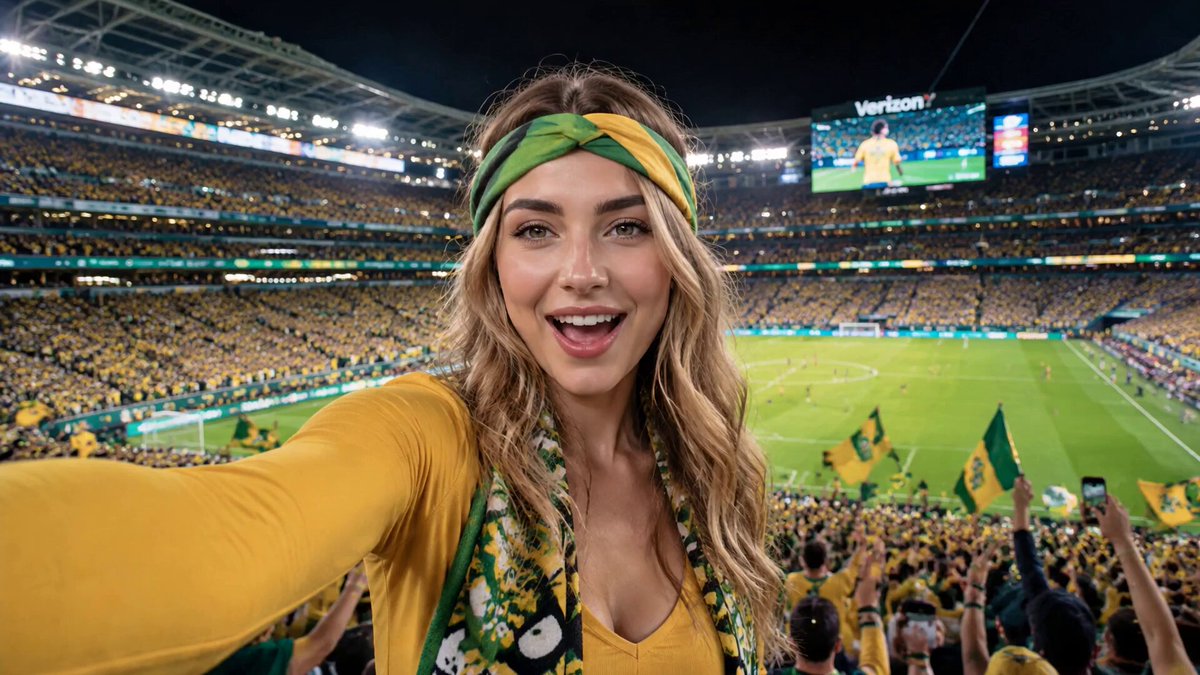
Why Short-Form Vertical Video Rewards a Workflow, Not a Lucky Idea
Every creator eventually has the same conversation with themselves after one video outperforms everything else on the channel: what did I do right, and how do I do it again? The instinct is to reverse-engineer the outlier and rebuild it identically. That rarely works twice. A single hit is noise. A process is a signal.
Vertical short-form video behaves differently from long-form in ways that make process more valuable, not less. Viewers arrive mid-scroll with no context and very little patience. The signals that decide whether your video gets shown to more people are completion rate, rewatch behaviour, and how quickly someone swipes away in the opening seconds. None of those signals care about your budget or your gear. They care whether the first frame promises something and whether the video delivers it before attention runs out.
AI-assisted production changes the equation in one specific way: it collapses the cost of footage. Shots that once required a location, a crew, and a lighting setup can now be generated, iterated, and re-rolled in minutes. That is genuinely useful, but it creates a trap too. When footage is cheap, it is easy to generate two hundred clips and call it progress. The creators who build durable audiences generate fewer, better shots and spend the time they saved on structure, pacing, and sound.
So treat this as a workflow guide, ordered the way production actually happens: angle, script, shot plan, generation, assembly, repurposing, quality control, publishing, and review. Adapt what fits your niche.
Anatomy of a Short That Holds Attention
Before touching a generator, understand what you are optimising for. A short is not a mini long-form video. It is a compressed argument with a visual punchline.
The first second and a half
The opening frame has one job: stop the scroll. Do that with motion, a face, a strange object, or a bold on-screen statement. What does not work is a logo animation, a slow pan across a title card, or the phrase "hey guys, welcome back." Start in the middle of the action and let context arrive in the second beat. Text on screen should be readable in about half a second, which means three to five words, large type, high contrast.
The middle: open loops
A short should feel like a series of small unanswered questions. Each three-to-five-second beat raises a mini-question and answers the previous one. Countdown structures work because the viewer already knows how long the payoff is from the end. Reveal structures work because curiosity is stronger than satisfaction. This is where most AI-heavy shorts fail: the footage is beautiful, but nothing is at stake, so there is no reason to stay.
The payoff and the loop back
The final two seconds should deliver on the opening promise without hedging. Then, if you want rewatches, plant a detail early that only makes sense once the viewer has seen the ending. A number, a hidden object, a visual gag in the background. Rewatches are one of the strongest signals you can earn, and a deliberate second-view layer is a cheap way to get them.
Pre-Production: Turning a Loose Idea Into a Shot List
Filtering ideas before you generate anything
Keep three questions in front of you. Is the promise clear in one sentence? Is it visually feasible with the tools you have? And can the same idea be cut into more than one format later? An idea that fails the third question is still fine, but you should know it is a one-off.
Scripting with AI, then rewriting by hand
Use a language model for volume, not for taste. Ask for ten hook variants, pick two, then rewrite the winner yourself. A 45-second short with continuous voiceover usually lands between 100 and 140 spoken words. If your draft is longer, the problem is almost never the voiceover speed; it is that you have two ideas in one script. Read it aloud with a timer. Delete every sentence that does not either raise a question or answer one.
Building the shot list
A simple table beats a long treatment. Columns: shot number, duration, description, generation method, audio note, on-screen text, continuity note. Aim for six to twelve shots in a 45-second short. Fewer means each shot has to carry too much; more means the edit becomes a slideshow. The continuity column is what keeps generated footage from feeling random: note the light direction, the time of day, the wardrobe, and the colour temperature so each prompt inherits the same world.
Generation: Matching the Tool to the Shot
Different shot types want different tools. Mixing them deliberately is what makes AI-assisted shorts look intentional rather than stitched together.
| Shot type | Sensible approach | Why it works |
|---|---|---|
| Establishing or scenic | Text-to-video model with a camera-motion prompt | Fast iteration, easy to re-roll |
| Product or detail shot | Image model plus image-to-video animation | Full control of composition first |
| Talking head or narration | Avatar or lip-sync tool, or your own camera | Trust and personality read better live |
| Abstract or dream sequence | Generative model with motion blur and grain | Hides artefacts that break realism |
| Explainer overlays | Motion graphics or template tool | Precision text the models cannot guarantee |
A few rules that save hours. Describe camera and lighting, not adjectives: "slow push-in, 35mm, overcast daylight" outperforms "cinematic masterpiece." Generate three to five variations of every important shot and pick one, because the first result is rarely the best and re-rolling costs nothing but seconds. Keep a prompt library per project so recurring environments stay consistent. Finally, upscale and stabilise before editing; fixing softness inside the timeline is much harder than fixing it at the source.
Assembly: The Editing Pass That Makes Generated Footage Feel Human
Pacing
Cut on movement. If a subject turns, walks, or raises a hand, cut on that beat rather than at a fixed interval. Trim the first and last handful of frames of every generated clip, because that is where morphing and warping usually live. Aim for 0.8 to 2.5 seconds per shot in a fast short, longer only when a shot is genuinely beautiful.
Captions and typography
Most viewers watch with sound off at some point, so burn captions in. Two to four words per line, one or two lines on screen at a time, and a font weight heavy enough to survive compression. Respect the platform's interface zones: keep text out of the top twelve percent and the bottom twenty percent of the frame, where profile names and buttons sit. Pick two type styles for the whole channel and never introduce a third casually.
Sound design
Sound is the cheapest way to make generated footage feel real. Layer three elements: music, a bed of ambience or room tone, and short sound effects on cuts. Duck the music under narration by five to seven decibels, normalise your voice to a consistent loudness, and place one unexpected sound effect in the first two seconds to reinforce the hook. Where a clip has a visual glitch you cannot fix, cover it with a cut, a whip transition, or a sound effect that draws the eye elsewhere.
Repurposing: One Idea, Many Cuts
Before archiving a project, extract everything it can give you. From a single well-built short you can produce a second version with a different opening hook, a silent version with heavier captions, a carousel from the strongest three frames, a longer compilation that groups five related shorts with a new intro, and a still image for a community post that teases the next upload. Keep the project file and a one-page cut sheet listing the shots, timings, and prompts. When a topic performs, that sheet lets you rebuild the same visual world in a fraction of the time.
Pre-Publish Quality Control Checklist
Run the same ten checks on every upload. It takes three minutes and prevents most embarrassing mistakes.
- Watch the first two seconds on mute. Does the promise survive without audio?
- Confirm captions are in sync and free of typos, including names and numbers.
- Check that on-screen text avoids the interface zones at the top and bottom.
- Listen once on phone speakers and once on headphones for mixing problems.
- Verify every clip plays at a consistent loudness with no sudden jumps.
- Confirm the ending resolves the opening promise rather than trailing off.
- Make sure the thumbnail or cover frame reads clearly at small size.
- Check the title and description for the search terms a real person would type.
- Watch it at full speed once, as a viewer, with no pausing.
- Confirm the file exports at the correct aspect ratio and frame rate for each destination.
Cadence and Feedback Loops Without Burnout
Batching is the difference between a sustainable channel and a burnout spiral. Write five scripts in one session, generate all footage for those five in a second session, edit them together in a third. Context switching is what eats your week, not the work itself.
When you review performance, ignore single numbers and read shapes. The retention graph tells a story: a cliff in the first second means the hook or the cover frame failed; a gradual decline means the middle lost tension; a bump near the end means people are rewatching the payoff, which is a signal to build more endings like that one. Comments answer a different question, namely what your audience thinks the video was about, which is not always what you intended.
Publish at a rhythm you can hold for months rather than a burst you cannot repeat. Three strong shorts a week beats fourteen rushed ones, because each weak upload teaches the recommendation system less about who genuinely wants your content.
Common Mistakes That Break the Workflow
Generating before scripting. Without a shot list you will produce clips that look good individually and disjointed together.
Chasing visual polish over structure. A slightly soft shot inside a well-paced story outperforms a flawless shot inside a shapeless one every time.
Ignoring continuity. Mixed lighting, shifting colour temperature, and inconsistent wardrobe make generated footage feel synthetic even when the individual clips are convincing.
Overloading prompts. Long, poetic prompts usually produce mush. Specify subject, action, camera, lens, and light, then stop.
Neglecting audio. Viewers forgive soft visuals far more readily than bad sound.
Publishing without a silent pass. If the short only works with sound, a large share of your audience never receives the message.
Reviewing one video at a time. Patterns only appear when you compare five uploads side by side.
FAQ
How long should an AI-assisted short be?
Match the length to the idea, then trim. Most narrative shorts land between 25 and 60 seconds, and explainers often work better under 40 seconds. If your script needs 90 seconds of voiceover, it is probably two shorts, and splitting it usually improves both.
Do I need an expensive editor to make generated footage work?
No. A capable free or low-cost editor handles cutting, captions, and audio mixing perfectly well. The skill that matters is pacing, which is learned by studying retention graphs rather than by buying software.
How do I keep characters consistent across shots?
Fix the description once, reuse the exact same wording in every prompt, and generate a reference image before animating anything. Changes in wardrobe, hair, or light direction break the illusion faster than changes in the face itself.
How many variations should I generate per shot?
Three to five for hero shots, one or two for filler. Review them side by side rather than one at a time, because relative comparison surfaces the best option much faster than absolute judgement.
What if a generated clip has an obvious artefact?
Cut it earlier, shorten it, cover the glitch with a sound effect or transition, or replace it with a stock clip or a graphic. Do not leave it in hoping nobody notices; the audience's eye goes straight to the thing that looks wrong.
How do I avoid sounding like every other AI channel?
Own a lane. Pick a narrow visual palette, a recurring format, and a consistent voice, then reuse them until viewers recognise your work before they read the channel name. Consistency is the one advantage a generator cannot copy.
