

Why AI storytelling changes the job, not just the tools
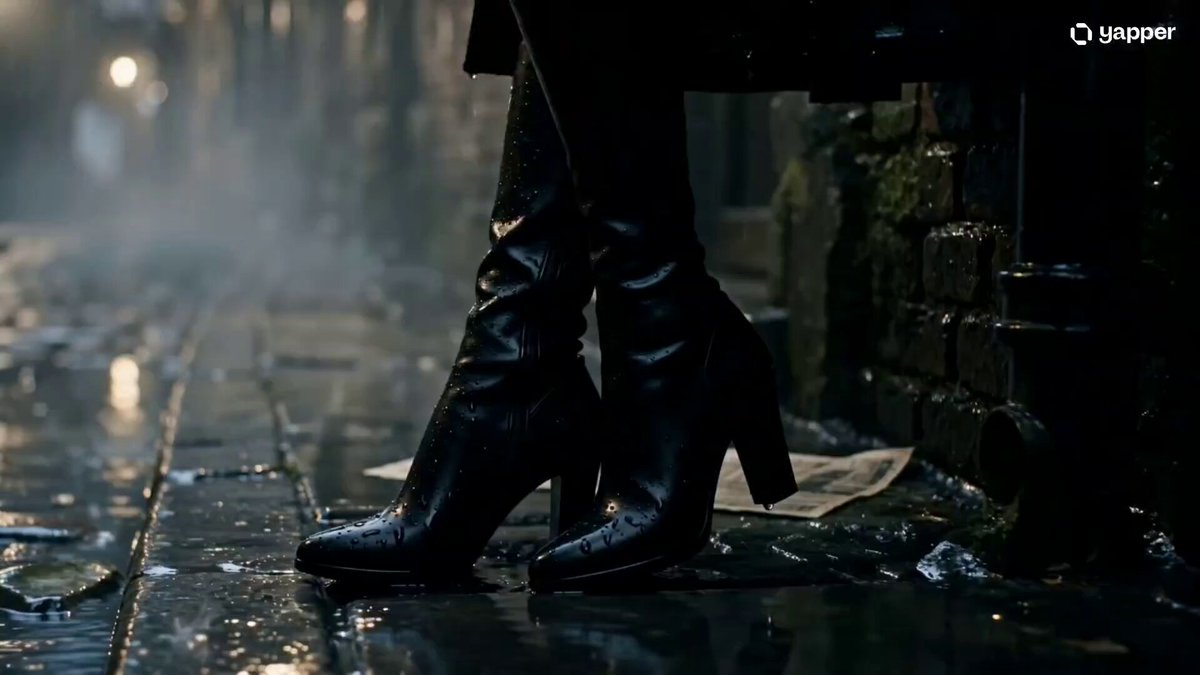
Generating a striking clip used to be the whole trick. Now anyone can produce a convincing five-second shot of a rain-slicked alley or a slow dolly across a desert ridge. The scarce skill has moved upstream: knowing what story those shots belong to, in what order, and why the audience should care by the third scene.
That shift is why AI storytelling in filmmaking is worth studying as a craft rather than a novelty. When generation is cheap, structure becomes expensive. A director who can hold a three-act shape in their head while dozens of model outputs compete for attention is doing something a prompt alone cannot replicate.
This guide walks through a working method: how to develop a story, translate it into shots, direct camera and continuity with AI assistance, and keep quality high when the tooling changes every few months. It is written for filmmakers, creative directors, and content teams who want repeatable results, not a demo reel.
What actually changed over the last few years
Three practical changes matter more than any single model release.
From clips to sequences
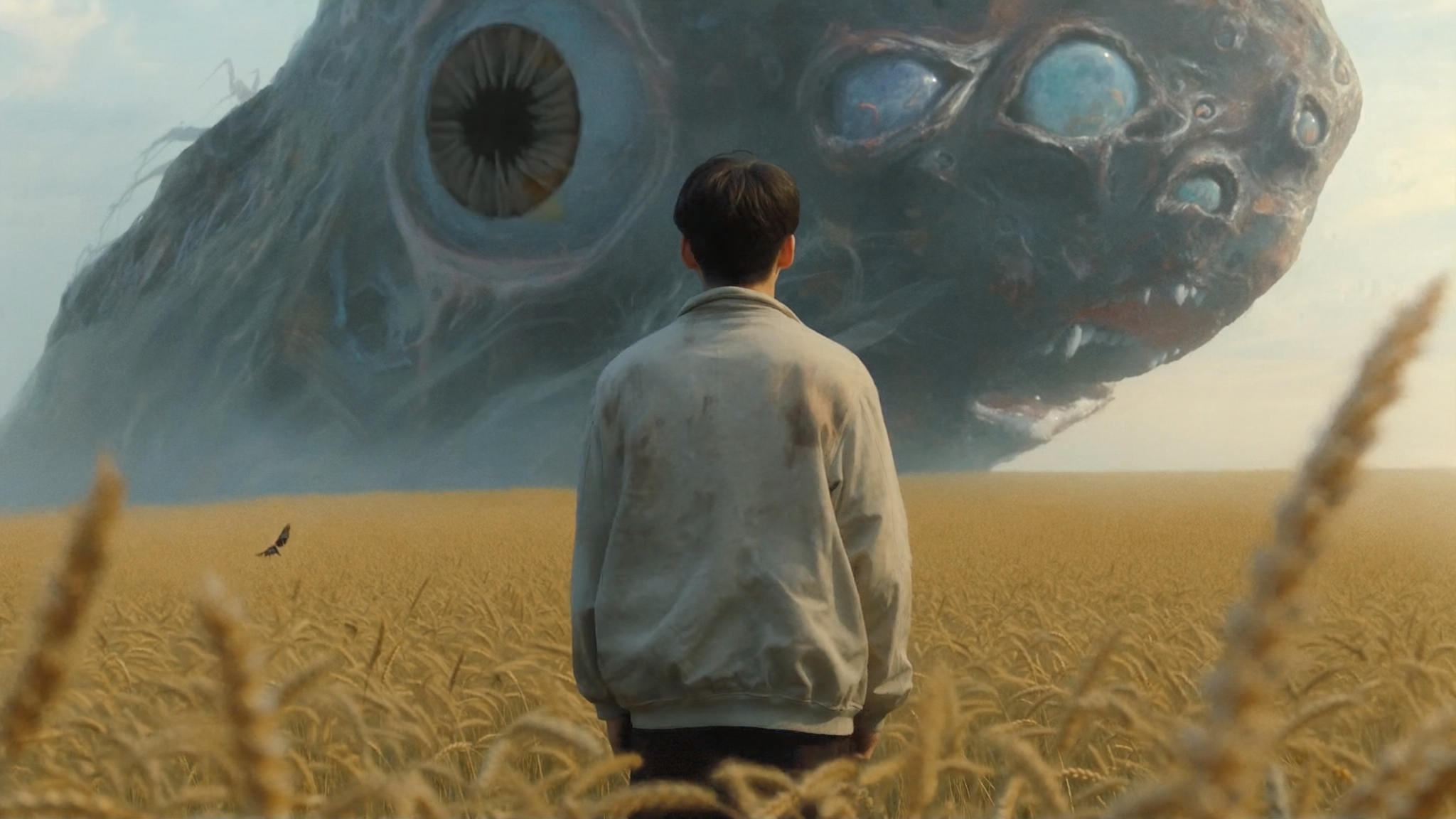
Early text-to-video tools produced isolated moments. Modern pipelines handle multi-shot sequences with control over motion, subject pose, and lens behavior. That means a short film can now be assembled almost entirely from generated footage, with live-action used as an accent rather than a foundation.
From prompting to directing
Agent-style tools introduced an intermediate layer between the idea and the render. Instead of writing one prompt and hoping, you describe a scene in narrative language and let the system propose a shot breakdown, camera moves, and pacing. The filmmaker's job becomes editorial: accept, revise, or reject.
From single model to model library
No single generator is best at everything. One excels at photoreal humans, another at stylized animation, another at long continuous takes, another at physics-heavy action. Professional workflows now route each shot to the model best suited a predictable content type, the same way a production picks a camera package per scene.
The pre-production layer: where AI does the most good
Most teams underuse AI in development and overuse it in rendering. The reverse is more efficient.
Story beats before shots
Write the film in prose first. A one-page treatment that describes the emotional turn of each scene will guide every later decision. Feed that treatment to a language model and ask for alternate beat structures: what if the midpoint revelation arrived earlier, what if the protagonist failed twice before succeeding.
Useful prompts at this stage are structural, not visual:
- 'Here is my treatment. Propose three alternate orderings of these beats and explain what each does to tension.'
- 'Identify the weakest causal link in this plot. Suggest the smallest change that fixes it.'
- 'List every scene that does not advance either plot or character. Recommend cuts.'
Shot lists and coverage plans
Once beats are locked, expand each scene into a shot list. A good AI-assisted shot list includes shot size, subject action, camera behavior, duration estimate, and the emotional function of the shot. That last column is the one most people omit and the one that saves an edit later.
Previsualization you can actually shoot against
Generate rough storyboard frames or animatic clips at low resolution. Do not chase beauty here. Chase readability: can a viewer follow the geography of the space and the direction of movement without narration? If not, fix it before you spend generation time on hero shots.
Translating a scene description into shots
This is the translation step where most AI film projects succeed or fail. Narrative language and visual language are not the same, and models bridge them imperfectly.
A workable translation pattern has four parts per shot:
- Subject and action — who or what, doing precisely what, at what moment.
- Framing — shot size, angle, height, and what is in the foreground.
- Camera behavior — static, pan, tilt, dolly, crane, handheld, or locked-off with subject movement.
- Light and atmosphere — time of day, source motivation, contrast, weather, texture.
Example. Narrative line: 'She realizes he is not coming.'
Translated shot: Medium close-up, eye level, slight low angle. Subject seated, gaze drifting from the door to the window, then down. Camera slowly pushes in a few inches over four seconds, no pan. Late afternoon light through half-closed blinds, warm on the right side of the face, deep shadow on the left. Quiet room, visible dust in the beam.
Notice what the translated version adds: a physical action that externalizes the realization, a camera move that mirrors the emotional close, and lighting that carries meaning. That is directing, and it can be delegated to an AI agent as long as your brief contains those four parts.
Directing camera and continuity with AI assistance
Camera control and continuity are the two areas where AI collaborators earn their place. Treat them as a feedback loop rather than a one-shot instruction.
Camera control as a design decision
Establish a camera grammar for the film before generation begins. For example: this film uses only locked-off frames and slow pushes; no handheld until the climax. Every AI-suggested camera move can then be checked against the grammar. A rule like that prevents the visual noise that comes from accepting every impressive camera move a generator offers.
Practical controls worth knowing, whatever tool you use:
- Motion strength: how much movement is applied within a shot. High values often break faces and hands, so use them for landscape and abstract shots.
- Camera path: the trajectory of the virtual lens. Simple paths (push, pull, truck) are far more reliable than complex orbits.
- Subject lock: keeping the primary subject stationary or stably framed while the environment moves.
- Reference conditioning: supplying a frame, a character image, or a depth map to constrain the result.
- Seed reuse: repeating a seed to keep look and texture stable across related shots.
Continuity without a script supervisor
Continuity in generated film is a data problem as much as an artistic one. Maintain a continuity sheet for each project and update it as shots are approved. At minimum track:
- character appearance descriptors, including wardrobe and any distinguishing features;
- props and where they are in each scene;
- time of day and light direction per scene;
- geography: where windows, doors, and vehicles sit relative to each other;
- emotional state at scene entry and exit.
When a shot comes back wrong, the continuity sheet usually explains why. Inconsistency is rarely a model failure; it is an underspecified brief.
An agent as a second pair of eyes
An AI directing assistant is most valuable when it audits your work rather than creates it. Ask it to review a finished sequence and answer questions like: does this cut pattern repeat three times in a row? Is the lighting direction consistent across shots four through nine? Does the protagonist's objective change between scenes five and six, and if so, is that change motivated on screen?
That review loop catches errors that are tedious for humans to spot at scale and obvious to audiences.
Building a model roster instead of betting on one generator
Professional practice is to keep a small roster of generators and know which task each one wins.
Premium photoreal generation
Use for hero shots, dialogue-adjacent coverage, and anything where a human face must hold up at full screen. Prioritize identity stability and skin rendering over motion ambition.
Stylized and animated generation
Use for title sequences, transitions, dream logic, and sequences where a graphic look is intentional. These tools tolerate stylization well and often accept higher motion values without artifacts.
Emerging and open-weight models
Open-weight and community models matter for three reasons: cost control at volume, fine-tuning on a specific visual identity, and local execution when footage cannot leave a controlled environment. They require more setup and more iteration, so reserve them for projects where control or volume justifies the effort.
Specialized utilities
The roster should also include narrow tools: upscalers, frame interpolators for smoothing motion, lip-sync and dubbing tools, matte and rotoscoping assistants, and audio generators for score sketches. These small utilities often improve perceived quality more than swapping the main generator.
A routing rule that works
For each shot, ask one question first: what is the primary risk? If the risk is identity, route to the strongest photoreal model. If the risk is motion complexity, route to the model with the best physics. If the risk is stylistic consistency, route to whichever model your style reference was built on. Routing by risk beats routing by habit.
Assembling the film: edit, sound, and finishing
Generated footage still needs a film.
Edit for rhythm, not for shot quality
Choose takes by how they cut, not by how they look in isolation. A technically weaker shot that lands the beat on time is worth more than a beautiful shot that arrives a second late. Cut a rough assembly with temp music early; rhythm problems are much easier to hear than to see.
Sound carries generated footage
Ambience, foley, and music do more continuity work than most visual fixes. Footsteps, room tone, and cloth movement sell a scene as real, and consistent ambience across cuts hides small visual inconsistencies. If you have to choose where to spend remaining time, spend it on sound.
Grade for cohesion
Different models produce different color science, contrast curves, and grain. A unifying grade is the fastest way to make a sequence feel like one film. Build a look with a consistent black point, a shared palette, and a light grain pass, then apply it across every source.
Finishing checklist
- consistent aspect ratio and frame rate throughout;
- no visible frame-rate stutter on interpolated shots;
- loudness normalized across the whole piece;
- captions and titles legible on a phone screen;
- no flash frames or single-frame artifacts at cut points;
- export settings matched to the intended platform.
Quality control: catching the failures that break belief
Audiences forgive stylization and forgive scale. They do not forgive broken faces, drifting props, and unmotivated camera moves. Run a QC pass on every sequence against this list:
- Hands and faces at full screen, not thumbnails;
- text and signage on any prop, checked for nonsense glyphs;
- reflections and shadows consistent with the stated light direction;
- wardrobe and hair stable across cuts within a scene;
- screen direction preserved across a conversation;
- prop continuity across an action sequence;
- physics plausibility in any object interaction;
- audio sync on every lip movement.
Keep a rejection log. When a shot is unusable, note the failure category and the prompt change that fixed it. After a few projects, that log becomes your most valuable production asset because it converts guesswork into procedure.
Common traps and how to avoid them
Chasing resolution instead of story. Upscaling a poorly motivated shot produces a sharp poorly motivated shot. Fix the brief first.
Generating before the beat sheet is locked. Every reordering of beats invalidates shots already produced. Lock structure early.
Overloading a single prompt. One prompt per shot, with one primary idea. Compound prompts produce average compromises.
Ignoring duration economics. Long continuous takes are expensive and fragile. Coverage from multiple shorter shots is usually faster and more editable.
No camera grammar. Without a rule set, every shot competes for attention and the film feels like a reel instead of a story.
Skipping the sound pass. The most common reason a generated film reads as artificial.
A worked example: a two-minute short
To make the method concrete, here is how a two-minute narrative short might be built.
Step 1 — Treatment. A courier delivers a package to an apartment where the intended recipient no longer lives. One page, three beats: arrival, discovery, decision.
Step 2 — Beat check. Ask a language model for the weakest causal link. Likely finding: the decision lacks pressure. Add a second beat of pressure, such as a second courier arriving with the same address.
Step 3 — Shot list. Around eighteen to twenty-four shots across three scenes. Establish geography in scene one with a wide of the corridor, then stay tight for the rest.
Step 4 — Previz. Generate low-resolution animatic frames for all shots. Cut them together with temp audio. Trim to the shots that carry the story, typically ten to fifteen percent fewer than planned.
Step 5 — Generate. Route hero shots (the face at the door) to the strongest photoreal model, corridor and exterior coverage to a motion-tolerant model, transition and title material to a stylized model. Keep seeds fixed within each scene.
Step 6 — Assemble. Cut for rhythm with temp score. Replace temp audio with ambience and foley. Apply a unifying grade.
Step 7 — QC and finish. Run the artifact checklist, fix the two or three worst offenders by regenerating with a tighter brief, normalize loudness, export.
The team that follows this sequence spends most of its time on steps one through four, and that is the correct distribution. Rendering is the fast part.
Frequently asked questions
Do I need a filmmaking background to tell stories with AI video?
No, but you need one of two things: an understanding of story structure, or a willingness to learn it deliberately. Shot vocabulary and continuity discipline are learnable in weeks, and they matter more than generation skill.
How do I keep a character consistent across many shots?
Lock a reference image, describe the character identically in every brief, keep seeds stable within a scene, and re-check wardrobe and hair on each approved shot. Most consistency failures are underspecified briefs rather than tool limitations.
Should I use one model or several?
Several, with a routing rule. Pick the model by the primary risk of each shot: identity, motion, or stylistic consistency. Maintain the roster small enough that you still know each tool's failure modes.
How long should an AI-generated shot be?
Shorter than feels natural. Most generated motion degrades over time, so two to five seconds per shot with strong coverage usually beats a single long take, unless the take itself is the point.
Where does AI help least?
Editing decisions and sound design. Both depend on judgment about rhythm and emotional effect that no generator can supply. This is also where the finished film is won or lost.
Can AI directors replace a human director?
Not for authorship. An AI assistant can propose shot breakdowns, audit continuity, and draft alternatives, but the choice of what the film is about stays human. The tooling raises the floor on execution; it does not set the ceiling on intent.
Where to go from here
Pick one scene, not one film. Write a one-page treatment for it, produce a shot list with an emotional function column, build a small look bible, and generate coverage with a clear camera grammar. Then edit it, add sound, and grade it.
If you can do that for one scene repeatably, you can do it for a film. The technology you use will keep changing, and the model roster you built this quarter may look different next quarter. Structure, shot logic, continuity discipline, and sound design transfer across every one of those changes.
That is the real opportunity in AI storytelling for filmmakers: not faster clip production, but a shorter distance between having an idea and seeing whether it works.
