
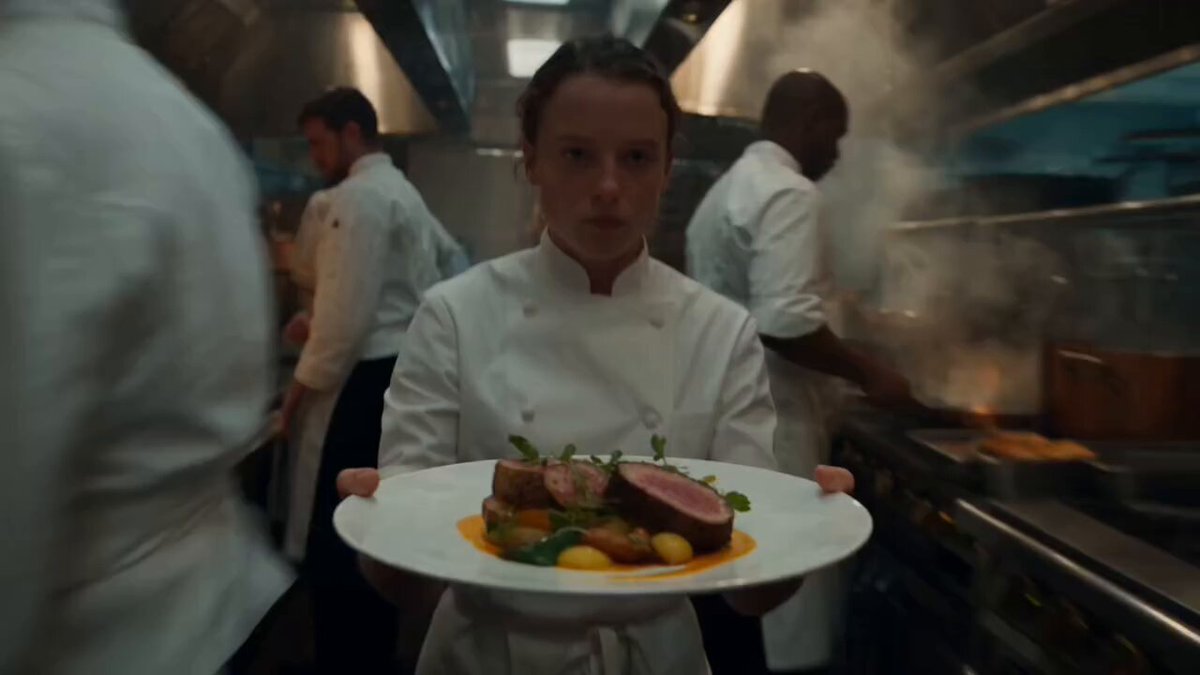

Generative video has collapsed the distance between an idea and a moving image. What once required a camera package, a lighting truck and a crew now starts with a sentence typed into a browser tab. That shift is genuinely exciting, and it is also why so much synthetic footage looks the same: a slow push-in on a vaguely attractive subject, lit from nowhere in particular, married to music that does all the emotional work.
Cinematography is the antidote, and not the gear side of it. The useful part is the grammar: how a frame is organized, how light is motivated, how a camera move implies a point of view. That grammar is portable. It works on a set, and it works inside a prompt, because a prompt is ultimately a set of directorial decisions written down. This guide walks through the craft decisions that matter most when you are generating video with AI tools, and shows how to translate each one into language a model can actually act on.
Why Cinematic Craft Is the Real Differentiator in AI Video
When anyone can produce a watchable clip in under a minute, technical polish stops being an advantage. Sharpness, plausible motion and clean renders are table stakes. What separates a channel people subscribe to from a channel they scroll past is the density of deliberate choices per second of footage.
Three layers carry almost all of that weight:
- Composition decides where the viewer looks and in what order.
- Light decides what the image feels like before a single line of dialogue lands.
- Motion decides what the viewer understands about the space and the people inside it.
Everything else — camera model emulation, film grain, lens flare — is seasoning. Seasoning applied without a dish underneath is just noise.
A practical test: mute a clip and watch it. Can you tell who the scene is about, what they want, and whether something just changed? If the answer is no, the problem is almost never render quality. It is that no one made a decision about the frame.
The good news is that AI generation makes iteration cheap. You can test three compositions of the same shot in the time it used to take to reposition a tripod. The skill being rewarded is not access to equipment. It is taste applied quickly and consistently.
Plan the Sequence Before You Write a Single Prompt
The most common workflow mistake is generating shot by shot with no plan, then trying to cut the results into a story. It rarely works, because each clip optimizes for its own internal beauty rather than for the sequence.
Start with a beat sheet: five to nine beats describing what changes emotionally or informationally. Then expand each beat into shots. A simple shot list with seven columns is enough:
- Shot number – for your own sanity during assembly.
- Story purpose – what this shot must accomplish. If you cannot state it, delete the shot.
- Shot size – wide, medium, close, extreme close.
- Camera move – static, push, pull, track, crane, handheld.
- Subject action – one clear verb, not three.
- Light and mood – time of day, source, contrast level.
- Target duration – two to six seconds is typical for generated clips.
Writing this out takes twenty minutes and saves hours. It also reveals problems early: three consecutive wides with no close-up, a scene where nobody moves, a beat with no visual escalation.
Keep each shot to one idea
AI models respond better to a single dominant action than to a paragraph of simultaneous events. "She turns from the window and her expression hardens" is one idea. "She turns, then walks to the table, then picks up a letter and reads it while rain falls" is four, and you will usually get a mediocre version of one of them.
Split complex actions across shots. A cut is cheaper than a failed generation, and cutting also gives you rhythm you cannot get from a single continuous move.
Match the plan to your delivery format
A nine-by-sixteen vertical short needs a different shot list than a sixteen-by-nine sequence. Vertical favors faces, hands and tight framing, because the frame cannot hold much environment. Horizontal favors wide establishing shots and lateral movement. Decide the aspect ratio first, then plan shots that fit it rather than cropping later and losing the composition you designed.
Composition That Guides the Eye
Composition is not decoration. It is a control system for attention. Every frame is telling the viewer where to look, and you can either direct that or leave it to chance.
Rule of thirds and negative space
Placing a subject on a third line rather than dead center creates tension and leaves room for context. More useful still is negative space: the emptiness around a subject communicates isolation, anticipation or scale depending on how much of it you allow.
In prompts, this translates to placement and balance language: "subject positioned left of frame, looking into open space on the right," "small figure low in frame against a vast plain," "tight framing with the subject filling the right two-thirds." Models are surprisingly responsive to this kind of spatial instruction, especially when you describe what occupies the empty portion of the frame.
A common failure is a centered subject with no surrounding information, which reads as a passport photo. If a shot feels flat, check whether the frame has a foreground, a subject and a background that are doing different jobs.
Layering for depth
Depth is what makes an image feel like a window rather than a wall. You get depth from three things: overlapping planes, atmospheric separation, and lens behavior.
- Overlapping planes: something soft and close, the subject in the middle, something specific and far.
- Atmospheric separation: haze, dust, rain or smoke between planes, so the far distance loses contrast.
- Lens behavior: shallow depth of field isolates the subject; deep focus lets the environment participate.
In practice, ask yourself what the closest object in frame is. If the answer is "nothing," add one: a doorframe, a shoulder, a curtain edge, a plant. That single element is often the difference between amateur and cinematic.
Compose for motion, not just for a still
The frame has to survive movement. A composition that is beautiful as a still may fall apart when the camera drifts and the subject ends up pressed against the edge. Leave headroom and lead room — space in front of a moving subject — so the shot still works three seconds in.
Camera Language: Moves, Lenses and Point of View
A camera move is a sentence about the scene. It says something about scale, control, intimacy or unease. Using it randomly is like adding exclamation marks to every line of prose.
Moves that survive generation
Some moves translate reliably into generated video, and some fight the model. The reliable ones:
- Slow push-in – builds intensity, great for reveals and emotional beats.
- Slow pull-out – reveals context, often used as a closing shot.
- Lateral track – shows a space or follows a subject, reads as observational.
- Static with subject movement – the safest and most underrated option.
- Gentle handheld – subtle drift and micro-shake that suggests documentary immediacy.
Moves that tend to cause artifacts include fast whips, complex orbits around a subject, and rapid changes of direction mid-shot. If you need those, generate a short clip and cut on the motion rather than asking one generation to do the work of three.
Directing attention with eyelines
Where a subject looks tells the viewer what matters. A character gazing off-screen creates a question the next shot should answer. A character looking directly into the lens creates confrontation and breaks the fourth wall.
When you plan a sequence, note the eyeline in each shot. If shot three has your subject looking right and shot four shows what they see placed on the left, the sequence will feel broken even if both shots are individually gorgeous. Continuity of eyeline is one of the cheapest and most powerful tools available, and it costs nothing to specify.
Blocking: where people stand and why
Blocking is the arrangement of bodies in space. Two characters facing each other across a table is a confrontation. One seated, one standing, is a power imbalance. Both are visible in a single frame, and both can be requested in a prompt with a short phrase such as "standing over the seated figure, low angle from the seated perspective."
Decide what the spatial relationship means before you generate it. Then the framing follows naturally.
Lighting: Three-Point Logic in Plain Language
Lighting does more emotional work than any other element, and it is the element most often left to default in AI generation. Default lighting is even, source-less and flat. It reads as cheap.
You do not need to describe a lighting diagram. You need to describe three things: where the light comes from, how soft it is, and what the shadows do.
Key, fill and rim, described simply
- Key: the main source. "Warm late-afternoon sun from camera left" or "single overhead bulb."
- Fill: how much shadow detail survives. "Deep shadows with minimal fill" or "soft bounced light filling the shadow side."
- Rim or backlight: the separation light that outlines a subject against the background. "Thin rim light along the shoulder, separating the figure from the dark room."
Rim light is the single easiest way to make generated footage look intentional. It also solves a frequent AI problem: subjects merging into busy backgrounds.
Motivated light and practical sources
Motivated light means the source is visible or implied in the world: a window, a lamp, a screen, a fire, a passing car. Motivated light makes a scene believable because the viewer can explain the illumination.
Practical sources — the lamp actually in frame — also give you something to cut to and something to move around. Naming them in a prompt often improves both lighting and set dressing at once: "lit by a single desk lamp that is visible at frame right, the rest of the room falling into darkness."
Contrast ratio as a mood dial
High contrast, with deep blacks and bright highlights, reads as drama, noir or tension. Low contrast, with gentle gradients, reads as romance, nostalgia or clinical calm. Decide the ratio before you decide the color palette, because contrast survives grading more gracefully than hue.
Color, Palette and Grading That Holds Together
Color is the fastest way to signal genre and the fastest way to make a sequence look like a random collection of clips.
Choose three to five colors and defend them
Pick a palette and treat it as a rule. A warm amber and deep teal pairing reads as contemporary thriller. Muted sage and bone white reads as period drama. Neon magenta against wet asphalt reads as cyberpunk.
Then check every shot against the palette. When a generated clip arrives with an off-palette color — a bright red jacket in a blue scene — you have two options: remove the element in post or regenerate. Leave it, and the sequence loses cohesion.
One useful technique is to assign each location or character a signature color. The audience will not consciously notice, but they will feel the geography.
Grade for skin tones first
Almost every grading mistake begins with skin. Push saturation, and faces turn orange or gray. Pull contrast, and faces go flat and lifeless.
Grade with a scope on skin tones before you tune the environment. Once faces look right, the rest tends to fall into place. If a clip cannot be fixed without wrecking the faces, regenerate it rather than fighting it.
Match shots to each other, not to an ideal
In a generated sequence, each clip may come from a slightly different interpretation of your prompt. The result is a cut where the white balance shifts, contrast pops, and the sequence feels stitched.
Fix it by matching each clip to a reference shot rather than to an abstract target. Put your hero shot on a reference monitor, then adjust each clip toward it. Small corrections — a few degrees of temperature, a touch of contrast — do more than a heavy stylistic grade applied to everything.
Atmosphere, Texture and Weather as Story Tools
Atmosphere is the most efficient mood delivery system in video, and it is extremely cheap to request.
When atmosphere helps
- Haze compresses contrast in the distance and adds depth to wide shots.
- Rain gives surfaces something to reflect, which makes night exteriors dramatically richer.
- Dust or smoke catches light beams and reveals the shape of the space.
- Fog isolates subjects from their surroundings and can hide limited set detail.
Atmosphere also covers a multitude of generation sins. A slightly odd background reads as intentional when it is seen through mist.
When atmosphere hurts
Too much atmosphere removes information, and information is what keeps viewers oriented. If every shot is thick with haze, the sequence becomes a mood with no story. Use atmosphere to build, then clear it for the moments that matter.
Also watch continuity: rain in one shot and bone-dry pavement in the next breaks the illusion instantly. Note weather in your shot list alongside lighting.
Texture as a period and genre signal
Grain, halation, slight softness and chromatic aberration are all readable signals. A little grain reads as film. A lot reads as a stylistic choice. None reads as digital cleanliness, which is fine for some genres and wrong for others. Pick a texture level for the project and hold it.
Continuity Across Shots: Making One Film Instead of Ten Clips
Continuity is where generated sequences most often fail, and it is the area where planning beats prompting.
Build reference material
Create a small reference kit for each recurring subject: a few images of the character or product from different angles, plus a written description you reuse word for word. Consistency comes from repetition of the same description, not from inventing new adjectives each time.
Lock the elements that should never change — hair, clothing, a scar, a logo — and vary only the elements that should. Models handle "same character, new angle" far better than "vaguely similar person, new scene."
Match motion across cuts
Two shots cut together feel connected when their motion agrees. If a subject exits to the right, the next shot should continue that direction or deliberately oppose it for effect. Random directions read as chaos.
The same applies to camera movement. A push followed by a push feels continuous. A push followed by a lateral track with no motivation feels like a jump.
Watch the small stuff
- Light direction: a window on the left in shot one should not be on the right in shot two.
- Wardrobe and props: the cup in hand should stay in hand.
- Time of day: note the sun position per scene.
- Grading: match before you assemble, not after.
A continuity checklist does not make you less creative. It frees you to be creative, because you stop guessing.
Common Mistakes and How to Fix Them
Everything is a medium shot. Vary shot sizes deliberately: wide to establish, medium to explain, close to feel. A sequence with only medium shots feels like surveillance footage.
Lighting is unmotivated. Add a source. Name it in the prompt and, if possible, show it in frame.
Camera moves compete with the action. If the subject is moving, hold the camera still. If the camera is moving, keep the subject action minimal.
Too many ideas per shot. One verb per clip. Split the rest across cuts.
No negative space. Give the frame room to breathe and the audience room to anticipate.
Grading applied globally instead of per shot. Match each clip to a reference, then apply a light overall look.
Atmosphere used everywhere. Save it for the sequences that need it.
Character drift across shots. Reuse the exact same descriptive phrasing and a reference image every single time.
Music carrying scenes with no visual arc. If the visuals cannot hold attention muted, the edit is not finished. Fix the cut before adding sound.
Generating before planning. Twenty minutes with a shot list saves hours of assembly and regret.
FAQ
Do I need to understand film theory to generate good AI video?
No, but you need to make decisions. A handful of principles — motivated light, varied shot sizes, one idea per shot, consistent direction of motion — account for most of the visible difference between amateur and professional-looking output.
What is the single highest-impact change I can make?
Add rim light and vary your shot sizes. Rim light separates subjects from backgrounds, which is the most common visual weakness in generated footage, and varying shot size gives your edit rhythm.
How long should each generated clip be?
Two to six seconds covers most needs. Short clips are easier to control and easier to cut. Generate short, then extend in the edit rather than asking one generation to hold for fifteen seconds.
How do I keep a character consistent across shots?
Write one description and reuse it verbatim. Pair it with reference images of the same subject from multiple angles, and change only the camera and action language between shots.
Should I grade before or after editing?
Match shots individually first, roughly, so the edit is not distracting. Then do a final pass over the assembled timeline so the whole piece shares a look.
Why does my footage look flat even though it renders well?
Flatness almost always comes from contrast and separation, not resolution. Deepen your shadows, add a motivated key, and introduce a backlight. Flat lighting with no shadow direction reads as low effort regardless of render quality.
How much atmosphere is too much?
If you cannot clearly read the subject and their surroundings in a still frame, you have too much. Atmosphere should add depth and mood, not obscure the story.
Can I fix a bad clip instead of regenerating it?
Sometimes. Color, contrast, crop and speed are all recoverable in post. Broken composition, wrong eyeline or missing light direction are usually faster to regenerate than to repair.
Cinematography in AI video is not about chasing photorealism. It is about making choices that a viewer can feel even when they cannot name them. Plan the sequence, control the frame, motivate the light, hold the palette, and protect continuity. The tools will keep changing. The grammar will not.
