
Why the Platform Question Is Really a Workflow Question
Professional-looking video used to require a studio, a crew, and a budget that only large brands could justify. That barrier has collapsed. Text-to-video and image-to-video engines now produce footage that holds up on a phone screen, a broadcast spot, and everything in between. The practical problem is no longer whether AI can generate usable footage — it is that there are too many engines, each with a different personality, different control surfaces, and a different failure mode.
Most comparison articles answer the wrong question. They rank engines by raw visual quality in a single showcase clip, then declare a winner. Production teams do not work that way. A team shipping thirty social cutdowns a month has completely different needs from a two-person studio building a narrative short film or an agency localising a campaign across several markets.
The honest answer to "which platform is best" is: the one whose weaknesses you can absorb. Every engine today has a signature weakness — melted hands during fast motion, drifting faces across shots, weak physics on collisions, poor text rendering, or a queue that stalls right before a deadline. Choosing well means identifying which weaknesses your productions can tolerate and which ones will sink you.
This guide treats the decision as a workflow design problem. You will find the criteria that actually predict results, how the major model families diverge, how to direct camera behaviour rather than hope for it, and how to build a repeatable pipeline that survives client revisions.
Seven Evaluation Criteria That Predict Real-World Results
Ignore feature checklists. These seven criteria map directly to the kinds of work you will actually do.
1. Motion Coherence and Physical Plausibility
Ask how the engine handles weight. A running character, a car turning, water pouring, fabric folding — these reveal whether the model understands physics or merely interpolates pixels. Engines that excel at static beauty shots sometimes fall apart the moment anything accelerates.
Test with a deliberate stress clip: a subject walking toward camera, turning, then picking an object up. If the hands and the object interact convincingly, the model has real spatial reasoning. If fingers merge or the object teleports, you have found your limit.
2. Prompt Adherence and Instruction Following
Some engines are poets: they ignore half your instructions and deliver something prettier than you asked for. Others are literalists: they follow every clause and produce something stiff. Neither is universally better. Commercial work usually needs literalists; mood-driven creative work often benefits from a poetic model that you steer after generation.
Score prompt adherence by writing a prompt with five distinct constraints — subject, action, location, lighting direction, and camera movement — then count how many survive in the output.
3. Subject and Character Consistency
If your video has a recurring person, product, or mascot, consistency beats realism. Look for reference-image conditioning, identity locking, and multi-image fusion. A model that produces a slightly stylised but perfectly consistent face across eight shots is more valuable than one that produces a photoreal face that changes every cut.
4. Duration, Resolution, and Aspect Ratio Flexibility
Short bursts of four to eight seconds are the norm. Some engines chain these into longer sequences with varying degrees of success; others export a single continuous take with no seams. Native support for vertical, square, and widescreen framing saves a generation cycle and preserves composition, since cropping a widescreen render to vertical usually ruins the shot's intent.
5. Control Surfaces
This is where engines genuinely separate. Look for camera-movement presets, start-and-end frame conditioning, motion brushes that let you define direction and intensity, depth and pose guidance, and keyframe interpolation. Every control you gain reduces the number of re-rolls needed to hit a shot.
6. Latency and Iteration Speed
Quality is worthless if you get three attempts per day. Measure real turnaround on a typical prompt at your usual resolution, including queue time. Teams that iterate fifteen times per shot need a fast engine plus a slower, higher-quality one for final passes.
7. Cost Structure and Predictability
Pricing models vary wildly: subscription tiers with monthly generation allowances, per-second rendering charges, pay-as-you-go usage, or flat enterprise agreements. What matters is predictability. A model with a low headline rate but frequent failed generations can cost more than a premium engine that nails the shot in two attempts. Track cost per approved shot, not cost per generation.
How the Leading Model Families Actually Differ
Photoreal Cinematic Engines
This family — the engines behind the most widely shared demo reels — optimises for filmic realism, shallow depth of field, and believable lighting. They tend to be strongest on human faces, skin, and atmospheric scenes. Their weaknesses cluster around fast action, complex hand interactions, and text inside the frame.
Use them for: brand films, hero product shots, mood pieces, narrative dialogue scenes without much physical action.
Fast Iteration and Stylised Engines
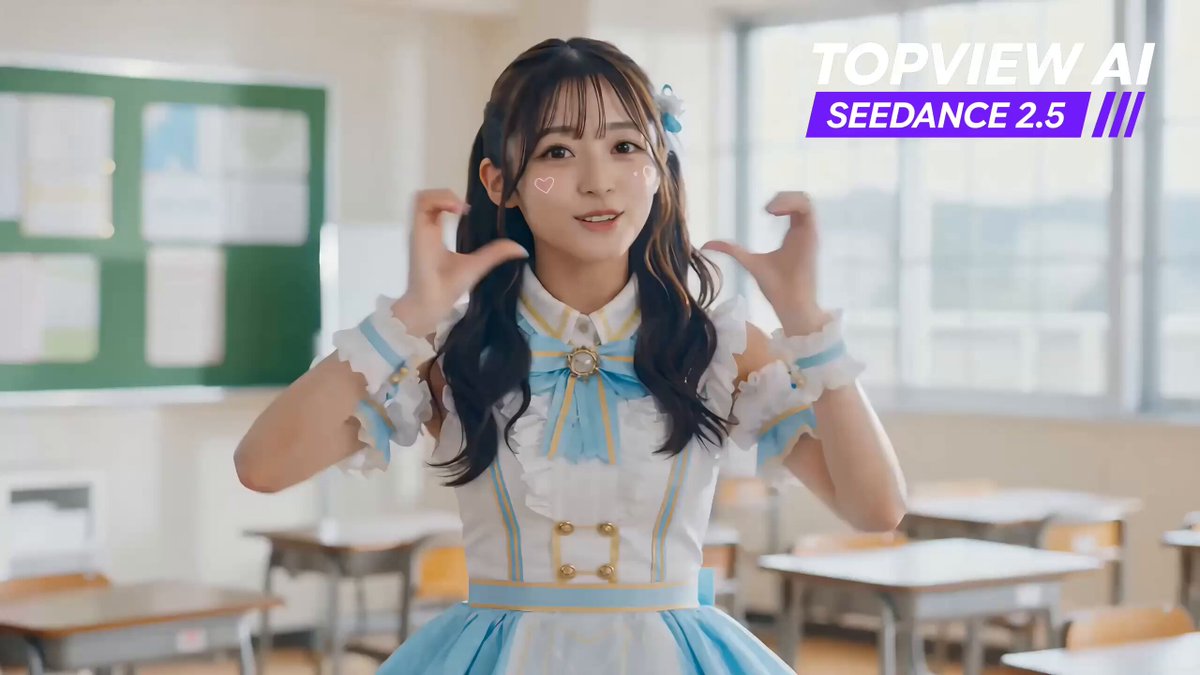
A second family prioritises speed, strong style transfer, and responsiveness to stylised prompts — anime, illustration, painterly, retro film stock. Motion is often deliberately exaggerated. These engines are excellent for storyboards, animatics, and social content where energy matters more than realism.
Use them for: concept development, social-first content, animated explainers, rapid A/B testing of creative directions.
Regional and Multilingual Tuning
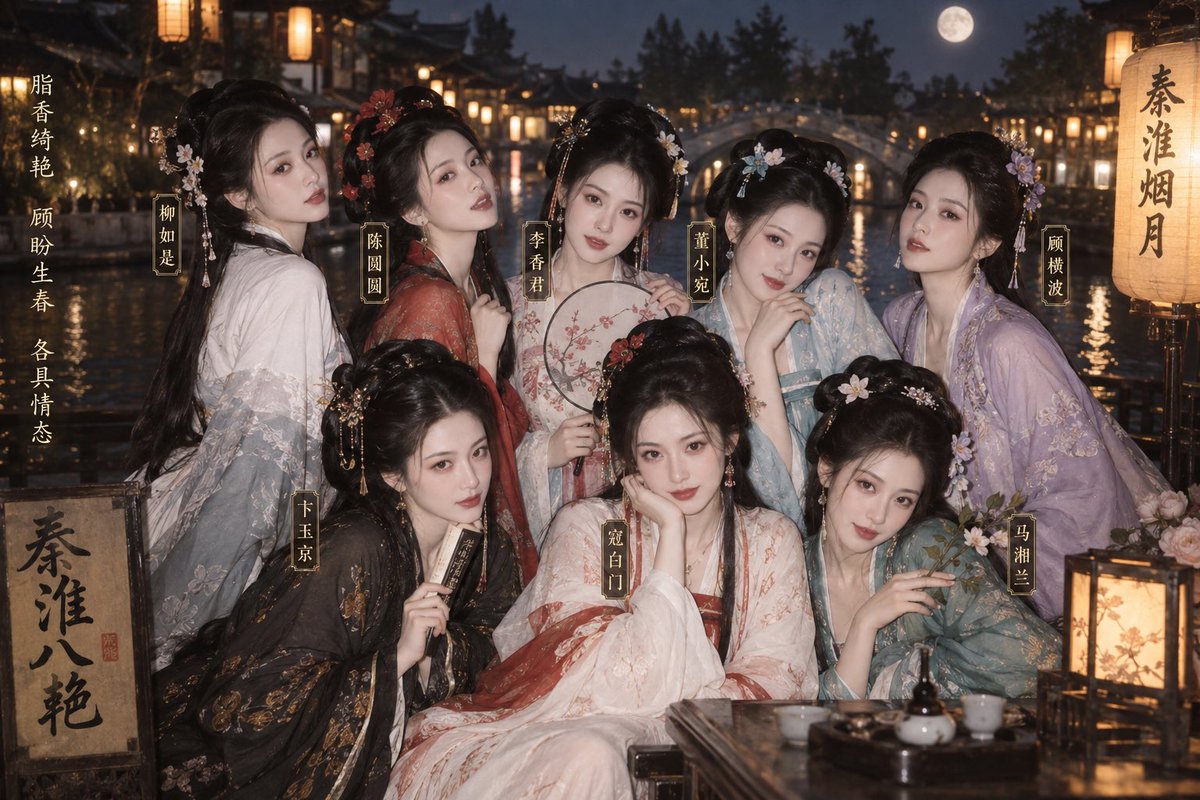
Some engines are tuned on regional visual data and text encoders that handle non-Latin scripts and local aesthetic expectations more gracefully. This is not a small detail. A prompt written in Japanese, Arabic, or Mandarin may be parsed differently across platforms, and cultural markers — architecture, clothing, colour symbolism, casting norms — show up in the output whether you asked for them or not.
For anyone producing for a specific market, run the same brief through two or three engines with prompts in the target language and compare cultural fidelity, not just sharpness.
Open-Weight and Self-Hosted Options
A growing set of models can be run on your own hardware or private cloud. You trade peak quality and convenience for control, privacy, and no per-generation cost. For teams handling sensitive material or needing thousands of low-cost variations, self-hosting changes the economics entirely. Expect more setup, more tuning, and a real need for GPU capacity.
Directing the Camera: Control Surfaces Worth Paying Attention To
Great AI video looks directed, not generated. The difference usually comes from how deliberately you specify camera behaviour.
Camera movement. Specify dolly in, dolly out, truck left, crane up, orbit, handheld, and static lock-off. Vague prompts like "dynamic shot" produce arbitrary motion that rarely matches your edit.
Lens language. Terms like 24mm wide, 50mm normal, 85mm portrait, macro, and anamorphic flare steer framing and compression. Models respond to this vocabulary more than most people expect.
Lighting direction. Say where the light comes from: soft window light from camera left, hard rim light behind subject, practical neon from the right. This single detail removes more re-rolls than any other.
Shot duration and pacing. Request a specific pacing feel — slow push, whip pan, gentle drift — and pair it with a duration. A six-second slow push reads completely differently from a six-second orbit.
Start and end frame conditioning. If the engine supports it, define the first and last frame. This gives you edit-friendly shots you can cut together without a jarring jump, and it is the single most reliable way to build a sequence rather than a collection of clips.
A useful habit: keep a reusable prompt skeleton with slots for subject, action, environment, lighting, camera, lens, pace, and style. Consistent structure produces consistent output and makes troubleshooting far easier.
Character Consistency and Multi-Image Reference Workflows
Character drift is the most common reason AI video projects get abandoned. The fix is procedural, not magical.
Build a character sheet first. Generate or photograph a reference set: front, three-quarter, profile, full body, plus two or three expressions, all under neutral lighting on a plain background. These become your anchors.
Use multi-image fusion where supported. Feeding several reference images into a single generation helps the model triangulate identity instead of guessing from one angle. Three to five well-chosen references usually outperform one highly detailed prompt.
Lock wardrobe and props in the prompt. Identical clothing descriptions repeated verbatim across shots dramatically improve continuity. Changing the wording changes the output.
Re-anchor every few shots. Even strong engines drift over a long sequence. Regenerate a hero frame, then use it as a start frame for the next group of shots. This is essentially a digital version of shooting coverage.
Accept stylisation as a trade. If perfect photorealism causes drift, a lightly stylised look often holds identity better and reads as an intentional creative choice rather than a compromise.
Managing Queues, Render Volume, and Usage Budgets
Agentic and batch workflows change how you plan. When an engine can run dozens of variations unattended, your constraint shifts from creative time to compute allowance and review time.
Estimate volume per deliverable. A thirty-second social spot might need sixty to a hundred generations across shots, re-rolls, and format variants. Multiply that by your monthly output before choosing a plan.
Separate exploration from finishing. Use a fast, cheap engine or low-resolution mode to explore composition and motion. Then spend your premium generation allowance on the final pass with the best model available.
Batch similar shots. Group prompts that share a subject and environment into one queue run so the model's internal consistency works in your favour and you review in fewer sessions.
Track failure rates. Log which prompts fail and why. A pattern usually emerges within a week — a specific action, a lighting condition, or a subject type the engine cannot handle. Adjust the shot list rather than fighting the tool.
Keep a render log. Shot ID, prompt version, engine, settings, outcome, and approval status. When a client asks for a revision three weeks later, this log is the difference between a fifteen-minute fix and a full reshoot.
Matching Platforms to Production Types
Short-form social content. Prioritise speed, native vertical output, strong style options, and cheap iteration. Volume is the metric. Pick the fastest engine that clears your quality floor and use it almost exclusively.
Product and e-commerce video. Prioritise controlled camera moves, accurate materials and reflections, and the ability to keep a product's shape and branding intact. Pair generated environments with real product photography composited in post for the safest results.
Narrative shorts and brand films. Prioritise character consistency, start-and-end frame control, cinematic lens language, and the ability to hold a mood across a sequence. Expect to use two engines: one for performance-driven shots, one for atmosphere and establishing frames.
Localisation and multi-market campaigns. Prioritise multilingual prompt handling, cultural fidelity, and format flexibility. Build a master shot list, then regenerate or adapt per market rather than cropping and dubbing a single cut.
Advertising concepts and pitch work. Prioritise rough speed over polish. Stylised engines produce convincing animatics faster than realistic ones produce convincing footage, and clients approve concepts, not render quality.
An End-to-End Workflow You Can Reuse
Step 1 — Script and shot list. Break the video into shots of four to eight seconds. Every shot gets a purpose, a subject, an action, and a camera instruction. This document is the single biggest quality lever in AI video production.
Step 2 — Style bible. Define palette, lighting philosophy, lens preferences, grain, and aspect ratio. Generate three reference stills and get sign-off before any video generation begins.
Step 3 — Reference assets. Build character sheets, product plates, and location stills. These become conditioning inputs.
Step 4 — Low-cost exploration. Generate motion tests with the fast engine. Evaluate movement and composition only. Discard anything that does not serve the edit.
Step 5 — Hero generation. Move approved shots to the highest-quality engine with full control settings, start frames, and a locked prompt skeleton.
Step 6 — Sequencing and continuity pass. Assemble in the editor, then look for continuity breaks: eyelines, screen direction, wardrobe, light direction. Re-generate only the broken shots.
Step 7 — Post-production. AI footage benefits enormously from standard finishing: colour grading to unify shots, film grain to mask micro-artifacts, sound design, and music. Slight speed ramps hide motion imperfections.
Step 8 — Delivery variants. Reframe or regenerate for each aspect ratio, add subtitles, and export platform-specific versions from the same master timeline.
Common Mistakes and How to Avoid Them
Chasing one perfect generation. Ten minutes of prompt-tweaking usually produces a worse result than ten quick generations. Generate in batches and choose.
Ignoring screen direction. If a character exits frame right in one shot and enters frame left in the next, the cut feels wrong even if both shots look beautiful. Plan direction in the shot list.
Overloading prompts. Five clear constraints beat fifteen contradictory ones. Move stylistic nuance into reference images instead of words.
Skipping audio planning. Motion generated without thought for pacing will fight your music. Decide the rhythm of the edit before generating.
Treating AI footage as finished footage. Ungraded, un-grained, unsound-designed AI video reads as AI video. Twenty minutes of finishing makes it read as a film.
Choosing an engine based on a highlight reel. Test with your own hardest shot. Every engine looks good on a sunset landscape.
FAQ: Choosing Your AI Video Stack
Can one platform do everything I need? For short-form social content, often yes. For narrative or branded work, no — most professional teams run one fast exploration engine and one high-fidelity finishing engine.
How do I compare engines fairly? Run the same three prompts across candidates: a face with dialogue-style expression, a fast action shot, and a camera move with a specific lighting setup. Judge consistency across multiple attempts, not the best single output.
What matters more, model quality or prompt quality? Prompt quality, consistently. A disciplined prompt skeleton with locked lighting and camera language beats switching engines every week.
How long should each generated shot be? Four to eight seconds for most work. Longer shots need start-and-end conditioning or stitching, and both add risk.
Do I need editing skills? Yes, and they matter more than AI skills. Sequencing, pacing, sound, and grading are what separate a demo from a deliverable.
Should I self-host? Only if you have GPU capacity, technical staff, and a genuine privacy or volume requirement. Otherwise, hosted engines will be faster and better for a long time.
How do I budget for AI video? Work backwards from approved shots. Estimate your re-roll ratio honestly — often three to five attempts per usable shot — and multiply by your monthly deliverable count. Predictable overage terms matter more than a low headline rate.
The short version: pick the tool whose failure modes you can plan around, standardise your prompt and shot-list process, and spend your effort in post-production, where the work actually shows.
