


Why Video Marketing Automation Became a Baseline Requirement
Video stopped being a campaign format a long time ago. It is now the default format for product education, paid acquisition, social reach, onboarding, recruiting, and support. Once a channel becomes the default, the constraint changes. The hard part is no longer "can we make a video?" — it is "can we make fifty of them, in four aspect ratios, in three languages, without the team burning out?"
Manual production does not scale linearly. Every additional video adds a brief, a script, a shot list, a review cycle, a set of captions, a thumbnail, and a distribution checklist. At five videos a month this is annoying. At fifty it becomes a logistics problem that no amount of creative talent can solve. That is precisely the gap AI automation fills: not the camera work, but the coordination cost around it.
It helps to be clear about what automation actually does. Generative models handle first-draft visuals, voiceovers, background music, captions, and variant generation. Workflow tooling handles versioning, approvals, naming, and publishing. Neither replaces strategy. A well-automated pipeline pointed at a weak message simply produces weak content faster. The teams that win treat automation as an iteration engine: cheaper drafts, faster feedback, more experiments per quarter.
The End-to-End AI Video Pipeline
A reliable automated pipeline has five stages. Skipping any of them is the most common reason teams describe AI video as "unpredictable." In practice, unpredictability usually means a missing stage, not a bad model.
Stage 1 — Brief and concept framing
Start with a one-page brief that defines the audience, the single takeaway, the call to action, the target length, and the placements. Placements matter early because a vertical short, a square social cut, and a 16:9 explainer require different framing decisions. When the brief is vague, every downstream stage inherits the ambiguity.
A useful discipline is to write the takeaway as one sentence a viewer could repeat after watching. If nobody on the team can agree on that sentence, generation will not help.
Stage 2 — Script and storyboard
Draft the script with an AI assistant, then edit it yourself. The editing pass is where brand voice lives. Convert the approved script into a shot list: one line per shot, each with subject, action, camera movement, lighting mood, and duration. This shot list becomes your prompt source, which is why it is worth the extra twenty minutes.
Stage 3 — Generation
Generate the shots. For most marketing work you will mix approaches: text-to-video for abstract concept shots, image-to-video for product fidelity, avatar models for presenter-led segments. Generate more takes than you need. Three to five variations per shot is normal, and the best take is rarely the first.
Stage 4 — Assembly and post-production
Bring shots into an editor, cut to the script, add music, captions, lower thirds, and end cards. This stage is still where most of the perceived quality comes from. Clean pacing, consistent framing, and accurate captions do more for a video than a marginally better generation model.
Stage 5 — Localization and distribution
Duplicate the timeline for each aspect ratio and language, then export. Automated captioning and dubbing tools make localization a copy-and-review task rather than a re-shoot. Distribution automation then pushes the same asset to the right surfaces with the right metadata.
Choosing the Right Generative Model for Each Job
There is no single best model. There is a best model per shot type, and the ability to match them is a genuine competitive advantage. Build a small decision map rather than defaulting to one tool for everything.
Text-to-video
Best for concept visuals, abstract transitions, lifestyle b-roll, and anything where exact product geometry is not critical. Strengths are speed and variety. Weakness is control: hands, logos, and text often drift. Use it to build atmosphere, not to depict a specific SKU.
Image-to-video
Best when visual fidelity matters. Start from a real product photo or a rendered frame, then animate it with a controlled camera move. This is the workhorse for ecommerce and SaaS feature shots because it keeps the hero asset accurate while still adding motion.
Avatar, voice, and lip sync
Best for presenter-led explainers, localized versions, and internal training. Modern avatars are convincing enough for support content and mid-funnel education. For high-stakes brand films, human footage still reads as more credible — a hybrid approach where the avatar handles localized variants is often the pragmatic compromise.
Upscaling, interpolation, and cleanup
Do not skip this layer. Upscaling to delivery resolution, frame interpolation for smooth motion, and cleanup for artifacts are what separate a demo from something you would put behind paid spend. Budget time for it in the pipeline; it is not an afterthought.
When deciding between models, weigh four criteria: control (how precisely can you steer output?), consistency (does the same prompt yield similar results across runs?), throughput (how many clips per hour can you realistically review?), and licensing (can you use the output commercially without ambiguity?).
Prompt Craft and Scripting for Repeatable Output
Prompts are not magic words. They are specifications. The teams that get consistent results write prompts the way a cinematographer writes a shot note.
Write prompts like shot specs
A strong prompt covers six elements: subject, action, environment, camera behavior, lighting, and style reference. "A ceramic coffee cup on a walnut table, steam rising, slow dolly-in, soft window light from the left, muted editorial photography style" gives a model far more to work with than "coffee cup video."
Negative guidance matters too. Note what to exclude: no text overlays, no extra fingers, no lens flares, no floating objects. Keep the exclusion list short and reuse it everywhere.
Keep a prompt library
Every prompt that produces an approved shot should be saved with a tag for the shot type and a note about the model used. Six months later this library is the most valuable asset your team owns — it turns generation from experimentation into assembly.
Troubleshooting bad generations
When a shot fails repeatedly, change one variable at a time. Common fixes: simplify the action, remove competing subjects, shorten the prompt, swap the model, or switch to image-to-video with a controlled start frame. If a shot still fights you after four attempts, redesign the shot. Some ideas simply do not survive the transition to generative output, and forcing them wastes budget.
Engineering Brand Consistency Into Every Output
Automation multiplies whatever you feed it. If your inputs are inconsistent, you get inconsistent output at scale, which is worse than slow output.
Build a visual style kit
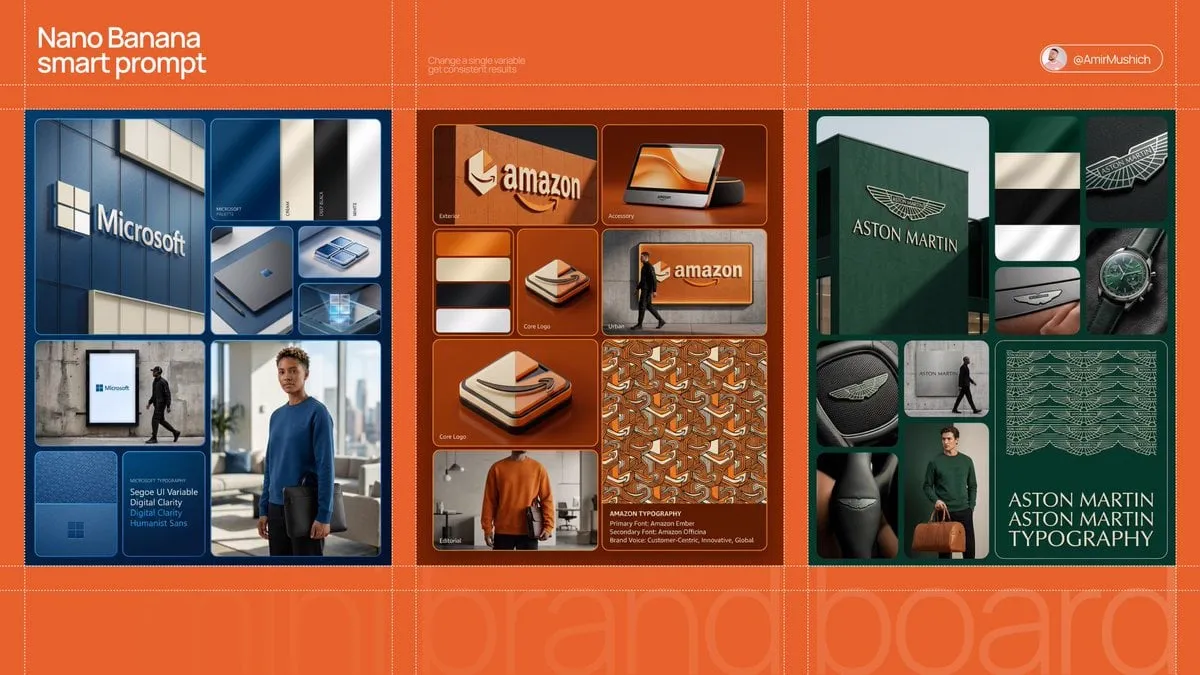
Define a small, fixed set of rules: color palette with hex values, preferred lighting, lens character, typography, transition style, and music genre. Store reference frames alongside the rules. Reference images communicate style to a generation model more reliably than adjectives do.
Lock tone and voice
Write a two-paragraph voice guide: how the brand addresses the viewer, sentence length, words to use, words to avoid. Paste it into every script generation request. Voice drift across fifty videos is far more noticeable than a slightly imperfect shot.
Add review gates, not review bottlenecks
Use two gates: one after the script, one after the rough cut. Approve the message before spending generation time, and approve the edit before spending localization time. Everything between gates can be automated aggressively because nobody is waiting on a decision.
Batch Production and Asset Management at Volume
Batching is the single biggest efficiency lever in an automated pipeline. Switching between concepts is expensive for people, so group work by stage rather than by video.
A practical weekly rhythm: Monday for scripts and shot lists across the whole batch; Tuesday for generation; Wednesday for editing and captions; Thursday for review and revisions; Friday for localization and scheduling. This keeps context switching low and makes review sessions predictable.
Asset management deserves real attention. Adopt a naming convention that encodes campaign, video ID, aspect ratio, language, and version — something like spring-launch-v07-9x16-en-v2. Store generated raw clips separately from approved exports. Keep a simple spreadsheet or board tracking each video's stage, owner, and gate status. Without this, a hundred-clip library becomes unusable within a month, and teams end up regenerating assets they already have.
Video SEO and Smart Distribution
Metadata that earns impressions
Video discovery depends on more than the video. Titles, descriptions, tags, thumbnail frames, and captions all influence whether the asset gets surfaced. Write metadata for the viewer's search intent, not for the algorithm's amusement.
Captions are dual-purpose: accessibility and indexability. Automated transcription gets you 90% of the way; a human pass fixes product names, brand terms, and numbers. On short-form platforms, burned-in captions also raise watch time because most viewing happens with sound off.
Turning one asset into ten
One flagship video should produce a long-form cut, three to five vertical shorts, a square teaser, a carousel of still frames, and a written summary. Plan these derivatives in the brief so the framing works across ratios from the start. Cropping a center-framed talking head into vertical is fine; cropping a wide product demo is usually a disaster.
Quality Control and Performance Measurement
Pre-publish checklist
Run every asset through the same list: audio levels normalized, captions accurate, brand colors correct, logo safe zone respected, call to action visible for at least two seconds, no placeholder text, no watermark, file size and codec correct for each platform. Automate what you can — tools that flag loudness or missing captions catch errors faster than human eyes.
Metrics that matter
Track a small set. Hook rate (three-second retention) tells you whether the opening frame works. Average view duration tells you whether the script holds. Click-through and conversion tell you whether the offer and call to action land. Cost per finished video tells you whether the pipeline is actually efficient. Attribution is imperfect, especially for brand work, so pair platform metrics with post-purchase surveys rather than trusting last-click alone.
Close the loop deliberately. Each month, review the top three and bottom three videos, then update the prompt library, the style kit, and the script template accordingly. This is how a pipeline improves instead of just running.
Common Mistakes to Avoid
Automating before defining the message. Speed amplifies confusion. Fix positioning first.
Judging the first take. Generative output is a distribution, not a single answer. Generate several variations before concluding a model cannot do something.
Ignoring aspect ratio planning. Design for vertical, square, and widescreen framing decisions in the brief stage, not in the export stage.
Skipping human review on claims. Models will happily render a plausible-but-wrong statistic on screen. Every factual claim needs a human check.
Over-automating the voice. Fully synthetic narration works for some formats and feels hollow in others. Test, and keep a human voice in reserve for flagship content.
No versioning discipline. Without naming rules and an approval log, teams lose track of which file is final — and publish the wrong one.
FAQ
How many videos should a small team automate per week?
Start with what you can review properly. Five to ten finished videos per week is a realistic ceiling for one or two people including review and localization. Increase volume only after the pipeline runs without errors for three consecutive weeks.
Do AI-generated videos hurt brand trust?
Not inherently. Audiences respond to usefulness and clarity. Where trust suffers is when the content looks generic, makes unsupported claims, or mismatches the brand's established tone. Strong scripts and a locked style kit prevent most of this.
Do I still need a video editor?
Almost always, yes. Generation handles shots and sometimes voice, but pacing, sound design, captions, and the final twenty percent of polish still benefit from human judgment. The editor's role shifts from assembling from scratch to curating and refining generated assets.
How do I keep quality consistent across a large batch?
Standardize inputs: one style kit, one voice guide, one prompt library, one checklist. Consistency comes from constrained inputs, not from more review cycles.
What is the biggest hidden cost?
Review time and clean-up. Rendering is fast and cheap; watching, trimming, correcting captions, and re-generating failed shots is where hours go. Budget for it and batch it, or the pipeline will feel slower than it is.
Should every video be AI-generated end to end?
No. The strongest results usually come from hybrids: real product footage or photography as the anchor, AI for motion, variants, background, localization, and volume. Use AI where it compresses iteration cost, and use real assets where credibility is the deciding factor.
