


Why text-to-video stopped being a novelty
A marketing team of four schedules a product launch on a Tuesday. Traditionally the next three weeks involve a script, a shot list, a location, a freelancer, two rounds of edits, and a final invoice. The alternative path now looks different: write a paragraph describing the scene, set a duration and aspect ratio, generate, review, and publish. The gap between "we have an idea" and "we have a watchable asset" has collapsed from weeks to an afternoon.
That collapse is real, but it is also uneven. Anyone can generate thirty seconds of surprising footage in a browser tab. Far fewer teams can generate thirty seconds of footage that matches their brand colors, avoids a warped logo, reads correctly in a caption overlay, and survives legal review. The interesting work is no longer in the generation itself. It is in the pipeline wrapped around it.
This guide is about that pipeline. It covers how the model ecosystem is actually structured, how to choose engines for a given job, how to keep visual identity stable across many generations, how to plug generated footage into the tools a marketing team already uses, and how to run quality control that catches the failures models still produce. No vendor worship, no magic-button promises.
The four layers of a text-to-video stack
Most teams think about text-to-video as a single tool. In practice a production workflow has four distinct layers, and confusing them is the most common reason projects stall.
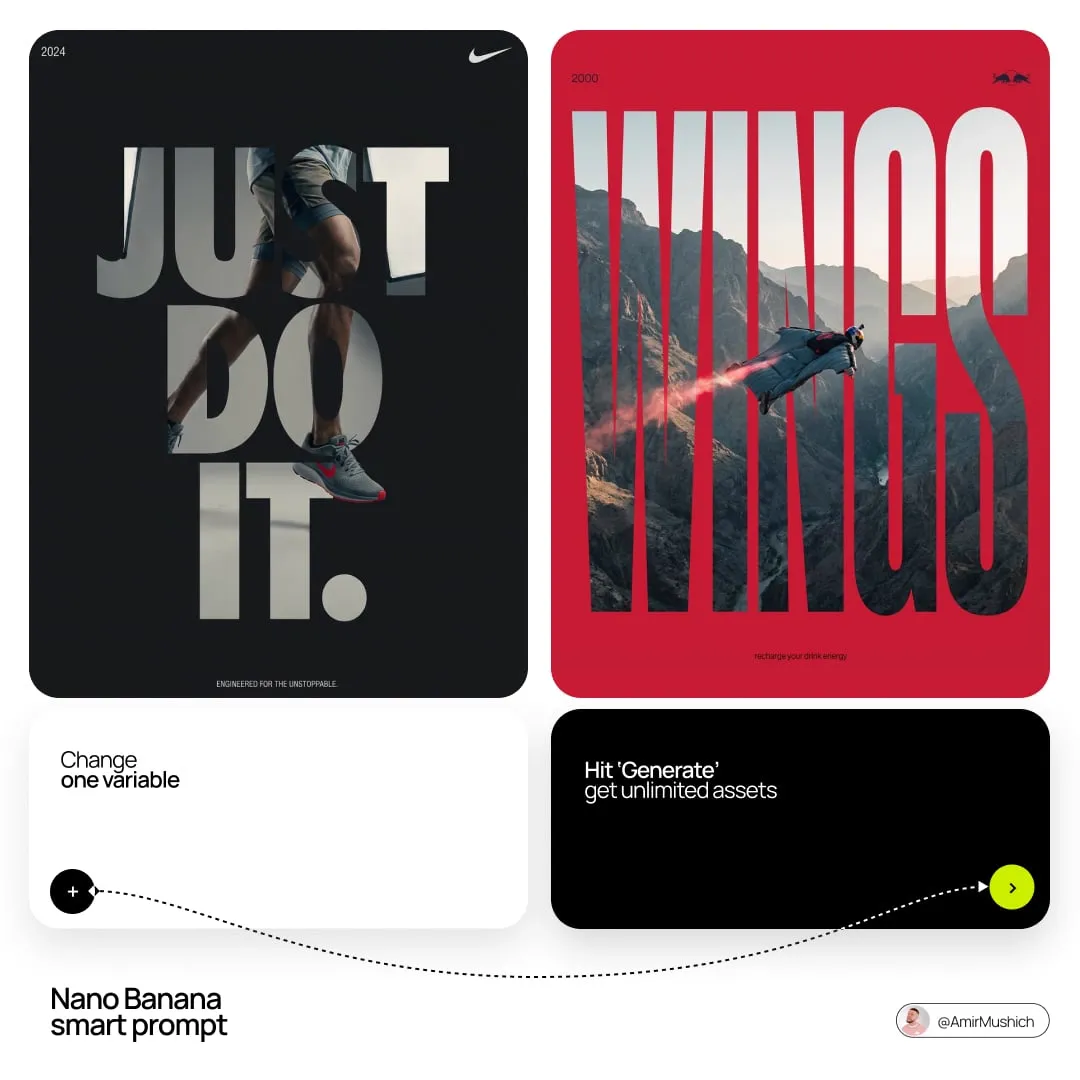
Layer one: the prompt interpreter. This is the part that turns your plain-language description into a structured plan — subject, motion, camera, lighting, mood, duration. Some tools expose this as a single text box. Better ones let you control elements independently, which matters enormously when you need to iterate on one variable without losing the rest.
Layer two: the generation engine. The actual model producing frames. Different engines have genuinely different strengths: some excel at photoreal humans, some at stylized illustration, some at product turntables, some at text rendering inside the frame, some at cheap high-volume iteration.
Layer three: the coherence layer. This is where character identity, product geometry, color palette, and typography get enforced across shots. It is often missing from beginner tutorials and it is the single biggest determinant of whether output looks professional or looks generated.
Layer four: the delivery layer. Encoding, captioning, aspect-ratio variants, asset naming, storage, and handoff into the editing or publishing system. Unglamorous, entirely mechanical, and where most of the hidden labor lives.
A team that buys only layer two and hopes the rest sorts itself out will produce a flood of unusable clips. A team that invests in layers one, three, and four on top of a mid-tier engine will ship consistently.
Choosing a generation engine: a decision framework
Engine comparisons age quickly. A framework survives longer. Score candidates against the dimensions that actually affect your output.
| Dimension | Why it matters | How to test it |
|---|---|---|
| Motion realism | Warped limbs and melting hands destroy trust in product and people shots | Generate five clips with continuous motion and human subjects |
| Prompt adherence | A model that ignores half your instruction forces manual rework | Give a five-constraint prompt, count how many survive |
| Text rendering | On-screen prices, names, and captions that garble are unusable | Ask for a specific short string inside the frame |
| Aspect control | Vertical, square, and widescreen variants all ship from one brief | Generate the same scene in 9:16, 1:1, and 16:9 |
| Latency and cost | Determines whether iteration is practical or precious | Time a ten-clip batch end to end |
| Style consistency | Determines whether ten clips can live in one ad | Generate the same character across five prompts |
| Commercial terms | Determines whether legal will let you publish | Read the actual license, not the marketing page |
Run this test set once per quarter on your two or three finalists. The results change fast, and a model that lost on motion realism six months ago may now win.
Where premium engines earn their cost
Premium, high-fidelity engines justify their price in three situations. First, when the clip is the ad itself — a hero spot where a single visual flaw is the difference between a launch and a reshoot. Second, when photoreal humans feature prominently, because human faces and hands remain the hardest thing for generative models to get right and the easiest thing for viewers to notice. Third, when the legal or brand exposure is high, since premium vendors generally invest more in provenance tooling, watermarks, and defensible licensing terms.
For everything else — internal explainers, social cutdowns, B-roll padding, concept tests for stakeholder review — a mid-tier or open engine is usually the rational choice. Paying premium rates for a draft that will be replaced is a common and expensive mistake.
The open and community model ecosystem
Open-weight and community-hosted video models have improved dramatically, and they solve two problems premium APIs cannot. The first is volume economics: when you need hundreds of iterations to find the right motion, per-generation pricing becomes the constraint on creativity. Self-hosted or low-cost hosted open models remove that ceiling. The second is customization through fine-tuning — if your brand has a very specific visual language, a tuned open model can match it in ways a general-purpose model never will.
The tradeoff is operational. Open models require hardware, inference plumbing, and someone to keep the stack running. They also tend to lag on prompt adherence and temporal coherence. The pragmatic pattern many teams land on is a tiered approach: open models for high-volume exploration and internal drafts, premium engines for the final asset that ships.
A note on specialization
Beyond quality tiers, engines specialize. There are models tuned for anime and illustration, models tuned for architectural and real-estate flythroughs, models tuned for talking-head avatars, models tuned for product rotation on a clean background, and models tuned for audio-driven lip sync. Building a short internal map of which engine you reach for in which scenario will save you more time than any single benchmark comparison.
Style consistency: the hardest problem in AI video
Consistency is what separates a folder of cool clips from a coherent campaign. A viewer does not consciously register that your protagonist's jacket changed color between cuts, but they register that something feels off. There are three levels to solve, and they need different techniques.
Level one: character identity
The goal is the same face, same wardrobe, same proportion across every shot. Practical approaches, roughly in order of effort:
- Reference conditioning. Supply one or more reference images of the character alongside each prompt. Most modern engines support multi-reference conditioning that binds identity to the output. Keep a canonical reference sheet — front, three-quarter, profile, neutral lighting — and reuse it.
- Seed locking. Fix the random seed and vary only the prompt text. This is cheap, effective for background elements, and useless once you change the camera angle significantly.
- Descriptor discipline. Write your character description once, store it as a reusable block, and paste it verbatim into every prompt. Rephrasing "silver-rimmed glasses" as "glasses with silver frames" will change the face.
- Fine-tuning or custom training. The most durable option and the most expensive. Worth it when a character will appear across dozens of assets.
Level two: environment and palette
Brand color drift is subtle and pervasive. If your primary color is a specific deep green, generated footage will wander through teal, olive, and mint. Fixes that work: state color relationships in the prompt rather than vague adjectives ("deep forest green accent against warm neutral gray" beats "brand green"), build a low-saturation LUT and apply it in post rather than fighting the model, and generate background plates separately from foreground subjects so you can grade the plates once.
Level three: motion and rhythm
Even perfectly consistent frames feel incoherent if the camera language changes shot to shot. Decide your motion grammar up front — for example, "slow push-in for product reveals, static wide for context, handheld for testimonials" — and encode it in your prompt templates. Rhythm consistency is also an editing concern: a fixed shot-length range, a consistent transition set, and a matched music tempo will do more for perceived quality than another round of generation.
Fusion techniques that help
Layering is the most underused technique available. Generate a background plate, generate your subject in isolation against a flat background, and composite. Now you can regenerate the subject without losing the environment, swap environments without re-rendering the character, and color-grade the two independently. Image-to-video conversion works the same way: generate a strong still frame first, approve the composition, then let the model animate it. Approving a still is fast and cheap; approving an animation is not.
Building the production workflow
Here is a workflow that holds up under deadline pressure. It assumes a team of one to five people and a monthly output measured in dozens of assets, not thousands.
Step 1: Brief to prompt spec. Write the creative brief as normal. Then write a separate prompt specification document — a table with one row per shot containing subject, action, camera, lighting, mood, duration, and aspect ratio. This document, not the brief, is what drives generation. It also becomes your QA checklist and your re-generation log when something fails.
Step 2: Explore cheaply. Generate low-resolution or short-duration drafts across several engines for each shot. The only question at this stage is "is this the right idea?" Do not chase fidelity. Kill weak concepts here; they get more expensive to kill later.
Step 3: Lock the look. Pick one shot as the reference. Generate it repeatedly until the style, palette, and framing are right, and save the exact prompt, seed, and reference images that produced it. Every subsequent shot inherits from this locked reference.
Step 4: Produce in batches. Generate each remaining shot in parallel batches, ideally routed to whichever engine handles that shot type best. Batch by shot type rather than by story order — all product turntables together, all talking-head segments together — so you can spot drift within a batch before moving on.
Step 5: Assemble and cut down. Import approved clips into your editor. Cut for rhythm before you fix image problems; many "bad" clips survive once trimmed to two seconds and placed against the right music. Grade globally, add captions, and produce the required aspect-ratio variants from a master timeline rather than re-generating per format.
Step 6: QA and archive. Run the checklist below. Then archive the winning prompts, seeds, and reference assets alongside the delivered video. This is what makes your next campaign faster than this one.
Prompt engineering that behaves like engineering
Treat prompts as versioned artifacts. Adopt a written template with fixed slots — subject block, action block, camera block, lighting block, style block, negative block — and change one slot at a time. Record which change produced which effect. Within a few weeks you will have a private tuning log that is worth more than any public prompt guide, because it is calibrated to your brand and your engines.
Two specific habits pay off. First, be concrete about quantity and direction ("three-quarter view, camera at chest height, moving left to right") rather than evaluative ("cinematic, beautiful, high quality"). Second, build a standing negative list of the failures your engines actually produce — extra fingers, floating logos, garbled signage, morphing backgrounds — and append it to every prompt.
Automating the busywork
The strategic value of an agent-style orchestration layer is not that it generates video. It is that it removes the coordination tax from production. A director-style agent that decomposes a brief into shots, assigns each shot to an appropriate engine, tracks what has been rendered, flags what failed, and reassembles the results turns a task list into a queue.
That abstraction matters most when several people share the same output. Instead of three teammates independently discovering that the character's jacket changed, one system holds the canonical reference and enforces it. Instead of someone manually checking whether last night's batch finished, the queue reports status and retries failures.
Running a task queue without losing your mind
A generation queue is a small distributed system, and it behaves like one. Three practices prevent most pain.
Make every job idempotent. A job should carry its full prompt spec, seed, engine, and reference assets so that rerunning it reproduces the same output. Without this, a retry after a network failure silently produces a different clip and you lose an hour reconciling versions.
Separate exploration jobs from production jobs. Exploration should be allowed to burn through budget and fail freely. Production jobs should be gated — locked prompts, locked source images, locked engine version, human approval before release.
Log outcomes, not just successes. Record rejections with a short reason. After a month, the rejection log tells you which prompt patterns and which engines are wasting your budget. That is the data that drives better decisions.
Quality control: the checklist that catches real failures
Run these checks before anything reaches a stakeholder. Every item on this list is something that has shipped to production somewhere and embarrassed someone.
- Anatomy and continuity. Pause on hands, teeth, ears, and hair edges. Check that objects maintain shape across the clip rather than morphing.
- Text in frame. Zoom in on any on-screen text. Generated lettering frequently degrades into plausible-looking nonsense.
- Logo integrity. Verify any brand mark rendered by the model is exact. If it is not, remove it from generation and overlay it in post.
- Color accuracy. Compare against brand hex values, not against memory. Displays lie.
- Audio sync and levels. If the clip is audio-driven, check lip sync frame by frame and confirm loudness normalization across the whole set.
- Aspect-ratio safety. Confirm captions and key subjects survive the crop in every delivered variant.
- Caption and localization accuracy. Machine transcription mangles proper nouns and numbers. Read them.
- License and disclosure. Confirm the engine's commercial terms cover your use, and confirm any required AI disclosure is present.
- Residue check. Scan for watermarks, boilerplate, or fragments from reference assets you did not intend to include.
- Delivery spec. Correct codec, bitrate, resolution, filename convention, and destination folder.
Ten minutes of checklist beats a re-render, and it costs far less than the alternative.
Measuring whether it works
Once the pipeline runs, measure it. Useful metrics for a text-to-video marketing operation:
Cost per finished second. Total spend — tooling, generation, labor — divided by seconds of approved, published video. This is the number that tells you whether you are actually more efficient than the old way.
Acceptance rate. Approved clips divided by generated clips. A low rate is not automatically bad if generation is cheap, but a falling rate signals prompt drift or a mismatched engine.
Time to first cut. Hours from brief to a watchable rough assembly. This is where the biggest real gains show up, because it collapses the feedback loop with stakeholders.
Variant throughput. How many aspect ratios, languages, or audience versions you can ship from one master. This is often the strongest business case, since generating variants is nearly free once the master exists.
Rework rate. How often an approved clip gets pulled after review. Track the reasons. They cluster, and clusters are fixable.
Where this goes next
The trajectory is toward tighter integration rather than better isolated models. Expect generation to move inside editing timelines, expect agents to handle multi-shot assembly rather than single clips, and expect provenance and disclosure tooling to become a baseline requirement rather than a differentiator.
The teams that benefit most will not be the ones with access to the newest model. They will be the ones whose prompts are versioned, whose source images are canonical, whose queues are observable, and whose QA is a written checklist rather than a feeling. Those assets compound. Model access does not.
Frequently asked questions
How many words should a prompt be for a business video clip?
Long enough to remove ambiguity, short enough to stay focused — usually one dense sentence describing subject and action, plus separate clauses for camera, lighting, and style. Vague evaluative words add nothing. Concrete spatial and motion instructions add a lot.
Can I edit a generated clip the same way I edit footage?
For practical purposes, yes. Treat output as source footage: cut it, trim it, grade it, composite over it. Generative fill and outpainting can extend a clip, but expect quality falloff at extension boundaries, so plan your shot lengths rather than relying on extension in post.
Do I need multiple engines, or is one enough?
One engine is enough to start and it will keep you consistent. Multiple engines become worthwhile once you notice specific recurring failures — poor text rendering, weak product geometry — and find another engine that solves them.
How do I keep a character consistent across many clips?
Use reference-image conditioning with a canonical reference sheet, lock your seed, and paste an identical character description block into every prompt. Reserve fine-tuning for characters that will appear across many assets.
What is the biggest mistake teams make?
Skipping the coherence layer. They generate individual clips well and then discover the set does not hold together, which forces a full re-render under deadline. Decide your motion grammar, palette, and character source images before producing at volume.
Is generated video safe to publish commercially?
That depends entirely on the engine's license terms and your jurisdiction's disclosure rules, not on the quality of the output. Read the actual license for the specific model version you use, keep records of the prompts and assets, and disclose AI generation where required.
