
Why AI Video Is Now a Practical Production Tool
Generative video has crossed an important line. A few years ago, AI clips were short, unstable curiosities: hands melted, faces drifted, and camera motion ignored the laws of physics. Today, diffusion-based video models and transformer architectures produce multi-second shots with believable lighting, coherent subjects, and controllable camera behaviour. That shift matters most for teams that were never able to afford a full film crew: small agencies, in-house marketing departments, independent creators, and regional studios.
In Saudi Arabia and the wider Gulf, the pressure to publish video constantly is enormous. Brands compete for attention on Snapchat, TikTok, Instagram, YouTube, and streaming platforms that commission local content. At the same time, traditional production is expensive and logistically slow. Permits, talent, locations, and travel all add friction. Generative tools do not remove that friction entirely, but they let a team prototype ten concepts before lunch, test a hook in three languages, and produce supplementary footage that would otherwise be impossible to shoot.
The practical mindset to adopt is this: AI video is not a button that replaces production. It is a new department inside your pipeline, with its own inputs, review loops, and quality standards. Teams that treat it as a magic wand end up with a folder of unusable clips. Teams that treat it as a shot-generation stage inside a normal production process ship work that audiences actually finish watching.
This guide walks through that process end to end: what an AI video pipeline contains, how to run a project step by step, how to adapt output for Arabic-speaking audiences, how to choose between models, and which mistakes sink otherwise promising projects.
What an AI Video Pipeline Actually Looks Like
A reliable pipeline has five stages. Skipping any of them usually shows up later as rework.
Script and concept development
Everything starts with a written idea, not a prompt. Before you touch a generative tool, you need a logline, a target platform, a runtime, and a beat sheet. The beat sheet is what later becomes a shot list, and the shot list is what becomes prompts. Writing prompts before you know what the video is about is the single most common cause of wasted generation time.
At this stage, decide what the AI will actually do. Some videos are fully generated. Others combine generated shots with live-action footage, screen recordings, product photography, or motion graphics. A hybrid approach is usually stronger: use AI for establishing shots, abstract transitions, stylised sequences, and anything impossible to film, then use real footage for people and products where authenticity matters.
Visual generation and image conditioning
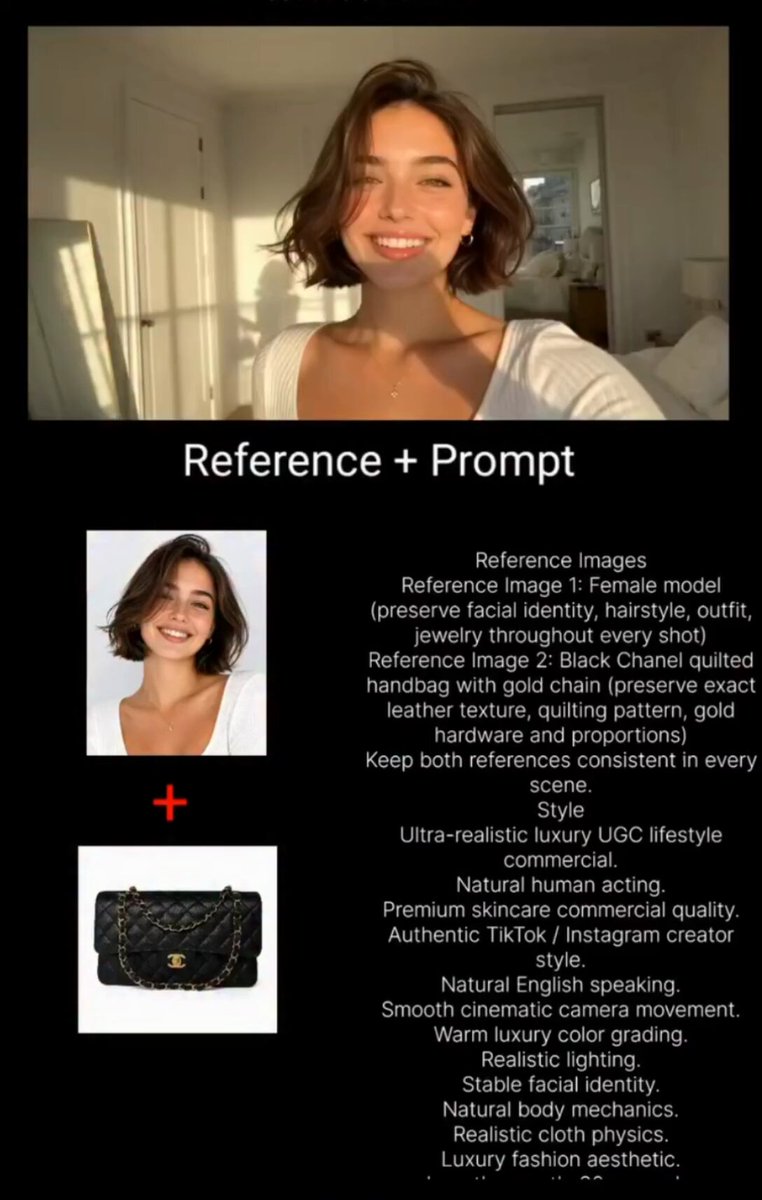
Most professional workflows do not start from text alone. They start from a still image. Generating a keyframe first, either with an image model or by photographing a real location, gives you control over composition, wardrobe, colour palette, and framing. You then animate that keyframe with an image-to-video model. This two-step approach dramatically improves consistency across shots, because you are solving composition and motion separately instead of hoping a text prompt handles both.
Motion and camera control
Modern models expose motion parameters: camera push, pan, orbit, dolly, and subject-motion strength. Treat these like a virtual camera department. A slow push-in signals importance; a handheld drift signals documentary realism; a static locked-off frame signals composure. When every shot in a sequence uses the same energy level, the result feels artificial regardless of how good each individual clip looks.
Voice, dubbing, and Arabic language work
Narration can be synthetic or human. For internal drafts, synthetic voice is fast and cheap to iterate. For published work aimed at Gulf audiences, a human voice artist or a carefully tuned synthetic voice with correct regional pronunciation usually performs better. Arabic is unforgiving here: Modern Standard Arabic reads as formal and authoritative, while Gulf dialects feel warmer and more native to social platforms. Choose deliberately per channel, and always have a native speaker review pronunciation, emphasis, and pacing.
Music, sound design, and mixing
Sound is where AI video projects are most often exposed. Generated visuals tend to be clean and slightly sterile, so ambient layers, room tone, Foley, and a licensed or generated music bed do most of the emotional work. Mix dialogue first, then music, then effects, and check the result on a phone speaker, which is how most short-form audiences will hear it.
A Step-by-Step Workflow From Brief to Final Cut
Step 1: Define the deliverable before the idea
Write down the platform, aspect ratio, target duration, language, and publication deadline. A vertical Snapchat ad, a horizontal YouTube explainer, and a broadcast bumper have different pacing rules. This single decision filters hundreds of later choices.
Step 2: Build a shot list with generation notes
For each shot, note the subject, action, framing, camera movement, lighting mood, and duration. Add a column for method: generated, filmed, stock, motion graphic, or archive. Ten to twenty shots is a normal scope for a sixty-second piece.
Step 3: Generate keyframes, then approve them
Produce stills for every shot and review them as a contact sheet. Reject anything with anatomical errors, broken text, inconsistent wardrobe, or lighting that contradicts the previous shot. Fixing composition at the still stage costs a fraction of fixing it after animation.
Step 4: Animate in controlled batches
Animate approved keyframes in batches of five to ten, using identical settings within a sequence. Keep a spreadsheet that records the model, prompt, seed, and settings for every clip you keep. Reproducibility matters when a client asks for a variation three weeks later.
Step 5: Edit for rhythm, not for clips
Import everything into your editor and cut for rhythm. AI clips often need to be trimmed aggressively, reversed, sped up, or used as short inserts rather than full beats. A four-second clip is often best used as a one-second accent.
Step 6: Complete sound, subtitles, and localisation
Add narration, music, effects, and captions. Burned-in Arabic subtitles require careful typography: right-to-left alignment, generous line spacing, and a font with proper Arabic glyph support. Avoid overlaying text on busy motion; viewers cannot read and track movement simultaneously.
Step 7: Quality control and delivery
Watch the finished piece on three devices: a phone, a laptop, and a TV. Check audio loudness, caption timing, colour consistency, brand assets, and file specifications. Then export multiple versions: vertical, square, horizontal, and a clean master without text overlays.
Building for Saudi and Gulf Audiences
Localisation is more than translation. Consider these dimensions before you generate anything.
Language register. Modern Standard Arabic suits corporate, governmental, and formal educational content. Gulf dialects suit entertainment, lifestyle, and social-first campaigns. Mixing registers within one video confuses audiences, so pick one and stay consistent.
Visual context. Architecture, clothing, interiors, and street scenes should feel plausibly regional. Generic desert imagery with no context reads as foreign. Reference real urban textures, coastal environments, or modern interiors when briefing visual generation.
Cultural sensitivity. Review scripts and imagery for modesty, gesture, and symbolism. A short internal review with a local team member prevents problems that no post-production fix can solve.
Seasonal calendars. Ramadan, Eid, National Day, and major retail moments drive most of the annual content calendar. Produce generic evergreen assets early, then layer campaign-specific overlays so you are not regenerating footage under deadline pressure.
Platform behaviour. Vertical short-form rewards fast hooks, bold captions, and sound-on design. Long-form and broadcast reward pacing, structure, and professional narration. Do not reuse one cut everywhere.
Choosing the Right Model: Decision Criteria
Model choice should follow the shot, not the other way around. Evaluate options against these criteria.
- Shot type. Talking-head realism, product macro, stylised animation, and abstract B-roll are solved by different model families. Test your specific shot type, not the model's demo reel.
- Duration and continuity. If you need eight seconds of stable motion, verify stability at that length before committing the whole sequence.
- Controllability. Look for image conditioning, motion strength sliders, camera controls, and seed locking. Control beats raw beauty in client work.
- Character and style consistency. Consistent characters across multiple shots usually require reference images, LoRA-style fine-tuning, or a fixed keyframe library.
- Resolution and aspect ratio. Confirm native output matches your delivery formats, or plan an upscale step.
- Commercial licensing. Read the terms for commercial use, redistribution, and training restrictions. This is a legal question, not a technical one.
- Speed and iteration cost. A slightly weaker model that renders in seconds often wins because you can iterate twenty times instead of two.
- Integration. API access, batch processing, and local/self-hosted options matter once you move from exploration to weekly output.
A practical approach is to keep two or three models in rotation: one fast model for exploration, one high-fidelity model for hero shots, and one specialised model for animation, effects, or stylised sequences.
Common Mistakes That Wreck AI Video Projects
Prompting before planning. Long, poetic prompts produce unpredictable results. Short, structured prompts describing subject, action, framing, and lighting produce usable footage.
No shot list. Without a plan, you generate clips instead of a sequence, then discover in the edit that nothing connects.
Ignoring physical logic. Objects appearing from nowhere, implausible reflections, and gravity-defying motion break immersion instantly. Watch every clip twice at half speed.
Inconsistent lighting. If shot one is warm sunset and shot two is cool daylight, no grade will fully rescue the sequence. Lock a lighting plan for the whole piece.
Neglecting sound. Audiences forgive imperfect visuals far more readily than bad audio. Never publish before a proper mix.
Unverified rights. Confirm that every model, voice, music asset, and stock element you use permits your intended commercial use. Keep documentation per project.
Skipping localisation review. A native speaker catches register, pronunciation, and cultural missteps that no automated check will flag.
Overproducing. More shots do not mean a better video. Cutting from twenty clips to ten often doubles the impact.
Team Roles, Timelines, and Budgeting
A lean AI video team can be three people: a creative lead who owns the concept and client communication, a shot designer who writes prompts, conditions keyframes, and manages generation settings, and an editor who handles assembly, sound, and delivery. On larger projects, add a localisation reviewer, a sound designer, and a motion designer for titles and graphics.
Timelines compress compared with traditional shoots, but they do not disappear. A sixty-second promotional piece typically needs a day for concept and script, a day for keyframes and approval, one to two days for animation and review cycles, and one to two days for edit, sound, localisation, and QC. The bottleneck is almost never rendering; it is decisions and reviews.
On budget, think in categories rather than single line items: concept and scripting, visual generation and iteration, sound and music licensing, localisation and voice, editing and finishing, and contingency for re-generation. The contingency line is essential, because the number of retakes is the least predictable part of any generative project.
Quality Control Checklist Before You Publish
- Framing, horizon lines, and eye-lines are consistent across cuts.
- Characters retain facial features, wardrobe, and proportions between shots.
- No warped hands, duplicated limbs, or melting geometry in motion.
- On-screen text is rendered as real graphics, never as generated imagery.
- Arabic captions are correctly shaped, right-to-left aligned, and readable at phone size.
- Dialogue and narration are intelligible on a phone speaker at 60 percent volume.
- Music licensing and model usage rights are documented.
- Brand colours, logos, and legal disclaimers appear as specified.
- Export settings match each platform's specification exactly.
- A clean master is archived without text or logos for future reuse.
Frequently Asked Questions
How long should an AI-generated clip be?
Generate longer than you need, then cut down. Four to eight seconds is a comfortable generation window; most final cuts use one to three seconds of any given clip.
Can AI video replace live-action production entirely?
For abstract, stylised, or impossible sequences, yes. For human emotion, product accuracy, and testimonials, live action still wins. Hybrid workflows produce the most credible results.
What is the minimum viable setup?
A capable laptop, a video generation tool or API, an editor with good audio tools, a music library, and a native Arabic reviewer. Everything else is optimisation.
How do I keep characters consistent across shots?
Create a reference image of the character once, then condition every subsequent shot on that reference. Lock wardrobe, lighting, and lens choices, and avoid prompts that introduce new variables.
Should I use synthetic voice for Arabic content?
For drafts, internal reviews, and low-stakes content, synthetic narration is efficient and improving quickly. For brand-critical publishing, a human voice artist or a hybrid approach usually delivers better trust and pronunciation.
How many generations should I expect per usable shot?
Plan for three to six attempts per shot in the exploration phase and one to two once your keyframe and settings are stable. Logging settings is what brings that number down.
Is AI video content acceptable for broadcast?
Increasingly, yes, provided it meets technical delivery standards and rights requirements. Many broadcasters still expect disclosure for synthetic imagery, so check the platform's policy before delivery.
What is the biggest workflow upgrade I can make?
Motion graphics layer on top of AI footage. Titles, lower thirds, maps, and animated icons make generated clips feel intentional rather than experimental.
How do I avoid looking generic?
Art-direct colour, lens choice, and camera movement as deliberately as you would on a real shoot. Generic output is usually the result of generic art direction, not weak tools.
Putting It Into Practice
The teams getting the most from AI video are not the ones chasing the newest model. They are the ones who built a repeatable pipeline: brief, shot list, keyframe approval, controlled animation, editorial rhythm, sound, localisation, and quality control. That structure turns unpredictable generation into a dependable production stage.
Start small. Pick one recurring content format your team already produces, and rebuild it as a hybrid AI-assisted workflow. Measure how long each stage takes, where rework happens, and which shots consistently need re-generation. Within a few project cycles you will have a documented internal playbook, a library of reusable keyframes and prompts, and a delivery process that scales across platforms and languages without starting from zero every time.
