
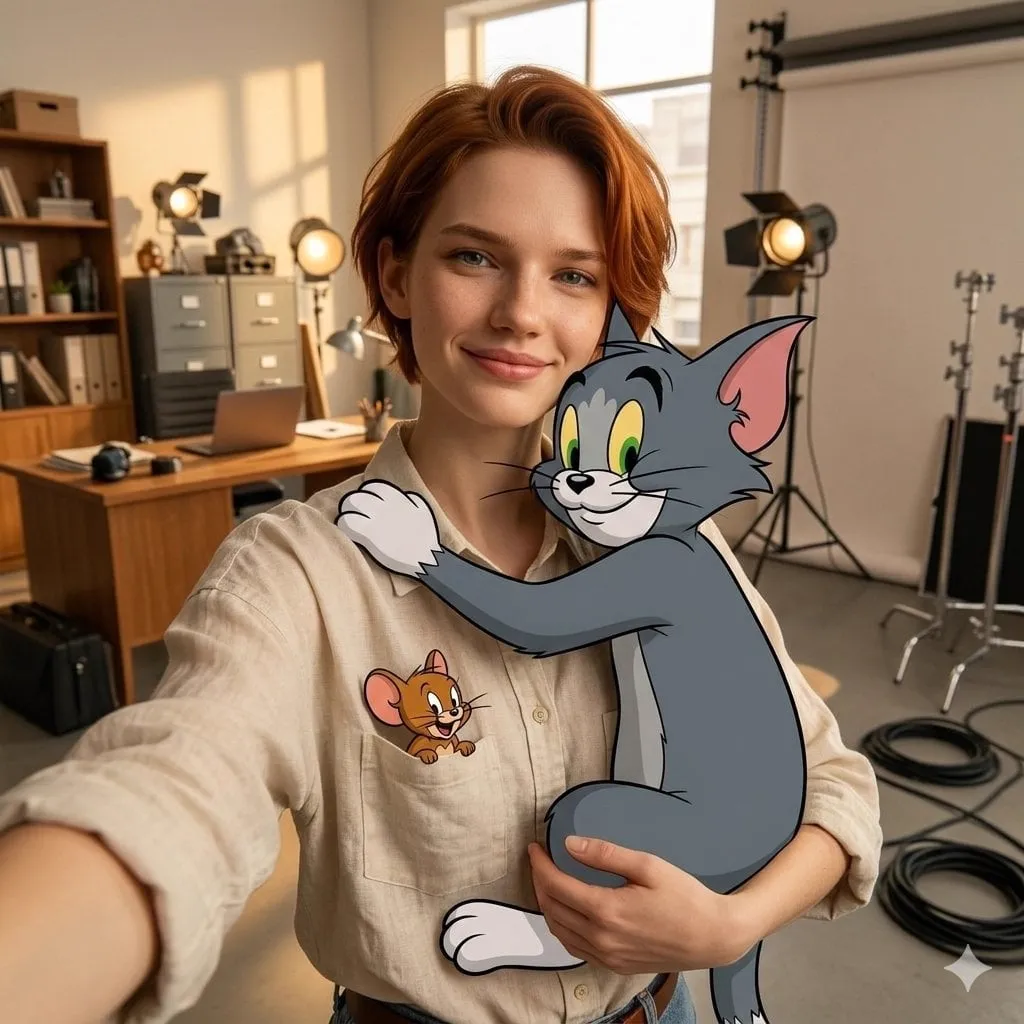
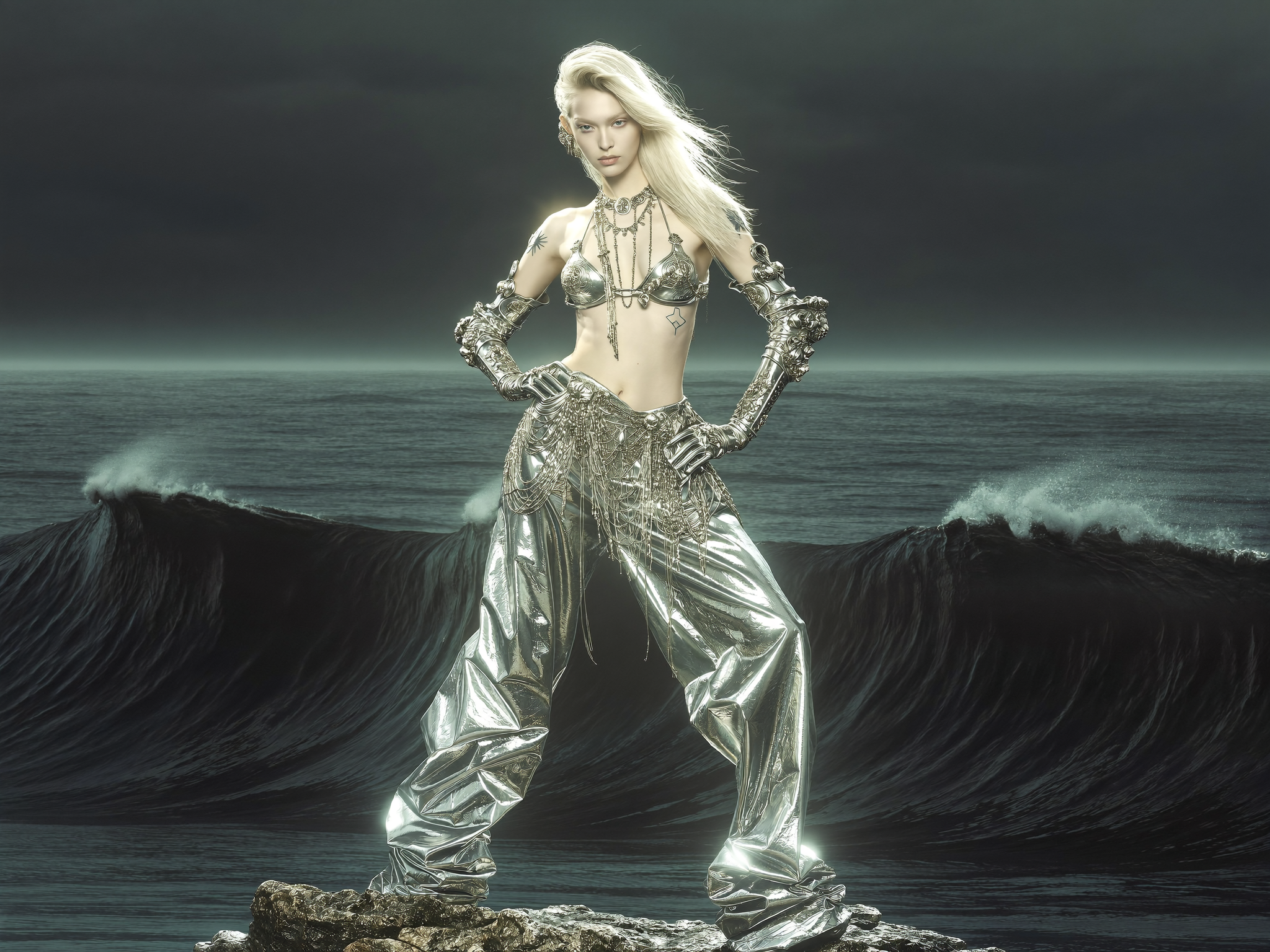
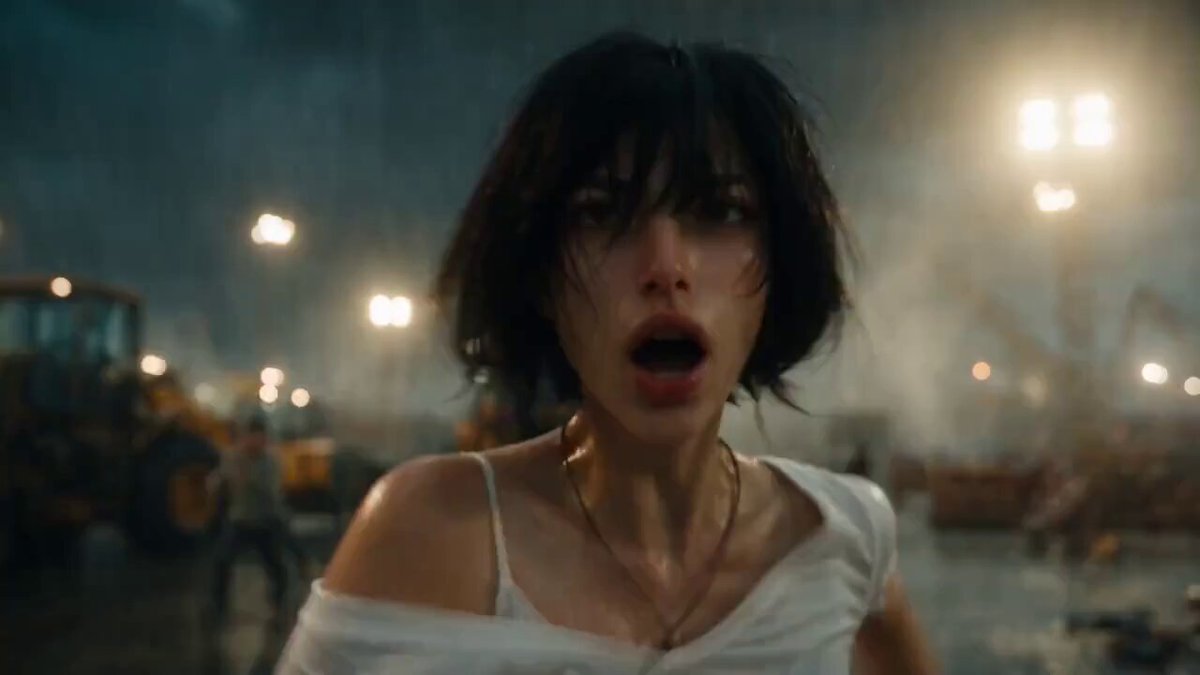
Why Consistency Is a Production Problem, Not a Prompt Problem
Every generative video tool demos well on a single shot. A dramatic skyline at dusk, a dancer mid-turn, a product rotating on a seamless backdrop — one clip is easy. The hard part begins on shot two, when the same character has to walk into the next scene wearing the same coat, lit by the same window, with matching grain and contrast. Nothing in a text box guarantees that. Consistency comes from decisions made before generation and enforced after it.
That is why teams producing polished AI video rarely talk about prompts first. They talk about shot lists, reference frames, seeds, naming rules, review cadence, and a final grade that unifies everything in the timeline. The prompt is one input among many. Treating it as the entire system is the most common reason a project stalls halfway with a folder full of beautiful, unusable clips.
The goal is not to remove randomness. Randomness is where interesting images come from. The goal is to confine it: allow exploration during look development, then squeeze variance down to nearly nothing for the shots that must match each other. A workflow is the set of checkpoints that keeps those two modes from bleeding together.
Six artifacts carry a project from idea to delivery: a one-page spec, a shot list, a reference board, a prompt library, a selects bin, and a timeline. Each one is small, and each one saves hours.
There is also a difference between a personal experiment and paid work. In a personal project, a happy accident is a bonus. In client work, a happy accident is a continuity risk, because it cannot be reproduced on demand when someone asks for one more variation of the same shot. Building the workflow is essentially building the ability to repeat yourself on purpose.
Define the Deliverable Before You Touch a Generator
Write the spec before you open any tool. Ten lines is enough: total runtime, delivery aspect ratios, frame rate, target resolution, soundtrack expectations, on-screen text needs, number of finished shots, and a definition of done.
Aspect ratio is the decision that costs the most when it is made late. If the piece must ship in both widescreen and vertical, decide early whether to generate once in the wider frame and reframe, or generate each format separately with adjusted compositions. Reframing is cheaper but only works when the subject sits near the center and there is headroom to spare. Generating twice doubles the review load but gives you control over vertical framing that a crop can never match. For character-driven work, generating separately is usually worth it; for landscapes and product macro shots, reframing is fine.
Decide where text lives. Almost every video engine mangles lettering, especially small type and logos. Plan to add packaging, prices, and labels in the editor as overlays, and keep generated frames free of text so nothing has to be painted out later.
Decide the sound approach too, even roughly. A music-led edit tolerates slower cuts and longer holds; a dialogue-led edit needs tighter timing and cleaner lip sync. Knowing which one you are making changes how long each generated shot needs to be, and that changes the shot list.
Budget the phases honestly. A workable split for a short piece is roughly a third of the time on planning and look development, a third on generation, a quarter on review and rework, and the remainder on finishing. Teams that skip planning do not save that third — they spend it on rework, at a worse hourly rate, with fewer options.
Shot Lists, Attempt Budgets, and Generating the Hardest Shot First
A shot list is the backbone. Five columns are enough: shot number, description, target duration, camera move, and dependency. The dependency column is the one people omit. It records what must exist before the shot can be generated — a character sheet, a location plate, a prop image, or a neighbouring shot to match continuity against.
Keep individual generations short, roughly four to eight seconds. Detail drifts over long runs: hands multiply, background architecture warps, faces lose identity. Editors forgive a cut far more readily than an audience forgives a melting face. If a sequence needs a fifteen-second unbroken move, plan it as three generations with matched camera position and light, then join them in the timeline.
Set an attempt budget per shot before you start. Three to five attempts is a normal working default with a structured prompt and a solid reference. If a shot routinely needs fifteen, the model is rarely the problem. The shot is under-specified, or it asks for something physically incoherent — a character turning toward camera while walking away from it. Rewrite the shot instead of burning the afternoon.
Order the work by difficulty. Generate the riskiest shot first. If it fails, you can redesign the scene before investing in ten supporting shots whose only job is to set it up. A cheap reordering of the shot list often saves a full day.
Finally, mark shots that can be locked off. A static camera hides more than any plugin, and a still frame with subtle motion is easier to match than a sweeping move. If a scene is fighting you, ask whether the camera really needs to move at all.
Reference Assets Are Your Real Consistency Engine
If you adopt only one habit from this guide, adopt this one: build references before you build motion.
Three kinds of reference matter. Character sheets: two or three clean images per principal, front, three-quarter and profile, neutral background, identical wardrobe and hair across all three. Environment plates: one wide establishing frame per location plus one detail frame that establishes texture and material. Style frames: a handful of images that encode the grade you want, including contrast, saturation, grain and bloom.
Then use words as well as images. Write a one-line descriptor for each reference and reuse that exact wording in every prompt featuring that subject. If the character sheet is labelled olive raincoat, close-cropped dark hair, neutral grey backdrop, then every prompt describing that character should contain that phrase word for word. Paraphrasing is how drift enters a project.
When a character or style must survive across dozens of shots and references alone are not holding, consider training a small adapter on a curated set of images of that subject. The set matters more than the size: consistent lighting, no accessories that appear in only one image, several angles, and a clean background. A tight set of a few dozen frames beats a loose set of hundreds, because a loose set teaches the model that your character sometimes has a beard and sometimes does not.
Keep naming disciplined. A file called sc03_heroine_profile_v2.png will always beat one called Untitled(7).png. The purpose is not tidiness; it is traceability. When an output looks wrong, you need to know exactly which reference produced it.
Finally, guard against contradictory references. If your character sheet is lit softly but your environment plate is lit with hard sun, the model has to choose, and it will choose differently on different runs. Match the lighting logic of every reference in a scene, or accept inconsistency as a permanent feature of the project.
Match the Generation Mode to the Shot Type
No single mode wins everywhere. Map modes to shot types deliberately, then write the mapping down so nobody re-argues it on every project.
Text-to-video is for exploration and for shots with no continuity constraint: abstract transitions, weather, textures, aerial establishing frames. It is the worst choice when identity must hold, because every run invents a new world.
Image-to-video is the workhorse. You supply a frame, the tool animates it. Composition and identity are already fixed in the still, so output variance collapses. If your project has recurring characters or a defined set, most shots should be image-to-video.
Video-to-video and motion transfer are for borrowing performance or restyling existing footage. Use them when movement quality matters more than the subject — dance, fight choreography, a specific camera sweep you cannot describe in words.
Control passes — depth, pose, edge and other structural guides — are what turn a good-looking generation into a usable shot. They hold framing while you change style, or hold performance while you change the environment.
| Shot type | Preferred mode | Why it holds up |
|---|---|---|
| Establishing wide | Text-to-video | No continuity constraints to violate |
| Character dialogue | Image-to-video with a character sheet | Identity and framing locked in the still |
| Complex action | Video-to-video or motion transfer | Realistic performance from real footage |
| Product beauty shot | Image-to-video plus a control pass | Precise framing, legible surface detail |
| Transition or texture | Text-to-video | Cheap, fast, disposable |
| Restyle of existing footage | Video-to-video with a style reference | Keeps original timing and motion |
Evaluate engines on four criteria, in this order: identity fidelity, motion naturalness, adherence to the prompt, and controllability. Resolution and render speed matter, but they are the easiest problems to solve later with an upscaler and a longer render queue.
Hybrid pipelines are common in practice. A background plate generated with text-to-video can be composited behind a subject animated with image-to-video, and a control pass can keep the subject's framing steady while the background moves. Once you accept that a single shot can be assembled from two or three generations plus a composite, most of the difficulty around impossible shots disappears.
Prompt Templates: The Five-Part Frame
Long adjective stacks produce beautiful randomness. Structured frames produce repeatable results. Use a fixed order and change one variable per attempt.
Subject and action
Subject: who or what, with two or three concrete traits — a woman in her thirties, close-cropped dark hair, olive raincoat. Action: one clear verb phrase — steps off a curb and glances left. One action per shot. Two actions in one generation produce a compromise between them.
Environment and light
Place, time of day, weather, and the direction of the key light. Early dusk, wet asphalt, soft overhead light is more useful than cinematic. Light direction is the single most underrated consistency lever: mismatched shadow direction reads as wrong even to viewers who cannot explain why.
Camera language
Phrases that reliably change output include dolly in, dolly out, truck left, crane up, orbit, push in, pull back, static tripod, handheld drift, whip pan, slow motion and time-lapse. Combine exactly one camera instruction with one subject action. Two camera instructions in the same prompt usually produce mush.
Finish and grade
Name the texture you want: muted teal shadows, gentle grain, shallow depth of field, slight halation. Keep the finish phrase identical across shots in the same scene, then push the grade further in post where you can see the whole sequence at once.
Negatives
When the engine supports them, give negatives their own line: no text, no watermark, no extra limbs, no camera shake, no rapid zoom. Test them one at a time. Some tools respond to a negative by generating precisely the thing you asked them to avoid.
Change one variable at a time
Fixed seed, one changed word. This is the only reliable way to learn what a model actually responds to. Keep the whole prompt under roughly eighty words for most engines; longer prompts dilute attention and make it impossible to attribute a change to a phrase.
Keep a prompt log
Record every prompt that produced a usable take, together with the seed, the reference images used, and the mode. That log, not the engine list, is your real asset. It is what makes the next project faster than this one.
The Review Loop: Scoring, Repair, and Stop Rules
Generate in batches of four to six variations per shot with identical settings, changing only the seed. Then review them muted and small — a phone-sized silent grid. Sound and screen size flatter weak motion; a silent review exposes which take actually reads as a shot.
Score each take on four things: identity, motion, composition, artifacts. Only the last two are usually fixable inside the same shot. Identity problems mean a new reference or a different engine. Motion problems mean a new verb or a new seed.
Common repairs and what they indicate:
- Hand and face warping: shorten the clip, slow the motion, or add a reference frame of the problem pose.
- Flicker between frames: lock the seed, reduce style strength, or apply temporal smoothing.
- Drifting background: crop tighter or generate a slower camera move.
- Unstable identity: switch to image-to-video with a locked reference frame.
- Rubber-looking surfaces: reduce motion speed, add finish detail to the prompt, and add grain in post.
Write down a stop rule before you start reviewing: after a defined number of attempts — say five — the shot either gets simplified or gets cut. Without a stop rule, one stubborn shot can consume an entire production day.
Keep a rejects folder. Failed takes document what the prompt actually does rather than what you intended, and that record shortens the next project considerably.
Review in scheduled passes rather than continuously. Judgement degrades after an hour of staring at six near-identical clips, and the tenth take reviewed at the end of a long session is almost never the one you keep the next morning.
Post-Production Passes and Team Handoffs
Generated footage rarely arrives edit-ready. Plan these passes in order:
- Conform. Bring every clip to one resolution, frame rate and colour space before cutting a single frame.
- Stabilize and retime. Gentle stabilization where camera drift was unintended; speed ramps to hit target durations.
- Upscale the selects only. Do not upscale everything. Choose takes first, then spend processing time on the shots that survive.
- Clean up. Remove small artifacts with patch or paint tools, mask and recompose where needed, and rebuild any text as an overlay.
- Grade. One grade across all shots is what makes disparate generations look like one film. Match black levels, shadow tint and grain first; adjust colour second.
- Sound. Ambience, foley and music carry more continuity than pixels do. A consistent audio bed hides minor visual drift better than any plugin.
The last ten percent of polish is where generated footage stops looking generated.
Before delivery, run the unglamorous checks: overall loudness, caption timing, safe areas on vertical cuts, head and tail frames on every clip, and a full playback on a phone with the sound off. Most embarrassing errors are found in that last pass, not in the review of individual shots.
If more than one person touches the project, write a one-page style guide: palette, lens language, prompt frame, naming rules, note conventions and a shared definition of good enough. Ambiguity in a style guide always reappears as inconsistency on screen. Schedule review passes instead of reviewing continuously, and keep renders running overnight rather than babysitting single shots.
A Worked Example: Forty Seconds of Product Film
Suppose the deliverable is a forty-second product film for a ceramic coffee grinder, delivered in widescreen with a vertical cutdown. Eleven shots, no actors, one hero object.
Planning: the spec sets the frame rate, a widescreen master, a vertical version of four key shots, no on-screen text inside generated frames, and a two-note ambient bed. The shot list marks three shots as high risk: the hand grinding beans, the pour, and the slow rotation that reveals the base.
References: a product sheet with six angles on a neutral backdrop, one kitchen plate for the environment, and three style frames for the grade — warm highlights, deep shadows, fine grain. Every prompt repeats the same descriptor for the grinder and the same finish phrase.
Mode mapping: the establishing kitchen wide is text-to-video. The product hero shots are image-to-video from the angle sheet, with a control pass on the rotation. The grinding and pouring shots are image-to-video with attention to hand detail, since hands are the most common failure point in generated close-ups. The transitions are text-to-video and disposable.
Prompts: the rotation prompt runs roughly sixty words — subject, single action, environment and light direction, one camera instruction, one finish phrase, and a negatives line. Attempt one drifts the base; attempt two tightens the camera and fixes the drift; attempt three is the keeper. Seed and reference logged.
Review: the grinding shot takes five attempts. Attempts one and two warp the fingers, so the fix is shortening the clip and slowing the motion rather than rerolling blindly. Attempt four is acceptable but flickers, so temporal smoothing finishes the job in post.
Post: everything is conformed to one frame rate, the keeper takes are upscaled, two small paint fixes remove a stray reflection, a single grade is applied across all eleven shots, and the sound bed plus two foley hits carry the rhythm. Total generation attempts: thirty-one. Total usable shots: eleven.
That ratio — roughly three attempts per keeper — is a realistic target. If yours is much higher, revisit the shot list before you revisit the tool.
Common Mistakes and Frequently Asked Questions
The recurring mistakes are predictable, and each one costs days:
- Prompting before planning. No prompt rescues a shot that was never clearly defined.
- One mode for everything. Match the mode to the shot type instead of defaulting to habit.
- Exhaustive prompts. Specific beats long every time.
- Generating long clips. Short generations assembled later are far more controllable.
- Mixing reference lighting. A character sheet lit three different ways teaches three different characters.
- Ignoring sound until the end. Audio determines pacing more than picture does.
- No naming convention. Untraceable assets create duplicated work and broken continuity.
- Judging takes with sound on. Muted review is more honest.
- Never stopping. Without an attempt limit, one shot becomes the whole schedule.
How many attempts should one shot take?
Three to five with a structured prompt and a solid reference. More than that usually means the shot needs rewriting rather than rerolling.
Do I need to train a custom model?
Only when a character or style must survive across many shots and reference images are not holding. A curated set of a few dozen consistent frames is typically enough for a usable adapter.
What resolution should I generate at?
Work at a moderate resolution while exploring and upscale only the keepers. It is faster, it keeps decisions reversible, and the final quality difference after a good upscale is smaller than most people expect.
Can I mix engines within one project?
Yes, and you probably should. A single grade in post unifies the look. Viewers notice inconsistency, never the engine name.
How do I keep a face stable across shots?
Lock an image reference, repeat wardrobe and lighting language verbatim, and change only the seed or the action between attempts. If drift persists, reduce head movement and bring the camera closer.
Is storyboarding worth it for very short pieces?
Yes. Even a rough six-frame board prevents the most expensive mistake in generated video: producing shots you will cut.
What should I do when a shot refuses to work?
Change the shot, not the tool. Reframe it as a closer angle, make it static instead of moving, or split it into two simpler beats. Constraints discovered on the shot list cost minutes; constraints discovered mid-generation cost days.
How do I keep rework from eating the schedule?
Track attempts per usable shot for two projects. Most teams assume generation is the bottleneck when it is actually selection and rework. Once you can see which phase leaks time, you know exactly what to fix next.
A repeatable pipeline never feels as exciting as a lucky first generation, and that is the point. The lucky generation produces one clip. The pipeline produces a finished film, and then produces the next one in half the time.
