

Why AI Video Is Now a Production Default
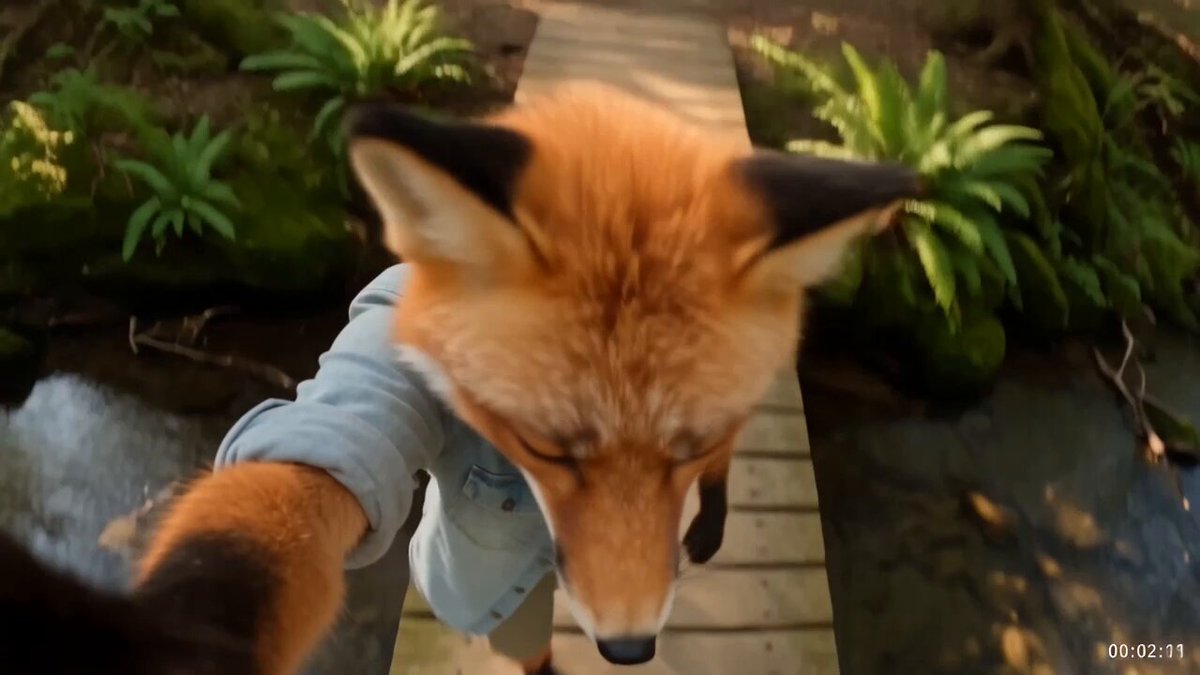
A few years ago, AI video meant a five-second curiosity: a slightly melting face, a camera that drifted sideways for no reason, a background that changed shape between frames. Those clips were fun to share and almost impossible to use. That era is over. Today, generative video sits inside real production pipelines, from short-form social campaigns to documentary inserts, explainer sequences, music videos, and even pre-visualization for feature work.
The reason is not that a single model suddenly solved filmmaking. It is that the surrounding workflow matured. Teams learned to treat generation as one stage in a larger process — script, shot list, reference design, iterative passes, assembly, sound — rather than as a magic button. When generation is placed correctly in that chain, it stops competing with traditional production and starts filling the gaps traditional production cannot afford: impossible camera moves, historical settings, rapid concept iteration, and localized variants of the same ad at a fraction of the usual cost.
This guide walks through that workflow end to end. It is written for creators, marketers, and small production teams who want a repeatable process rather than a pile of disconnected clips. You will not find a single "best" tool here, because the right choice depends on the shot. What you will find is a decision framework, a prompting discipline, and a quality checklist you can reuse on every project.
The Core Pipeline: From Idea to Finished Cut
Every reliable AI video project follows the same broad shape. The specific tools change; the order does not.
Script and Beat Sheet
Start with words, not prompts. Write the piece as if it were going to be shot traditionally: a logline, a beat sheet, then a full script with dialogue or narration. The reason is simple — generative models are excellent at rendering intent and terrible at inventing structure. If your script has a clear turn in the middle and a payoff at the end, your shots will inherit that clarity. If your script is vague, no amount of prompt engineering will save the edit.
Keep beats short. A thirty-second piece usually wants four to seven beats. A two-minute piece rarely needs more than sixteen. Mark each beat with its emotional job: establish, escalate, reveal, resolve.
Storyboards and Shot Lists
Convert the script into a shot list before generating anything. Each row should contain: shot number, duration, subject, action, camera behavior, location, lighting mood, and the reference assets attached to it. This document becomes your production database. When a shot fails, you return to the row and adjust one variable at a time.
Storyboards do not need to be beautiful. A generated still, a rough sketch, or a screenshot collage all work. What matters is that the visual intent is locked before you spend generation time, because re-deciding the look of a shot mid-generation is the single most expensive habit in AI video.
Generation Passes
Generate in passes rather than one shot at a time. Pass one is a cheap exploration: short clips, lower quality settings, a single attempt per shot. The goal is coverage and composition — do the angles work, does the pacing feel right? Pass two upgrades only the shots that survived review. Pass three handles problem shots with targeted fixes: a locked reference image, a different model, or a split into two shorter clips.
This tiered approach mirrors how animation studios work, and it protects you from burning your entire generation budget on shots you later cut.
Assembly and Sound
Assemble early. Drop your pass-one clips onto a timeline with temp music and scratch narration before you perfect anything. Editing reveals problems that isolated clips hide: a shot that looks stunning alone can feel static in sequence, and a technically imperfect shot can carry a scene if the rhythm is right.
Sound does more heavy lifting in AI video than in almost any other format. Dialogue, ambience, foley, and music mask the small instabilities that generative footage tends to have. If a clip feels uncanny on mute, try it with sound before you regenerate it.
Choosing the Right Model for the Right Shot
There is no universal winner. Different families of models excel at different jobs, and a professional workflow mixes them freely.
Text-to-Video vs Image-to-Video
Text-to-video is best for exploration, abstract sequences, and shots where you have no fixed visual reference. It gives you the widest range but the least control.
Image-to-video is the workhorse of controlled production. You begin with a still — a generated frame, a photograph, a designed graphic — and animate it. Because the opening frame is fixed, composition, wardrobe, and color are already correct. Use image-to-video whenever a shot must match an established look.
A practical rule: explore with text-to-video, deliver with image-to-video.
Talking-Head and Lip-Sync Models
Any shot with visible speech needs a model built for faces. These tools trade flexibility for accuracy: they handle mouth shapes, head motion, and eye behavior well, but they constrain camera movement and scene complexity. Feed them a clean, frontal or three-quarter framing with even lighting. Extreme angles, hands near the face, and heavy shadows all degrade lip-sync quality.
Stylized and Motion-Heavy Models
For animation, anime, painterly looks, or physics-driven action, choose models with strong style adherence and temporal stability. These are often the same models that handle fast camera moves well. Test them on a two-second clip of your hardest shot before committing to a full sequence; if the style drifts during a whip pan, you want to know immediately.
Consistency: Keeping Characters and Scenes Stable
Consistency is the difference between a demo reel and a deliverable. It is also the most common place where AI video projects fall apart.
Build Character Sheets First
Before generating any scene, create a character sheet: three to five reference images showing the same person or character from different angles and expressions, plus a written description of distinguishing details — hair length, scar placement, jacket color, glasses shape. Save it as a reusable asset. When a new shot needs that character, attach the sheet rather than re-describing them from memory.
Lock Seeds and Prompt Structure
Many models accept a seed value that makes output more reproducible. Locking a seed does not guarantee identical results across shots, but it reduces random variation in lighting and texture. Just as important is prompt structure: keep the same ordering and phrasing for recurring elements. If a character is "a tall woman in a charcoal trench coat" in shot four, she should not become "a woman wearing a dark coat" in shot twelve.
Track Wardrobe, Lighting, and Location Continuity
Maintain a continuity log. For each scene, note the time of day, the light direction, the wardrobe state, and any props. AI models have no memory of your previous shots, so this log is your only defense against a jacket that changes color between cuts or a window that moves from left to right.
When continuity breaks, fix the frame, not the prompt. Generate a corrected still in the right lighting and wardrobe, then animate that still. It is faster and more reliable than re-prompting and hoping.
Prompting for Motion, Not Just Frames
Most prompting advice focuses on subject description. In video, motion and camera language matter more.
Describe the Camera, Not Only the Subject
A prompt that only describes what is in frame leaves the camera behavior to chance. Specify it: slow push-in, handheld drift, locked-off wide, orbit around the subject, crane up. Models respond well to plain cinematographic vocabulary. If you want a stable shot, say so explicitly — "static tripod shot, no camera movement" is a legitimate and useful instruction.
Budget Time Inside Each Clip
A generative clip is a tiny timeline. If you ask for three actions in six seconds, you will get three half-finished actions. Give each clip one primary action and one secondary detail. "She turns and smiles" is achievable in three seconds. "She turns, smiles, picks up a cup, and walks away" is not — split it into separate shots and cut them together. Short clips also fail less often, which reduces your regeneration count.
Use Negative Prompts and Know Your Failure Modes
Every model has signature failures: warping hands, text that mutates, crowds that melt, reflections that lag, fast pans that smear. Track them per model in a notes file and list the relevant ones in negative prompts. Common entries include distorted anatomy, extra limbs, flickering, duplicated faces, watermark, subtitles, and abrupt cuts. Update the list after every project — the failure modes drift as models are updated.
Using an AI Director Layer
A newer pattern is to place a planning assistant above the generation tools. This is not a rendering model; it is a reasoning layer that turns your script into a shot list, suggests camera language, flags continuity risks, and produces draft prompts for each shot.
This layer is genuinely useful for three tasks. First, breakdown: it can read a script and propose a shot-by-shot plan in seconds, which you then edit. Second, prompt scaffolding: it can enforce consistency by generating every prompt from the same template, so recurring characters and locations stay phrased identically. Third, review: it can compare your shot list against your generated clips and point out missing coverage or tonal mismatches.
Treat its output as a first draft from an enthusiastic assistant, not as a final decision. The creative judgment — pacing, emotional weight, which imperfect take actually works — stays with you. The value is administrative: less time rewriting the same character description twenty times, more time on the edit.
Quality Control Before You Export
Run every sequence through the same checklist. It takes ten minutes and prevents most embarrassing re-uploads.
- Anatomy: hands, fingers, teeth, ears, and limb counts at the start and end of each clip.
- Text: any signage, packaging, or UI in frame — generative text rarely survives scrutiny.
- Continuity: wardrobe, hair, props, light direction, and screen direction across cuts.
- Motion: acceleration ramps, missing frames, and sudden changes in speed.
- Faces: identity drift between shots, especially after a cut to a different angle.
- Audio sync: mouth shapes against dialogue, and ambience that does not jump at cut points.
- Aspect ratio and safe areas: captions and logos outside the platform's UI overlays.
- Resolution and bitrate: consistent across all clips so the export does not flicker between qualities.
Anything that fails two or more checks is usually faster to regenerate than to repair in post. Rotoscoping a warped hand takes longer than re-running a three-second shot.
Planning Time and Compute Realistically
New teams consistently underestimate effort. A useful baseline for a one-minute finished piece: two to three hours of scripting and shot planning, one to two hours of reference generation, two to four hours of clip generation across multiple passes, and two to three hours of editing, sound, and color. That is a single working day for something short and polished, and it assumes the script is already approved.
Plan for a failure rate. Depending on complexity, expect roughly one in three generated clips to be usable on the first attempt, with difficult shots — hands, crowds, fast action, dialogue — closer to one in six. Budget accordingly, and prioritize your generation spend on the shots the audience will actually look at. A establishing wide shot that appears for eight frames does not need the same effort as a fifteen-second hero close-up.
Common Mistakes and How to Avoid Them
Generating before writing. Without a script and shot list, you accumulate pretty clips that do not cut together. Write first, generate second.
Chasing a perfect first pass. Perfectionism at the exploration stage wastes budget. Accept rough coverage, then upgrade selectively.
Changing many variables at once. When a shot fails, adjust one thing — reference image, prompt phrasing, model, or duration. Otherwise you learn nothing about what worked.
Ignoring sound. AI footage carries small instabilities that music and ambience disguise effectively. Skipping audio makes you regenerate shots you did not need to regenerate.
Overlong clips. Long generative clips drift. Cut more, generate less per shot.
Inconsistent phrasing. Recurring characters and locations must be described identically across every prompt, or they will quietly change appearance.
No continuity log. Memory is not a substitute for a spreadsheet when you are managing forty shots.
FAQ
How long should each generated clip be?
Three to six seconds is the sweet spot for most models. Longer clips increase drift and failure rates; shorter clips cut together fine if your edit has rhythm.
Do I need image-to-video for everything?
No. Use text-to-video for exploration and abstract material, then switch to image-to-video for any shot that must match an established look.
How do I keep a character consistent across many shots?
Build a reference sheet, lock your prompt phrasing, generate corrected stills for problem frames, and maintain a continuity log. Consistency is a process, not a setting.
What is the fastest way to improve output quality?
Improve your inputs. Better reference images, clearer camera instructions, and shorter clips raise quality more reliably than switching models.
Can AI video replace a live-action shoot?
For some formats, yes. For most, it is better used as a complement: inserts, impossible angles, concept pre-visualization, and localized variants.
How much footage should I generate for a one-minute video?
Plan for roughly two to four times your final runtime in usable clips so you have room to cut for rhythm and drop weak shots.
Do planning assistants replace a director?
They replace administrative work — breakdowns, templated prompts, coverage checks. Judgment, taste, and timing remain human responsibilities.
Where should a beginner start?
Pick one scene of thirty seconds, write a script and shot list, generate in three passes, and finish it completely with sound. A finished short teaches more than a folder of unfinished experiments.
