
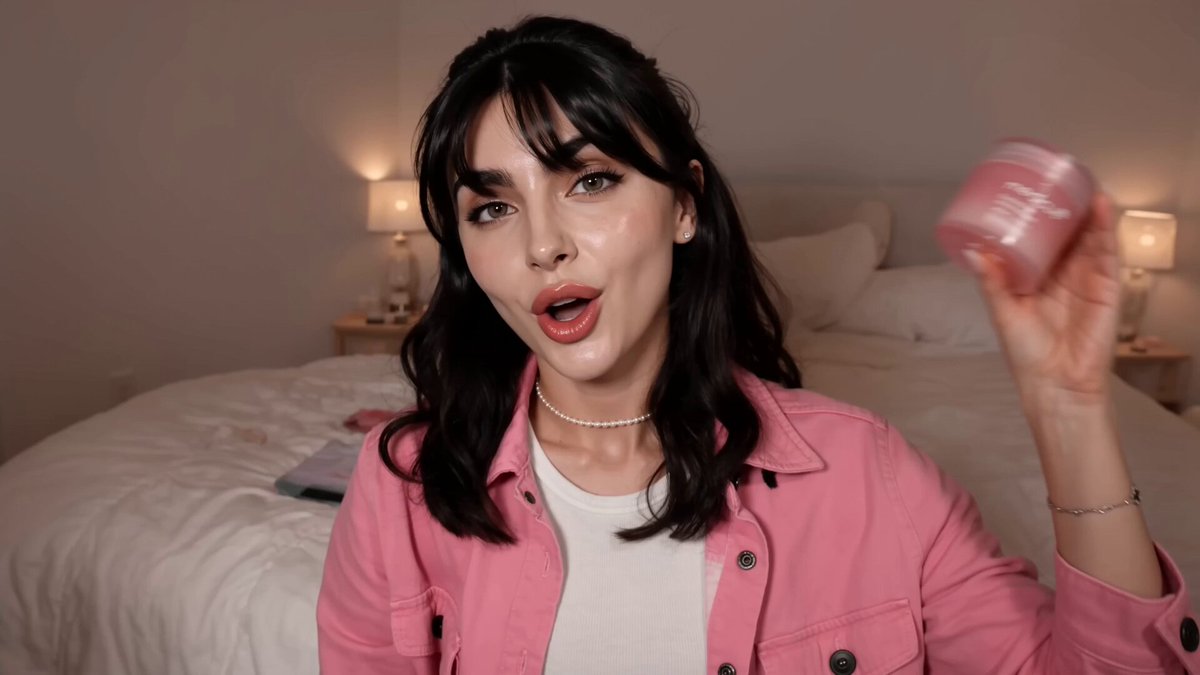


Why short-form video rewards a different kind of workflow
Short films and social clips look similar on the surface — both are brief, both are visual, both are usually watched on a phone. But they fail for opposite reasons, and that difference should shape every tool choice you make.
A short film usually fails when continuity breaks. A character's jacket changes colour between shots, a street switches architectural style mid-scene, a close-up lands two seconds after the emotional beat it was supposed to support. The viewer may not be able to name what went wrong, but they stop believing the world on screen.
A social clip usually fails in the first second. If the opening frame is not legible, surprising, or emotionally loaded, the scroll continues. Aspect ratio mismatch, unreadable captions, a title card that eats the hook, an audio mix that is quiet on phone speakers — these are the killers.
AI video generation has collapsed the cost of producing footage. It has not removed the need for a workflow. What used to be a camera problem is now a planning problem: you must decide what you want before you generate, because generation is cheap enough to do badly a hundred times and expensive enough in time that you cannot afford to wander.
The rest of this guide lays out a neutral, tool-agnostic workflow you can run with any modern AI video generator, plus the decision criteria that determine which one deserves a place in your stack.
Core decision criteria for choosing an AI video tool
Most comparison articles rank tools by demo reel quality. That is the least useful signal, because every demo is curated. Judge tools on the constraints you will hit on your tenth project, not your first.
Output quality across shot types
Test each candidate on the three shots that break generators: a human face in medium close-up with subtle expression, a wide establishing shot with recognisable geography, and a moving subject crossing frame with a stable background. A tool that excels at landscapes and fails at faces is a tool for b-roll, not for narrative.
Also test negative space. Titles and captions need room in the frame. If a generator fills every corner with detail and motion, you will be fighting it in every edit.
Consistency controls
Ask three questions:
- Can you reference one or more still images to anchor a character or location?
- Can you carry that anchor across multiple generations without re-uploading and hoping?
- Can you fix a small region of a shot without regenerating the whole thing?
A tool that answers yes to all three cuts your shot count dramatically, because you stop discarding 80% of takes.
Duration, aspect ratio, and resolution
Short films want longer single takes — eight to fifteen seconds of coherent action. Social clips want vertical 9:16 with a safe area for captions, plus square and horizontal variants for reposting. Check whether vertical is native or a crop, because a crop of a horizontal composition usually decapitates your subject.
Iteration speed and predictability
Measure time from prompt to usable take, not time from prompt to first frame. A slow tool with strong consistency often beats a fast tool that requires six attempts. If your generator queues for minutes, plan generation batches and do other work while they run.
Cost structure and commercial rights
The real comparison is cost per usable second, not cost per generation. A cheaper tool that needs four attempts can cost more than a premium tool that lands it in one. Read the terms for commercial use, model training on your inputs, and whether generated footage can be used in paid advertising.
Editorial and audio integration
Some platforms stop at video generation. Others include editing timelines, voice synthesis, music, and captioning. Neither is better in the abstract — but a fragmented stack costs you time in transcoding and relinking, while an all-in-one stack can lock you into weaker components in one area.
A repeatable workflow from concept to first cut
This is the sequence that holds up whether you are making a three-minute narrative short or a thirty-second vertical clip.
Step 1 — Write for the format, not for the tool
Start with a one-line premise and a target duration. For a short film, that means a single emotional turn: a character wants something, tries, and either gets it in a way that costs them, or fails in a way that reveals them. For a social clip, that means one idea, one visual surprise, and one reason to watch to the end.
Write a script with shot boundaries marked. Even a loose shot list prevents the most common AI failure mode: generating beautiful footage that has no place in the edit.
Step 2 — Build a shot list with intent per shot
For each shot, record four things: framing (wide, medium, close), subject action, camera move, and emotional function. The last one matters most. A shot that exists only because it looks good is the first thing you should cut when the edit runs long.
A practical short film might run 18–30 shots. A social clip runs 4–10. Count your shots before you generate anything; if the script needs 60 shots for a two-minute film, simplify the script.
Step 3 — Create anchor frames before animating
Generate or draw still reference images for every recurring element: the lead character, the second character, the main location, the signature prop. These anchors do double duty — they lock visual identity and they give you a cheap way to test composition before spending time on motion.
If you can only afford to be rigorous in one place, be rigorous here. Fixing a character halfway through a project means regenerating everything before that point.
Step 4 — Generate in deliberate passes
Do not generate shot by shot from start to finish. Generate in passes by category:
- All wide establishing shots first, so the world feels coherent.
- All dialogue-adjacent coverage next, using the same anchors.
- Inserts and pickups last, when you know what the edit actually needs.
Keep a naming convention from the start — project_scene_shot_take — and keep a simple log of prompts that worked. Your future self will reuse them.
Step 5 — Assemble rough, then refine
Cut a rough assembly with sound before polishing any individual shot. Continuity problems reveal themselves in motion, not in isolation. Only after the rough cut holds should you regenerate weak takes, extend good ones, or adjust colour.
Prompting that produces usable shots
Most prompt advice is about vocabulary. The more useful discipline is structure. A reliable shot prompt contains, in order:
- Subject and wardrobe — specific, unchanging descriptors you repeat in every shot of that scene.
- Action — one clear verb phrase in present tense. Two actions in one prompt produces two half-finished actions.
- Setting and time of day — including weather and light direction if it matters to continuity.
- Framing and lens — close-up, 35mm feel, shallow depth of field, eye level.
- Camera movement — slow push in, static tripod, gentle handheld drift. Or explicitly "locked off".
- Lighting and mood — practical lamps, overcast soft light, high-contrast noon sun.
- Negative guidance — text overlays, watermarks, distorted hands, extra limbs, jump cuts.
Keep prompts under roughly 80 words. Long prompts dilute attention and give the model more places to improvise. If you need more control, add a reference image instead of more adjectives.
For dialogue scenes, generate the visual performance without lip-sync first and decide later whether to add mouth movement, dub, or cut away to reaction shots. Reaction shots are the cheapest way to imply dialogue, and they hold up better than imperfect lip-sync.
Keeping characters and locations consistent
The single highest-leverage habit in AI filmmaking is separating identity from action. Identity comes from anchors that never change: reference images, a locked wardrobe description, a locked location description. Action comes from prompts that change every shot.
Practical techniques that work across most generators:
- Reference-image anchoring. Feed one or two clean stills of the character and mention the same wardrobe details in every prompt.
- Wardrobe locking with a twist. Give each character one memorable, repeated element — a red scarf, a specific jacket — so the viewer's eye tracks identity even if something else drifts.
- Location locking with a landmark. Keep one recognisable object in every shot of a location: a particular lamp, a doorway, a sign.
- Shot-size discipline. When consistency is fragile, favour wider shots and cutaways over long close-ups, where drift is most visible.
- Region-level fixes. If a tool allows masked regeneration, repair the hand or the collar instead of regenerating the whole take.
Expect some drift. Plan for it editorially: insert a cutaway, a reaction, or a different angle at the moment drift becomes noticeable.
Sound, captions, and the first three seconds
For social clips, sound is not post-production — it is structure. Design the audio before you finish the visuals.
The first three seconds should contain, in some combination: motion, a face, and a promise. A moving subject entering frame is the most reliable attention holder. Text on screen should be short enough to read at a glance and placed inside the platform's safe area, away from interface chrome at the bottom and top of the frame.
A working audio checklist:
- Voice. Synthesised narration is fast and consistent; recorded voice is warmer. Match the register of the content — technical explainers tolerate synthetic narration better than personal stories.
- Music. Pick a track with a clear beginning, a lift, and a button at the end. Cutting a long loop at an arbitrary point is the most common cause of an ending that feels unfinished.
- Sound design. One or two well-placed effects — a whoosh on a transition, a subtle impact on a reveal — do more than a dense soundscape.
- Mix for phone speakers. Check the mix on a phone at moderate volume. If the music buries the voice, rebalance; low-frequency content disappears entirely on small speakers.
- Captions. Burn them in for social, keep them as a track for longer films. Correct them manually — auto-captions mangle names, jargon, and accents.
Publishing workflow and platform-specific delivery
Deliverables multiply faster than creators expect. Plan from the master timeline outward:
- Master export. Highest practical resolution, neutral colour grade, separate audio stems if your editor allows.
- Vertical cut. 9:16, hook in the first second, captions burned in, subject centred in the safe area.
- Horizontal cut. For long-form platforms; can breathe more, slower opening, longer payoff.
- Square or 4:5 cut. Often the best performer in feed placements.
- Silent version. Some watching happens muted; make sure the visuals carry the idea alone.
Keep a naming and metadata template: title, description, three to five tags, thumbnail frame, and a one-line hook. Consistent metadata makes it possible to compare performance across posts without guessing.
Also consider a release rhythm rather than a single drop. One short film can yield a trailer, three vertical clips, a behind-the-scenes prompt breakdown, and a carousel of stills. That repurposing plan is the difference between one asset and a month of content.
Common mistakes that waste time and cost
Generating before scripting. The most expensive habit. You end up with gorgeous clips and no film.
Chasing a single perfect shot for an hour. Set a take limit — five attempts, then change the prompt, the anchor, or the shot design. Persistence is not the same as progress.
Ignoring aspect ratio until the end. Reframing a horizontal composition into vertical often destroys it. Decide delivery format before generation.
Overloading prompts. Six adjectives about mood crowd out the three words that describe the action.
Neglecting audio until the final pass. Audio problems often require visual fixes: a slower cut, an extra reaction shot, a longer hold.
No version control. Without a naming convention and a prompt log, you will regenerate work you already finished.
Treating the first cut as final. A rough assembly with placeholder shots is not a failure; it is the cheapest way to discover which shots you actually need.
Troubleshooting: when the output fights you
Faces drift or morph. Shorten the shot, move to a wider framing, add a reference image, and remove motion words from the prompt.
Motion is jittery or melts. Reduce camera movement, describe a simpler action, and generate a shorter take. Long takes with complex motion are where most generators break.
The style changes between shots. Re-state lighting, lens, and colour descriptors in every prompt rather than assuming continuity from the previous generation.
Text in frame is garbled. Do not ask the generator to render text. Generate a clean plate and add typography in the editor.
The clip feels lifeless. Usually a pacing problem, not a generation problem. Cut two seconds from the opening, trim the middle, and add one sound effect on the key beat.
Vertical crops cut off heads. Recompose for vertical natively or generate with extra headroom above the subject.
FAQ
Do I need one platform or several?
Use one primary generator for consistency, and one secondary for the shots the primary handles badly — usually fast motion, complex crowds, or stylised animation. Two tools is manageable. Six is chaos.
How long should an AI-generated short film be?
Three to six minutes is a comfortable range for a first project. Shorter forces tight writing and reduces the number of shots you must keep consistent.
What is the ideal length for social clips?
Between fifteen and forty-five seconds for most feeds, with the strongest visual moment inside the first second. Longer works when the content has a genuine narrative pull.
Can AI-generated footage be used commercially?
It depends on the tool's terms. Check commercial-use permissions, whether your inputs can be used for model training, and whether the output can appear in paid advertising before you build a campaign around it.
How many takes should I generate per shot?
Three to five for critical shots, one to two for b-roll and inserts. Batch them, review them side by side, and pick on the basis of editability rather than standalone beauty.
Do I need editing software if the platform includes a timeline?
Not necessarily, but a dedicated editor gives you finer control over audio, captions, and multi-format delivery. Many creators generate in one tool and finish in another.
What is the biggest quality gain for the least effort?
Better audio and tighter pacing. Viewers forgive a slightly odd hand; they do not forgive a clip that is boring for the first four seconds or inaudible on a phone.
How do I keep a series visually consistent?
Lock your anchors — character references, wardrobe, location, lighting language, colour grade — and treat them as a project style guide. Then vary only framing, action, and pacing between episodes.
The throughline in all of this is unglamorous: decide before you generate, anchor before you animate, assemble before you polish, and mix before you publish. Any competent AI video tool can produce a striking five-second shot. A workflow is what turns a folder of striking shots into a short film someone finishes, or a clip someone shares.
