
Story First, Pixels Second: Why Direction Beats Generation
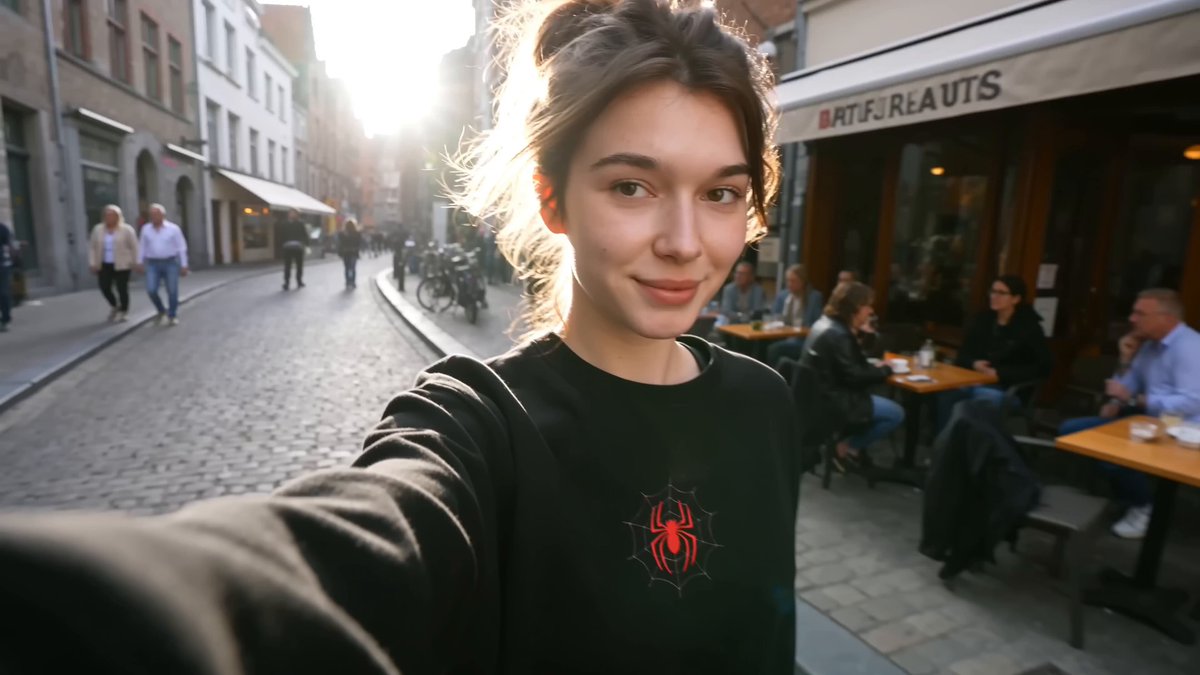
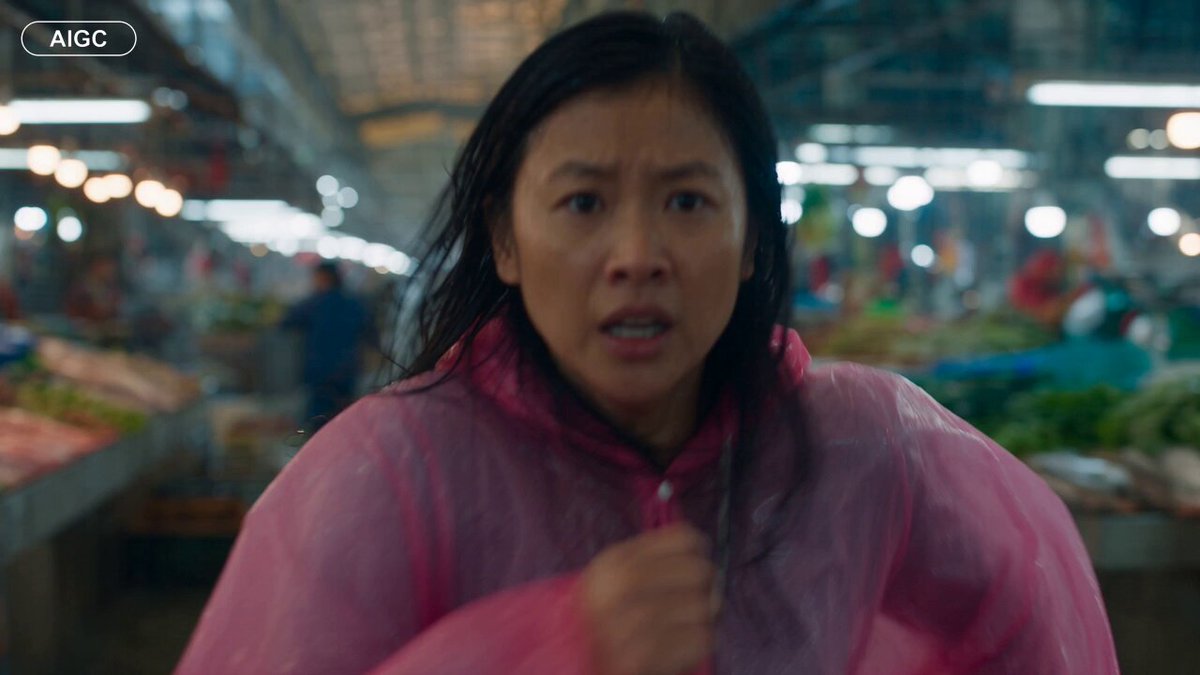
Most people who try to make a cinematic AI video start in the wrong place. They open a video model, type a beautiful sentence, and hope. What comes back is technically a moving image but emotionally nothing: a slow push on a generic face, light that does not come from anywhere, a camera that drifts because the model has no reason to hold still. The problem is almost never the model. It is that no one directed the shot.
Cinematic AI video is a two-part craft. The first part is story intelligence: understanding what a scene is actually about, what the audience should feel, and where the camera should be standing to make that feeling land. The second part is shot design: translating those decisions into concrete, machine-readable instructions about framing, lens, movement, light, and pacing. Everything else — model choice, resolution, render time — is downstream of those two.
This guide walks through a practical workflow for both halves. It is written for writers, directors, and creative teams who want generated footage that cuts together into something with a point of view, not a folder of pretty clips. You can apply it whether you are producing a 15-second product film, a documentary-style explainer, or a narrative short.
Diagnosing the "AI look" Before You Try to Fix It
Before adding more words to a prompt, learn to read what went wrong. Almost every weak generated clip fails in one of five recognizable ways, and each failure points to a different fix.
- Static subject, drifting background. The model had no motion instruction, so it invented ambient drift. Fix: specify the camera behavior explicitly rather than trusting defaults.
- Plastic skin and floating limbs. The model optimized for smoothness over physics. Fix: add texture and imperfection language, and shorten the action so weight can be rendered.
- Camera with no motivation. The shot moves because the prompt said "dynamic," not because the scene demanded it. Fix: tie every movement to a narrative reason.
- Continuity breaks between clips. Faces shift, wardrobe changes, light direction flips. Fix: anchor the sequence with reference frames and a locked description template.
- Emotional flatness. Everything is lit the same, framed the same, paced the same. Fix: plan a shot progression — wide to close, calm to tense — instead of generating each clip in isolation.
Once you can name the failure, the fix is usually a structural change rather than a longer prompt. This distinction saves enormous time, because teams that cannot diagnose tend to respond to every problem by writing more adjectives.
Mapping the Story: Finding the Intent Behind Each Beat
The first real work happens before any generation. Take the scene and reduce it to four things: who wants what, what blocks them, how the audience should feel when it ends, and what single image would represent the whole thing. That last one is the most useful. If you can name the frame that would stand in for the scene on a poster, you already know what the camera is looking for.
From logline to beat sheet in four passes
Write the scene's logline in one sentence with no adjectives. Then break it into three to seven beats, where each beat is a change in the situation, not a description of action. "She reads the letter" is not a beat. "She realizes the offer is a trap" is.
For each beat, answer three questions in a single line each:
- What changes for the audience's understanding?
- Where is the camera relative to the subject — close enough to feel, or far enough to judge?
- How much time does this beat honestly need? One second of shock can be plenty; a payoff may need five.
This pass usually reveals that the scene you planned is three shots too long, or that the emotional turn happens in beat five and everything before it exists only for setup that can be compressed.
Assigning a visual intention to every beat
Transition from story work to direction by writing one visual intention per beat. Not a shot yet — an intention. Examples: "isolate her from the room," "make the product feel inevitable," "show that the space is bigger than he thought."
Visual intentions are the bridge between writing and shot design because they constrain the choices that follow. "Isolate her from the room" immediately rules out wide ensemble framing and pushes you toward shallow depth, negative space, and a slow creep-in. The words you write later in the prompt are simply the encoded form of that intention.
Building a Shot: The Six Decisions That Define a Frame
Every generated shot, regardless of model, is determined by six decisions. Make them consciously and the prompt almost writes itself.
Subject and state
Define the subject with enough specificity to be reproduced: apparent age, wardrobe materials and colors, posture, and emotional register. Avoid vague quality words like "beautiful" or "professional" — they carry no information the model can act on. Replace them with physical facts: "mid-thirties, wool coat, hands in pockets, jaw set."
Action arc
Give the action a beginning and an end. A clip that starts mid-motion with no defined completion tends to wobble. "Steps forward, pauses, turns to the left" is renderable in a way that "moves around" is not. If the action is complex, split it across two shots; models handle one deliberate action per clip far better than three hurried ones.
Environment and time
Name the location type, the time of day, and the weather or atmosphere. This matters more than beginners expect, because time of day silently determines the light logic of the entire frame. Saying "late afternoon, low sun" gives the model a physical reason for long shadows and warm edges.
Framing and lens
State the shot size and the perspective. Close-up, medium, and wide behave like different languages: close-ups carry emotion and ambiguity, mediums carry behavior and transaction, wides carry context and consequence. Add lens character — a wide lens distorts and energizes, a long lens compresses and observes. This single decision changes the psychological reading of a scene more than any lighting tweak.
Light and color
Specify the direction and quality of the source: window light from camera left, hard key with deep falloff, overcast diffusion, practical neon behind the subject. Then set the color logic: warm interior against cool exterior, desaturated midtones with preserved highlights, high-contrast night. Consistency across a sequence matters more than beauty in any single frame.
Style and texture
Keep a short, reusable style clause for the whole project rather than inventing a new aesthetic per clip. Something like "fine grain, natural skin texture, restrained contrast, no stylized grading" gives an entire sequence a coherent identity. If you change this clause mid-project, the sequence will visibly fracture.
Writing the Direction Layer So Models Actually Obey
There is a difference between describing a scene and directing it. Descriptions are nouns; direction is verbs with magnitudes. Models respond better to the second.
Compare two versions of the same idea. Descriptive: "a woman walks through a rainy neon street, cinematic." Directed: "mid-thirties woman in a beige trench coat enters from frame right and walks slowly toward camera; medium shot at chest height, 35mm feel with mild distortion; slow forward dolly at walking pace; rain-slick asphalt reflects cyan and magenta signage from behind her left shoulder; cool high-contrast grade, visible skin texture and fine grain."
The second version is longer, but every clause removes a decision from the model. That is the test for any prompt line: if deleting it does not change the output, it is padding.
Movement vocabulary that produces usable footage
- Push in — slow approach, builds tension or intimacy. Write the speed; a "barely perceptible" push reads differently from a "steady" one.
- Pull out — reveal of context, useful for openings and closings.
- Pan or tilt — scanning motion that moves attention across information; keep it slow enough to avoid smearing.
- Tracking — camera follows the subject; slight handheld imperfection reads as documentary rather than sloppy when described deliberately.
- Orbit — circles the subject, ideal for showing volume, whether of a product or a face.
- Crane or rise — vertical movement for scale and grandeur.
Whenever the platform exposes a motion strength control, treat it as a multiplier on your written direction, not a replacement. Words set direction and character; the parameter sets magnitude.
Negative constraints are weaker than positive specificity
Telling a model what not to show is unreliable, especially with text artifacts and anatomy. Negative phrasing often produces the very thing you excluded. The stronger move is to fill the frame with sufficient specificity that the unwanted element has nowhere to appear: name the hands' positions, name what the background is, name the light. Positive occupancy crowds out errors.
The single-variable rule for iteration
Change one layer per generation round. If you alter lens, light, action, and style simultaneously, you cannot attribute the improvement, and the next project starts from zero. Run three variants differing only in camera height, and you will learn something permanent about your subject.
Continuity Engineering for Multi-Shot Sequences
A single good clip is easy. Five clips that feel like one film is where most generated projects fall apart. Continuity in generated video splits into four independent problems, and each has its own solution.
Character continuity
Build the character before you animate them. Generate a small reference set of the same person: front, three-quarter, profile, half-body, full-body, all in the same wardrobe under the same light. Use those stills as conditioning inputs where the platform supports image-driven generation, and freeze a reusable description block for the character — age, hair shape, wardrobe, distinguishing features — that gets pasted into every shot unchanged, with only the action and framing clauses appended.
Scene continuity
Lock three anchors. First, light direction and time of day, declared identically in every shot. Second, a physical object repeated across the sequence — a specific table, a particular window, the same brick wall — which tells the audience subconsciously that this is one world. Third, a color baseline: the same temperature, contrast, and saturation language throughout, later equalized in the grade.
Product and prop continuity
For product work, form fidelity is non-negotiable. Establish the product in still images from the exact angles you need, then animate from those frames rather than generating the product from text. Packaging proportions, label placement, and color values drift badly under text-only generation, and a subtly wrong logo is worse than no shot at all.
Temporal continuity
Plan the sequence so that adjacent shots share something: a movement direction, a light source, a prop, or a color. Cutting from a leftward tracking shot to a rightward one creates a jolt even when the subject is consistent. Mapping movement direction across the sequence is a two-minute planning step that prevents an expensive editing problem.
Choosing the Right Generation Path for Each Shot
Rather than chasing model rankings, choose by task. This framework holds as tools change.
- Concept and atmosphere shots — text-driven generation. Fast, cheap to explore, ideal for figuring out what a scene should feel like before committing to precision.
- Hero shots with people or products — image-driven generation starting from a controlled still. Best consistency and form control.
- Style conversion of existing footage — video-to-video pathways, useful for reworking live-action material into animation or a specific texture.
- Serialized content with a recurring lead — any path with explicit character or identity conditioning, plus a locked description template.
- Composite scenes — multi-reference approaches that combine a person, an object, and an environment into a single frame.
A practical default: run the master visual and any product shot through image-driven generation, let atmosphere and transitions come from text-driven generation, and reserve style conversion for material you already own.
A four-phase pipeline that keeps costs where they are cheap
Phase one produces stills: character references, key environment concepts, product angles. This is the least expensive stage and where you should burn most of your revision cycles. Phase two converts approved stills into short shots, several variants per shot, at modest resolution. Phase three assembles a rough cut, identifies missing coverage, and sends only those gaps back to phase two. Phase four handles voice, music, text, grade, and output in multiple aspect ratios.
The value of this order is that uncertainty is resolved early, when changes are cheap. Teams that generate finished-quality clips before locking the story pay for every revision at the most expensive point in the pipeline.
Queue, batch, and render discipline
When producing at volume, the bottleneck is rarely quality — it is waiting and rework. Write an entire batch of shot prompts before submitting anything, so generation runs continuously instead of stalling while you think. Render low-resolution previews to verify composition and motion, then commit to final resolution only for approved shots. Schedule heavy rendering for off-hours while creative work happens during the day. Adopt strict file naming such as project_shot_version_resolution, because at two hundred files you will no longer identify anything by eye. Finally, log which prompts worked and how they failed; a searchable internal library of failures is worth more than any collection of tips.
Pace, Rhythm, and Sound as Shot-Design Inputs
Rhythm maps and audio marks
Pacing is decided during shot design, not in the edit. Shot length, movement speed, and cut frequency together create the sense of tempo, and a sequence of identically paced clips feels inert no matter how good each frame looks.
Build a rhythm map alongside the shot list. Vary shot duration deliberately: a long establishing hold, then three short cuts, then one slow reveal. Match movement speed to emotional temperature — tension usually wants slower camera movement against shorter cuts, while energy wants faster movement against longer, flowing takes.
Storyboard the audio simultaneously, even if the generation platform outputs no sound. Mark where the voiceover lands, where the music accents fall, and which cut should land on a beat. Editing to a pre-laid track is dramatically faster than hunting for music that fits a finished cut, and aligning a key action to a musical accent is one of the cheapest ways to make generated footage feel professionally finished.
A useful structural pattern for short films: open on a wide that establishes place, cut to a medium that introduces the subject, move to a close-up for the emotional stake, deliver the product or point in a controlled insert, and close on a held frame that resolves the visual intention you wrote in the planning stage.
Quality Control and Delivery Checklist
Run this before anything ships. It catches most preventable failures.
The pre-delivery gate
- Character identity, wardrobe, and hair read as the same person in every shot.
- No visible deformation in hands, teeth, text, or fast-moving edges.
- Brand elements — color, typeface, logo placement — are correct and undistorted.
- Light direction and time of day stay consistent across the sequence.
- Movement directions do not create visual jolts at the cuts.
- Licensed or original music and footage, with usage rights clear for commercial placement.
- On-screen text matches the spoken word and contains no contradictions.
- Every required aspect ratio is exported and safe areas are checked for each platform.
- Low-resolution previews approved before final renders were committed.
Archive the prompt text and parameters next to each finished clip. Reproducibility is what turns a lucky result into a repeatable process, and it is the difference between a team that scales and a team that re-learns every project.
Common pitfalls and how to route around them
Overloaded prompts. A single clip that must walk, open a door, speak, and turn will fail at the joints. Split the action into multiple shots and cut them together. One deliberate action per clip is the reliable ceiling.
Contradictory direction. Asking for a locked-off static camera and a dynamic sweeping shot in the same prompt guarantees a compromise that satisfies neither. Resolve the contradiction in planning, not in the prompt.
Consistency by repetition. Repeating a character description is not the same as conditioning on a reference image. Use references for identity, text for action.
Late story changes. Rewriting the story after ten finished shots is the most expensive mistake in the workflow. Lock the beat sheet and visual intentions before phase two.
Mismatched aspect ratios. Deciding delivery formats late forces reframing that ruins carefully designed compositions. Design for the tightest ratio you need and protect the safe area from the start.
Ignoring iteration cost. Every generation cycle takes time. Budget it explicitly, and prioritize which shots genuinely need a fifth attempt versus which are already usable.
Frequently asked questions
How long should each generated shot be?
Two to five seconds of a single clean action is the reliable range. Shorter clips are safer for complex motion; longer clips work when the action is simple and the camera is doing the storytelling. Sequences of six to ten short shots cut better than two long ones.
Should the prompt describe the story or just the frame?
Only the frame. Models render single moments, not narrative arcs. Story belongs in the beat sheet; the prompt translates one beat into one image with a defined beginning and end.
Why does the same prompt produce different results every time?
Generation involves sampling, so variation is inherent. Reduce it by fixing seeds where available, fixing reference images, and adding specificity. Keep some randomness available for exploration and treat generation as sampling rather than exact execution.
What is the fastest way to improve a weak sequence?
Fix the lighting logic first, then the pacing. Continuity errors and flat pacing account for most of the "AI feel," and both are structural rather than stylistic. Texture and grain tweaks come last.
Do I need a high-end model for every shot?
No. Route by task. Atmosphere and transition shots rarely justify premium quality settings, while hero shots with faces or products do. Reserve the most expensive generation for the shots that carry the story.
How do I keep a character consistent across many clips?
Use a reference image set as conditioning input, freeze one reusable description block, and never regenerate the character from scratch. If a shot still drifts, start that shot from a still of the character in the right posture.
When should I abandon generation and shoot for real?
When the content depends on real performance, documentary authenticity, or complex physical interaction. Generated footage works best for concept, atmosphere, product, and stylized sequences; live action still owns genuine human spontaneity.
How do teams keep prompt quality from degrading over time?
Modularize. Maintain shared blocks for character, environment, and style, require everyone to reference those blocks rather than writing freehand, and store prompts with each finished asset so successes can be traced and repeated.
Turning Direction Into a Repeatable System
The gap between hobbyist output and work that holds up on a screen is not model access. It is the presence of intention at every level: a story that knows what it is about, shots whose framing and movement were chosen for a reason, and a pipeline that resolves uncertainty while it is still cheap to change.
Start with one scene. Write the logline, break it into beats, write a visual intention per beat, then design six shots using the six decisions. Generate them, watch them together with no music, and note where the sequence stops feeling coherent. Fix the lighting logic and the pacing before touching a single adjective. Do that three times and you will have a process — not a set of tricks — that holds up on the next project regardless of which generation tools you happen to be using that month.
