
Why Character Consistency Breaks AI Video Pipelines
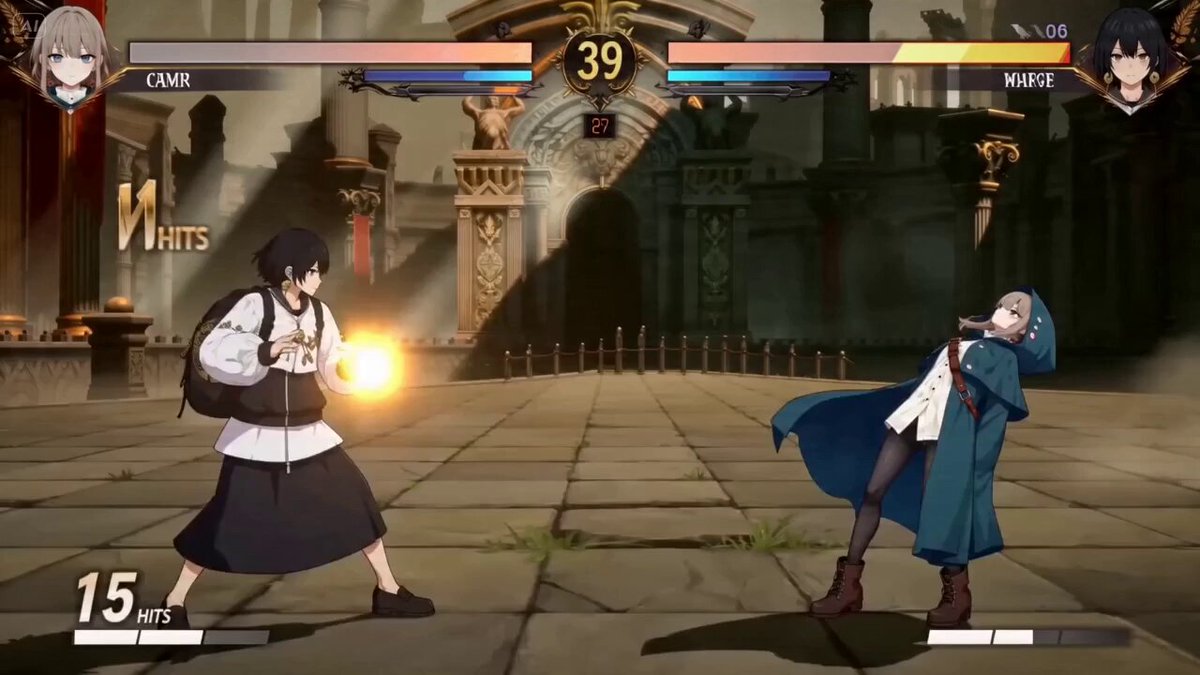
Video generation models are trained to produce plausible motion and plausible imagery, not to remember who your character is. When you prompt a scene, the model samples from an enormous distribution of faces, wardrobes, and lighting setups. Two generations from the same prompt can easily look like two different actors wearing the same costume.
The industry has a name for the symptom: character drift. It shows up in predictable places.
- Facial geometry: jawline width, cheek volume, nose shape, and inter-eye distance shift by a few percent between clips.
- Colour identity: eye colour, hair colour, and skin tone wander warmer or cooler from shot to shot.
- Wardrobe: a jacket that was charcoal becomes navy; a stripe count changes; a logo disappears.
- Age and texture: freckles, scars, and stubble appear and vanish.
- Proportions: the character looks taller in wide shots than in close-ups.
Drift happens because most pipelines render each clip in isolation. A single reference image gives the model exactly one sample of the subject, and the model treats that sample as a suggestion rather than a constraint. Motion modules also optimise for temporal coherence inside a clip, which says nothing about coherence between clips.
The cost is real. Editors end up rotoscoping faces, inpainting eyes, regrading skin tones, or regenerating entire sequences. Worse, audiences notice. A viewer may not be able to articulate why a series feels cheap, but the moment a protagonist's face changes shape between cuts, trust in the story drops.
A useful working definition for the problem: a viewer should not be able to tell that two shots of the same character were generated in separate sessions, on separate days, possibly with different models. Everything in this guide is aimed at making that true.
What Multi-Image Fusion Actually Does
Multi-image fusion means conditioning a generative model on several reference images of the same subject simultaneously, instead of one. Rather than asking the model to copy a single sample, you give it a small cluster of samples that describes the subject as a stable region in latent space.
The model then blends identity information drawn from all references while keeping the scene prompt, camera move, and lighting specified by your text. In practice, fusion happens through a mix of components:
- Identity encoders that convert reference images into embeddings capturing face structure and skin characteristics.
- Structural conditioning such as depth, pose, or edge maps that keep silhouette and camera geometry honest.
- Style adapters — lightweight trained weights that teach a base model a particular face, outfit, or rendering look.
- Cross-attention over multiple references, where the model weighs each reference per layer and per region.
Single reference versus multi-reference conditioning
One reference is a snapshot. It carries the lighting of the day it was captured, one angle, one expression. If that reference was shot in warm evening light, the identity embedding inherits some of that warmth and drags it into a midday scene.
Three to six well-chosen references act as an average. The model learns what stays constant across them — bone structure, eye spacing, hairline — and treats the rest as noise. Counter-intuitively, more references are not always better. Ten near-identical photos add no information and can push the model toward over-fitting to one angle.
Separating identity, wardrobe, and lighting
The most common structural mistake is bundling everything into one fusion set. Identity should come from face-focused references. Wardrobe should come from full-body or three-quarter shots, ideally on neutral backgrounds. Lighting should come from your prompt and your scene plates, never from your reference set.
If you fuse face references that all share a single light setup, you have quietly hard-coded that light into your character. Break your reference set into purpose-specific groups and apply them at different strength values so you can dial identity up without dragging wardrobe along.
Building a Reference Set That Works
The reference set does more work than any prompt you will ever write. Aim for four to eight images per character, curated rather than collected.
Angle and expression coverage
Cover the range your story will actually use: frontal, three-quarter left, three-quarter right, and one profile. Add a neutral expression, a smile, and one strong emotion. If your script includes action, include one dynamic frame so the model has seen the face under motion.
Technical hygiene
- Minimum 1024px on the long edge; higher is better for close-ups.
- Sharp facial features. Slight motion blur in a reference becomes permanent mushiness.
- Even, neutral lighting. No strong colour casts, no dramatic side light.
- Clean backgrounds. Cluttered references leak background objects into unrelated scenes.
- No heavy filters, beauty smoothing, or colour grading.
What to exclude
Exclude images with extreme angles, sunglasses, hats that hide the hairline, heavy makeup that changes bone structure, or watermarks. Also exclude any image where the character occupies less than roughly a third of the frame — the encoder simply has too few pixels to learn from.
If you are building a character from scratch rather than from photography, generate a batch of candidate portraits first, pick the strongest one as your canonical look, then generate the remaining angles from that anchor. This is faster than trying to fuse twenty mediocre candidates into one coherent person.
A Step-by-Step Multi-Image Fusion Workflow
Step 1: Write a character bible
Before touching a generator, write a short document: age range, ethnicity, build, height relative to other characters, hair length and texture, eye colour, distinguishing marks, and a wardrobe inventory with colour names. Keep it under a page. This document is what you paste into every prompt scaffold, and it is what a collaborator will read when they take over the project.
Step 2: Generate or collect anchor frames
Produce a canonical portrait plus the angle coverage described above. Approve them explicitly and freeze them. Every later stage references the frozen set, not a regenerated set.
Step 3: Fuse and run a drift test
Render the same short prompt three times with three different seeds, plus one shot in a completely different location and lighting condition. Compare all four side by side at 100% zoom. If the jawline or eye colour shifts, tighten the reference set or raise identity conditioning strength before generating anything else.
Step 4: Produce shots in scene order
Generate in story order where possible. The first approved frame of a scene becomes an additional reference for the next shot in that scene, which keeps local continuity tight. Chain forward rather than backward, and never chain more than three generations deep — drift accumulates.
Step 5: Assemble and repair
Cut the sequence together before you polish individual shots. Many apparent identity problems vanish once shots are intercut at real speed; others only become visible in motion. Repair selectively with inpainting or a short regenerated insert rather than re-rendering whole clips.
Prompt Scaffolding for Repeatable Characters
Prompts should be modular so that identity is constant and scene detail is variable. A reliable structure has three parts:
- Locked prefix — the character bible compressed into one dense sentence. Never change this between shots of the same character.
- Scene clause — location, action, time of day, camera move, lens feel. This is the part you rewrite every shot.
- Technical suffix — resolution, aspect ratio, frame rate, style descriptors such as film grain or animation line weight.
Two habits make scaffolding work. First, keep a seed log: for each character, record which seeds produced approved frames so you can return to a known-good starting point. Second, write negative prompts that explicitly ban drift behaviours — different face, changed hairstyle, altered clothing colour, extra characters in frame, inconsistent eye colour.
Avoid stacking contradictory style words. "Photorealistic" plus "anime" plus "claymation" forces the model to average wildly different manifolds, which almost always damages identity. Pick one rendering language per project and stay inside it.
Choosing the Right Model for Each Shot
No single model wins at everything, and swapping models mid-project is the fastest way to introduce drift. A practical approach is to assign roles.
- Portrait and character-sheet generation: choose an image model with strong facial detail and good adapter support for trained identities.
- Dialogue and close-up video: choose a video model that handles subtle lip and eye motion; these shots carry the most identity signal, so spend your best generation budget here.
- Wide action and establishing shots: choose a model with strong physical motion and scene coherence. Faces are small, so identity pressure is lower and you can accept a looser match.
- Stylised sequences: choose a model that respects a trained style adapter, then keep the character adapter at moderate strength so style does not overwrite identity.
Decision criteria worth writing down for your team: how well the model respects a reference image, how much control you get over identity strength, whether it supports image-to-video continuation, average render time, and how stable results are between runs. Test all five on your own character before committing to a pipeline.
Common Failure Modes and Fixes
Face morphing across cuts
The face is close but the geometry slides. Usually caused by too few references or references that all share one angle. Fix: add a profile and a three-quarter view, and reduce any structural conditioning that may be fighting the identity encoder.
Wardrobe drift
Colours and details change between shots. Fix: separate the wardrobe reference group from the face group, name colours explicitly in the prompt, and keep costume shots on plain backgrounds so the model has nothing else to blend.
Style collapse and over-blending
At very high fusion strength, multiple references average into a generic, slightly airbrushed face. Fix: lower identity strength, drop redundant references, and re-check that your references are not already heavily edited.
Uncanny over-smoothing
Skin loses texture and pores vanish. Fix: include at least one reference with visible natural skin detail, lower denoising strength in refinement passes, and avoid chaining more than two enhancement steps.
Identity bleed between two characters
Two characters in one frame share features. Fix: generate each character separately first, then compose; or use region-specific conditioning and explicit prompt separation. Never fuse both characters' references in the same unsegmented pass.
Scaling Consistency Across Episodes and Campaigns
Consistency is an asset-management problem as much as a generation problem. Treat it that way.
- Version everything. Tag approved reference sets, adapters, and prompts with a version number. When a look changes, create a new version instead of overwriting the old one.
- Use a naming convention that encodes character, angle, and approval status, so a collaborator can pick up the project without a call.
- Freeze golden frames. Keep one approved frame per character per wardrobe state as the ground truth for comparison.
- Document lighting rules. If episode one is overcast and episode six is golden hour, write down how the character's colour should shift so it shifts the same way twice.
- Batch by scene, not by character. Switching between characters constantly is where most fusion strength errors happen.
For long-running series, budget time for a periodic consistency audit: sample one frame from every scene, lay them out in a grid, and look for outliers. Fixing a drifting character at scene twenty is far cheaper than at scene two hundred.
Pre-Render Quality Control Checklist
Before committing to a full sequence render, verify:
- Reference set is frozen, documented, and at least four images with angle coverage.
- Locked prompt prefix is identical across every shot of that character.
- Drift test passed at 100% zoom across three seeds and one lighting change.
- Identity and style strength values are recorded, not remembered.
- Wardrobe and prop descriptions use explicit, named colours.
- No shot chains more than three generations deep from an approved frame.
- Negative prompts explicitly ban the drift behaviours you have actually seen.
If any item fails, fix it before rendering. Re-rendering a sequence is always slower than re-rendering a test.
FAQ
How many reference images do I really need?
Four to eight curated images is the sweet spot for most characters. Below four, identity is unstable. Above ten, you are usually adding redundancy rather than information, and you risk over-blending.
Can I use the same reference set across different video models?
You can, but expect different results. Each model weights identity conditioning differently, so re-run the drift test whenever you switch. Keep per-model strength presets rather than one global setting.
Why does my character look right in stills but wrong in motion?
Motion modules distribute attention across frames, which can dilute identity cues. Try shorter clips, more reference variety, and generate dialogue close-ups first, then use approved frames as references for wider shots.
Is a trained character adapter better than fusion alone?
They solve different problems. Fusion handles immediate consistency from a small reference set. A trained adapter handles long-term consistency across many projects and styles. Serious productions typically use both: fusion for control, adapters for stability.
How do I handle aging or costume changes in a long story?
Create distinct reference sets per story state and version them separately. Do not try to make one fusion set cover three ages — the model will average them into someone who looks vaguely in-between at all times.
What is the biggest mistake beginners make?
Changing many variables at once. Adjust reference sets, prompt scaffold, strength values, and seeds one at a time, and record what changed. Character consistency is a debugging discipline more than a prompting trick.
Can two characters share one scene reliably?
Yes, if you generate them separately and composite, or use region-scoped conditioning. The unreliable path is fusing both identities in a single unsegmented pass and hoping the model keeps them apart.
How do I know when to stop tuning?
When a viewer watching at normal speed cannot identify which shot was generated on a different day. If the only person who can spot drift is you at 400% zoom, you are done.
