
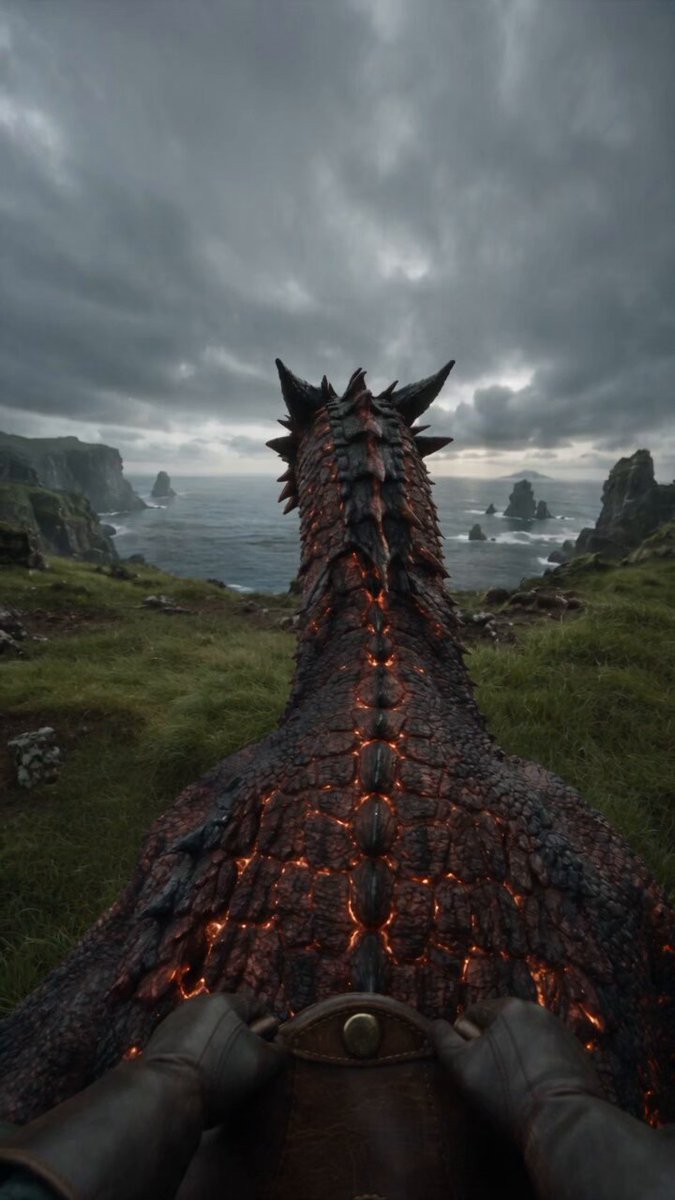
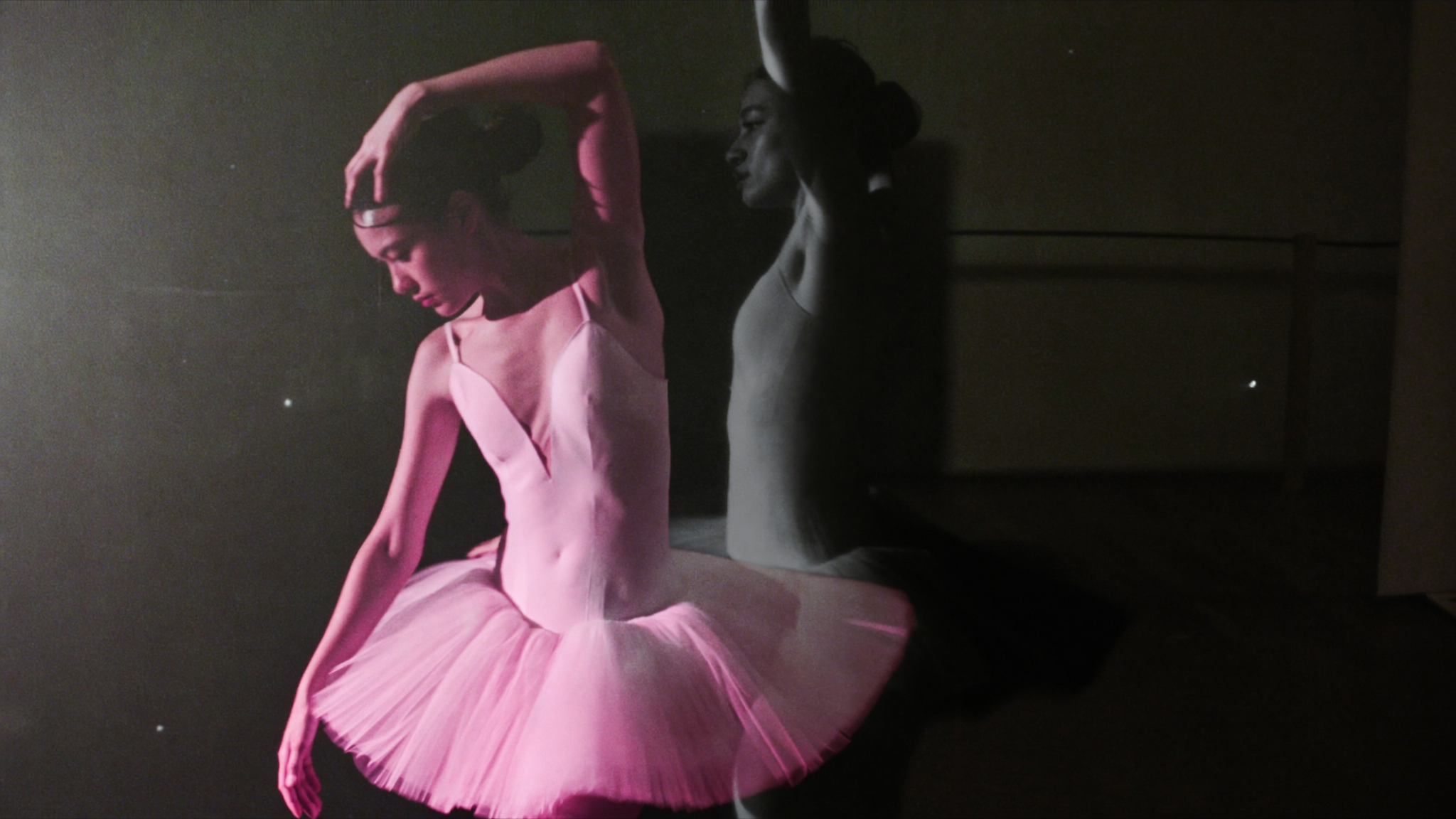
Every convincing AI-generated shot starts out as a sentence someone typed. The sentence may be eleven words long or four paragraphs deep, but it carries the entire creative burden: the subject, the motion, the light, the mood, the lens, the pacing, and the boundary of what should never appear. When a render disappoints, the model rarely gets the whole blame. More often, the request was ambiguous in a way a human collaborator would have quietly resolved and an AI generator resolves literally.
That gap between intent and instruction is where prompt craft lives. It is a learnable discipline with its own grammar, its own failure modes, and its own repertoire of tricks. This guide walks through the full practice: how to structure a request, how to weight and negate elements, how to keep characters and locations stable across many shots, how to adapt the same idea for different model personalities, and how to build a repeatable workflow that survives contact with a real production schedule.
Why Prompt Quality Now Sets the Ceiling on Video Quality
A few years ago, AI video was a novelty: short, warped, dreamlike clips that succeeded mostly by surprise. Today the same tools are used to build product films, explainer sequences, social cutdowns, previsualization reels, and full narrative shorts. The technical floor has risen dramatically. Motion is smoother, anatomy is more stable, camera language is more legible, and clip length has grown. As the floor rises, the ceiling becomes the interesting part — and the ceiling is set by the prompt.
There is a practical reason for this. Models are increasingly capable of doing many things well, which means they no longer default to a single obvious interpretation. Give a generator a vague instruction like "a woman walking through a city at night" and a modern model will invent architecture, wardrobe, weather, lens, color grade, and camera move on your behalf. The result may be beautiful and completely wrong for your story. Specificity is not decoration; it is direction.
The second reason is scale. Single hero shots are forgiving. Series work is not. The moment you need eight shots of the same character, or twelve angles of the same room, inconsistency becomes the dominant cost — in time, in re-renders, and in editorial sanity. Prompt systems, not prompt sentences, solve that.
The Anatomy of a Strong Video Prompt
Think of a prompt as a shot description written for a very literal, very talented crew member who has never read the script. The clearest structure follows a cinematic logic: subject and scene, then action and camera, then style and atmosphere, then technical constraints. Order matters less than completeness, but a consistent order trains you to notice what you forgot.
Subject, Scene, and Specificity
Name the subject precisely: age range, wardrobe, posture, expression, and what they are holding or wearing that matters to the story. Then anchor the place with two or three sensory details rather than a genre label. "A rainy street" is a genre label. "A narrow street after rain, neon reflecting in shallow puddles, steam rising from a grate" is a scene. Concrete nouns beat adjectives almost every time.
Action, Motion, and Camera Language
Video prompts need verbs, and they need to know what the camera is doing. Distinguish between subject motion ("she turns, coat swinging") and camera motion ("slow push-in, handheld with slight drift"). If you want a static frame, say so explicitly — otherwise many models add movement by default because movement looks impressive in isolation.
Useful camera vocabulary includes: slow dolly in, tracking shot following the subject, lateral pan, crane up, handheld, locked-off tripod, over-the-shoulder, macro close-up, wide establishing shot, whip pan, and orbit. Pair each with a pace word: gradual, brisk, abrupt, lingering.
Style, Light, and Atmosphere
Style is where most prompts become mush. "Cinematic" is a mood, not an instruction. Instead, describe the light source and its quality: soft window light from camera left, hard midday sun with deep shadows, practical neon at night, overcast diffusion. Then name the visual register: documentary realism, 1970s film grain, clean commercial sheen, muted indie drama, high-contrast noir.
Technical Parameters Worth Specifying
Aspect ratio, frame rate feel, depth of field, lens character, and color palette are all legitimate prompt material. So are constraints like "no on-screen text" or "single continuous take." Treat technical parameters as the last line of the prompt, not the first — they refine, they do not define.
A Reusable Prompt Template You Can Adapt
Templates are scaffolding, not straitjackets. A dependable one looks like this:
[Shot size and subject] — [wardrobe and distinguishing detail] — [action in the present tense] — [environment with 2–3 concrete details] — [camera move and pace] — [lighting description] — [visual style and grade] — [technical constraints]
Filled in, it might read: "Medium close-up of a courier in her late twenties, wet yellow rain jacket, hood down, catching her breath — she glances over her shoulder and steps out of frame right — narrow alley at night, puddles, flickering sign, steam from a vent — handheld tracking shot, brisk — cold neon key from the right, deep shadows — gritty urban realism, subtle grain — 2.39:1, shallow depth of field, no text overlays."
That is one shot. The value of the template is that it makes omissions visible. When a render fails, you can audit which slot was weak: usually action, camera, or light, in that order.
Weighting, Emphasis, and Negative Prompts
Some interfaces let you emphasize words with numeric weights or bracket syntax. Use weighting sparingly. If you find yourself pushing a token to a very high value, the prompt is probably fighting itself — the model is trying to honor a contradictory instruction. Rewrite instead of shouting.
Negative prompts work best as a short list of persistent problems rather than a wish list of everything you dislike. Typical entries: extra fingers, warped faces, text artifacts, logo artifacts, oversaturated skin, duplicated limbs, sudden cuts, jittery motion, blurry background. Keep the list stable across a project so you can attribute changes accurately, and remove negative terms once a model update has fixed the underlying issue.
One caution: negatives can suppress adjacent qualities you actually want. "No soft light" may kill the gentle falloff you were relying on. Test negatives in isolation before you bake them into a template.
Consistency Across Shots: Characters, Wardrobe, and Locations
The hardest problem in AI video is not a single beautiful frame. It is the second, third, and fourteenth frame that must feel like the same world. Three techniques carry most of the load.
Lock the description, not the vibe. Write a canonical paragraph for each recurring character and location, and paste it into every relevant prompt with minimal edits. If the character has "cropped black hair, silver hoop earring, olive field jacket," those words should appear every time. Synonyms are drift.
Use reference images where the tool supports them. Image-to-video, character reference, and style reference features anchor identity far more reliably than text alone. Generate a clean still of your character in three lighting conditions, then drive shots from those stills.
Keep camera and lighting logic consistent within a scene. If a scene is lit by a single window, every shot in that room should respect that source. Models happily relight between shots; your prompt should forbid it by naming the source each time.
Matching Prompts to Model Personality
Different generators behave like different crew members. Photoreal-oriented models reward dense descriptive writing, explicit lens and lighting language, and long, well-ordered prompts. Speed-focused models reward shorter prompts with strong motion verbs and a single clear subject; over-describing confuses them into mush. Motion-control and keyframe-driven tools care less about prose and more about precise first and last frame descriptions plus a clear transition instruction.
A practical rule: start with the shortest prompt that captures your intent, then add one clause at a time until the output stops improving. The moment adding detail no longer changes the render, you have hit that model's ceiling and should switch tools rather than argue with it.
Emotion and Subtext in Prompt Writing
Emotion does not come from the adjective "sad." It comes from behavior. A character who keeps folding and unfolding a receipt is anxious. Someone who laughs half a beat late is grieving. Write the behavior, and let the model render the feeling.
Pair behavior with micro-timing: "she holds the smile two seconds too long before it drops." Add breathing and weight: "shoulders rise on an inhale, then settle." Small physical facts produce performance far more convincing than emotional labels, which tend to push a model toward stock expressions.
Atmosphere follows the same logic. Do not ask for "tense atmosphere." Ask for "a room where the only sound would be the fridge hum, one lamp on, chair pushed back from the table." The prompt describes; the audience infers.
A Practical Workflow: From Script to Rendered Shot
The most reliable process looks less like prompting and more like production.
1. Write a shot list first
Break the sequence into shots with intent: what changes between the start and end of each shot. One idea per shot. If a shot needs two ideas, it is two shots.
2. Draft prompts in a single document
Keep every prompt in one file, numbered, with the character and location blocks clearly separated. Project-wide consistency starts with project-wide visibility.
3. Render cheap, judge strict
Generate at the lowest acceptable quality first. Watch for the three killers: wrong motion, wrong light, wrong identity. Only the third usually requires a reference image rather than a rewrite.
4. Iterate one variable at a time
Change only the camera clause, or only the lighting clause. Multi-variable edits produce unrepeatable results, and you will not know which change fixed the shot.
5. Finish the shots that matter
The hero shot deserves ten iterations. The transition shot deserves one good take. Budget your time by editorial weight, not by equal effort.
6. Assemble, then re-prompt
Rough assembly reveals problems invisible in isolation: a shot that is fine alone but breaks rhythm, a color grade that clashes with its neighbor. The final round of prompts is usually driven by the edit, not the script.
Common Mistakes and How to Fix Them
Prompting a genre instead of a scene. Fix: replace every abstract label with a physical detail.
Asking for too many subjects in one shot. Models blend faces and limbs past two people. Fix: split into multiple shots, or move secondary characters into soft background focus.
Forgetting to specify motion. Fix: end every prompt with an explicit statement of what moves and what stays still.
Fighting a model's defaults. If a generator insists on warm skin tones, build your palette around them rather than demanding an icy grade in every shot. Fix: pre-grade in post instead of in the prompt.
Ignoring aspect ratio until the end. Fix: decide framing before you write, because ratio changes composition logic, not just crop.
Rewriting from scratch after a bad render. Fix: keep a version log. Most fixes are one clause, and the clause you deleted is often the one that worked.
FAQ: Prompting for AI Video
How long should a prompt be? Long enough to remove ambiguity, short enough to stay coherent. For most photoreal models, 60–120 words is a healthy band; for faster models, 20–40 words often performs better.
Should I write prompts in English if my project is in another language? Most generators are trained predominantly on English, so English prompts usually give the most predictable geometry and lighting. Write in your own language if the model handles it well, but keep a translated master prompt for consistency.
Can one prompt produce a multi-shot sequence? Some tools accept sequence descriptions, but reliability drops quickly. Shot-by-shot prompts with locked character blocks produce more controllable results.
How do I stop jitter and morphing? Reduce the number of simultaneous motions, lower implied speed, and add stability negatives. If a tool supports motion strength or frame interpolation settings, that is often the real fix.
Do I need different prompts for vertical and horizontal versions? Yes. Vertical framing favors closer shots, center-weighted composition, and less lateral camera movement. Rewrite rather than crop.
What is the fastest way to improve? Keep a failure log. Recording why a render missed — wrong motion, wrong light, wrong identity — turns vague frustration into a checklist you can actually fix.
Building Your Own Prompt Library
After a few projects, patterns emerge. Certain lighting setups, camera moves, and character blocks keep working. Save them. A personal library of twenty tested fragments — three lighting recipes, four camera moves, five character blocks, two grain and grade descriptions — will outperform any generic prompt list you find online, because it is calibrated to your models and your taste.
Give each fragment a short name, note the model it was validated on, and date it. Model updates quietly change behavior, and a fragment that was perfect six months ago may now over-saturate skin or add unrequested camera drift. Treat the library as living documentation, prune it quarterly, and resist the urge to hoard variations you never use.
The final skill is editorial restraint. A prompt is not a place to demonstrate vocabulary. It is a set of instructions that should disappear into the finished shot. When the audience notices the light, the performance, and the cut — and never once thinks about the text that generated them — the prompt did its job.
