

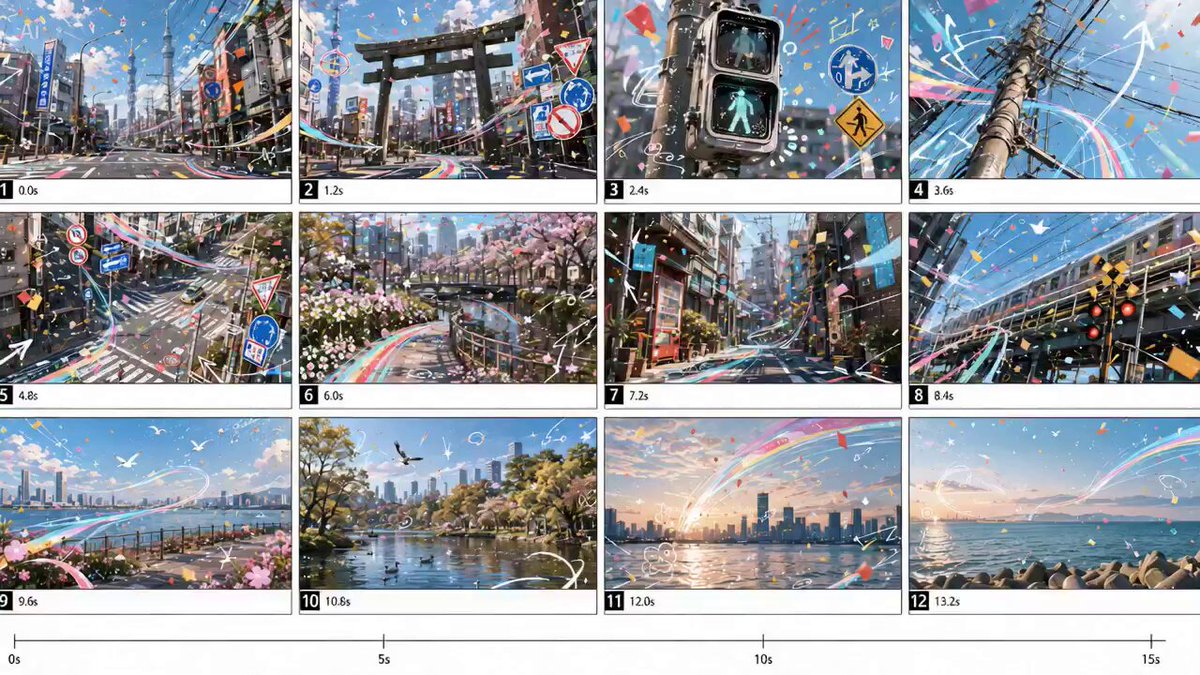

A marketer with a script, a browser tab, and a free afternoon can now produce a broadcast-quality 30-second spot. That sentence was aspirational not long ago; today it is mostly a logistics problem. The model is rarely the bottleneck anymore. The bottleneck is the pipeline wrapped around the model: how you translate a brief into shots, how you keep a character recognizable across eight separate clips, how you handle voice and music, and how you decide what is good enough to ship.
This guide is a practical workflow for creative marketers who need repeatable output rather than impressive demos. It covers how to plan, prompt, generate, assemble, and quality-check AI video so the result looks like a campaign instead of a slideshow of unrelated clips.
Why text-to-video moved from novelty to production channel
The economics changed. Classic production scales linearly: more videos mean more shoot days, more crew, more edit hours. Generative video scales sub-linearly once your pipeline is set up, because the expensive part is the template, not the individual clip. A team that has built a good shot template can produce the tenth variant of an ad in a fraction of the time it took to produce the first.
What matters is not the price of a single generation. It is the cost per approved second. If you generate forty clips and approve six, your real cost is roughly seven times the sticker price of one clip. This single reframing changes how you should invest your time: reducing the rejection rate is worth more than finding a marginally cheaper model.
Most teams pass through three levels of maturity, and it helps to know which one you are on:
- Ad hoc. Each video starts from a blank page. Quality swings wildly, and nothing is reusable.
- Templated. You have prompt templates, a shot list format, a brand kit, and a QC checklist. Output is predictably decent.
- Industrialized. You generate in variant matrices, route shots by type, and review against measurable creative criteria. Output is fast and boring in the best way.
The rest of this article is essentially a map from level one to level three.
Mapping the pipeline before you touch a prompt
Generating first and planning later is the most common and most expensive mistake. Spend twenty minutes on paper and you will save hours of regeneration.
Compress the brief into six lines
Write down: audience, single message, desired emotion, must-show product truth, mandatory brand elements, and duration. If a shot does not serve one of those six lines, cut it. AI video tempts you toward visual excess, and visual excess is what makes a 30-second ad feel like a tech demo.
Build a beat sheet, not a storyboard
For a 30-second spot you generally need six to ten shots. Sketch them as beats: hook, context, product reveal, benefit in action, proof, call to action. Each beat then becomes a small generation task with its own success criteria. Beats are more flexible than a storyboard because they survive when a shot turns out to be ungeneratable and you need to substitute.
Inventory your assets
Before generating anything, collect the reference material that keeps output on brand: logo files with transparent backgrounds, two or three approved product photos, a color palette with hex codes, font names, and any existing footage you can reuse. Also decide on delivery specs now — aspect ratios, frame rate, caption safe areas, and maximum file size. Retrofitting a 9:16 campaign from 16:9 master clips is possible but always costs quality.
Choosing a model per shot, not per project
There is no single best text-to-video model. There is a best model for a shot type. Teams that lock into one engine for everything end up fighting it on the shots it handles worst.
A useful routing table looks like this:
| Shot type | Priority | Recommended approach |
|---|---|---|
| Cinematic hero shot | Realism, camera control | Premium cinematic engine, image-to-video from a keyframe |
| Product close-up | Fidelity, label legibility | Image-to-video, minimal motion, locked camera |
| Lifestyle b-roll | Volume, speed | Fast iteration engine, short clips, heavy culling |
| Talking head | Lip sync, identity | Avatar or voice-driven pipeline with a fixed reference portrait |
| Abstract transition | Novelty | Any engine, short duration, heavy post-processing |
| Text or UI on screen | Legibility | Generate the plate, add text in the editor |
Premium cinematic engines
Frontier models such as Sora-class, Runway, and Flux-based pipelines excel at camera language: dolly moves, rack focus, believable depth, and complex lighting. They are slower and pricier, so reserve them for the two or three shots that carry the ad.
Fast iterative engines
Lighter models — many of the Kling- and PixVerse-style systems, plus open-weight alternatives — are ideal when you need twenty variations of the same idea. Their motion physics may be less refined, but you are using them to explore, not to finish.
Keyframe-first and hybrid approaches
If a shot must look exactly like your product, generate or photograph a still first, then animate it. Image-to-video dramatically improves fidelity and consistency, and it turns a creative decision into something your art director can approve before you spend compute on motion.
When not to use AI at all
Some shots are cheaper to film or license: hands interacting with packaging, long dialogue scenes, anything with precise on-screen text. Knowing when to stop generating is a senior skill, not a failure.
A prompt structure that survives generation
Prompts are production documents. Treat them that way.
The five slots
Write every prompt in the same order so results are comparable:
- Subject — who or what, with specific identity markers (age range, wardrobe, material, color).
- Action — one clear verb. Two actions in one clip usually produce mush.
- Camera — framing, movement, lens feel, height. "Slow push in, eye level, 35mm" beats "cinematic."
- Light and environment — time of day, source quality, weather, atmosphere.
- Style and grade — film reference, color treatment, grain, contrast.
Continuity tokens
Invent short, repeated identifiers for recurring elements and paste them verbatim into every prompt: for example, a character token like "woman in mustard linen blazer, short dark bob" and a location token like "concrete loft with north-facing windows." Consistency comes from repetition, not from hoping the model remembers.
Guardrails
Most engines accept negative instructions or safety-adjacent constraints. Keep a standard block for every generation: no text overlays, no extra fingers, no logos, no sudden camera cuts, no color shift. Reuse it rather than rewriting it each time.
Three reusable templates
- Product hero:
[product token] centered on [surface], slow 15-degree orbit, macro lens, soft key light from left, shallow depth of field, subtle reflections, no hands, no text - Lifestyle:
[character token] walking through [location token], handheld follow shot, natural window light, warm grade, 24fps motion blur, no direct eye contact with camera - Proof/in-use:
[character token] using [product token] on [surface], medium close-up, static camera, practical interior light, realistic skin texture, no exaggerated motion
Save these in a shared document. A prompt library is the closest thing this discipline has to institutional memory.
Solving consistency: faces, wardrobe, and sets
Visual inconsistency is the first thing audiences notice and the last thing models fix on their own.
Build a character sheet
Generate or photograph one approved portrait, then create a small sheet: front, three-quarter, profile, plus a full-body shot. Use the front and three-quarter images as reference inputs for every clip featuring that character. Store the exact wardrobe description next to the images so prompts stay synchronized with the references.
Keep a scene state log
For multi-scene projects, maintain a simple table with columns for scene, location token, time of day, lighting direction, wardrobe, and props. Update it after every approved generation. When a clip comes back wrong, the log tells you instantly whether the prompt drifted or the reference did.
Editing tricks when generation drifts
You will not achieve perfect consistency, so design around it:
- Cut on movement so a change in facial detail is masked by motion.
- Use inserts — hands, product, environment — between two shots of the same person.
- Apply a shared color grade and grain pass across all clips; unified texture does more for perceived continuity than pixel-perfect faces.
- Keep individual shots under four seconds when identity is fragile.
Audio is half the video
Silent AI clips read as unfinished. Plan audio from the start, because pacing depends on it.
Voiceover
Write for the ear: short sentences, concrete nouns, no subordinate clauses. Generate a scratch voiceover early — even a synthetic one — and cut visuals to it. Timing to a voice track immediately makes generated footage feel intentional.
Music and sound design
Choose music before final generation if you can, then match motion to the beat. Add three to five sound design layers per spot: room tone, a physical sound for any contact, a transition whoosh or riser, and a subtle low-end bed. Sound design is the cheapest way to make AI footage feel expensive.
Lip sync
For talking-head content, lock the script first, generate or record the audio, then drive the visual from that audio. Changing the script after lip sync means regenerating the shot.
A pre-flight quality checklist
Run the same checks every time, in the same order. Ten minutes here prevents an embarrassing launch.
- Faces and hands: count fingers, check eye direction, look for melting features in the background.
- Text: any lettering visible in the clip must be intentional. Otherwise remove or replace it in the edit.
- Physics: liquid, fabric, and hair should behave plausibly, especially at clip edges.
- Brand integrity: logo proportions, product color accuracy, no competitor-adjacent imagery.
- First three seconds: does the hook land without sound? Most feed views are muted.
- Captions: check safe areas on both 9:16 and 1:1 crops.
- Loudness and levels: normalize to platform targets and check the mix on phone speakers.
- Technical specs: resolution, frame rate, bitrate, and file size within delivery limits.
- Legal: rights for music, voices, and any recognizable person or location.
Scaling output with templates and review gates
Volume without structure produces chaos. Volume with structure produces a library.
Variant matrices
Define two or three variables — hook type, opening shot, voice tone, aspect ratio — and generate the combinations deliberately. Twenty variants from four hooks and five openers is manageable; twenty random variants is not, because you cannot learn anything from the results.
Review gates
Use two gates. Gate one is a contact sheet of stills and two-second previews: cheap, fast, kills weak concepts. Gate two is a rough assembly with audio: only approved concepts pass. Never send raw generations to stakeholders; they will judge the model instead of the idea.
Localization
If you operate in multiple markets, keep the visual layer free of text and localize in the edit. This lets one generation run serve five markets with five caption sets and, where needed, five voice tracks.
Measuring whether the workflow is actually working
Track five numbers and review them monthly:
- Hook rate — three-second view-through on the opening shot.
- Hold rate — percentage reaching the product reveal.
- Cost per approved second — total spend divided by finished, shipped seconds.
- Iteration velocity — concepts taken from brief to rough cut per week.
- Rejection cause mix — how often failures come from prompts, references, or model limits.
That last metric is the one most teams skip, and it is the one that tells you where to invest next. If most rejections come from reference quality, buy or shoot better stills. If they come from motion artifacts, reroute those shots to a stronger engine.
Common mistakes and how to avoid them
- Prompting before planning. You get beautiful clips that cannot be edited into a story. Fix: beat sheet first, always.
- One model for everything. Fix: route by shot type using the table above.
- Chasing perfect realism. Audiences forgive stylization and punish uncanny faces. Fix: lean into a deliberate grade and shorter shots.
- Ignoring audio until the end. Fix: scratch voiceover in the first hour.
- Editing on a laptop only. Fix: check every cut on a phone before approval.
- Too many shots in 30 seconds. Fix: cut the shot count before you shorten the shots; rushed pacing reads as amateur.
- No version control. Fix: name files with concept, shot, and version, and keep the prompt in the filename or metadata.
- Skipping rights checks. Fix: maintain a simple asset log with source and license for every input.
FAQ
How long should an AI-generated marketing clip be?
Most single generations work best between two and six seconds. Anything longer increases the chance of drift, so build longer sequences from shorter clips cut together.
Do I need to disclose that a video was made with AI?
Requirements vary by platform, market, and industry, and they are tightening. Check current platform policies and local advertising rules, and keep an internal record of which assets are synthetic.
What is the fastest way to improve consistency?
Switch to image-to-video. Generating an approved still first and animating it solves more consistency problems than any prompt wording trick.
Should the whole team use the same prompts?
Yes, at least as a starting point. A shared prompt library, scene state logs, and templates are what turn individual talent into team output.
How many generations should I expect per approved shot?
Plan for five to ten for simple shots and fifteen or more for complex human motion. Budgeting for that reality up front keeps timelines honest.
Can AI video replace a production shoot entirely?
For many social and performance formats, yes. For hero brand films with precise product handling, most teams still combine generated footage with a small number of filmed inserts.
What is the single biggest time saver?
Approving stills before animating them. It moves creative review to the cheapest possible stage and prevents expensive regeneration loops.
How do I keep quality stable as volume grows?
Standardize three things: prompt templates, the QC checklist, and review gates. Volume only helps when the process is dull and repeatable.
The technology will keep improving, and the specific engines you use today will be replaced. The pipeline — brief, beat sheet, routing, prompts, references, audio, QC, gates — is what transfers. Teams that build it now will absorb every new model as an upgrade rather than a restart.
