


Why Audio and Visual Effects Decide Whether Anyone Stops Scrolling
Short-form video has become the primary discovery surface for most consumer categories, and the rules of that surface are different from anything that came before it. A viewer does not arrive with intent. They arrive mid-scroll, half-distracted, with a thumb already moving. Your job is not to persuade someone who is paying attention. Your job is to earn attention in roughly one and a half seconds, then keep earning it beat by beat.
Two levers do most of that work. The first is sound. Audio is the fastest emotional shortcut available to a marketer, because a familiar rhythm tells the brain what kind of moment this is before a single word is read. The second is the visual treatment: the transitions, lighting shifts, overlays, and generated elements that give a clip a sense of craft and momentum.
Neither lever works alone. A great sound over flat, static footage feels like a missed opportunity. Beautiful visual effects with a mismatched soundtrack feel expensive and empty. The brands that consistently win are the ones that treat sound and image as one composed system, the way a film editor treats a cut and a music cue as a single decision.
This guide is a practical system for doing that at volume: how to spot sounds while they are still rising, how to convert them into formats that fit your brand, which visual effects are worth the effort, and how to build a workflow a small team can repeat every week without burning out.
Reading the Signals That Reveal a Rising Sound
The most common mistake in trend-driven video is arriving late. By the time a sound is universally recognizable, it is usually already saturated, and your clip competes with thousands of near-identical executions. The goal is to find sounds in the window between "interesting" and "everywhere."
There is also an important distinction between a famous song and a trend sound. A famous song gives you mood. A trend sound gives you structure: a specific beat drop, a pause, a punchline slot, a tempo that implies a particular editing rhythm. Structure is what you can build a brand moment around.
Cues worth checking every week
- Accelerating usage. A sound that has grown quickly over a short window is more promising than one with a huge total count and a flat curve.
- Format diversity. When the same audio appears with several different visual interpretations, viewers have adopted it as a template rather than a song.
- Comment signals. People asking "what is this sound?" or tagging friends indicates the audio is doing narrative work.
- Niche crossover. A sound appearing in your category is far more useful than one trending only in unrelated entertainment feeds.
- Save and share behaviour. Saves signal that people want to reproduce the idea later. Shares signal they want to be associated with it.
A repeatable twenty-minute scan
Set a recurring slot each week. Open the sound pages on the platforms that matter to you, filter by category where possible, and save eight to twelve candidates into a private collection. For each one, write a single line describing the format it implies: build-up reveal, fake-out, rapid list, before-and-after, reaction cut. Add the date you found it. That date stamp matters more than any other note, because it tells you later whether you were early or late.
When to walk away from a trend
Skip a sound if the joke depends on a tone your brand cannot credibly hold, if the lyrics contradict a claim you make, or if you cannot produce and publish within the trend's natural lifespan. A sound that takes three weeks to execute is usually a sound you should have skipped. Choosing not to participate is a strategic decision, not a failure of nerve.
Turning a Popular Sound into a Branded Format
Once you have a candidate, the creative work is translation rather than copying. There are three patterns that consistently produce results without making a brand look desperate.
The template swap. Keep the structural skeleton of the trend and replace the punchline with a real moment from your product or service. If the trend is a drum fill followed by a reveal, your reveal is the unboxing, the finished dashboard, the plated dish. The rhythm is borrowed; the substance is yours.
The response format. Use the sound as a question and your product as the answer. This works especially well for service businesses, where the trend can set up a common frustration and your clip can resolve it in two seconds flat.
The sensory match. Sometimes the value of a sound is purely textural: a rising whoosh, a ticking clock, a low bass hit. Use those elements as transition markers in your edit rather than as a meme. This is the safest pattern for regulated industries, because nothing about the audio carries a claim.
Whatever pattern you pick, change at least one meaningful variable so the clip reads as your interpretation. A one-to-one copy of a trend that already has a million executions adds nothing to the feed.
The Mute-First Reality: Captions, Overlays, and the First Frame
Many viewers begin with sound off and turn it on only after the visuals convince them. That means your opening must work twice: once silently and once with audio. Text overlays carry the silent version, so treat them as primary content, not decoration.
Four rules keep overlays readable on a phone:
- Four to six words per card, maximum. Anything longer gets skipped.
- High contrast against the busiest frame, not the average frame.
- One idea per beat, so text and audio land together rather than fighting.
- Never let text repeat narration word for word. If the voice says it, the screen should show the proof instead.
Also plan the first frame as a still image. If someone pauses on it, does it communicate the topic? A first frame that only makes sense in motion is a first frame that wastes a scroll.
Visual Effects That Actually Earn Attention
Effects are not decoration. Each one should either hold attention, clarify something, or establish atmosphere. Anything that does none of those three is cost without return.
Effect families worth mastering
- Motion transitions. Match cuts, whip pans, speed ramps, and snap zooms. These are the cheapest, highest-yield effects in short-form video because they solve a real problem: keeping a clip moving.
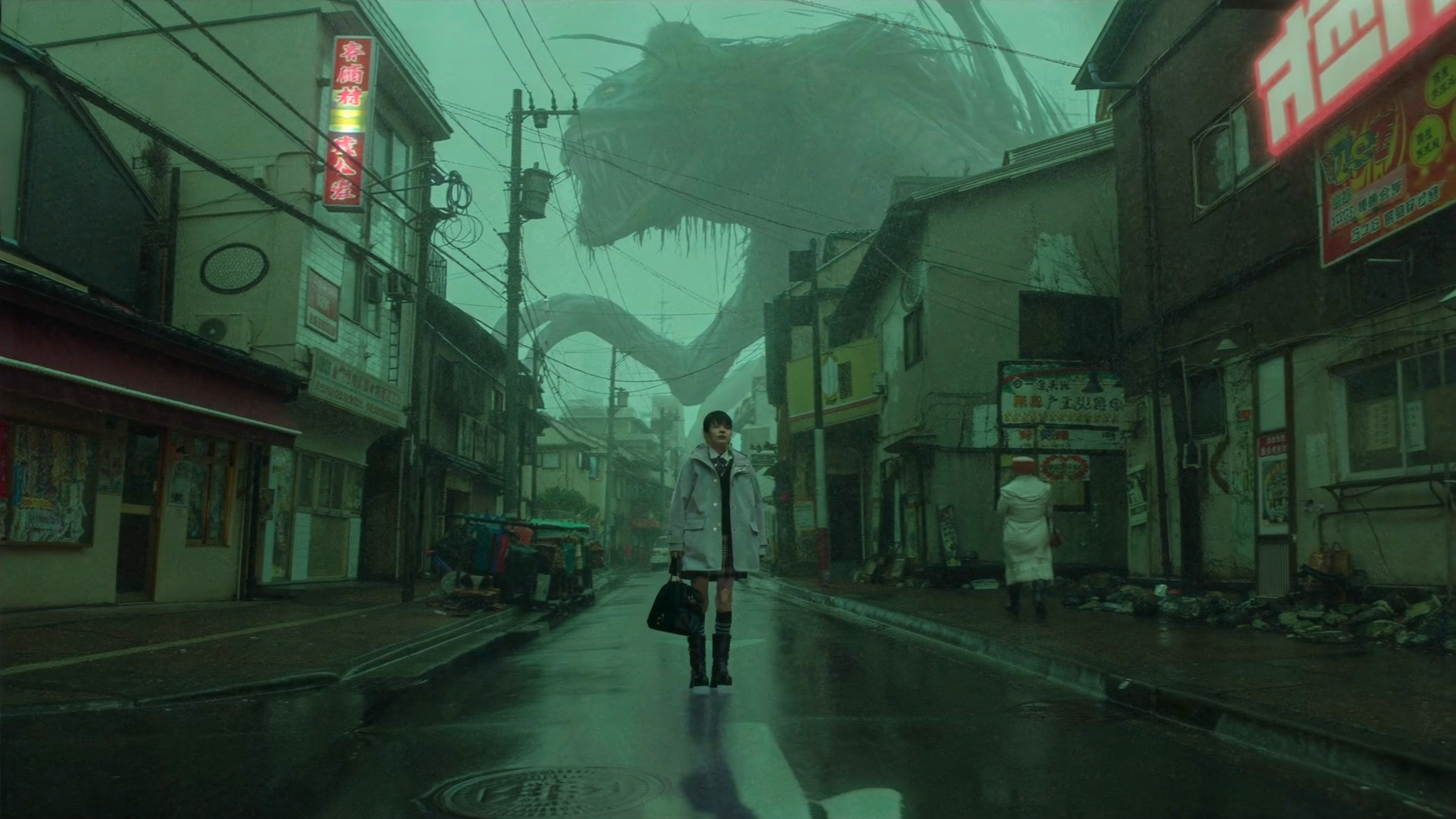
- Atmospheric treatment. Fog, particles, light leaks, lens flares, and grain. These create mood and can make modest footage feel intentional.
- Environment extension and set dressing. Adding background depth, replacing a plain wall, or placing a product in a stylized setting. Useful for product demos shot in small spaces.
- Cleanup and replacement. Removing distractions, fixing a reflection, or swapping a label. Invisible work with high perceived quality returns.
- Stylized grading and film emulation. Scene-level colour work that gives a series a recognizable identity.
- Consistency tools. Anything that helps a character, product, or outfit look identical across multiple clips.
Choosing effects by objective, not novelty
| Objective | Effect direction | Typical risk |
|---|---|---|
| Stop the scroll in the first second | Hard motion transition, sudden light change | Feels gimmicky and disconnected |
| Show a product in context | Environment extension, set dressing | Physics or perspective errors |
| Explain a process | Overlay graphics, callouts, step markers | Clutter that hides the product |
| Build atmosphere | Grade, particles, haze | Muddy contrast, long render times |
| Establish series identity | Fixed intro, repeated grade, consistent type | Repetition fatigue |
Shot lists and prompt discipline
Generated visuals reward specificity. A workable prompt structure is: subject, action, camera behaviour, lighting, style reference, duration. Add negative constraints such as "no text artefacts," "no warped hands," "single light source." Keep a shared shot list per campaign so every clip inherits the same camera language. When a generation fails, do not rewrite the whole prompt; change one variable and note what moved.
Style Continuity: Keeping Every Clip in the Same World
A series that looks slightly different in every post never builds recognition. Continuity is what turns individual videos into a brand asset.
Anchor colour and light
Choose three palette colours and hold them. Decide the direction of your key light and keep it. Pick one lens feel, whether that is a wide phone look or a longer, compressed frame, and resist switching between them.
Keep products and people consistent
For recurring characters or products, keep a reference folder of approved stills, wardrobe notes, and angles. When using generative tools, reuse reference images and descriptions rather than starting fresh each time. Small drifts in colour, hair, or packaging are noticed instantly by viewers, even when they cannot explain why a clip feels off.
Fix the format, vary the content
Lock the intro frame, caption style, lower-thirds, and end card. Then vary the idea, the sound, and the pacing. Consistency in form is what makes experimentation in content safe.
A Repeatable Production Workflow
Step 1 — Build the trend shortlist
Twenty minutes, once a week. Save candidates, note the implied format, date everything.
Step 2 — Map concepts to the content calendar
Thirty minutes. For each of your next three planned posts, ask whether a trend adds anything. If not, move on. Never force a sound onto a topic that does not need one.
Step 3 — Write the shot list
Describe each shot in one line, including camera behaviour and lighting. Mark which shots need generated effects and which can be captured practically. Practical is almost always faster and more believable.
Step 4 — Produce the raw material
Capture or generate footage in the widest aspect ratio you need, then crop down. Generate at higher resolution than you publish so you can reframe without softening.
Step 5 — Edit to the beat
Place the audio first, mark the beats, then cut picture to those marks. Cutting picture first and hunting for music afterwards produces edits that feel almost right and never quite land.
Step 6 — Caption, then check on a phone
Add captions, export, and review on an actual handset at arm's length with the sound off, then with sound on. Errors that are invisible on a desktop monitor are obvious on a phone.
Step 7 — Publish variants and log results
Publish two or three hook variants of the same idea where the platform allows it. Record which hook, sound, and effect combination won. Over a month, that log becomes more valuable than any trend report.
Licensing, Copyright, and Platform Safety
Sound rights are the most common source of avoidable trouble. Audio available inside a platform's own editor is typically cleared for organic posts made within that app, but that permission usually does not extend to exporting the file and reposting it elsewhere, and it rarely extends to paid advertising. If a clip will run as an ad, use a properly licensed commercial track instead.
Keep a simple log: sound name, source platform, date used, licence type, and where the final video was published. For client work, that log is the difference between a calm conversation and a difficult one. Avoid cloning recognizable artist voices, avoid sampling tracks without clearance, and be careful with trending sounds built on film dialogue, since the underlying dialogue carries its own rights.
Measuring Whether the Trend Actually Worked
Reach alone tells you almost nothing. The metrics that matter for sound-driven video are early retention, completion, saves, shares, and profile or site activity attributable to the post. Compare each trend clip against your own baseline, not against a viral outlier you saw elsewhere.
When a clip outperforms, isolate one variable before concluding anything. Was it the sound, the hook, the length, the effect, or the posting time? Change one thing on the next test. Teams that skip this step end up "discovering" the same lesson four times a year.
Mistakes That Quietly Kill Performance
- Arriving two weeks late to a sound that has already peaked.
- Mixing audio loudness inconsistently across clips, forcing viewers to adjust volume.
- Letting effects obscure the product, so the viewer admires the edit and forgets the offer.
- Duplicating narration in on-screen text instead of showing evidence.
- Reusing one hook format until it stops working, then blaming the algorithm.
- Skipping captions and losing every viewer who starts muted.
- Ending with no clear next step, which converts attention into nothing.
- Overproducing a format that works precisely because it looks unpolished.
FAQ
How early should I jump on a sound? Aim for the first third of its visible rise. If you cannot publish within the window you observed, note the sound for reference and move to the next candidate instead of publishing late.
Can I use trending audio in paid campaigns? Usually not. Platform sound libraries are generally cleared for organic use inside that platform. For advertising, license a commercial track and confirm the terms cover your placement and duration.
Do heavy visual effects hurt authenticity? Only when they replace substance. Effects that clarify a product, control pacing, or create a consistent look are read as craft. Effects that exist purely to show off are read as advertising.
How many videos should a small team produce? Better to publish three carefully structured clips weekly than seven rushed ones. Volume matters, but only after you can repeat a format that retains viewers past the first three seconds.
What if my niche has no visible trends? Borrow structure from adjacent categories. The rhythm of a cooking reveal translates cleanly to a software demo or a service explainer once you replace the content.
Do I need generative video tools for this to work? No. Motion transitions, grading, captions, and strong editing carry most of the load. Generative tools help most when you need environments, stylized scenes, or consistent series visuals that would otherwise be expensive to shoot.
Where to Start This Week
Pick one sound, one format, and one effect family, then produce three clips using them. Keep everything else stable so the results mean something. Write down the sound's discovery date, the hook you used, and the retention number you got. Repeat the following week with a single change.
That is the entire discipline. Trending audio gives you a temporary advantage in the feed, and visual craft gives you a reason to be remembered after the scroll moves on. Combine them deliberately, measure honestly, and the compounding effect shows up faster than most teams expect.
