

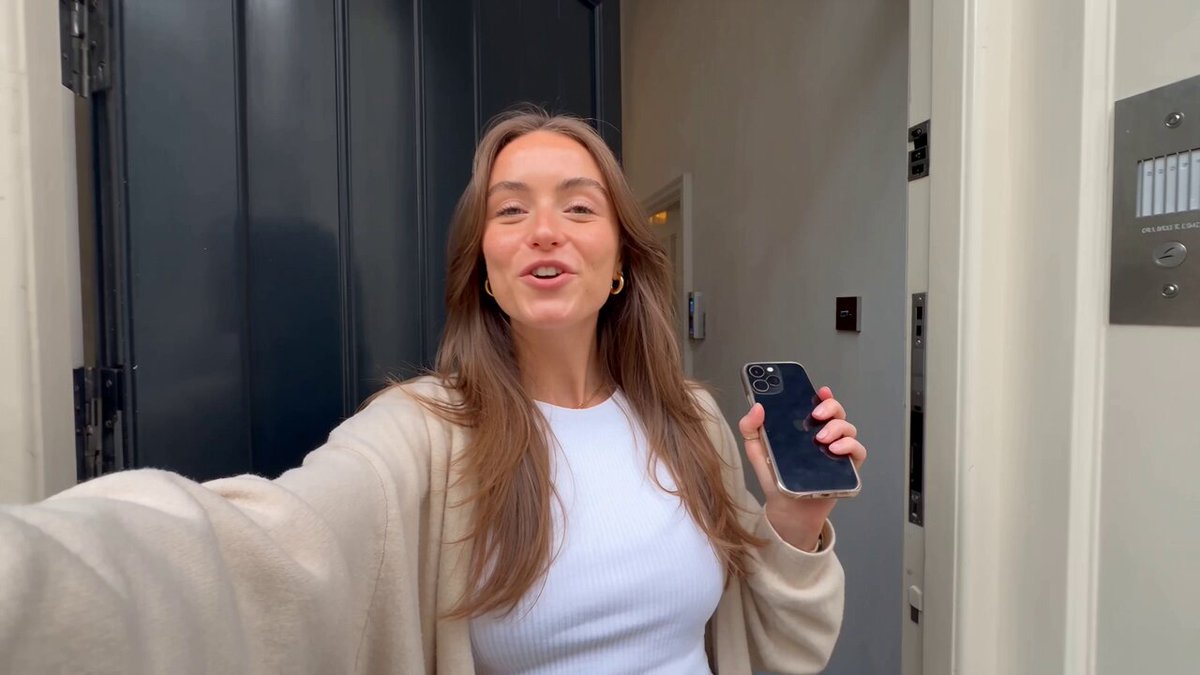
Why a Short Clip Outperforms Another Slide
Most business presentations fail for a boring reason: nothing in them is memorable. A slide with six bullets is processed as text, and text competes with every other thought in the room. A 40-second clip of a real customer describing a real problem is processed as an event. The audience stops reading, starts watching, and remembers a face, a voice, and a specific moment.
That difference is not a matter of taste. It comes from how people encode information. When a message arrives as synchronized image and sound, it enters memory through two channels instead of one, which raises the odds that at least part of it survives until tomorrow. Motion also triggers orienting behavior: the human visual system is built to notice change, and a screen that suddenly moves pulls attention back from phones, laptops, and side conversations.
The practical implication is simple. Video clips are not decoration you add after the argument is built. They are a delivery mechanism for the one or two claims that matter most, and they deserve the same planning you give to your opening line.
Where Clips Actually Fit in Business Communication
There is no single correct place for video in a professional setting. The right spot depends on what the clip is doing and who is watching. These are the situations where clips earn their runtime most reliably.
Pitches and sales conversations
In a sales call, the hardest thing to fake is proof. A two-minute clip of a customer explaining what changed after adopting your product does more than any comparison table, because it transfers the emotional weight of a decision already made. Keep it to the single most relevant sentence from a longer interview. If the prospect's industry differs from the clip's, narrate the bridge in one line before pressing play.
Internal updates and change management
Company-wide messages about restructuring, tool migrations, or new processes are usually delivered as slides and skimmed. A short clip from the team lead who will actually live with the change, filmed on a phone, often lands better than a polished executive video. Authenticity reads as competence when the topic is operational.
Training and onboarding
This is where clips repay their cost fastest. A 90-second screen recording of the exact click path beats a written procedure, because it removes interpretation. Record once, caption it, and reuse it for every new hire. Training libraries built this way also cut repeat questions dramatically.
Product demos and launches
Live demos break. A recorded clip of the critical feature flow gives you a guaranteed version of the moment you want, with no waiting for a slow network. Use it as the backbone of the demo and keep the live walkthrough for questions.
Recruiting and employer branding
Candidates want to see the workplace, not read about the culture. Thirty seconds of an unscripted stand-up meeting tells a candidate more than a paragraph about collaboration. Get consent, keep it recent, and avoid filming anyone who has not volunteered.
Conference talks and panel intros
At events, the room's audio system is your biggest risk and your biggest asset. A clip with strong audio can reset a tired audience after lunch. A clip that also carries your key statistic on screen works even if the room's speakers are failing.
Choosing Length, Format, and Placement
Length is a design decision, not a technical limit. The most common failure is a clip that is 3 minutes long when 45 seconds would have been sharper. Use these bands as starting points and test them against your own audience.
- 8 to 20 seconds: a hook, a reaction, a single visual proof point. Good for opening a section or replacing a headline slide.
- 30 to 60 seconds: a customer quote, a before-and-after demonstration, a single concept explained. This is the workhorse range for live presentations.
- 90 to 150 seconds: a case study, a product walkthrough with context, a training module step. Works better in async viewing than in a live room.
- 3 to 6 minutes: full training lessons, recorded interviews, compliance content. Treat these as standalone assets rather than presentation inserts.
Format matters just as much. For a 16:9 deck, export 1920x1080 with text kept inside the safe area so nothing gets cropped by a projector. For social teasers of the same material, reframe to 1080x1920 rather than letterboxing, and move captions up so platform interface elements do not cover them. A clip that looks broken in one context undermines the credibility of the whole presentation.
A Repeatable Workflow for Producing Clips Fast
Speed comes from sequence, not from shortcuts. This workflow works for a two-person team and scales to a marketing department.
1. Write the sentence the clip replaces. Before any footage exists, write the exact claim the clip must make. One sentence. If you cannot write it, the clip is not ready to be made.
2. Break it into three to five visual beats. Each beat is one shot or one screen. Beats keep the clip from drifting and make editing mechanical.
3. Choose the footage source deliberately. Screen recording for software, filmed footage for people, generated footage for concepts that cannot be filmed, and hybrid for everything else. Mixing sources is fine as long as the visual language stays consistent.
4. Record lean. One idea per clip, no padding at the start, no lingering on the end. Trim the first and last second where people fidget.
5. Caption everything. Most business viewers watch without sound at some point, including in conference halls. Burned-in captions survive every playback environment; a separate subtitle file does not.
6. Normalize audio. Loudness differences between a clip and a presenter's microphone are the fastest way to lose a room. Aim for consistent perceived loudness across every asset in the deck and test on laptop speakers, not headphones.
7. Export per venue. Keep a master file and generate a deck version, an email version, and a vertical version. Naming conventions such as topic-format-length-date save hours later.
8. Run a two-minute review. Does the first frame work as a still? Do captions appear before the audio starts? Does anything confidential show in the background? Is the last frame clean enough to freeze on during discussion?
AI-Assisted Production: Realistic Capabilities
AI video tools have removed the two biggest barriers to using clips: the need for a camera crew and the need for editing skill. What they do well today is worth understanding precisely, because overestimating them is how projects stall.
Strong use cases include turning a written script into a narrated explainer, generating conceptual b-roll for abstract topics, creating multiple language versions of the same message with subtitles, auto-captioning long recordings, auto-cutting silence from interview footage, and reformatting a horizontal clip into a vertical one.
Weak use cases include anything requiring exact product interfaces, legally precise statements, precise brand typography, long dialogue with perfect lip sync, and complex hand or object interactions. Generated footage also should never be presented as documentary evidence. If the clip implies that a real event happened, use real footage, or label the visual clearly as an illustration.
A hybrid approach is usually best: real people for credibility, generated or stock visuals for concepts, AI assistance for captions, translations, and rough cuts, and a human pass for accuracy, tone, and brand fit. That division of labor keeps quality high without adding headcount.
Delivering Clips in a Live Setting
Production is half the job. Playback is where most presentations lose their advantage.
- Never rely on autoplay. Embed the clip so it waits for you, with the first frame visible while you set up the context.
- Check audio before the room fills. Connect to the house system, play five seconds, and confirm level and latency.
- Keep an offline copy. Local file plus a backup on a second device. Venue networks fail more often than people expect.
- Test clicker compatibility. Some remotes advance slides instead of controlling the video player, which can skip your clip entirely.
- Stop talking during playback. Talking over a clip splits attention and wastes both. If narration is needed, add it into the clip itself.
- Freeze on a meaningful last frame. A still that stays on screen during questions keeps the message alive instead of collapsing back to a menu.
For async viewing, the rules invert. Assume the viewer is skipping, so put the claim in the first three seconds, keep captions on by default, and make the clip work without any surrounding slides at all.
Measuring Whether the Clip Worked
The temptation is to judge a clip by how it felt in the room. Feelings are unreliable. Use signals that can be compared across meetings.
- Retention: on async versions, the percentage of viewers who reach the final frame.
- Unprompted recall: in Q&A, note whether anyone references the clip's content without being reminded of it.
- Question quality: clips that work generate specific questions rather than general ones.
- Follow-up behavior: reply rates, scheduling rates, or internal ticket volume after a training video goes live.
- Assessment scores: for onboarding, compare quiz results between cohorts who received a clip and cohorts who read a document.
A simple A/B test settles most debates. Present the same argument to two similar groups, one with a clip and one without, and ask three questions afterward: what was the main point, what was the strongest evidence, and what would you do next. The gap in specificity will tell you whether to keep the format.
Common Mistakes and How to Fix Them
The decorative clip. A beautiful video that carries no claim weakens a presentation by consuming time. Fix: tie every clip to a sentence you would otherwise have to say out loud.
Runtime creep. Clips accumulate seconds during editing. Fix: cut until the clip feels slightly too short, then add three seconds back.
No captions. Fix: burn in captions and check them at the actual playback size, not on a monitor at full resolution.
Inconsistent audio. Fix: normalize every clip to the same target and compare against the presenter's microphone.
Talking over playback. Fix: script a silent pause where the clip plays, or move your commentary into the clip.
Generated footage presented as fact. Fix: label illustrative visuals or use real footage for evidentiary claims.
Missing consent and rights. Fix: written permission for faces and voices, licensed music, and cleared footage before you export.
Confidential data on screen. Fix: record screen captures on a clean profile and blur anything customer-specific.
Over-polishing. Fix: set a deadline tied to the meeting date and ship at 80 percent polish. A used clip beats a perfect clip that never gets presented.
Accessibility, Legal, and Brand Guardrails
Accessibility is not a compliance checkbox; it is the difference between a clip that reaches everyone and one that reaches half the room. Captions should be accurate, synchronized, and readable at presentation distance. Avoid text baked into the image at small sizes, avoid rapid flashing, and keep contrast high. If a clip carries essential information visually, describe it in speech or in a caption line.
On the legal side, three areas cause most problems. First, likeness and voice: get written consent for anyone identifiable, including in background footage, and be careful with voice cloning even when the voice belongs to an employee. Second, music and stock assets: verify that the license covers commercial internal and external use, and keep records of what was used where. Third, data: screen recordings leak more information than people expect, from notification popups to file paths.
Brand guardrails are simpler but just as important. Define one intro style, one caption style, one music mood, and one aspect ratio per channel. Consistency is what makes a series of clips feel like a deliberate communication system rather than a collection of experiments.
Frequently Asked Questions
How long should a clip be in a business presentation?
Between 30 and 60 seconds for most live settings. Anything longer works better as a pre-read or an async asset. If your claim needs more than a minute, split it into two clips separated by a spoken transition.
Do I need editing experience to start?
No. Modern editors handle trimming, captions, and audio normalization with templates. The skill that matters is script discipline: knowing exactly what the clip must say before you open the software.
Can AI-generated footage be used in client-facing material?
Yes, for concepts, mood, and abstract illustrations, as long as it is not presented as documentary evidence and does not depict real people or places without permission. Keep real footage for anything that functions as proof.
How many clips belong in one presentation?
Two to four for a 30-minute session. The first should appear early to establish that motion is part of this presentation, and the strongest should sit immediately before your main recommendation.
What if the venue has no working sound?
Design every clip to survive sound-off with burned-in captions and on-screen text carrying the key claim. Then it does not matter whether the speakers cooperate.
How do I keep clips consistent across a team?
Build a small kit: two caption styles, one music track, one lower-third template, and one export preset. Store it where anyone can copy it, and add a one-page checklist to the project folder.
How do I start with no footage at all?
Record three interview questions with a colleague using a phone and a window for light. One usable answer is enough to build your first 45-second clip and prove the workflow internally.
Quick Start: Your First Clip This Week
Pick the highest-stakes meeting on your calendar. Identify the single claim that the audience most needs to believe. Write it as one sentence. Decide whether a face, a screen, or an illustration serves it best. Record or generate three to five beats, cut to 45 seconds, caption everything, normalize the audio, export a 1080p version, and test playback on the actual equipment you will use.
After the meeting, ask two questions in the room: what was the main point, and what evidence stuck. If people repeat the clip's content back to you more precisely than they repeat your slides, you have found a format worth keeping. From there, the work is repetition: same structure, better footage, tighter scripts. That is how video stops being a special effect in business communication and becomes a reliable tool you reach for by default.
