
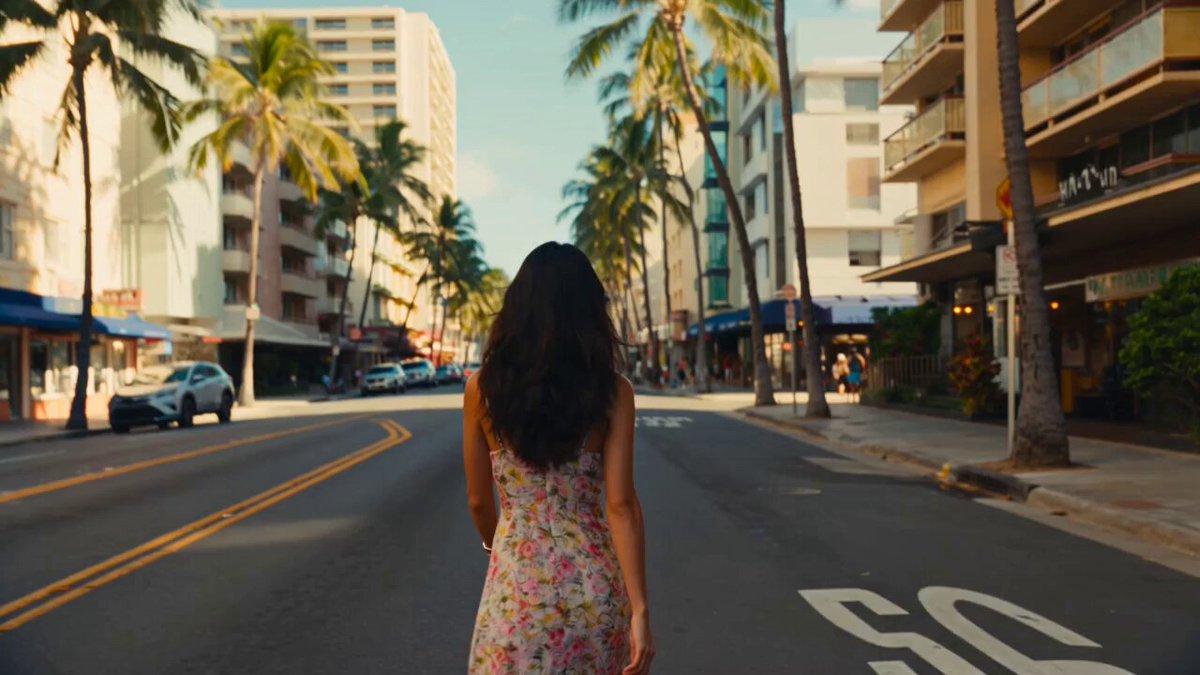
Most disappointing AI video clips are not model failures. They are brief failures. When a model receives "a woman walking through a city, cinematic," it has to invent wardrobe, street, weather, lens, pacing, and the reason any of it matters. It will invent something. It just will not invent the same thing twice. A prompt generator exists to narrow that invention: it turns a loose idea into a specification precise enough that randomness has fewer places to hide.
The awkward part is that prompt tools are easy to overestimate. They have no taste, they do not know your story, and they cannot rescue a shot list that was never thought through. What they do well is mechanical: expand, order, and constrain language so a generative model has a clear target. Treat that mechanical work as part of production and it pays off across every clip you make.
Why Prompt Quality Decides Video Quality
Video is unforgiving in a way that still images are not. A single frame can be beautiful by accident. Six seconds of motion cannot. Every unresolved question in your prompt becomes visible motion the moment the camera starts moving: a background that drifts, a jacket that changes color, a face that recomposes itself halfway through the shot.
There is also an economic argument. Generation time is the scarce resource in most AI video pipelines, not disk space and not inspiration. Teams that preview at low resolution before committing to a full render routinely produce three times as many usable shots per hour of compute as teams that render first and evaluate later. Prompt structure is what makes cheap previews informative: if the prompt is precise, a rough low-resolution pass still tells you whether the framing and motion read correctly.
Finally, prompts are the only part of the pipeline you can version. Models update, interfaces change, pricing models shift, but a well-kept block library travels. A director of photography who knows that "soft north-facing window light, cool shadows, warm skin tones" is their look can reuse that phrase for years. That is the real asset a prompt practice builds.
What a Prompt Generator Actually Contributes
Strip away the interface and most generators do three jobs. Knowing them helps you judge output instead of being impressed by long paragraphs.
Intent parsing and slot expansion
Your sentence is broken into semantic slots: subject, action, setting, lighting, camera, mood, and finish. Each slot is then expanded with vocabulary that models respond to. "Moody lighting" becomes "low-key lighting, single soft source from camera left, deep shadow falloff, warm practical lights in the background." The expansion is not creativity. It is disambiguation.
Syntax assembly and ordering
Models weight early tokens more heavily than late ones. A decent generator reorders your slots so subject and action lead, camera and lighting sit in the middle, and style or quality markers close. This is why the same words can perform differently depending on position, and why an assembled prompt often looks nothing like what you typed.
Constraint routing
Negative prompts, aspect ratio, duration, and motion strength are steered into separate fields rather than crammed into prose. Anything that behaves like a setting should be a setting, because settings are repeatable and prose is not.
The Six Layers of a Video Prompt
A dependable prompt fills six layers. Skip one and the model substitutes a cliché, usually the most average-looking option in its training distribution.
Subject, action, and continuity anchors
State who or what is on screen, what they are doing, and what changes during the shot. "A courier" is scenery. "A courier steps off a bike, scans a doorway, then turns as a light switches on inside" is a shot. If a character appears more than once, repeat the same descriptors word for word: approximate age, hair, build, wardrobe, one distinctive detail. Consistency beats novelty here every time.
Camera, lens, and framing
Camera language is your strongest steering control. Useful levers include shot size (extreme close-up, medium, wide, aerial), angle (eye level, low, over-the-shoulder, top-down), movement (static, slow push in, dolly out, handheld follow, orbit, crane up), focal feel (wide with visible distortion, neutral 50mm, compressed portrait, macro), and depth of field. One movement per shot. Two movements in one prompt usually produce a camera that wanders without intent.
Light and color
Describe the source and the quality of light, never the feeling. "Melancholy" is unactionable. "Overcast daylight through a frosted window, cool grey tones, soft shadow edges" is a recipe. Name practical sources, time of day, and a palette of two or three colors. If you want sodium-vapor night streets or clinical fluorescent, say it plainly rather than hoping the model guesses.
Motion, pacing, and duration
Speed is where models struggle most, so give anchors: slow motion, fast whip pan, steady drift, locked-off. Also state what must stay still. Uncontrolled background motion is the single most common artifact in generated footage, and it usually comes from a prompt that described only the foreground. Match duration to content: a mood shot can hold six seconds; a reaction beat cannot.
Medium, texture, and finish
This layer sets visual language: cinematic live action, 2D animation, stop-motion, archival footage, product macro render, documentary handheld. Add grain, halation, or slight imperfection if you want it to feel filmed rather than computed. Avoid contradictory styles stacked together. "Photorealistic anime" produces mush, not a hybrid.
Sound cues
If your tool supports audio, specify ambience, music energy, and any spoken line. Keep dialogue short and mark the speaker. For most social video, clean ambience plus a music cue outperforms generated speech, which still tends to land in an uncanny middle register.
A Repeatable Workflow From Logline to Final Cut
A prompt generator only earns its keep inside a process. This one scales from a single clip to a weekly publishing calendar.
Write the logline first
One sentence: who wants what, what blocks them, how it resolves. Everything downstream points at that sentence. Without it you collect attractive clips that never add up to a story.
Break the script into shots
Turn the logline into six to twelve shots. For each, note three things only: what we see, what the camera does, how long it lasts. That is your shot list, and it is also your budget guardrail, because you know the count before generating anything.
Generate three variants per shot
Feed each shot through a generator and produce a literal version that protects continuity, a stylistic version that tests a look, and an experimental version that occasionally delivers the shot you did not know you wanted. Fifteen previews from five shots is a normal morning.
Preview cheap, render expensive
Never promote a shot to a full render before the composition and motion read correctly at low resolution and short duration. This single habit removes most wasted computation, and it keeps review conversations about ideas rather than artifacts.
Build a reusable block library
Save what worked: the character sheet, the lighting presets, the camera moves, the palette, the negative list. Paste blocks instead of rewriting them. Within a few projects you have a house style any teammate can apply without guessing.
Review muted, then with sound
Watch the assembled cut without audio first. Muted viewing exposes weak framing and continuity breaks that a music bed hides. Then watch with sound, which exposes pacing problems. Log every rejected shot with one line explaining why: camera drift, wardrobe change, extra fingers. The log becomes the fix list for your next prompt revision.
Negative Prompts and Artifact Control
Negative prompts tell the model what to avoid, and for live-action work they often matter more than the positive description. A starter set that covers most failures: warped hands and extra limbs, merged faces, text and watermarks, flicker and jitter, morphing background objects, oversaturated color, heavy high-dynamic-range halos, duplicate subjects appearing from nowhere.
Match the negatives to the shot rather than running one universal list. For an interior dialogue scene, ban lens flares and crowd noise. For a product macro, ban dust, smudges, and reflections of your own equipment. Keep the list to five or eight terms. An overloaded negative list flattens legitimate detail along with the artifacts, and you end up with footage that looks scrubbed and lifeless.
A useful habit is to attach negatives to shot types, not to projects. "Interior conversation," "exterior wide," "product hero," and "vertical close-up" each get a small preset, and each preset evolves as you learn what your chosen model actually produces.
Working Across Multiple Models Without Rewriting Everything
Different engines reward different syntax. One may follow long natural-language sentences well; another responds better to comma-separated fragments; a third ignores motion words and relies almost entirely on the starting frame. Rewriting per model is expensive, so keep one canonical prompt and derive model-specific variants from it.
The canonical version holds the story and continuity information: subject, wardrobe, action, setting, light direction, palette. The derived versions adapt delivery: sentence length, ordering, whether camera terms are accepted, how much style vocabulary the model can absorb before it destabilizes.
Practical rules that hold up across most engines:
- Lead with subject and action in every variant.
- Compress camera notes to a single movement for stylized models.
- Keep character blocks identical across engines; only the surrounding delivery changes.
- When a model drifts, cut the prompt rather than adding more.
- Test a new engine with a shot you already have a good result for. It is the fastest way to see how its syntax differs.
Decision Criteria When Choosing a Prompt Tool
Feature pages all look the same. Judge tools on what changes your output.
| Criterion | What to look for | Why it matters |
|---|---|---|
| Transparency | Shows the assembled prompt and lets you edit it | You learn the model's grammar instead of guessing |
| Model awareness | Adapts syntax per engine | One phrasing rarely transfers cleanly |
| Negative support | Dedicated field plus presets | Faster, more consistent artifact control |
| Continuity tools | Character and style blocks | Fewer wardrobe and face breaks across shots |
| Export | Copyable text, batch output | Fits the editing tools you already use |
| Iteration speed | Fast variants and visible history | Encourages testing instead of settling |
A quick test beats a long comparison: run the same three-sentence idea through two options and count how many edits you make afterward. The winner saves keystrokes and rework, not features. Also check genre fit. A tool tuned for anime rarely produces convincing documentary footage, and a product-render preset will fight a handheld street scene.
Worked Example: A Twenty-Second Vertical Ad
Say the brief is a running shoe for a vertical feed, and the logline is: a runner who almost quits finishes a hill and changes how the day feels.
Shot list and prompts:
- Laces, 3 seconds. "Extreme close-up of a dusty shoe lace being pulled tight, early morning light from the right, shallow depth of field, static camera." Negatives: text, brand marks, dust clouds, extra fingers.
- Stride detail, 4 seconds. "Low tracking shot of feet striking wet pavement, water displaced on impact, cool blue-grey palette, 35mm feel, handheld follow." Negatives: floating debris, morphing shadows, lens flare.
- Wide uphill, 5 seconds. "Wide shot of a lone runner on an empty road climbing a hill at dawn, low sun directly behind creating a rim of light, slow drone rise, deep focus." Negatives: cars, buildings, crowds, jitter.
- Face beat, 3 seconds. "Medium close-up of a runner slowing, jaw tight, breath visible in cold air, warm skin against cool background, slight handheld drift." Negatives: beauty retouching, smooth plastic skin, smiles.
- Summit and release, 4 seconds. "Medium wide shot from behind as the runner reaches the crest, city in soft haze below, warm highlights breaking over cool shadows, static camera, deep focus." Negatives: text, watermarks, busy rooftops.
- Closing frame, 3 seconds. "Static close-up of the shoe resting on the road edge, morning haze, negative space at the top of the frame for a title card." Negatives: text, reflections of equipment, harsh highlights.
Five shots over three variants gives eighteen previews. Six full renders emerge, the edit cuts to a music build, and the vertical framing leaves headroom for the title card planned in shot six. Notice how much of the work happened before generation: logline, shot list, palette, camera plan, negative presets. The generator translated decisions you had already made rather than making them for you.
Mistakes That Quietly Wreck Output Quality
Writing paragraphs instead of specifications. Lyrical description dilutes the tokens that matter. Delete every adjective no one could photograph.
Changing five things at once. When a shot fails, adjust one variable: camera, light, or subject phrasing. Otherwise you learn nothing about the cause.
Ignoring aspect ratio and platform. Vertical framing needs different headroom and subject placement than widescreen. Decide the destination before writing the prompt.
Reusing prompts across unrelated engines. A photoreal prompt often needs simplification for a stylized model, while a short poetic prompt may need expansion for one that follows long instructions.
Skipping the sound plan. Silence dates a clip faster than imperfect visuals. Decide ambience and music even while shots are still being iterated.
Generating without a naming convention. Name by project, shot number, and version. "Final-take-really-final" is a workflow killer when you return a week later.
Trusting a beautiful still. Screenshot-level beauty hides motion problems. Watch the full clip at normal speed before approving anything.
Never pruning the block library. Old presets accumulate. Review saved blocks every few projects and delete the ones that no longer match your taste.
FAQ
Do I need paid software to write strong video prompts?
No. Structure matters more than the tool. A plain document with saved descriptor blocks, a shot list, and a negative preset list gets you most of the way. Generators help mainly when you are producing volume and need consistency across many shots or collaborators.
How long should a video prompt be?
Usually two to four sentences, roughly 40 to 90 words. Long enough to specify subject, action, camera, light, and finish; short enough that no instruction gets buried. If you cannot say which layer a clause belongs to, cut it.
Why does my character change appearance between shots?
Because appearance was implied rather than stated. Write a character block with age range, hair, build, wardrobe, and one distinctive detail, then paste it unchanged into every prompt featuring that person. Consistency comes from repetition, not from clever phrasing.
Should style words go at the beginning or the end?
Most engines weight early tokens more heavily, so lead with subject and action, place camera and lighting in the middle, and close with style or quality markers. Test on your specific model, since a few respond better to front-loaded style cues.
Can one prompt work across different video models?
Partly. Keep a canonical prompt for story and continuity, then create per-engine variants that adjust sentence length, ordering, and how much style vocabulary you include. Expect to trim more than you add when moving to a new engine.
How do I reduce flicker and morphing artifacts?
Add a focused negative list, lock the camera when possible, keep background elements simple, and shorten the clip. Flicker usually comes from too much simultaneous motion, so removing secondary action often fixes it faster than adding negative terms.
What is the fastest way to improve?
Keep a failure log. One line per rejected clip: what went wrong and which phrase you will change. Within a few weeks that log becomes a personal prompt manual tuned to the models you actually use, which no generic template can match.
Prompt generators do not replace direction. They translate direction into language a model can execute, and translation is exactly where most AI video projects lose time. Write the logline, build the shot list, specify camera and light, ban the artifacts you keep seeing, and watch every clip muted before you judge it. Tools will keep changing. That discipline travels with you.
