



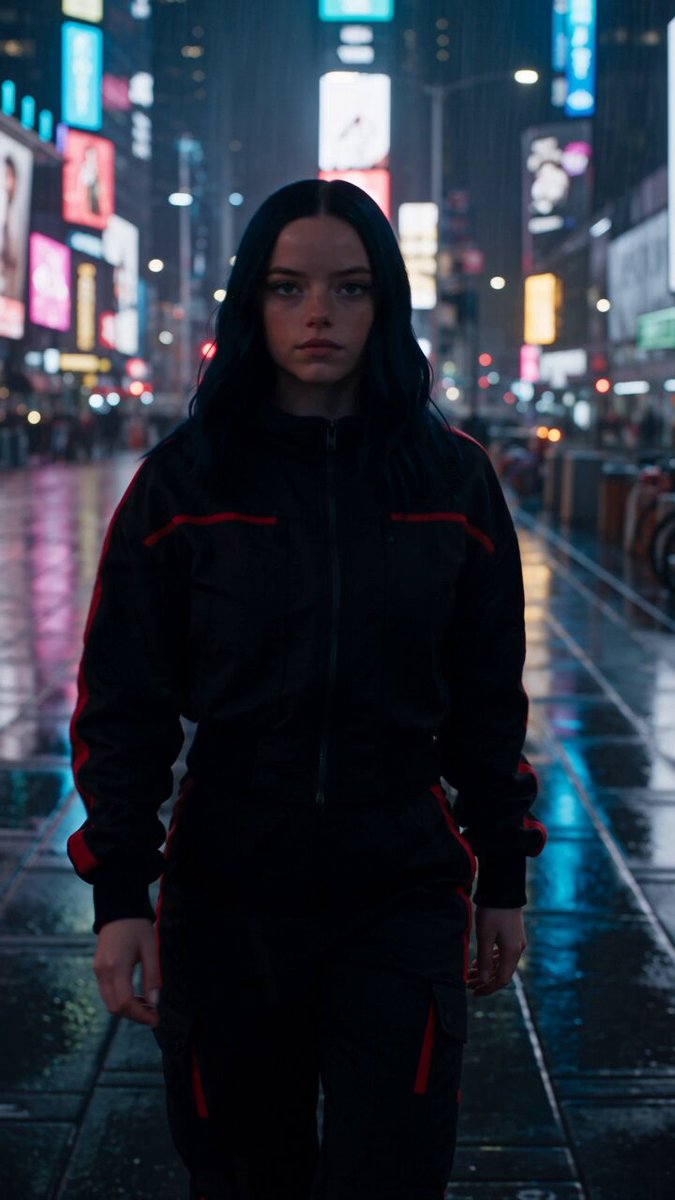
Korean short-form audiences move faster than almost any other market. A clip that trends in the morning can feel dated by dinner, and the brands that consistently win are rarely the ones with the largest budgets. They are the ones with the tightest production loop. This guide is about building that loop: finding hooks that land, choosing between generative and live-action footage, editing for the rhythm viewers expect, running a series instead of a one-off, and measuring whether any of it actually worked.
Why Korean short-form audiences behave differently
Three structural facts shape every campaign, and none of them are about budget.
First, consumption is overwhelmingly mobile and often sound-optional. Many viewers watch with captions burned in, frequently in public or on transit with the volume off. If your story depends on audio to make sense, it is already losing a share of the audience before the first cut. This is not a small edge case — it is a large slice of viewing behavior that should be designed for, not tolerated.
Second, the sharing layer is private as much as public. A large share of discovery travels through group chats and direct messages, which means content has to survive being forwarded without context. If the joke needs a caption explaining the brand, it will not travel. If the clip requires the viewer to have seen episode one, it dies in the forward.
Third, the half-life is short and the volume is high. A concept that worked three weeks ago is now a nostalgia reference, not a format. This is why teams that plan quarterly campaigns struggle while teams that ship weekly compound their learning. The weekly team has thirty data points per quarter; the quarterly team has one.
Practically, this means optimizing for three things at once: a hook that lands in under two seconds, a visual or emotional beat that works muted, and a format flexible enough to become a series rather than a one-off.
What actually makes a clip travel: three drivers
Emotional resonance comes before product logic
The most-shared clips in this market are usually about a feeling the viewer recognizes — workplace fatigue, family pressure, the awkwardness of a group chat, the small relief of getting out of a social obligation gracefully. The product appears as the resolution, not the premise. If your script opens with a list of features, you have written a spec sheet with a soundtrack.
A useful test: strip the product out of the storyboard. If the story collapses, you have an ad. If the story still works and the product fits naturally back in, you have a shareable format. Run that test before you generate a single frame, because it is the cheapest decision point in the entire project.
Trend timing is a production constraint
Trend cycles here are measured in days. That turns trend response into an operations problem: how quickly can you go from noticing a spiking audio clip to publishing your version of it? Teams that maintain a bank of pre-approved concepts, character designs, and reusable shot templates can ship in roughly 48 hours. Teams that start from a blank page cannot, no matter how talented they are.
The practical takeaway is to build assets before you need them. Pre-approve three character looks. Pre-build five transitions. Keep a folder of cleared music beds. Then, when a trend spikes, you are assembling rather than inventing.
Visual polish is table stakes
Viewers are saturated with high-production footage and will scroll past anything that looks obviously cheap. Until recently that meant studio budgets. Generative video tools have compressed that gap dramatically — but only if you understand their failure modes and design shots around them instead of hoping for the best. A generated close-up with drifting facial features is worse than a clean, simple live-action shot, because the audience reads it as carelessness rather than as a style choice.
Writing the creative brief before you generate anything
The one-line cultural hook
Write the concept as a single sentence of the form: a specific person in a specific situation does an unexpected thing and discovers product-backed relief. Specificity is what makes a hook feel native rather than imported. "Office worker" is generic. "Junior employee on day three of a team dinner, trying to leave without insulting the manager" is a scene. The scene is what viewers recognize and forward.
Reference boards and tone mapping
Collect six to ten reference clips: three that match the visual tone, three that match the comedic or emotional register, and two that demonstrate the editing rhythm. Note explicitly what you are borrowing from each one — color, pacing, framing, sound design — so the references do not collapse into a vague mood board nobody can act on. "Like this one" is not direction. "Hard cuts on movement, 1.2-second average shot length, warm grade, no music until the turn" is direction.
Script length and hook timing
For a 20-second finished video, plan 45 to 60 words of spoken text at most. Budget roughly the first 1.5 seconds for the visual hook, the next six to eight seconds for the setup, and the final third for the turn and payoff. Anything after the payoff should run under three seconds. If you have written 120 words, you have written a 45-second video, and you should decide honestly whether the story earns that length.
Choosing the right production approach
When generative video wins
Generative clips are strongest for impossible or expensive setups: a surreal open-plan office, a cityscape at golden hour, a stylized product transformation, a food-close-up macro that would need a dedicated rig. They also excel at rapid variation testing and at series content that needs visual consistency from a small team. If you need five alternate openings of the same scene to test hooks, generation is the only practical route.
The caveat is precision. Generated footage is best when the shot is short, when motion is simple, and when the subject does not need to hold a long, emotionally specific expression. Ask for atmosphere, texture, and transition material; do not ask a model to carry a monologue.
When live action still wins
Live action still owns certain territory: genuine reactions, handheld authenticity, dialogue-driven comedy where timing is everything, and anything where the audience must believe a real person is speaking. A talking-head testimonial generated by a model is easy to spot and easy to distrust, and in a market with high skepticism toward advertising, distrust is the most expensive production cost of all.
Hybrid workflows
The most efficient pattern most teams land on is hybrid: generate the expensive establishing beats, product hero shots, and transitions, then shoot the human moments with a phone on a tripod and a single soft light. This keeps costs low without hollowing out the emotional core of the piece. A typical hybrid budget splits roughly 60/40 toward live action for narrative formats, and 70/30 toward generation for product-led formats.
A step-by-step production workflow
Step 1 — trend scan and shortlist
Run a 30-minute weekly scan across three to five platforms, capturing audio clips, formats, and recurring visual motifs. Log each find with a one-line note on why it spreads — the mechanism, not the vibe. Then shortlist two concepts, not ten. Ten concepts means none of them get the iteration they need, and iteration is where the performance gains live.
Step 2 — storyboard in 8 to 12 shot beats
Write each beat as one line with a duration. Example: 0–2s slammed laptop; 2–5s awkward eye contact across the table; 5–9s phone screen glow; 9–14s reveal; 14–18s reaction; 18–20s logo beat. Beats make it obvious when a section is too slow, and they let an editor or a generative tool work against a shared plan instead of a mood.
Step 3 — generate, then select ruthlessly
Produce three to five variations per shot rather than one. Select on a simple rubric: does it read at a glance, does the motion feel natural, does it match neighboring shots in color and framing. Expect to discard most outputs, and treat a low usable rate as normal rather than as a failure. A 20 percent usable rate is a good day, not a warning sign.
Step 4 — edit for rhythm
Cut on motion. Keep shot lengths between 0.8 and 2.5 seconds in the first ten seconds. Use hard cuts rather than dissolves, which read as corporate. Let one shot breathe in the middle to reset attention before the payoff lands — this pause is what makes the turn feel earned rather than frantic. Watch the cut muted first, then with sound; the muted pass exposes pacing problems that music hides.
Step 5 — sound, subtitles, and the opening seconds
Choose music after picture lock so the edit drives the track rather than the reverse. Burn in Korean subtitles with a clean sans-serif and a semi-transparent backing plate. Do not rely on auto-translation; have a native speaker read every line aloud before publishing. Read-aloud catches honorific awkwardness, unnatural spacing, and jokes that only work on paper — all of which are invisible in a subtitle editor.
Character consistency and the series effect
One-off viral clips are luck. Series formats are leverage. Pick a single character — a specific age, wardrobe, speech pattern, and posture — and commit to it across at least eight episodes. Viewers begin to recognize the character before they recognize the brand, which is exactly the point.
To keep a generated character stable, lock a written character sheet and reuse it verbatim in every prompt: age range, hair, glasses, jacket color, baseline expression, camera distance. Keep the same lighting recipe across episodes. Any drift in wardrobe or lighting resets the audience's recognition and forces them to re-learn who they are watching, which is the same as losing a subscriber every time.
Track which episodes get rewatched rather than merely liked. Rewatches signal that the character is doing the work, which is a signal to invest more in the series and less in new concepts. Likes are cheap; rewatching is a decision.
Platform formatting, captions, and localization
Respect the native aspect ratio of every destination — vertical for short-form feeds, square for chat-forward placements, widescreen only for embedded surfaces. Reframe rather than crop blindly; faces cut in half look careless, and a cropped logo reads as a mistake.
Caption design matters more than most teams admit. Korean text benefits from slightly increased line height and shorter line lengths than Latin script, because dense character blocks slow reading speed. Keep captions out of the bottom portion of the frame where platform interface elements sit, and keep them to two lines maximum.
Localization is not translation. Idioms, honorific registers, and humor transfer unevenly. When adapting a concept that worked elsewhere, rewrite the setup rather than subtitling it. If a phrase needs a footnote, cut it. A rewritten setup costs an hour of writing; a confusing clip costs the entire campaign's reach.
Testing, measurement, and the iteration loop
Define one primary metric before publishing: three-second hold rate for hook testing, completion rate for pacing, share rate for resonance. Everything else is secondary, and reporting on everything equally means learning nothing.
Run hooks as A/B tests with identical bodies. If the body performs the same with two different openings, the hook was not the problem — the story was. That is a much cheaper lesson to learn from data than from a post-mortem meeting.
Keep a simple weekly log: concept, first-frame description, hold rate, completion rate, shares, and one sentence on why you think it performed. After six weeks, patterns appear that no single dashboard will show you. Most teams discover that their strongest format is not the one they assumed, and that one of their recurring characters quietly outperforms everything else.
Common mistakes that cost reach
- Opening with the brand. The logo can come last; it should not come first.
- Over-scripting dialogue. Long lines kill pace and strain lip-sync in generated footage.
- Chasing a trend after it peaks. If you cannot ship within roughly two days, pick a slower-burning format instead.
- Reusing one visual style for every story. Different stories need different grading and pacing.
- Ignoring the muted viewer. If the clip makes no sense with sound off, it is not finished.
- Producing a single version. Ship three cuts of the same concept with different openings.
- Treating a low usable rate from generative tools as failure instead of as a normal filter.
- Localizing by subtitling instead of rewriting the setup.
FAQ
How long should a Korean-market short-form video be?
For humor or twist formats, 15 to 25 seconds is the sweet spot. For narrative or emotional pieces, 30 to 45 seconds works if the story earns it. Past a minute, you need a strong reason and a very good first three seconds.
Do I need Korean-language voiceover?
Not always. Many top-performing clips rely on on-screen text, music, and reaction footage. If you do use voiceover, cast a native speaker — synthetic voices still stumble on intonation, rhythm, and honorific nuance, and the audience notices within a sentence.
How many variations should I produce per concept?
Three finalized cuts minimum. Test different openings and different payoff timings, keep the body identical, and let the data pick the winner. Three cuts also give you material for a second platform without extra production.
Can generated footage work in regulated industries?
Yes, with care. Use generated footage for atmosphere, abstract product moments, and transitions, and reserve real footage for claims and disclosures. Follow local rules on disclosure of synthetic media, and keep documentation of what was generated and what was filmed.
What is a realistic production cadence?
One concept per week with three cuts each. That rhythm beats a single polished campaign every quarter, because it compounds learning instead of betting everything on one guess. Budget roughly two hours of planning, three hours of generation and review, and two hours of editing per concept once the templates exist.
How do I tell whether the hook or the story is failing?
Swap only the opening, keep the body untouched, and compare three-second hold rate. If hold rate improves but completion rate does not move, the hook got them in and the story lost them. Fix the middle, not the first frame.
