
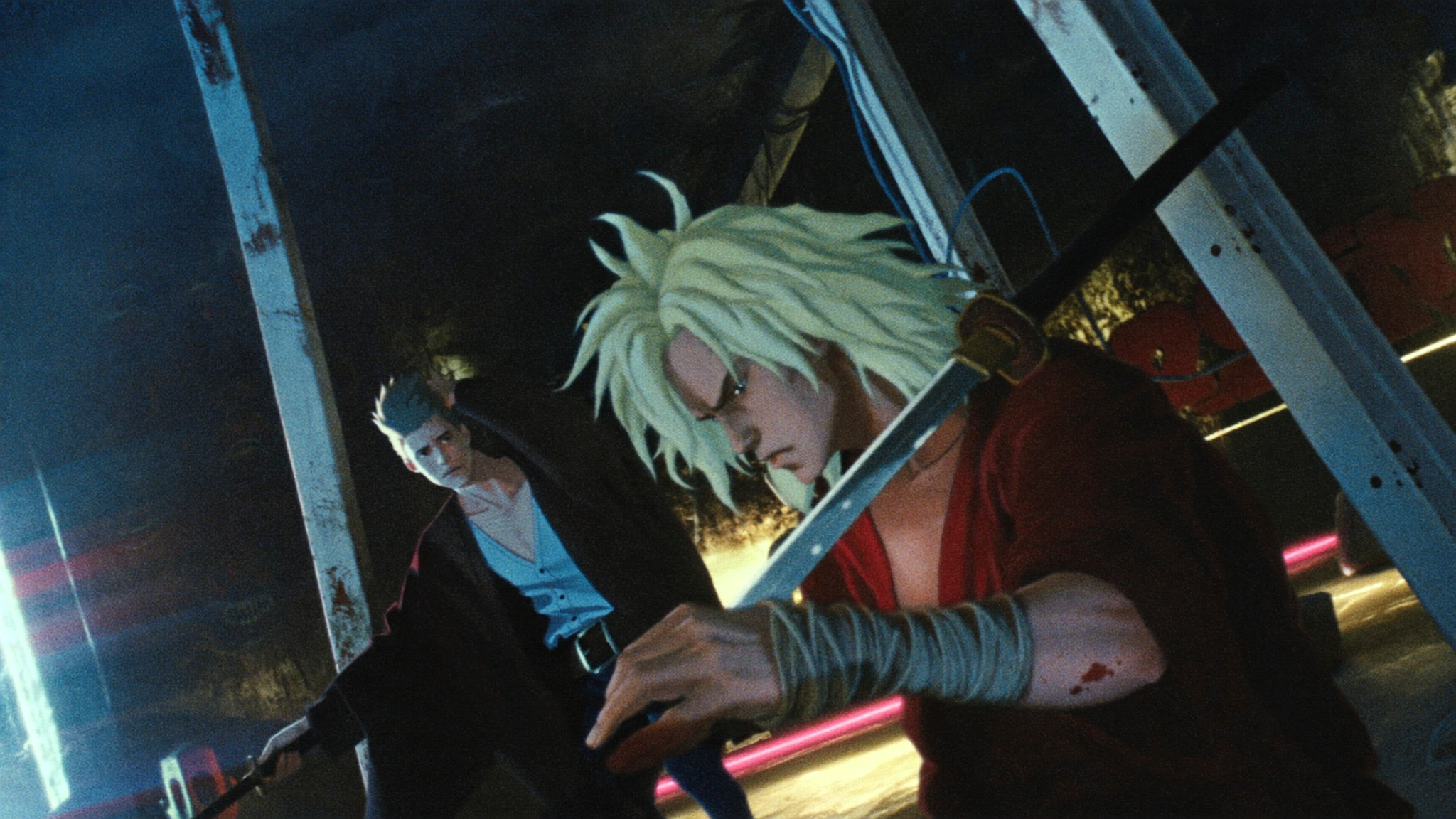

If you have spent any time generating video with AI, you have met the same frustrating ghost. You describe a character carefully, the first scene looks right, and then the very next shot the same character has a different face, a different jacket, a different eyebrow. The sequence quietly falls apart and what should have been a story becomes a slideshow of unrelated people wearing similar clothes.
This is the problem of character drift, and it is the single biggest reason so much generative content feels flat. The solution that has started to work is multi-image fusion: using more than one reference image to anchor a character and a style, so that identity travels from scene to scene instead of being recreated from scratch each time. This guide explains why drift happens, how multi-image fusion fixes it, and how a creator can put it into practice to produce characters that actually persist.
Why Characters Drift in the First Place
Character drift is not a bug that someone forgot to fix; it is a direct consequence of how generative models work. A text-to-image or text-to-video model has no persistent memory of a character. Every new prompt is a fresh generation, and everything the model knows about the character lives in the words you typed. Describe someone as "a tall woman with red hair," and the model invents a reasonable version of that, but there is nothing forcing the next scene to match it, so the hairline shifts, the jaw changes, the outfit migrates.
The more a story demands, the worse the drift gets. In a single static portrait, a model can hold itself together because there is little to change. In a multi-scene narrative, with different locations, different actions, and different moods, every new prompt is another chance for the character to wander. Long-form video multiplies the opportunities for inconsistency, which is why drift is so visibly worse the moment you try to tell an actual story.
This explains the most important rule of generative character work: never rely on text alone when consistency matters. Text is a leaky anchor. Reference images are a fixed one.
What Multi-Image Fusion Actually Does
Multi-image fusion answers the drift problem directly. Instead of describing the character purely in words, you supply one or more reference images, and the model uses those images as anchors while it generates the scene. The character's face, build, and clothing are read from the references and carried forward, so the new scene shows the same person.
This is more than simply pasting an image onto a scene. The system has to understand which features define the character, which are just incidental, and how to re-render that identity under new lighting, new angles, and new actions. When it works, you get a character that is recognizably the same across every shot, which is the entire point.
The power of using multiple images rather than one becomes clear the moment the character needs to act. A single static reference tells the model the face and the outfit, but not what the character looks like from other angles or in motion. Several images, the face, a full-body shot, a side view, give the model a richer model of the whole person, and richer input produces output that stays stable for longer and across more variation.
Embedding Character and Tracking Style
For fusion to produce consistency, the model has to extract more than a face. Good implementations build a compact representation of the character, sometimes called an embedding, that captures identity across the images. It also tracks style: the look of the world, the color palette, the texture, the mood, so that a scene does not just keep the same person but keeps the same visual universe around them.
This matters far more than it sounds. A character who stays identical but appears in a scene that looks completely different every time, different grading, different lighting logic, different art style, still reads as inconsistent. Style tracking is what keeps the world from drifting even as the character flies between locations.
For a creator, this means supplying not just clean character references but also consistent style references. A palette, a lighting example, a few signature textures. The character has an identity, and the story has a look, and the model carries both. When identity and style are both anchored, the results hold across scenes that would have broken a simple prompt.
Keyframing: Controlling the Moments That Matter
Even with strong references, a fully automatic generation can wander in exactly the place a creator cares about most. That is where keyframing comes in. Keyframing lets you define the critical frames of a sequence yourself, the ones where the character must be exactly right, and lets the model fill in the transitions and the less important moments between them.
This gives you a practical control that balances effort against fidelity. You are not forced to hand-detail every frame, which would defeat the speed of generation. You specify the anchors, the hero shot, the emotional beat, the framing that must be perfect, and the model handles the connective tissue. Between your references, which hold identity, and your keyframes, which hold the important shots, the sequence stays on course.
The habit to build is deciding upfront which frames matter most. Usually it is the opening shot, the moment of any transformation, and the closest close-up. Lock those with keyframes, keep the references handy for the rest, and you will spend your limited attention where it buys the most consistency.
Managing the Heavy Lifting at Scale
Production that really leans on consistency, a long narrative, a recurring spokesperson, a series with a fixed cast, meets the practical wall that generative video always meets eventually: compute. Rendering stable, high-quality frames across many scenes is expensive, and heavy jobs pile up. A single slow render can hold up an entire day.
The standard answer is a task queue. Instead of firing every render synchronously and waiting, you stack jobs into a queue that processes them in order, using idle capacity and retrying failures. A batch of scenes can render overnight and be waiting in the morning. This turns what would be a blocking bottleneck into a background process, and it is what makes longer, consistent production actually schedulable.
Even for a solo creator the principle applies. Render the frames that need retrying separately, reuse outputs you already have, and structure your project so heavy work happens off to the side rather than stalling your iteration loop.
Practical Tips for Getting Better Results
The technology is powerful, but it rewards good habits. Feed it clean, consistent references. If your source images have wildly different lighting or angles, the model has to guess which is the "real" look, so curate a tight reference set that agrees with itself. Write specific direction alongside the images: not "make it darker" but "evening light, warm highlights, soft shadows," so the model knows what the references should be read as.
Iterate on the fast models before spending on the slow ones. Prove the character holds across the key scenes with a cheap, quick render, and only then commit the high-fidelity budget to the shots that will actually be seen closely. Match quality to the moment. And check the important frames yourself instead of trusting the whole batch, because a single drifted close-up undoes an hour of otherwise solid work.
Keep your reference library organized. A versioned folder per character and per style makes it trivial to drop in the right anchors for a new project, and over time that library becomes the asset that lets you generate consistent content in minutes rather than days.
When Consistency Is Worth the Effort
Not every generative task needs this machinery. A throwaway mood board, a single ambient clip, a background shot where no character matters, all of those can run on a plain prompt without references and look perfectly fine. Consistency work costs extra time and compute, so spend it where the story, or the brand, or the audience depends on it.
Genuinely consistent characters are the difference between generative content that is a demo and generative content that is a story. If the goal is to make people believe, to sell a product through a repeated face, to tell a narrative that anyone follows, consistency is not a nice-to-have. It is the entire job. Fusion, style tracking, keyframing, and a sane production queue are the toolkit for that job.
Frequently Asked Questions
How many reference images should I use? As many as you need to capture the character from the angles and in the light the script calls for. A face reference plus one or two body and side views is usually a solid start.
Does more detail in my prompt always help? Not always. Specific direction helps, but overloading a prompt with conflicting descriptors confuses the model. Prefer clean references plus focused direction over walls of adjectives.
Is character consistency still weak for extended videos? Multi-image fusion and keyframing have improved it a great deal, but very long, end-to-end consistency remains a hard problem. Break longer pieces into defined sequences and anchor each one well.
Will this replace traditional character design? It changes the workflow. The reference and style assets become the new design deliverable, which you can reuse across projects, but the creative choices become more important, not less.
Building the Reference Set That Carries the Work
The single highest-leverage habit you can adopt is treating reference material as a first-class asset rather than an afterthought. Too many creators improvise their references mid-project, grabbing whatever still they have and hoping it sticks. A deliberately curated set is worth far more than a lucky image. Every character and every visual style you expect to reuse deserves a small, consistent folder that agrees with itself.
A good character set covers the essential views: a clean front-facing portrait, a full-body shot, a profile, and at least one frame showing the character in motion. All of them should share a coherent palette and lighting, because wildly inconsistent references force the model to guess which look is the real one, and guessing is where drift begins. A good style set, similarly, holds one palette, one lighting example, and a couple of signature textures, so the world around the character stays as stable as the character herself.
Name the files clearly and keep the set versioned. "Character-mara-v2-front," "world-dusk-palette," and the like. When a new project needs that character or that look, you drop in the known-good set instead of rebuilding from scratch, and the first frame is already consistent. Over time your library grows into a genuine competitive advantage, because it holds the exact visual identities that define your voice, and producing consistent work with them becomes a matter of minutes rather than days of fixing drift.
The Trouble-Shooting Playbook for a Character That Keeps Changing
Even with a strong setup, you will occasionally get a drifted shot. Resist the urge to blame the model and arm yourself with a short troubleshooting order. First, check whether the reference images themselves were inconsistent; if the palette or the angle jumps around between them, unify the set and retry. Second, check the prompt that accompanied the scene, because a conflicting adjective can override even a good reference. Third, add a keyframe at the exact moment the character appears, locking the identity where it matters most instead of hoping the model carries it through the motion.
If the character still changes across an entire sequence, the issue is usually that the sequence is too long for automatic carry. Break the piece into defined scenes, anchor each one with the reference set and a few keyframes, and render them separately before stitching. That assembly-based approach keeps identity locked per scene, and it is the most reliable fix for the reader's number-one complaint. Consistency problems are almost always input problems: references, prompts, or scene length. Check those in order and the drift disappears in the vast majority of cases.
Character drift has always been the invisible wall between generative novelty and genuine storytelling. Multi-image fusion, style tracking, and keyframing pull that wall down, letting one character live through every scene of a piece as the same person. Curate your references, control the frames that matter, queue the heavy work, and the character you design on day one is still the one the audience is following at the end.
