
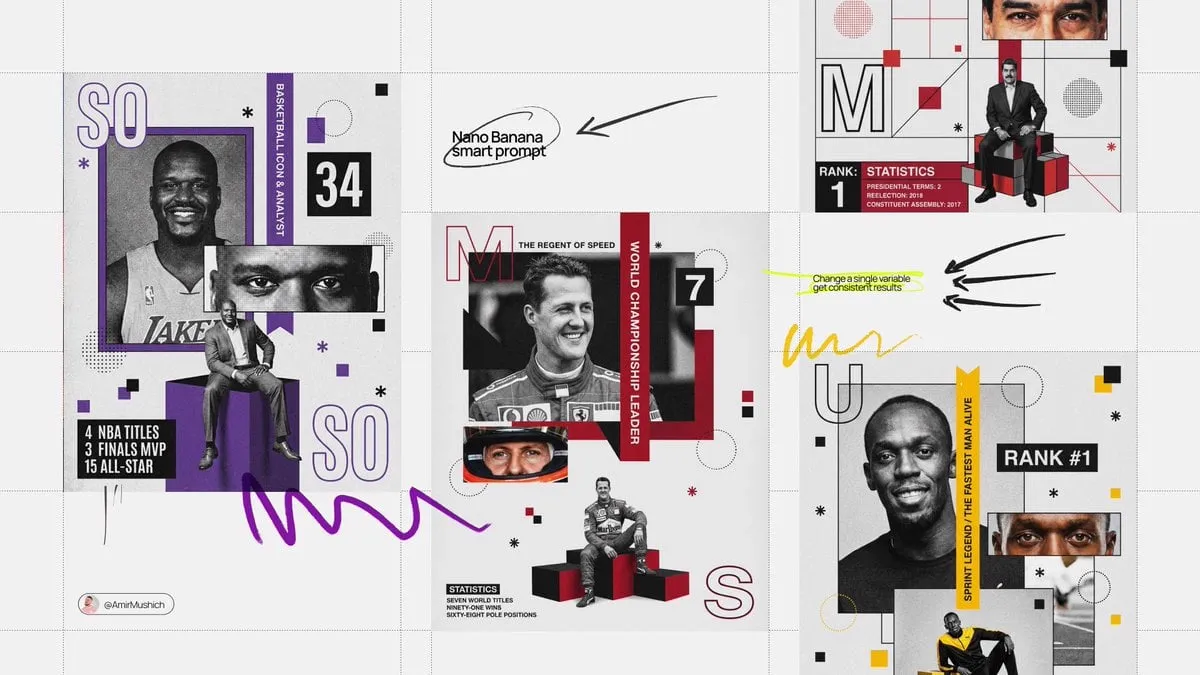
Generating images with AI has never been more accessible, yet many of the most popular tools still sit behind an account wall. You sign up, hand over your email, create a password, and only then discover whether the tool actually fits your needs. For a designer who wants to test five tools quickly, a marketer in the middle of a deadline, or a hobbyist who just wants a couple of images, that friction is the opposite of useful.
A growing group of generators sidesteps the entire signup dance. You open a page, type a description, and the model returns an image within seconds. No email, no account, no commitment. These tools are ideal for rapid experimentation, proof-of-concept work, and anyone who values privacy and speed over a persistent workspace.
This guide compares the best free AI image generators that work without an account, lays out the criteria that actually separate a great free tool from a frustrating one, and gives you a repeatable workflow plus the prompts that supply results. We will also cover the honest limits of free no-signup tools and how to graduate to a fuller workflow when the time comes.
What Makes a No-Signup Image Generator Great
The obvious baseline is that the tool works at all without forcing you to create an account. But the tools that earn a permanent bookmark do more than that. They balance output quality, control, speed, and fairness in a way that respects your time and your rights.
Output quality is the first filter. A tool that generates mushy or deeply flawed images is cheap for a reason. Evaluate the resolution, the fidelity of hands and faces, the accuracy of your prompt, and the overall aesthetic polish. Test each candidate on the same prompt so you compare like for like.
Control is the second factor. A great prompt box alone is fine for casual use, but the more you can steer aspect ratio, style keywords, negative prompts, and variation seeds, the more useful the tool becomes for real work. Look for settings that let you iterate rather than hope.
Speed and reliability round out the experience. A generator that returns in seconds encourages rapid iteration, one that makes you wait minutes slows your creative loop to a halt. Consistency matters too: a tool that fails half the time is a tool you cannot build a workflow around.
Finally, consider the fairness of the free tier. How many images can you generate before hitting a wall? Are there watermarks? What do the terms say about commercial use of your output? A free tool that produces a few high quality, unrestricted images beats one that offers endless mediocre watermarked results.
The Leading No-Signup Generators to Try
Several reliable options stand out when you want to generate without an account. They differ in style and strengths, so test a couple and pick the one that matches the kind of images you make most often.
A strong all-rounder produces clean photographic results quickly. Its interface is minimal, making it ideal for beginners and for fast tests. Expect a daily or per-session cap on generations, which keeps it free while encouraging deliberate prompts rather than blind spam.
Another favorite treats itself as an open image playground, allowing unlimited free experiments with no login at all. The trade-off is usually a cap on how many images you can keep or export quickly, that is, the tool invites you to explore but encourages moving to an account once you want to build a persistent project library.
A third option leans photographic and photorealistic, great for product concepts, environmental mockups, and stylized portraits. It tends to reward detailed descriptive prompts, so it pairs beautifully with the prompting habits you will learn below.
Do not ignore the text-to-image and image-to-image hybrids that require no signup for previews while reserving advanced features for registered users. These let you test the core engine genuinely before you decide whether the full experience is worth your details.
How to Compare Tools Honestly
Run a short benchmark on whichever candidates interest you. Build a fixed set of three prompts that cover distinct scenarios, for example a realistic portrait, a technical product shot, and a colorful illustrative scene, and run the same prompts through every tool.
Score each result on how well it matches your prompt, how believable the subject looks, and how emotionally or aesthetically appealing the output is. Write the notes down. A quick matrix of tool by scenario quickly reveals which engine handles your usual content well and which falls apart on it.
Pay attention to turnaround across tools. Note the wall-clock seconds from submit to result. In a deadline-driven workflow, a tool that is half a minute faster per iteration meaningfully compounds across a full batch.
Revisit the comparison occasionally. The free AI image landscape shifts quickly, with models and tools changing frequently. A candidate that is mediocre today may leap ahead in a few months, so refresh your benchmark on a schedule rather than assuming your favorites will stay ahead forever.
A Workflow That Gets Results on the First Pass
Even a great generator underdelivers if your prompt is weak. A disciplined workflow shrinks the gap between imagination and output.
Start by naming the subject and its key traits in plain words. "A vintage analog camera on a wooden desk" outdoes a vague flourish. The more concrete the nouns, the more ground the model has to stand on.
Then add the style and context. Specify the medium, the lighting, the mood, and the composition in a second sentence: "warm natural window light, soft shadows, shallow depth of field, editorial photography look." Style keywords are the difference between a generic render and an image that feels designed.
Finally, state what you do not want. Negative prompting, where available, prevents the model from adding clutter, extra people, or an unwanted style. When a tool lacks native negatives, rephrase positively: instead of "no watermark," describe a clean plain background.
Iterate deliberately. Change one variable at a time, the seed, a style word, or the framing, and keep what works. The no-signup tools are built for fast iteration, so lean into the loop rather than expecting perfection from a single attempt.
Crafting Pro-Level Prompts for Free Tools
The prompt is the whole game in free no-signup tools, because they rarely expose deep model parameters. A well written prompt extracts professional quality from a simple interface.
Structure prompts as a recipe with fields. Open with the primary subject and action, follow with environment, then lighting and mood, and close with the medium style and camera. "A fox standing in a snowy forest at twilight, volumetric fog, cool blue palette, cinematic wide shot, photorealistic detail" is far more compelling than three scattered adjectives.
Use one primary style anchor rather than hoping the model mixes many. "Photorealistic," "3D render," "watercolor," "isometric illustration," and "film still" each pull the generation in distinct directions. Stacking several anchors at once dilutes all of them.
Study the styles your chosen tool handles well and write to its strengths. A model tuned for realism produces weaker flat illustrations and vice versa. Your benchmark will reveal this, so align your prompts with the tool's home turf.
Read good prompts from strong communities and adapt the patterns, not the content. Notice how they order details and balance specificity with breathing room. You will internalize the grammar far faster by imitation than by memorizing hundreds of formulas.
Common Pitfalls and How to Avoid Them
The most common warning in AI image generation is detailed but contradictory prompting. Asking for "a dark moody ocean scene" and "bright sunny beach" in the same prompt forces a compromise the model cannot satisfy gracefully. Keep the descriptor set internally consistent.
Overloading the prompt is the second trap. Ten subjects and three styles in one sentence guarantees a muddle. Reduce the scope and let the model concentrate on rendering one idea cleanly. You can generate separate images and composite later if you truly need more.
Expecting fine identity control without reference inputs will frustrate you. Most free no-signup generators lack image-to-image or character reference features. For exact reuse of a character or product, you will eventually need a fuller workflow, so accept the free tier's creative freedom and its matching limits.
Ignoring the terms is a quiet mistake. Before you publish or sell any generated image, read the tool's license regarding commercial use and ownership. Free convenience never excuses an avoidable rights problem down the line.
When and How to Move Beyond the Free Tier
The day will come when rapid free experiments are no longer enough. You will want higher resolution, persistent project files, custom checkpoints, image-to-image capabilities, or fewer generation caps. That is the signal to step up to an account-based tool.
A mature upgrade path keeps your workflow intact. Save your proven prompts as templates, and look for a paid tool that respects the same vocabulary. Reusing your best recipes in a more powerful environment multiplies your productivity instead of forcing you to relearn everything.
Choose your next step by your dominant use case. Photorealistic commercial use points to a photographic engine; stylized personal art points to an illustration or model-library oriented platform. Let your actual workflow dictate the tool, not the marketing.
Keep a no-signup tool in your pocket regardless. There will always be quick concepts, one-off images, and private tests where a zero-friction generator is the right choice. The best toolkit includes both a fast throwaway sandbox and a deeper production workspace.
Practical Prompt Recipes to Steal Right Now
To make the loop concrete, here are three prompt patterns you can adapt for instant results. Use them as scaffolding and replace the subject with your own.
The clean product idea: name the object, place it in a simple environment, specify the lighting and lens. "A minimalist ceramic coffee cup on a pale stone counter, soft side light, gentle shadow, shallow depth of field, product photography" reliably produces a usable studio-style shot.
The portrait concept: describe the subject's key traits, the mood, and the framing once each. "A thoughtful young woman with dark curls by a rainy window, warm yellow interior light against cool blue dusk, cinematic medium close-up, film grain" yields an expressive, atmospheric frame.
The playful illustration: anchor the style early and keep one subject, not three. "A friendly red fox in a patterned scarf, flat vector illustration, soft sage and cream palette, centered composition, cheerful mood" keeps the result cohesive and on-brand.
Run each on your free tool, evaluate against your benchmark, and note which pattern matched your intent best. These recipes are meant to be borrowed, modified, and eventually replaced by the ones you discover yourself. Over time, your own proven templates beat any off-the-shelf formula.
Frequently Asked Questions
Are there really good AI generators that require no signup at all? Yes. Several solid options let you generate on the spot with no email or password. They trade this convenience for limits like generation caps, resolution caps, or watermarks, so they suit rapid testing rather than heavy production.
Can I use the generated images for commercial projects? Read each tool's terms, since policies differ. Some allow commercial use of free output, others reserve rights or impose attribution. Verify before publishing anything you plan to sell.
How many images can I make without paying? It varies by tool. Some cap per day or per session, others are effectively unlimited for on-page use while limiting downloads or exports. Check the specific tool's policy.
Will a no-signup tool match a paid tool's quality? Often not fully, particularly at high resolution and with advanced controls. But the gap is shrinking, and for concepts, ideation, and many real tasks, the free output is genuinely usable.
How do I get the best free results? Write structured prompts, keep them internally consistent, restate what you want with concrete nouns and a style anchor, and iterate quickly on one variable at a time. Velocity is the free tier's superpower.
A Pocket Toolkit of Instant Creativity
Free no-signup AI image generators are one of the lowest-friction forms of creativity on the internet. There is no commitment, no data handover, and no pressure, just a prompt box and an idea. That spirit of instant experimentation is exactly what makes them so effective at the start of any creative project.
Use them to prove a concept before buying a license, to explore visual directions cheaply, to train your own prompt instincts, and to answer a quick "what would this look like" in seconds. The output quality is frequently better than their price implies.
Master the ritual: write a tight structured prompt, iterate fast, and keep your best recipes. When the free tier eventually feels small, you will leave it carrying a valuable skill, plus a folder of prompts that turn a bigger investment into an even better return. The cheapest door into generative creativity is also one of the most instructive.
