
The Quiet Revolution in Dutch Video Production
The step from a single static image to a moving, cinematic clip has become the defining moment of the current AI video wave. For Dutch creators, marketers, and small businesses, the promise is simple: take a product photo, a portrait, or a concept sketch, and turn it into a short video that can hold attention on Instagram, LinkedIn, or TikTok. What sounded futuristic a few years ago is now an everyday workflow.
The shift is not only about novelty. It is about economics and speed. Renting a studio, hiring a camera crew, and editing hours of footage is out of reach for most regional businesses. A text-to-video or image-to-video tool flattens that cost curve dramatically. A single photo becomes a three-second establishing shot, a ten-second loop, or even a longer narrative sequence once you understand the underlying controls.
This guide is written for Dutch-language readers looking for a practical, methodical introduction. It walks through how image-to-video generation works today, which models behave best for which kinds of footage, and how to build a repeatable workflow that keeps your characters and settings consistent. If you have been staring at a folder of product images and wondering how to turn them into content, this is the place to start.
Why Consistency Has Become the New Benchmark
Early video generators were impressive in short bursts but unreliable across multiple clips. A character who appeared in one shot would subtly change face, wardrobe, or lighting in the next. For anyone producing a series, a tutorial, or a brand campaign, this wreckage of inconsistency made the output unusable.
That has changed. The current generation of models is judged less on a single wow frame and more on whether a character or environment can be carried from scene to scene without drifting. This is the real reason that image-to-video has overtaken pure text-to-video for many commercial uses: when you supply a reference image, you give the model an anchor, a fixed point it must preserve.
In the Netherlands, where many firms work with a defined visual identity, this anchoring matters. A bakery chain, a furniture studio, or a local consultancy wants its orange logo, its wood-toned interiors, and its recognizable faces reproduced faithfully. Supplying one or more reference frames is the single most powerful lever for achieving that.
The Role of Reference Images in Stable Generation
The simplest approach is a single reference image. You prompt the model with natural language describing the motion you want, and it animates the source picture while honoring its content. This works beautifully for subtle effects: looping water, drifting clouds, a model turning toward the camera, or a product rotating on a turntable.
More advanced workflows use multiple reference images. By feeding a few keyframes of the same character taken from different angles, you give the model enough information to reconstruct that person or object when the clip cuts to a new angle. This opens up real storytelling rather than single-shot loops.
Choosing the Right Model for the Job
The abundance of video models can feel overwhelming. The useful mental model is to separate them by personality rather than by brand loyalty. Some are masterful at realistic motion and physics. Others excel at stylized, anime-like rendering. Still others prioritize speed and low cost over absolute fidelity.
Flux-series image models have become a reliable default for establishing characters and scenes because they produce clean, high-quality stills that can then be animated by video models. They are a strong first step when you need to design a character or environment before you bring it to life.
Runway and MiniMax Hailuo are known for expressive motion and are often the right call when a clip needs visible physical action, like a person walking, a fabric swaying, or an object being handled. Luma and the newer Vidu and Kling generations meanwhile push toward longer, more continuous shots with better camera control, which suits cinematic establishing sequences.
Fast Models for Iteration
When you are brainstorming, you want speed. A fast, inexpensive model lets you test ten motion directions in the time a premium model would take for one. The trick is to lock your concept with fast models first, then render the final take on a higher-fidelity model so you do not burn time and budget experimenting on the expensive option.
Building a Repeatable Dutch Workflow
The most important skill is not prompt writing, although that helps. It is designing a pipeline that produces consistent results on demand. A practical Dutch workflow has five stages.
First, define the asset. Start from a strong still image rather than expecting a video model to invent everything from text. A well-lit, high-resolution photo gives the generator the ground truth it needs.
Second, describe motion deliberately. Instead of vague phrases like "make it move," write concrete instructions: a slow push-in toward the subject, a gentle parallax on the background, a character blinking and turning her head. Specific verbs translate into usable camera and action cues.
Third, validate on a cheap model. Confirm the motion reads clearly and the content stays intact before spending time on a premium render.
Fourth, scale up. Re-render the approved concept with a higher-fidelity model and, where possible, a higher resolution output.
Fifth, polish outside the generator. Add captions, trim the loop, apply a subtle grade, and normalize audio in a conventional editor. AI generation is the spark; the editor is where the clip becomes on-brand.
Generating Video Directly from Text
While image-to-video is the most controllable, pure text-to-video is still valuable. It shines when you have no starting asset at all, such as the opening abstract shot of a landscape, an establishing aerial, or a stylized transition.
The trade-off is control. Without a reference image, the model decides the details, so expect to iterate more. The disciplined approach is to treat text-to-video as a mood or concept generator, run it cheaply and often, and lock onto the rare output that matches your vision, then feed that output back into an image-to-video loop to refine it.
Controlling Camera and Movement
Modern models increasingly expose camera controls that go far beyond simple prompts. You can request zoom, pan, tilt, orbit, or a standard dollying movement. These controls are the difference between a clip that feels static and one that feels directed.
The rule of thumb is restraint. One intentional camera move per clip reads as cinematic; five simultaneous moves read as chaos. Pick the motion that best sells the story: a slow push-in to build tension, a lateral pan to reveal a large space, or a stable lock-off for a product showcase.
Matching Motion to Platform
Platforms reward different rhythms. A looping product shot for Instagram Reels wants smooth, endless motion with no hard cut at the loop point. A narrative clip for a website hero wants a controlled arc that resolves cleanly. Think about where the clip will live before you choose how much camera movement to request.
Keeping Characters and Sets Consistent Across a Series
The frustration many Dutch creators hit is not the first clip; it is clips two, three, and four drifting apart. Consistency across a series requires discipline at the asset stage.
Build a character sheet first. Generate several reference images of the same character in different poses or outfits and keep them stored alongside your video project. Whenever you need that character again, you re-animate from the approved reference rather than from scratch. This anchors the look every single time.
The same logic applies to environments. If your series takes place in a specific apartment, street, or factory floor, generate a master establishing image of that location and reuse it. The visual language stays stable, and viewers come to recognize your recurring world.
Practical Advice for Dutch Small Businesses
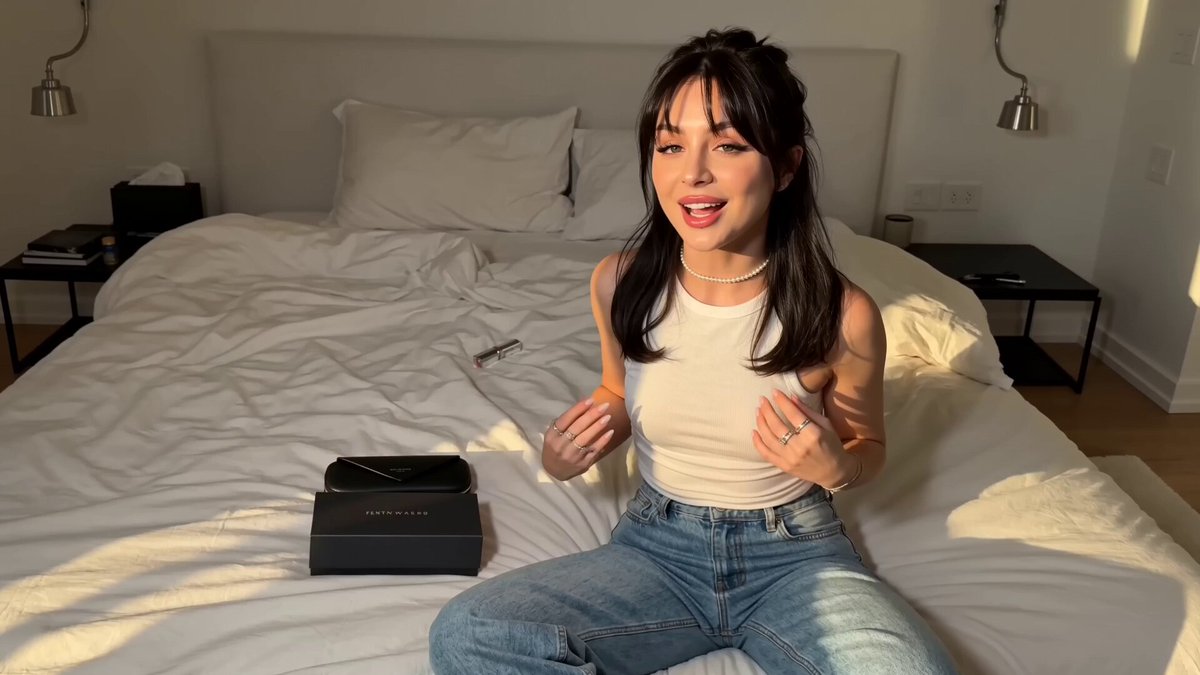
For a Dutch small or medium business, the highest-value project is almost always a product showcase or a founder-led talking video. Both benefit from image-to-video because the starting asset already exists: the product photo or the founder's portrait.
Start small. Turn three product photos into three short loops and publish them across channels to measure response before committing to a larger series. Track which motions and which captions perform, then double down on what the audience rewards.
Respect your visual identity. Keep the same reference images, the same color grade, and the same caption style across every clip so the feed feels like one brand rather than a collection of experiments.
Troubleshooting Common Problems
If movement looks unnatural, simplify it. Too much simultaneous motion overwhelms the model, so strip the request down to one or two actions and rebuild from there.
If the character drifts, go back to the reference. A stronger, clearer, higher-resolution source image will hold the model to its anchor far better than a noisy or low-res one.
If faces look distorted on close-up, reframe. Strong close-ups are the hardest shots for many models, and a slightly wider shot that still communicates emotion is far better than a mangled close-up.
If a clip feels too short or too long, remember that duration is a model property. Plan your edit around the engine's reliable range, and stitch together multiple clips in your editor if you need a longer sequence.
Frequently Asked Questions
Do I need a powerful computer to generate video in the cloud? No. These tools run on provider infrastructure, so a modest laptop with a decent browser connection is enough.
Which model should I start with? Begin with a fast, inexpensive model to learn the workflow, and only move to premium rendering once your concept is approved.
Can I use my own photos? Absolutely. Supplying your own product or family photos as reference images is exactly how the most consistent results are produced.
Does the language of my prompt matter? Most models understand English best. If you are more comfortable in Dutch, you can often write simple prompts and translate the key action verbs into English for the highest accuracy.
How long is a typical generated clip? It varies by model, but a few seconds to around fifteen seconds per clip is common. Assemble several in an editor for longer videos.
Getting Started This Week
You do not need a large budget or a technical background to begin. The realistic first step is to take one strong image you already own, choose a fast model, and generate a short looping motion. Review the output, adjust the motion prompt, and run it again.
The skill curve is forgiving, and the reward compounds. Every clip you publish teaches you a little more about how the tools behave and what your audience responds to. Within a couple of weeks, the step from still image to moving picture will stop feeling like technology and start feeling like a normal part of producing content.
A Short Toolkit for First Experiments
It helps to know a few plain names to start with, so you are not searching a model index blind. For designing a character or scene from a still, Flux-series image generation is a dependable, widely documented starting point. For animating that still with natural motion, Runway and MiniMax Hailuo are frequent choices because they handle expressive movement well. For longer, camerawork-focused establishing shots, Luma, Kling, and the newer Vidu generations give you more control over the lens.
You do not need every one of these. Pick two roles, a fast engine for testing and a higher-fidelity engine for final renders, and learn them well enough to trust their behaviour. Every month the field simplifies and hardens, but the two-stage habit of testing cheap and rendering premium remains the safest route to good results without wasted spend.
Designing the Product Hero Shot
For a typical Dutch e-commerce or service brand, the highest-leverage image-to-video job is the product hero. Start with a clean shot of your hero product, remove distracting backgrounds, and give it a single, elegant motion such as a slow rotation or a gentle float. Add a consistent colour grade and a caption that states the buying benefit in the first two seconds.
Test one motion, publish, and read the engagement. Iterate on the next version with what the comments and watch time tell you. You will quickly build a library of hero shots that double as reusable brand assets, ready to feed the next campaign without reshooting a single frame.
